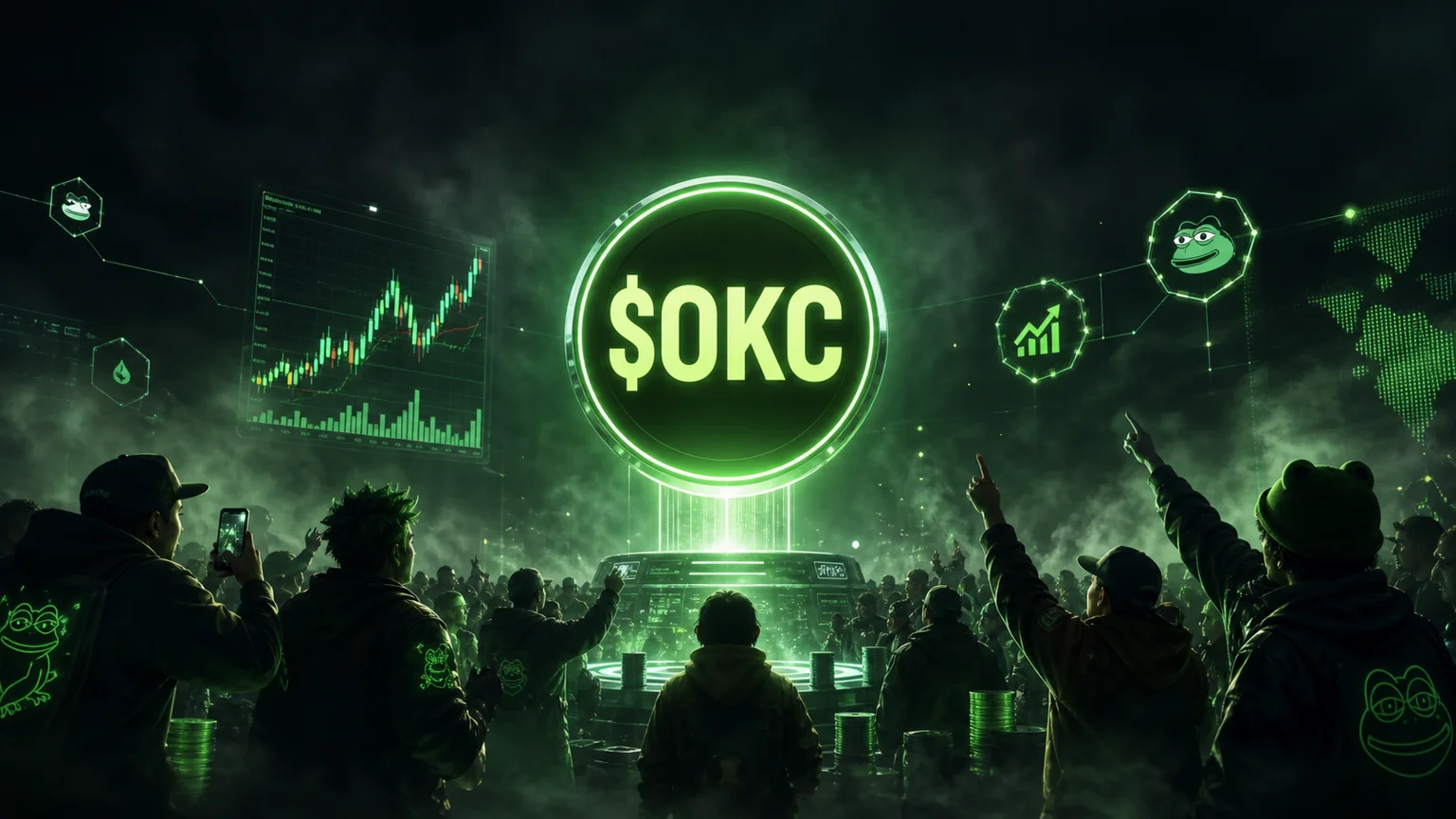
$OKC Turns OK Capy Into a Robinhood-Chain Liquidity Test
$OKC is not a clean Solana-style read, but the OK Capy board is moving enough volume and holding enough liquidity to make the Robinhood-chain experiment worth a sharper look.
No saved holder concentration profile is available; freeze authority and mint authority are not flagged in the local signal.
$OKC is a different kind of launch-radar problem than the usual Solana microcap sprint. OK Capy is trading on a Robinhood-labeled DexScreener route, and that alone makes the read less familiar. The token still earned a look because the numbers are not empty decoration: at the 2026-07-13 07:06 UTC snapshot, $OKC was around a $111.2K market cap, up 442% over 24 hours, with about $328.1K in reported volume and roughly $65.5K of liquidity.
That is a more balanced board than many tiny meme launches. The market cap is still low enough for violent repricing, but the liquidity is not a dust puddle. That changes the trade read. $OKC is not simply a green candle asking for attention. It is a small board with enough depth to test whether the capy meme, the chain novelty, and the current momentum can pull repeat participation instead of one cycle of screenshot chasing.
- → $OKC was up 442% over 24 hours at the 2026-07-13 07:06 UTC snapshot, with market cap near $111.2K and reported volume around $328.1K.
- → Liquidity near $65.5K gives OK Capy a better exit surface than most six-figure meme boards, but it also means the token needs real demand to keep repricing.
- → The local signal does not include a full holder concentration map, so this stays speculative even though freeze authority and mint authority were not flagged.
Why the Capy Board Is Not Just a Screenshot
Capybara memes have a simple advantage in crypto: they are soft, recognizable, and easy to remix. $OKC adds a ticker that reads like a shrug and a dare at the same time. In a market where traders are rotating between absurd mascots every few hours, that kind of low-friction identity can matter. The token does not need a complex thesis. It needs enough people to understand the joke and enough liquidity to make the chart tradable.
The strongest part of the $OKC setup is the relationship between market cap and liquidity. A $111.2K board with $65.5K of liquidity is still risky, but it is not the same as a $50K token leaning on a few thousand dollars in the pool. There is room for actual turnover. There is also a clearer market verdict if buyers fail to show up, because a deeper pool makes it harder to blame every red candle on one tiny sell.
The Liquidity Trap to Watch
The trap is that better liquidity can make a speculative meme look sturdier than it really is. $OKC has enough depth to invite larger clicks, but the market cap is still small. If the early 442% move was mostly a short burst of rotation, the board can stall even with a healthier pool. Liquidity makes exits possible. It does not create new buyers by itself.
That is why the next useful signal is not just price holding green. The better tell is whether volume stays active after the first attention wave cools. A token at this size can survive a pullback if the book keeps trading and the pool remains visible. It gets much harder if volume collapses while the market cap is still pricing in fresh discovery. For $OKC, the risk is not only a hard dump. It is a slow fade where the pool stays open but the crowd disappears. That kind of fade is easy to miss because the chart can still look orderly while buyers quietly stop refreshing the bid.
What the On-Chain Data Shows
$OKC does not come with the same Solana Rugcheck-style profile that makes some launch reads easier to grade. The local signal does not provide a populated top-holder map, a deployer-wallet history, or a full insider concentration table. Freeze authority and mint authority are not flagged in the saved signal, but the absence of a full holder map matters. Without that map, the editorial read has to stay more cautious than the price action alone might suggest.
The available contract address is 0xddEB6C5415c3CCB66295b610a06e8E30155f2bA3, and the visible market data points to a board with a relatively stronger liquidity base than many small meme launches. What is missing is equally important: no confirmed top-holder concentration, no saved insider flag list, and no creator-token history. That does not prove the holder profile is bad. It means the holder profile has not earned a cleaner rating. In meme coins, unknown concentration is still a risk.
Why the Rating Stays Speculative
$OKC has the kind of market structure that deserves attention but not a green-light read. The volume is real enough to matter, the liquidity is high enough to separate it from the weakest microcap boards, and the meme is simple enough for rotation traders to understand quickly. The weaker side is verification. A fuller holder map would change the confidence level. So would evidence that the same wallets are not simply cycling the pair. Until that arrives, the fairest read is momentum with incomplete custody context, not a clean accumulation story.
A speculative rating is the right middle lane. It recognizes that OK Capy has produced more than a random wick while refusing to pretend the missing pieces do not matter. If $OKC keeps volume near the current pace, holds a meaningful liquidity floor, and shows broader ownership over the next UTC sessions, it can graduate into a cleaner market-pulse read. If volume falls away, the 442% move starts looking less like discovery and more like a completed liquidity event. The token has earned attention; it has not yet earned trust.
$OKC is worth watching because its liquidity is unusually meaningful for a six-figure meme board. The caution is that the holder map is not fully populated in the saved signal, so the chart has to prove durability before the read improves.
$OKC gets a speculative launch-radar read. The board has better liquidity than many early meme coins and enough 24-hour volume to matter, but the missing holder concentration profile keeps the risk open. The next test is whether OK Capy can keep trading after the first Robinhood-chain novelty wave slows down.
Why is $OKC on the watchlist?
$OKC was up 442% over 24 hours at the 2026-07-13 07:06 UTC snapshot, with about $328.1K in volume and $65.5K in liquidity around a $111.2K market cap.
Why is the $OKC rating speculative?
The market data is active, but the saved signal does not include a full holder concentration map or creator history. That missing on-chain context keeps the read cautious.
What would improve the $OKC setup?
Sustained UTC-session volume, a stable liquidity floor, and better holder distribution data would make the move easier to trust beyond the first pump.