$HOODBIRD Turned Robinhood Chain Hype Into a $193K Board in Four Hours, and Now It Has to Prove the Chain Was Not the Entire Trade
At the 2026-07-13 04:06 UTC selection snapshot, $HOODBIRD was trading near a $193.3K market cap with roughly $184.0K of 24-hour turnover, about $33.8K of visible liquidity, and a headline 24-hour move around 11,194%. The first wave clearly bought the Robinhood wrapper. The real question is whether there is enough substance left once the novelty premium stops doing all the work.
The saved selection profile did not expose a verified dev wallet or useful top-holder breakdown, so holder-map confidence is limited. What it did show was the absence of a freeze authority flag, the absence of a mint authority flag, and no saved risk labels from the available scan.
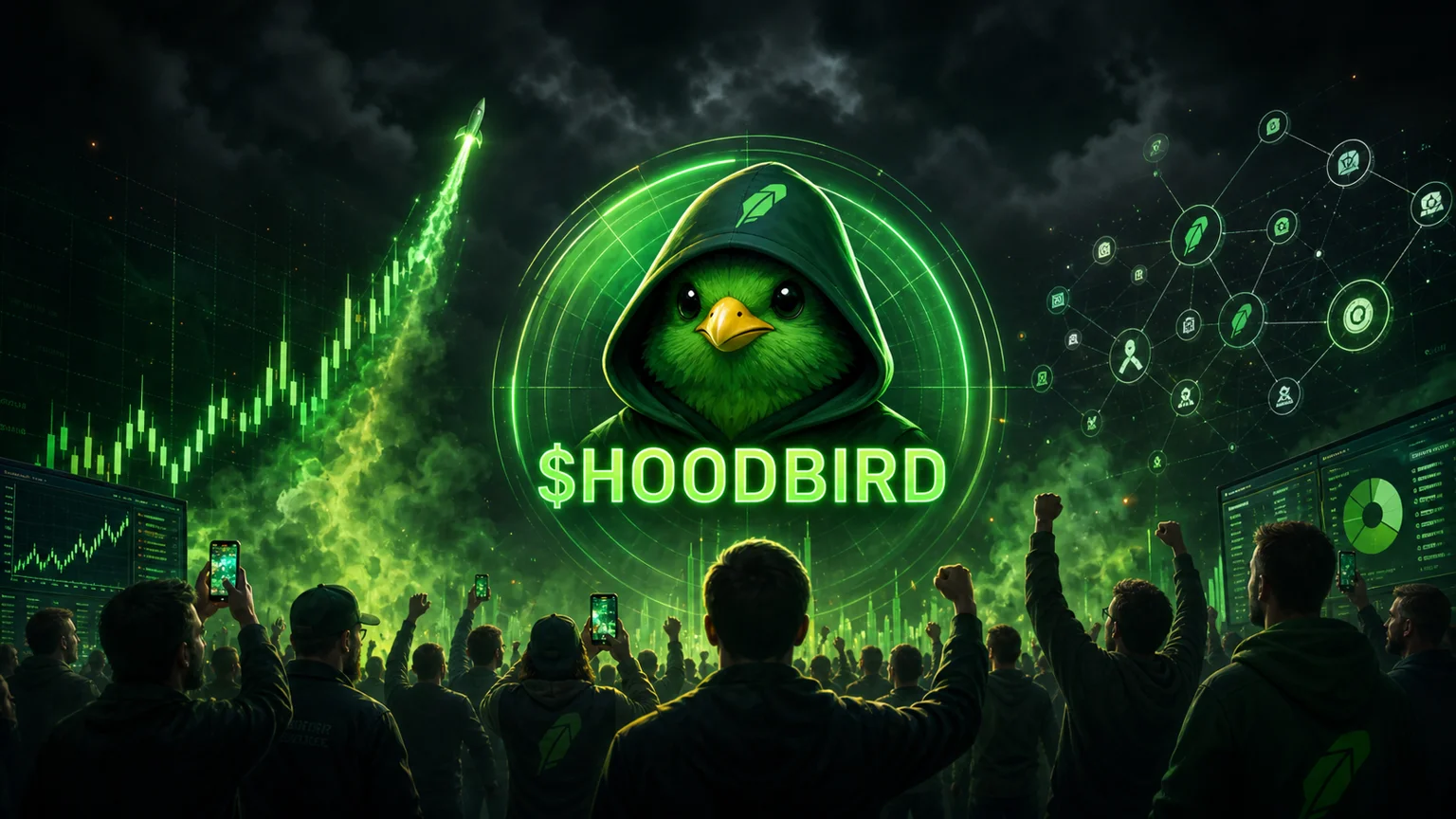
The easiest way to understand $HOODBIRD is that the market bought the wrapper before it bought the balance sheet. By the 2026-07-13 04:06 UTC selection snapshot, the token was trading near a $193.3K market cap after roughly $184.0K of 24-hour volume and a headline move around 11,194%, with the main pair only about 4.1 hours old. That is not subtle discovery. That is traders seeing a Robinhood-chain meme, understanding the joke instantly, and deciding it was worth repricing on the spot.
What happens next is a harder conversation. Boards that sprint this quickly on newer chain narratives often benefit from a novelty premium that is strongest in the first session and weaker every hour after. $HOODBIRD has enough visible liquidity and enough transaction count to avoid being dismissed as a random four-figure stunt. It does not yet have enough age or enough structural transparency to prove that the first burst was the beginning of a broader market or simply the cleanest expression of a chain-specific attention wave.
- → $HOODBIRD hit the 2026-07-13 04:06 UTC snapshot near a $193.3K market cap with about $184.0K in 24-hour turnover and roughly $33.8K of visible liquidity, giving the move more real footing than a typical microcap novelty sprint.
- → The board logged about 687 buys against 430 sells across 1,117 total transactions, with a 61.5% buy ratio and positive one-hour and five-minute reads, so momentum was still alive rather than already rolling into a dead bounce.
- → The available scan did not surface freeze authority or mint authority warnings, but it also did not deliver a useful holder breakdown. That leaves the trade leaning on narrative strength first and deeper ownership confidence second.
Why the Robinhood Wrapper Is Doing the Work
Robinhood-chain memes are still benefiting from an audience that wants to play the joke before the shelf gets crowded. The branding on $HOODBIRD is legible in one glance: broker reference, bird mascot, zero intellectual overhead. That kind of instant comprehension matters on a younger chain because traders do not need a grand thesis to take the first swing. They need a ticker that fits the mood of the room and a chart that looks active enough to justify trying it before someone else does.
The more important point is that the board did not just ride a name. It processed roughly $184.0K of volume against a market cap near $193.3K, which means buyers and sellers were actually negotiating over the same float instead of abandoning it after the first screenshot. When turnover stays in the same neighborhood as valuation on a fresh meme, the market is telling you the token is not merely visible. It is liquid enough to matter to short-horizon traders who expect an exit path if the story holds together.
The First-Day Scorecard
From a tape perspective, the market is giving $HOODBIRD a real chance. Roughly $33.8K of visible liquidity is not deep, but it is enough to keep the chart from looking totally fake at this size. The transaction mix also matters. More than eleven hundred swaps in about four hours is enough participation to suggest the board recruited an actual crowd rather than surviving on one or two aggressive wallets taking turns. The one-hour gain near 18.78% and the latest five-minute gain near 12.65% show that buyers were still pressing the chart into the snapshot instead of simply trying to defend old highs.
The caution is obvious once you step back. A move of 11,194% is not just evidence of excitement. It is also evidence that a lot of the easiest upside may already have been consumed by the first people through the door. When a fresh board becomes publicly legible that fast, the next buyer is no longer buying a hidden chart. They are buying a chart that everybody can already see. That changes behavior. Early holders start thinking about exits. New entrants start wondering whether the punchline has already been monetized.
What the On-Chain Data Shows
The on-chain read is useful, but incomplete. The saved profile did not identify a verified dev wallet, and it did not provide a meaningful top-holder map that would let traders score concentration with confidence. That missing holder detail matters because it keeps the board from graduating into a clean read. On a fast first-day move, the absence of evidence is not evidence of a healthy cap table. It simply means the chart still carries more of the burden than the ownership data does.
What the scan did show is still worth noting. No freeze authority warning was surfaced in the saved profile. No mint authority warning was surfaced either. The stored risk fields were empty, and the scan-level rug score was 0. Those are constructive signals because they remove some of the dumbest contract-level problems a new meme can carry. If the board breaks down, the first explanation is more likely to be exhausted demand or an ugly holder surprise than an obvious permissions trap hard-coded into the token.
That distinction matters for readers trying to separate tradeable volatility from structural nonsense. $HOODBIRD does not currently look like a token screaming contract danger. It looks like a token whose holder picture is still too thin to trust blindly. The market can keep rewarding that setup for a while if narrative appetite remains hot. It can also punish it the second a better Robinhood-chain board appears, because limited holder visibility gives everyone one more reason to sell first and ask questions later.
When a Chain Narrative Stops Carrying the Chart
The risk with chain-first trades is that they can feel bigger than they are while the narrative is still fresh. Traders convince themselves they are early to an ecosystem move when, in practice, they may just be early to a joke cycle inside that ecosystem. $HOODBIRD is attractive precisely because it is a clean, repeatable Robinhood meme. The problem is that clean, repeatable memes also invite competitors immediately. If the shelf fills with better names, funnier mascots, or boards with deeper liquidity, the narrative support underneath $HOODBIRD can thin out quickly.
This is where the ratio between turnover and valuation becomes important. About $184.0K in volume against a $193.3K board is strong enough to matter, but not so dominant that the token can ignore attention drift. The board still needs a second reason to exist after the opening novelty trade. That second reason might be better liquidity, stickier community participation, or a chart that keeps holding its pullbacks. Without one of those upgrades, the same narrative that launched the move can become the reason traders leave for the next variation.
Is There a Second Crowd Coming
The bullish answer is yes, if the board keeps acting like a real market instead of a souvenir. The liquidity is decent for the size. The one-hour momentum was still positive at selection. The transaction count was broad enough that the tape did not look like a single-wallet hallucination. Those are all signs that $HOODBIRD has a shot at surviving beyond the first impulse. If the Robinhood chain keeps drawing fresh meme attention, a board that already won the first visibility test can absolutely recruit a second crowd.
The skeptical answer is that the first crowd may have been the whole story. First-day percentage gains this extreme create a nasty psychological setup because every new buyer knows the chart is already famous. That fame can attract momentum traders, but it can also make them shorter-term and more mercenary. The right way to read $HOODBIRD, at least for now, is as a live speculative narrative board with upside left only if it proves that the meme can outlast the novelty premium that created it.
🟡 Speculative — $HOODBIRD has a credible first-day case, with roughly $184.0K of turnover, about $33.8K of visible liquidity, and a still-positive short-term tape on a board just over four hours old. It remains a yellow read because the move is already extended at 11,194%, and the available holder data is too thin to hand out structural confidence. The freeze and mint checks looked fine in the saved scan, but a fine permissions read is not the same thing as a solved holder map. If the Robinhood-chain narrative keeps feeding it, the board can stay alive. If the novelty premium fades, the first session may end up being the easiest part of the trade.
FAQ
What is $HOODBIRD?
$HOODBIRD is the symbol for Hoodbird, a Robinhood-chain meme token trading under contract 0x0aCb834130D284BFfFa1C697f02DDDaFd8F50335.
Why did $HOODBIRD make launch radar?
At the 2026-07-13 04:06 UTC selection snapshot, the token was trading near a $193.3K market cap with about $184.0K in 24-hour volume while the main pair was only around 4.1 hours old.
Does the contract look dangerous?
The available scan did not surface a freeze authority warning or a mint authority warning, and the saved risk fields were empty. The bigger issue is incomplete holder visibility rather than an obvious contract-level red flag.
Why is the rating speculative instead of clean?
Because the board is already up 11,194% on day one and the holder map is not detailed enough to score concentration with confidence. Narrative strength is carrying more of the thesis than ownership transparency is.
What would improve the $HOODBIRD read from here?
More staying power in the tape would help most: continued turnover, better liquidity, and evidence that the board can keep attracting demand after the first Robinhood novelty trade has already gone public.