$COBRA Is Still Printing Runner-Sized Solana Volume, but a 70% Wallet Keeps the Whole Story on a Leash
At the 2026-07-05 19:15 UTC production read, $COBRA was still trading around a $3.15M market cap with roughly $5.70M in 24-hour volume and about $152.4K of liquidity after landing on Jupiter's runners board. The tape is active enough to matter. The problem is that one visible wallet still controls about 70% of supply, which means the market is trading momentum and concentration risk at the same time.
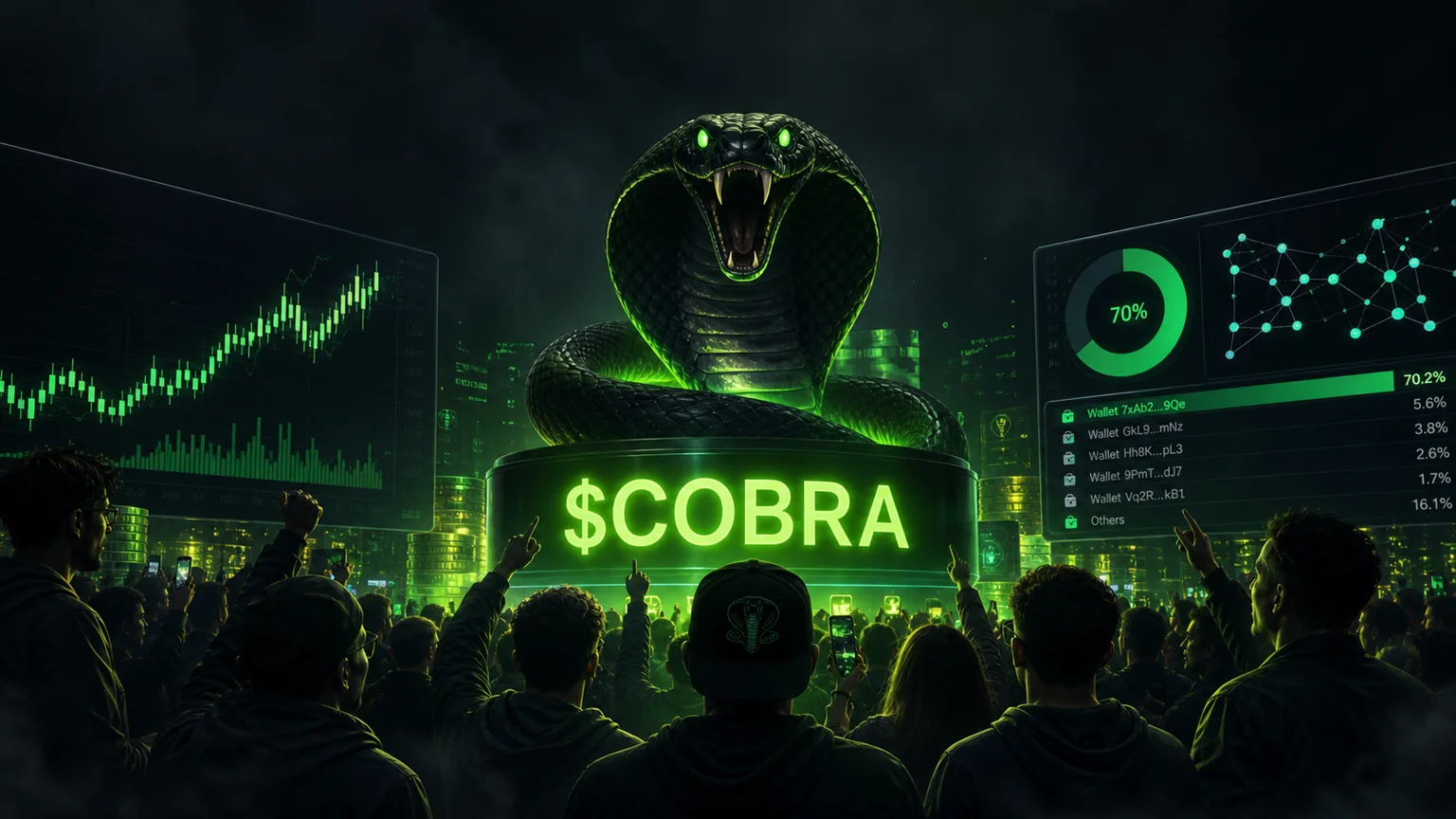
$COBRA does not show live freeze authority or mint authority risk, but Rugcheck scored it 55 and the holder map is dominated by one visible wallet at roughly 70% of supply. That means the contract shell is acceptable while the cap table remains the actual danger.
$COBRA is the kind of runners-board name that forces a real editorial split. On one side, the token has already done enough volume to stop being a random launchpad curiosity. At the 2026-07-05 19:15 UTC production read, DexScreener still had the board around a $3.15M market cap with roughly $5.70M in 24-hour turnover and about $152.4K of liquidity. On the other side, the saved on-chain profile is about as blunt as a cap table can get: one visible wallet controls roughly 70% of supply. That means every bullish read has to start with the same uncomfortable truth. The board is liquid enough to trade, but the supply is not distributed enough to trust casually.
That contradiction is exactly why $COBRA matters. A lot of Solana boards hit a volume burst and disappear before the market can even decide what the story was. $COBRA has already survived long enough to earn a second look from anyone tracking where retail attention and real order flow are meeting. The runner-board graduation matters because it tells you the market did more than click into a meme. It kept transacting around the meme. The only reason this is not an easy upgrade is that the board is still being priced inside a structure where one holder can reshape the mood without asking permission.
- → $COBRA was trading near a $3.15M market cap with about $5.70M in 24-hour volume and roughly $152.4K in liquidity at the 2026-07-05 19:15 UTC production read.
- → The runner-board status is real because turnover stayed large relative to valuation even after the first straight-up excitement cooled off.
- → The on-chain profile is the whole risk map: freeze authority is off and mint authority is off, but Rugcheck scored the token 55 and one visible wallet still controls about 70% of supply.
Why the Runner Board Still Matters
The best reason to respect the move is not the name, although the name obviously travels. It is the quality of the turnover relative to size. A board holding around a $3M-plus market cap while still printing nearly $5.70M in 24-hour volume is not living on launch nostalgia alone. That kind of churn means buyers and sellers kept finding each other after the first screenshot cycle. In meme terms, that is the difference between a candle and a market. Runner-board names that keep trading this hard can stay on desks longer than people expect because the market begins to care about the chart itself, not just the joke attached to it.
There is also a mechanical point here. Boards that come off pump-era infrastructure and make it onto higher-visibility flow lists are effectively being tested for whether they can behave like a real secondary-market asset. $COBRA has at least partially passed that test. The daily move was still up 111% at the production read, but the last hour was softer, which is healthy context rather than a flaw. A board that can still hold attention after the straight-line phase ends usually has a better claim on durable watchlist status than one that only looks good while every candle is vertical.
What the Tape Is Actually Paying For
Those numbers tell a more nuanced story than a simple moonshot recap. The liquidity is large enough that the chart is not purely decorative, but it is still thin relative to the headline market cap. That gap matters. A token can feel deep on the way up because fresh demand keeps finding asks, then suddenly feel tiny when distribution arrives and the same buyers discover how little support is sitting underneath them. The negative one-hour change is useful because it shows the market had already started testing where late enthusiasm stops and real support begins.
Put differently, the market is pricing two things at once. It is pricing the visibility boost that comes from appearing on a board traders already scan for graduation stories. It is also pricing the possibility that the entire setup is still just a spectacularly concentrated float acting bigger than it is. Boards like this can stay irrational for longer than cautious people want, but the quality of the trade always comes back to whether liquidity grows faster than the supply overhang hanging above it.
What the On-Chain Data Shows
On-chain, $COBRA presents the exact kind of split-read that creates both opportunity and danger. The basic permission checks are not the issue. Freeze authority is off, mint authority is off, and the creator wallet shows a zero token balance in the saved Rugcheck profile. Those facts matter because they remove the easiest contract-level reasons to dismiss the board outright. If somebody wanted a quick argument that the shell itself is not obviously hostile, they have one.
The problem is that none of those clean contract points solve the holder question. Rugcheck scored the board 55 for a reason. The top visible wallet holds roughly 70% of supply, and the top three visible holders still reach 73.5% combined. Even with 4,605 holders on the board, the supply map remains functionally centralized. That does not mean the chart cannot trade well. It means the chart trades well only as long as the largest pocket stays passive. The market is not negotiating with a dispersed crowd here. It is negotiating around a giant center of gravity.
That distinction is critical because people often misuse the words clean and safe when the contract shell looks normal. $COBRA is not a live freeze-authority scare and it is not a live mint-authority scare. But supply concentration of this magnitude creates a different class of risk that is just as important for actual traders. A board can have acceptable permissions and still be structurally fragile. Here, the holder map is the structure. Everything else is secondary.
The Real Trade Is Post-Pump Discipline
Once a board gets this visible, the next stage stops being about discovery and starts being about discipline. The market has already discovered $COBRA. The only remaining question is whether the board can behave like something stronger than a one-cycle spectacle. For that to happen, buyers need to keep volume elevated while liquidity deepens and the concentrated supply either stays locked up or becomes less dominant over time. Without those upgrades, every fresh squeeze is also an invitation for the board's biggest holder to test the exit.
That is why the best angle on $COBRA is not 'this is clean' and not 'this is doomed.' It is that the board has earned attention while still failing the easiest concentration sanity check imaginable. If traders keep treating runner-board status as a reason to front-run more visibility, the chart can absolutely keep moving. But any continuation move is living on borrowed certainty until the supply map gets less absurd. In practice, that means the setup stays tradable only for people who understand that the bullish case and the structural risk are inseparable.
Verdict
🟡 Speculative. $COBRA has enough real turnover to justify a serious Solana watchlist slot, and the contract shell does not show live freeze authority or mint authority problems. But the holder map is still too distorted to frame as a cleaner runner. With a 70% top wallet, a 55 Rugcheck score, and liquidity that remains small relative to the headline valuation, the board is trading attention and concentration risk at the same time. The opportunity is real. The structure is still the first thing to respect.
FAQ
What is $COBRA on Solana?
$COBRA is the Solana meme token COBRA TATE, trading under contract D6sA8hKpreRfWEqLRo2fyx5UpmcHeEmGsQ1UndLWpump and tracked on DexScreener around a $3.15M market cap at the 2026-07-05 19:15 UTC production read.
Why did $COBRA make the board?
Because the token kept enough turnover alive to matter after its first breakout phase. Roughly $5.70M in 24-hour volume against a $3.15M market cap is the kind of activity that keeps a board in front of Solana traders.
Does $COBRA look clean on-chain?
Cleaner on permissions than on distribution. Freeze authority is off and mint authority is off, but Rugcheck scored the token 55 and one visible wallet still controls about 70% of supply.
What is the biggest risk on $COBRA right now?
Holder concentration by a wide margin. When one visible wallet owns around 70% of supply, every green candle is also a question about whether that holder stays inactive.
What would improve the $COBRA setup from here?
Deeper liquidity, continued turnover, and a holder map that becomes less top-heavy. If the market absorbs the concentration over time, the board can graduate from a spectacle trade into a stronger momentum read.