$TRENCHER Is Trading Like an Old-Internet Reprice, and the Solana Holder Base Looks Cleaner Than Usual
At 2026-07-08 01:17 UTC, $TRENCHER was holding near a $1.40M market cap on roughly $576.9K in 24-hour volume with close to $299.8K in liquidity. The board is not screaming blow-off yet, and the biggest reason is structural: Rugcheck sits at 1, the top three visible holders control only 15.2%, and the token has more breathing room than most fresh Solana runners get.
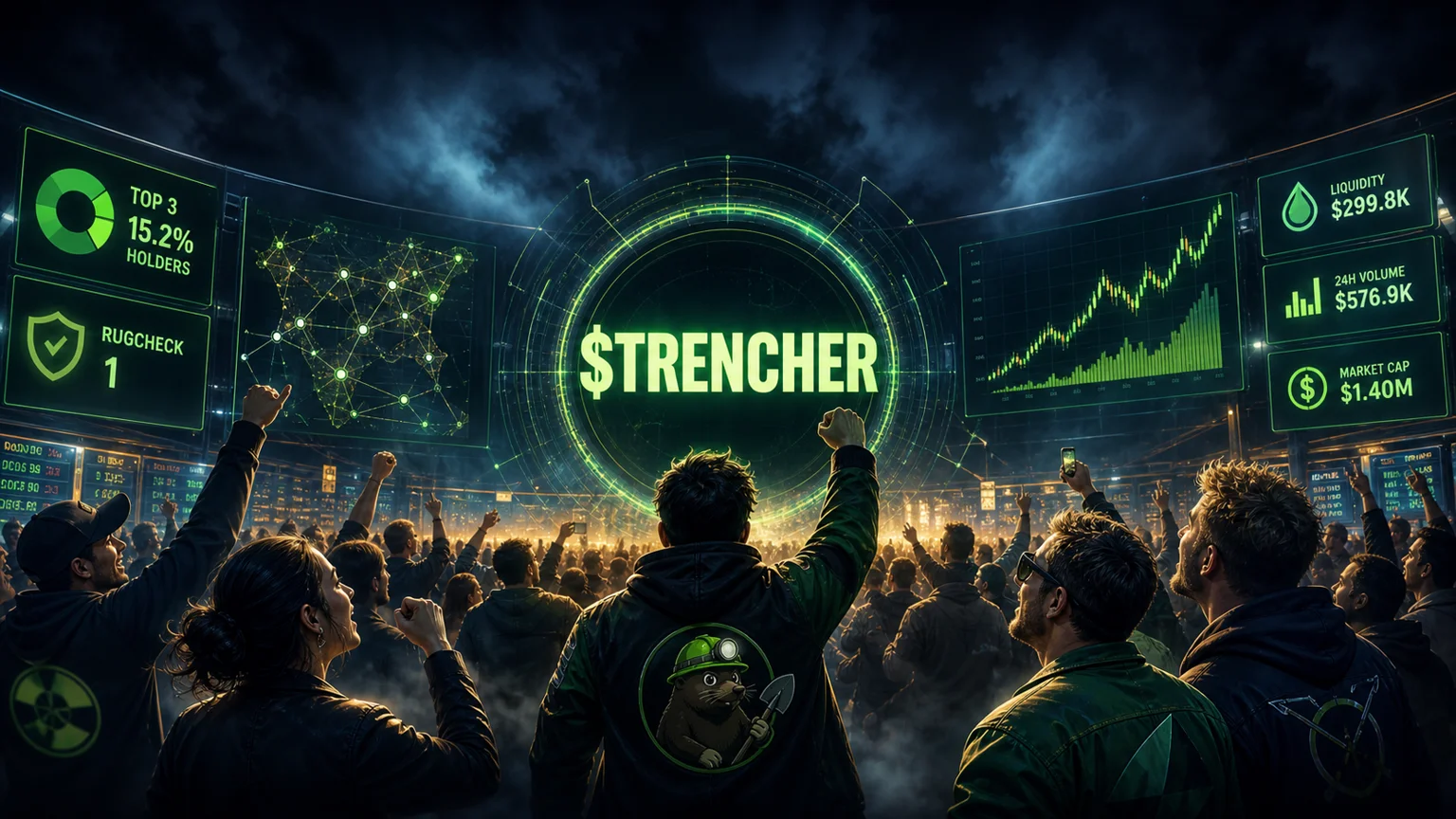
$TRENCHER carries one of the calmer saved profiles on the board right now: Rugcheck scored it at 1, freeze authority is disabled, mint authority is disabled, and the top three visible holders account for only about 15.2% combined.
$TRENCHER does not read like the usual fresh Solana joke that caught five minutes of attention and then spent the rest of the day begging for a second candle. The token feels more like a narrative salvage job done well: take an old-internet trench identity, give it new liquidity, and let traders decide whether the bit deserves one more life. By 2026-07-08 01:17 UTC, that experiment had already pushed the board toward a $1.40M market cap while keeping 24-hour volume around $576.9K and liquidity near $299.8K. Those are not monster numbers, but they are balanced enough to look tradeable instead of theatrical.
That balance is why $TRENCHER stands out. Meme boards usually become dangerous when the headline move outruns the structure underneath it. Here the chart is active, but the setup is not collapsing into obvious excess. The board doubled over 24 hours, the six-hour move stayed hot, and yet the holder map still looks more open than what traders usually inherit when a Solana runner starts getting recycled around the timeline.
- → $TRENCHER was trading near a $1.40M market cap with roughly $576.9K in 24-hour volume and about $299.8K in liquidity at 2026-07-08 01:17 UTC, which is a sturdier balance than most same-session Solana runners deliver.
- → The token's narrative works because it feels like an old-internet trench identity getting repriced by fresh flow rather than a random symbol searching for a story after the candle already happened.
- → The saved on-chain structure is the best part of the read: Rugcheck scored the token at 1, freeze authority is off, mint authority is off, and the top three visible holders combine for only about 15.2%.
Why This Relic Is Catching Fresh Money
A lot of meme coins try to force culture into existence by printing a chart first and hoping the narrative catches up later. $TRENCHER is working from the opposite angle. The idea is already legible: trenches, online survival, and a style of humor that still maps cleanly onto crypto traders who think in terms of boards, pain tolerance, and staying alive one more cycle. That familiarity matters because it lowers the amount of storytelling required to get the first wave of buyers comfortable.
The reprice also makes sense in the context of what the broader board rewards. Traders have spent enough cycles watching polished meme launches flame out that there is now real appetite for tokens that feel rougher, more native, and more willing to lean into the part of internet culture crypto actually remembers. $TRENCHER does not need glossy branding to work. It needs the board to believe the identity can travel, and the early numbers suggest that belief is at least real enough to sustain a serious look.
The most important detail is that the board is not living on speed alone. A 100% daily move is substantial, but it is not so violent that every later buyer is immediately reduced to exit liquidity. That gives $TRENCHER a better chance of behaving like a cleaner runner instead of a one-burst accident.
A Better Holder Base Than Most Solana Runners
The market-cap-to-liquidity relationship is the first thing that gives this board room to breathe. Roughly $299.8K in liquidity under a $1.40M market cap is not luxurious, but it is far less suffocating than the setups where a million-dollar headline is sitting on top of a tiny pool. That extra depth means buyers are not fighting over pure air, and it means sellers have a better chance of exiting without detonating the chart.
Volume matters too, though for a different reason. At roughly $576.9K over 24 hours, $TRENCHER is active enough to show real participation without tripping every obvious overheating alarm. The buy ratio at 51.9% is almost perfectly useful: it tells you this is not a one-sided mania board, but it also tells you the token is still attracting enough demand to keep the reprice alive. That kind of middle-ground tape often ages better than the fireworks traders mistake for certainty.
Then there is the holder base, which is where the board earns its cleaner label. The top three visible holders controlling 15.2% combined is a much healthier starting point than the concentration traders usually inherit when a runner gets noisy. It does not make the token immune to damage, but it means the chart is not obviously being held hostage by one or two pockets. That alone changes how seriously a trader can treat the move.
What the On-Chain Data Shows
The saved on-chain profile is about as calm as degen readers can reasonably expect from a board that is still making its name. Rugcheck scored $TRENCHER at 1, which immediately places it in cleaner company than most same-day Solana runners. Freeze authority is disabled and mint authority is disabled, so there is no obvious contract-control lever hanging over the crowd. Those checks do not make the token safe. They do make the basic structure easier to respect.
Holder concentration reinforces the same read. The largest visible wallet controls 10.59%, with the next two wallets at 2.57% and 2.06%. That distribution is not perfectly diffuse, but it is sane enough that new flow can still matter. A board with this kind of spread is easier to read because price action reflects a broader market conversation rather than a single wallet's mood swing.
The dev side is quiet in a good way. The saved profile lists zero creator tokens, which means there is no immediate serial-launch shadow hanging over the narrative. That matters because traders do not have to split their attention between the meme itself and an obvious deployer track record. When the dev wallet history is unremarkable and the holder map is relatively distributed, the board gets to compete on tape and narrative instead of trying to explain away its own plumbing.
There is still risk, just less of the obvious kind. A Rugcheck score of 1 and disabled freeze and mint authority remove several major reasons to fade the board outright, but they do not create endless demand. The clean label here means no obvious red flags are jumping out of the saved data, not that the token has graduated from meme-coin reality. If the bid stalls, even a healthier structure can still sag.
$TRENCHER is not getting the cleaner read because the meme is smarter.
It is getting it because the holder map is looser, the Rugcheck score is calm, and the contract controls are already turned off.
The Reprice Still Needs a Second Shift
The current board is good enough to earn patience, but not good enough to coast. A narrative reprice only becomes durable when the second wave of traders shows up for the structure, not just the first joke. For $TRENCHER, that means keeping volume healthy without letting liquidity lag, and it means proving the old-internet identity can keep attracting new buyers after the easiest part of the move is already gone.
This is where the medium organic score becomes useful context. The board is active enough to look genuine, but it has not yet graduated into the kind of runaway social machine that can survive on symbolism alone. That is probably healthier anyway. A token sitting in the middle zone has time to build conviction if the community and the chart keep reinforcing each other.
$TRENCHER does not need to become the loudest board on Solana to keep working. It only needs to remain cleaner than the average alternative while the theme continues to feel native. If that condition holds, the token can keep repricing in a measured way. If the attention fades, the cleaner setup simply means traders get a fairer exit than they usually do on weaker launches.
🟢 Clean — current data shows no obvious contract or holder-map red flags on $TRENCHER. Rugcheck scored the token at 1, freeze authority is disabled, mint authority is disabled, and the top three visible holders control only about 15.2% combined. That does not make the board safe or permanent. It means the Solana setup is cleaner than average right now, which gives the narrative reprice a better structural base than most fresh runners receive.
What is $TRENCHER?
$TRENCHER is a Solana meme token trading around an old-internet trench identity. At 2026-07-08 01:17 UTC, it was holding near a $1.40M market cap with about $576.9K in 24-hour volume.
Why does MemeDesk call $TRENCHER cleaner than most runners?
The cleaner read comes from structure, not hype. The saved profile shows a Rugcheck score of 1, freeze authority disabled, mint authority disabled, and top-three holder concentration of only about 15.2%, which is much lighter than many noisy Solana boards.
What still has to go right for $TRENCHER?
The token still needs a real second shift of demand. It has to keep attracting new buyers, maintain healthy liquidity relative to the market cap, and keep the narrative relevant after the first repricing wave cools.
What is the main risk on $TRENCHER if the structure looks clean?
The biggest risk is not an obvious contract problem. It is ordinary meme-coin attention risk. If fresh demand slows and the narrative stops feeling timely, the board can still fade even with a healthier holder base and disabled freeze and mint authority.