$PLINY Turned Roman-History Brainrot Into a Solana Bid, but the Tape Already Needs More Than a First Roar
$PLINY pushed roughly $791K of 24-hour volume and about a $88.1K market cap within its first trading window, which is enough to prove the Roman-history meme landed with traders. The harder question now is whether that first wave of curiosity can survive a cooling chart, because the board has already slipped into the phase where fresh buyers matter more than the joke itself.
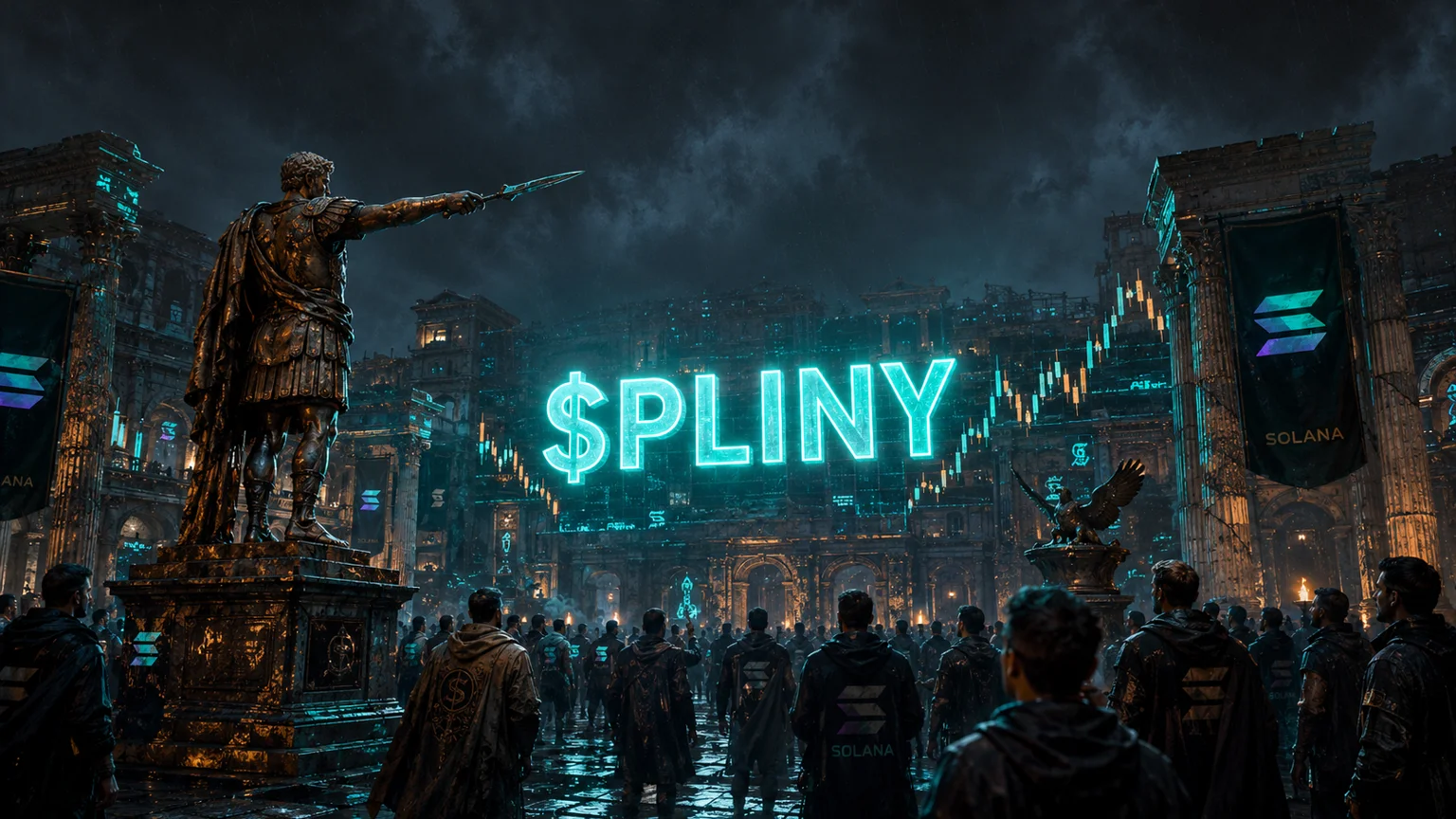
No major contract flags showed up, but the top-three visible wallets still account for about 37.8% of supply and the chart now needs real demand rather than pure novelty.
The first thing $PLINY has going for it is that the market understood the joke instantly. Pliny the Liberator is not trying to sell a complicated roadmap, a pseudo-AI abstraction layer, or some tortured piece of tokenomics theater. It is a Roman-history meme with enough weird specificity to stand out in a feed full of interchangeable animal boards, and for a few hours that was more than enough. The main Solana pair processed roughly $791K of 24-hour volume, traded around a $88.1K market cap, and printed a 228% session gain before the latest hour rolled over. That is real participation for something this early, not just a deployer pressing refresh on a private chart.
What changes the read is the timing. By 2026-06-13 07:15 UTC, the loudest part of the launch had already happened. The pair was down 17.8% over the last hour and 14.4% in the latest five-minute window, which means the board has moved out of the discovery stage and into the stamina stage faster than the headline numbers suggest. That does not kill the setup. It just means the editorial angle is no longer that $PLINY exists and traders laughed. The angle is that a clever culture meme found a real first audience, and now the tape has to prove it can attract a second one.
- → $PLINY turned a sharply defined Roman-history meme into roughly $791K of 24-hour Solana volume while holding a market cap near $88.1K, which is enough turnover to matter for a same-session board.
- → Freeze authority is off, mint authority is off, Rugcheck scored the token 1, and the creator wallet is already at zero, so the contract-level read is cleaner than the average first-day meme launch.
- → The problem is momentum shape, not contract hygiene: after the first burst, the chart slipped hard enough that the next buyers need to come for more than just a novelty screenshot.
Why the Roman-History Joke Worked Fast
Meme traders do not need a concept to be universal. They need it to be memetically legible. $PLINY clears that bar because it lands in the sweet spot between absurd and recognizable. Roman-emperor memes, “liberator” language, and overdramatic historical framing all translate well into crypto because they already sound like they belong in a chat full of self-mythologizing degenerates. A ticker can fail for being too generic, but it can also fail for being too clever. $PLINY avoided both traps. The branding was strange enough to spark curiosity and simple enough that traders could repeat it without needing a lore document.
That matters because same-day Solana volume is often downstream of how easy the story is to retell. A fresh board gets maybe one chance to make it out of its own launch bubble. If nobody can summarize it in a sentence, the trade usually dies with the first wallet cluster that cared. Here, the sentence already exists: this is the Roman-history meme that managed to get loose on Solana. That is stupid in exactly the way meme markets sometimes reward. The market showed that by chewing through turnover many boards never see, even if the price now has to fight for every next candle.
The Board Already Looks Like a Second-Hour Market
The stat line is strong enough to keep $PLINY on the board, but the shape under the stat line is where the risk lives. Roughly $22.0K of liquidity is workable at this size, yet it is not deep enough to absorb lazy chasers forever. When a token trades nearly nine times its liquidity in daily volume, the bullish read is that attention is real. The bearish read is that the chart can get fragile the second the novelty premium starts leaking. Both can be true at once, and on first-day Solana boards they usually are.
The cooling price action matters because meme traders often confuse “up on the day” with “still recruiting demand.” Those are different conditions. $PLINY can still finish with an eye-catching gain even while the live market gets more selective. The recent sell pressure suggests the easiest money from surprise discovery may already be gone. If the next flow comes from people who actually want to keep the Roman meme alive rather than late entries staring at percentage columns, the board can stabilize. If not, the same chart that looked explosive on the way up can turn into a thin patience tax on the way down.
What the On-Chain Data Shows
The on-chain read is cleaner than the cooling price action makes it look. Rugcheck scored $PLINY at 1, freeze authority is disabled, mint authority is disabled, and the creator wallet balance is already zero. Those are the basic checks that keep a fresh Solana board from failing the instant someone bothers to inspect it. There is no obvious contract gimmick here. That matters because it separates the main risk from the usual horror stories. The current danger is not a hidden mint switch. The current danger is the market deciding the joke was funnier at launch than it is six hours later.
Holder concentration also needs a more careful read than a raw top-three number. The top three visible wallets control about 37.8% of supply, which sounds scary until you notice the two largest rows are liquidity venues, not a cartoon villain dev cluster. The first listed holder at 20.69% is the pump.fun venue wallet, and the second at 11.88% is the active Solana AMM pair. That means the first meaningful non-pool concentration shows up much lower on the board, with the first non-venue wallet nearer 3.45%. For a board this young, that is a healthier spread than the headline percentage implies. The holder map is not broken. It is just not strong enough to rescue the chart if fresh buyers stop arriving.
What Has to Happen Next for $PLINY
For $PLINY to keep repricing, it needs to graduate from novelty trade to repeatable meme. That does not require institutional-grade depth or some fake utility pivot. It requires the cultural wrapper to keep producing reasons for traders to mention it after the launch window closes. Some meme tokens survive because the image is endlessly remixable. Others survive because the ticker becomes a running joke people want exposure to every time it reappears on the timeline. $PLINY has a path to that outcome because the concept is distinct. What it does not have yet is proof that the market wants to keep playing along after the first burst of recognition has passed.
That is why this remains a speculative read instead of a cleaner label. The board has enough volume to deserve attention and the on-chain profile does not wave obvious red flags, but the live tape is already asking tougher questions than the first-session headline suggests. A second wind would likely look like stabilizing liquidity, calmer pullbacks, and renewed turnover without a massive ownership distortion appearing underneath. A failure case would look simpler: volume thins out, the joke stops traveling, and the pair spends the rest of the day being remembered for a launch screenshot rather than an actual market.
🟡 $PLINY earns the speculative tag because the story and the contract both did their jobs, but the chart has already entered the part where narrative strength has to carry a cooling tape. The Roman-history branding clearly found its first audience, and the on-chain read is cleaner than most same-day Solana launches. That still does not guarantee staying power. Right now this looks less like a broken board than a culture trade at the exact moment it has to prove the joke can keep buying pressure alive.
What is $PLINY on Solana?
$PLINY is the Solana meme token Pliny the Liberator, trading under contract address HEokmdJyUprjSMZ9PcioMYzrKzLtrhiSyxyAMJwfpump. By 2026-06-13 07:15 UTC, the main pair was near a $88.1K market cap after roughly $791K in 24-hour volume.
Why did $PLINY get attention so quickly?
Because the meme was unusually easy to understand and repeat. Roman-history branding gave traders a cleaner narrative hook than a generic animal launch, which helped the token turn early curiosity into meaningful same-session turnover.
Does $PLINY have obvious on-chain red flags?
Not on the basic contract checks. Freeze authority is disabled, mint authority is disabled, Rugcheck scored the token 1, and the creator wallet balance reads zero. The bigger risk is momentum durability, not an obvious contract trap.
Is holder concentration a problem for $PLINY?
It needs context. The top-three visible wallets account for about 37.8% of supply, but the two largest rows are venue wallets tied to trading pools. The first notable non-pool wallet appears much lower, so the holder map is healthier than the raw top-three figure implies.
What would improve the read on $PLINY from here?
A steadier tape, deeper liquidity, and proof that buyers still show up after the initial meme shock would all help. The token does not need a straight-line moon candle. It needs evidence that attention can persist beyond the first roar.