$LTC Is Pulling Real Solana Volume, but One 75% Wallet Turns the Whole Board Into a Concentration Bet
$LTC ripped to roughly a $100.9K valuation with about $168.6K in 24-hour volume and a 74.6% buy ratio, yet the decisive read is not the tape alone. One wallet controls 75.11% of supply, making this less a clean breakout than a high-speed test of whether fresh demand can outrun a brutal holder overhang.
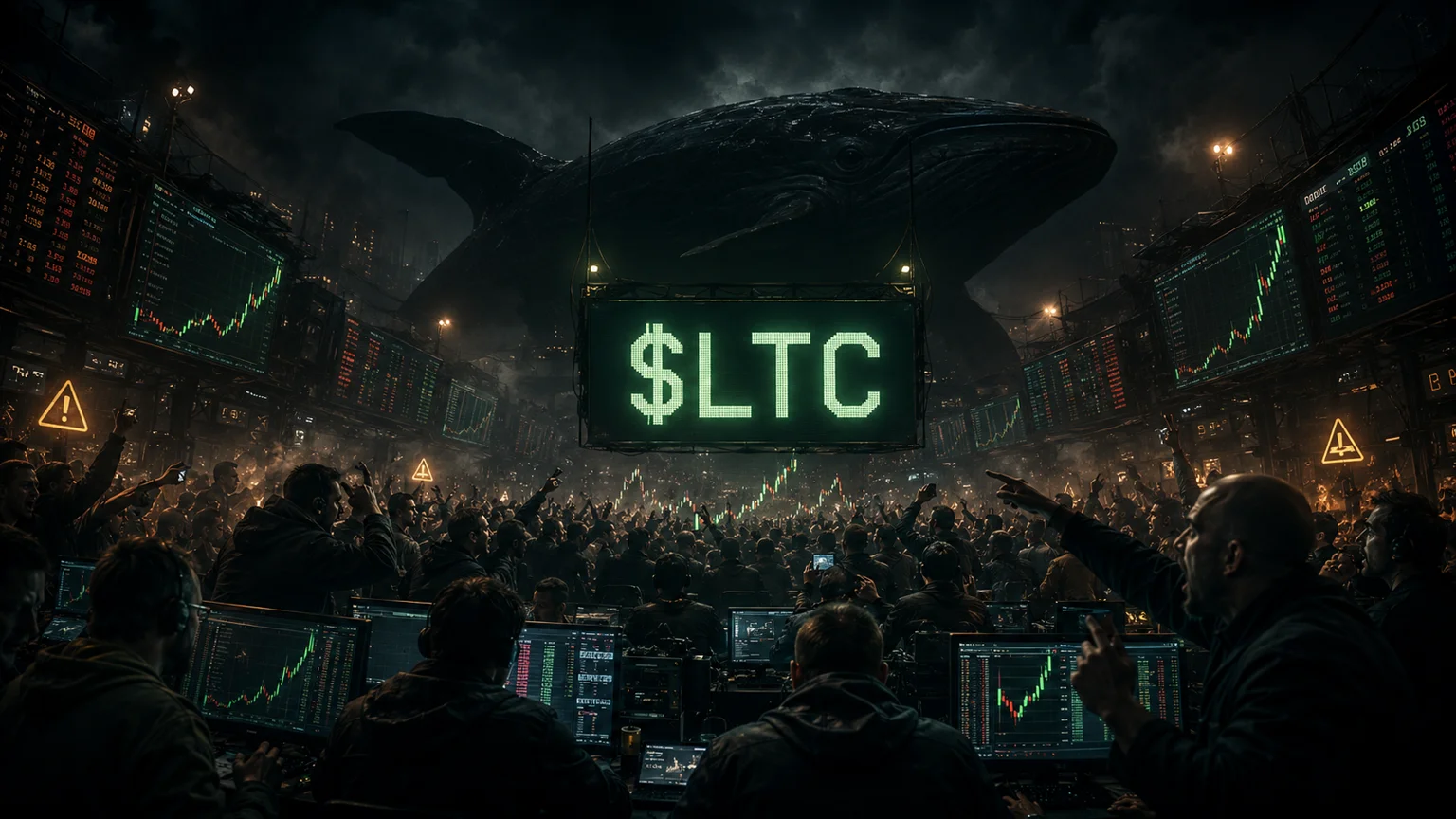
$LTC removes the ugliest permission risks with freeze authority disabled and mint authority disabled, and its Rugcheck score of 16 is not alarming on its own. The real problem is structural: the top wallet controls 75.11% of supply, the top three wallets hold 87.35%, and only about $22.0K of liquidity is available to absorb any serious decision from those wallets.
$LTC is running the kind of tape that normally earns a fresh look on speed alone. The saved signal shows a roughly $100.9K market cap, about $168.6K in 24-hour turnover, a 262% daily move, and more than 23,000 total swaps while the lead pair was still less than a day old. Those are not sleepy numbers. They tell you the board found real attention, real click-through, and enough repeated flow to avoid feeling like a one-wallet print job. If the only question were whether the market cares, the answer is clearly yes.
The issue is that $LTC stops being a tape story the second you open the holder map. This is not a launch where traders are debating whether volume is organic enough or whether the name has enough meme charge. The decisive risk is far simpler and harsher: one wallet controls 75.11% of the supply, the second-largest wallet adds another 10.73%, and the top three wallets together sit at 87.35%. That means the crowd is not really trading a distributed breakout. It is trading around a handful of addresses and hoping those addresses keep acting like passive scenery instead of active participants.
- → $LTC reached about a $100.9K market cap with roughly $168.6K in 24-hour volume, 23,048 swaps, and a 74.6% buy ratio while the main pair was only around 17.2 hours old.
- → The contract-level setup is cleaner than the holder map: freeze authority is disabled, mint authority is disabled, and the Rugcheck score sits at 16, so the biggest immediate concern is not hidden permissions.
- → The structure is still extremely fragile because one wallet controls 75.11% of supply and the top three wallets control 87.35%, leaving a thin $22.0K liquidity pool exposed to a tiny number of decisions.
Why the Board Drew Eyes in the First Place
There is a reason this ticker made it onto the screen despite the brutal concentration profile. The flow is simply too loud to ignore. More than 17,000 buys against 5,856 sells shows aggressive one-way appetite, and a 74.6% buy ratio usually means people were not just aping the name once and leaving. They were revisiting the board, pressing strength, and helping the chart keep its shape while the story spread. In a market filled with short-lived Solana launches that never build a second wave, that matters.
The name also does some work here. Long Term Crypto is a joke with built-in irony because the board itself is obviously living in the shortest possible trading timeframe. That contrast helps. Degens understand the punchline instantly, and instant readability is still one of the best accelerants a new meme ticker can have. A lot of launchpad names need context before they travel. $LTC does not. The pitch is clear at first glance, which makes it easier for order flow to arrive before the crowd bothers with deeper due diligence.
The Tape Is Real, but the Cushion Is Small
The numbers make the tension obvious. Roughly $168.6K of turnover against about $22.0K of liquidity is enough to create drama and enough to create slippage. A board can feel alive under those conditions because the churn is strong relative to the pool, but it can also turn hostile very fast if the buy pressure stops doing all the heavy lifting. The same imbalance that helps a token rip in discovery mode can make late entries miserable once the flow cools off for even a short stretch.
That is why the latest short-term read matters. The saved snapshot still had $LTC up 22.21% on the hour, but the most recent five-minute print was down 6.97%. That does not prove the move is finished. It does tell you the board has reached the stage where momentum has to keep renewing itself rather than simply benefiting from first sight. When a chart is this concentrated and this shallow, any pause gets amplified. Traders are no longer just asking whether the market likes the joke. They are asking whether there is enough depth to survive the first serious round of profit-taking.
What the On-Chain Data Shows
The easiest part of the $LTC read is the permissions layer. Freeze authority is disabled, so there is no obvious transfer-freeze switch hanging over holders. Mint authority is disabled too, which removes the classic fear that supply can suddenly expand into strength. Rugcheck assigns the token a score of 16, which is not spotless but also does not scream contract-level danger by itself. If someone only screened for freeze and mint risk, they would come away with a far more relaxed view of the board than the full picture deserves.
The full picture changes as soon as holder concentration enters the conversation. The top wallet controls 75.11% of supply. The second-largest wallet adds 10.73%. The third adds 1.51%. Together they account for 87.35% of the token. None of those leading addresses were flagged as insiders in the saved profile, but that does not rescue the setup. A non-insider whale can still crush a chart just as effectively as an insider can. When one wallet alone owns three quarters of the board, every green candle is being printed under the shadow of a single potential exit.
That concentration also changes how to interpret the liquidity line. About $22.0K of liquidity is not microscopic compared with the $100.9K valuation, but it is nowhere near enough to neutralize a 75.11% holder. In practice, the contract settings say the token is tradable, the holder map says the token is governable by a tiny circle, and the combination forces a very different editorial read from the one the headline tape might imply. $LTC does not look like a classic contract trap. It looks like a crowd auction happening inside someone else's house.
Why Concentration Owns the Entire Story
Some launch-radar names carry one ugly stat that still sits beside a broad enough market to justify patience. That is not the case here. The concentration is not a footnote. It is the thesis. A single wallet at 75.11% means there is no credible version of the bull case that ignores ownership structure. Buyers can be right about the meme, right about the social reflex, and right about short-term continuation and still be trading a board whose fate depends on whether the largest wallet remains inactive. That is simply a different class of risk from ordinary Solana chop.
The second point most traders will miss is that concentration warps signal quality even when the chart keeps going higher. If the token doubles again, that does not necessarily prove broader market conviction. It can just mean the supply available to trade remains tiny relative to the appetite chasing it. That distinction matters because it tells you why late-stage strength can actually make the structure less comfortable instead of more comfortable. A concentrated board can look strongest right before the ownership reality finally asserts itself.
What Would Have to Change for the Read to Improve
For $LTC to graduate from a pure concentration bet into something sturdier, the board needs to broaden fast. That means the top wallet would need to shrink in influence without detonating price, liquidity would need to expand meaningfully beyond the low five-figure range, and the chart would need to show it can hold gains after the first emotional rush. Those are not impossible outcomes. Meme coins sometimes do mature out of ugly starts. But this board has not earned that assumption yet, and the current data does not justify pretending it already has.
Until then, the trade remains simple. Momentum traders can still participate if they understand that they are effectively renting the move from the holder map rather than owning a clean market structure. The tape is loud enough to matter. The permissions are clean enough to keep the ugliest contract fears off center stage. The concentration, though, is so extreme that it dominates everything else. That is why the right read on $LTC is not that it lacks attention. It is that too much of the outcome still belongs to too few wallets.
Verdict
🟡 Speculative — $LTC deserves radar because the market is clearly engaging with it. The board has printed roughly $168.6K in turnover, a 74.6% buy ratio, and more than 23,000 swaps in less than a day, while freeze authority and mint authority remain disabled. It stays firmly speculative because one wallet controls 75.11% of supply and the top three wallets control 87.35%, which makes the trade less a vote on broad conviction than a wager that the biggest holders stay quiet long enough for the crowd to keep bidding.
FAQ
Why is $LTC not rated clean if the contract settings look fine?
Because the main problem is not freeze authority or mint authority. The contract permissions are relatively clean, but a 75.11% top holder and 87.35% top-three concentration create a market-structure risk that overwhelms the nicer contract-level read.
Does the high buy ratio mean the move is safer than it looks?
Not by itself. A 74.6% buy ratio tells you the board attracted aggressive demand, but on a concentrated token that can still coexist with severe downside risk if a dominant wallet chooses to sell into that demand.
What should traders watch next on $LTC?
The key tells are whether liquidity grows beyond the current roughly $22.0K range, whether the holder map broadens without wrecking price, and whether the chart can absorb profit-taking once the first discovery rush fades.