$FUCKCANCER Surges 1,302% on Solana — When Meme Coins Try to Do Actual Good
An indie cancer fundraiser token goes parabolic with a 69% buy ratio, raising the oldest question in crypto: can degens be donors?
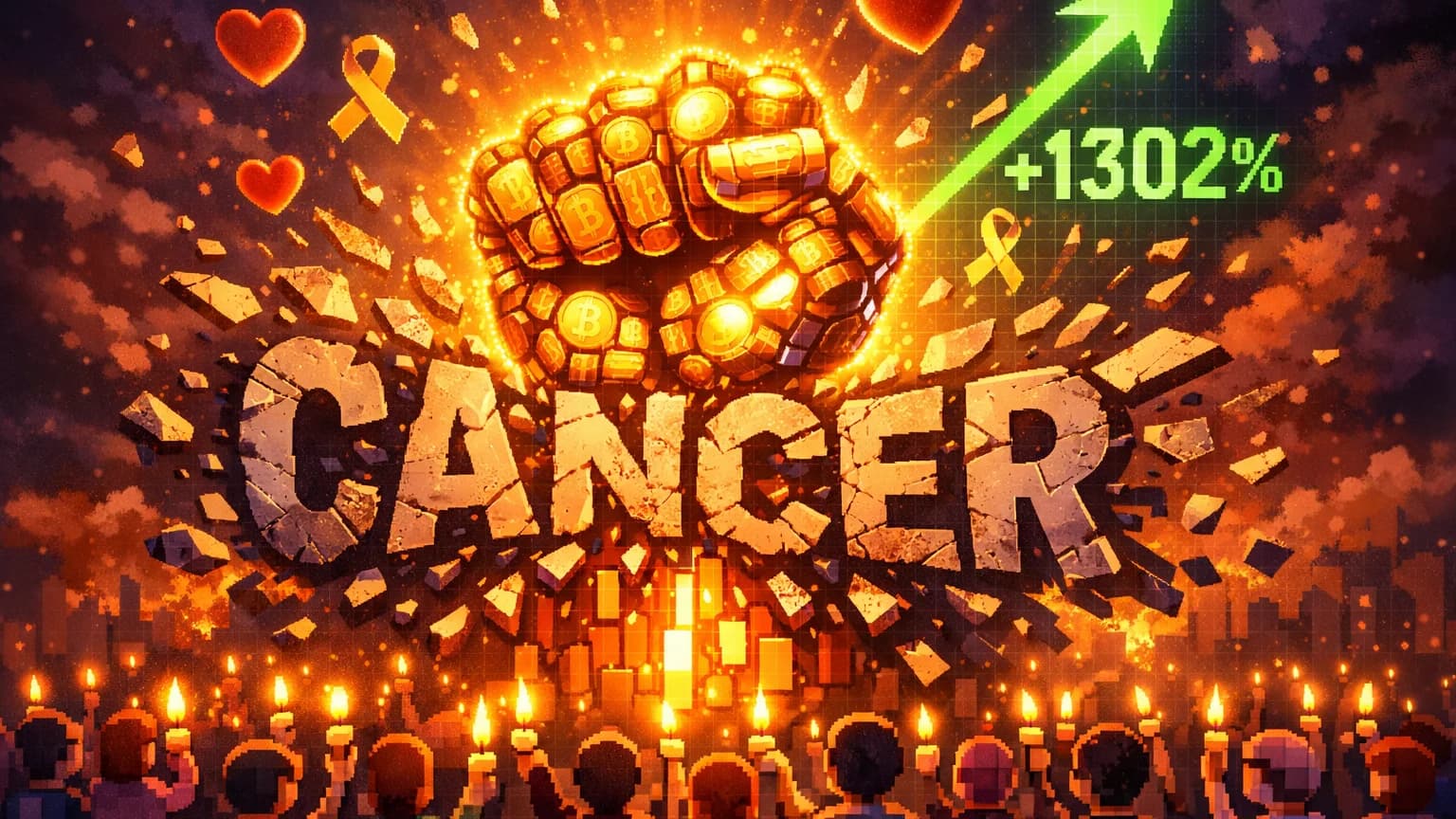
Somewhere on Solana, a token called $FUCKCANCER is doing exactly what the name suggests — trying to raise money for someone battling cancer. And it just pumped 1,302% with a 69% buy ratio, which means for every person selling, roughly two people are buying in. Whether this is genuine charity, a well-crafted narrative play, or both at the same time is the question that makes crypto endlessly fascinating and deeply uncomfortable.
- → Indie's Cancer Fundraiser ($FUCKCANCER) surged 1,302% on Solana with $44K volume and 1,010 transactions — small but emotionally charged
- → 69% buy ratio is the highest of any new token in this scan cycle, suggesting strong conviction buying rather than speculation
- → The charity meme coin genre has a mixed track record — some raised real money for real causes, others used emotional stories as exit liquidity bait
What Happened
The token appears to be tied to an individual cancer battle — 'Indie' presumably being the person the funds are meant to help. Charity tokens on Solana are nothing new, but they've had a complicated history. In 2025, several high-profile cases saw streamers and creators raise significant funds through meme tokens when traditional GoFundMe campaigns fell short. At the same time, bad actors exploited the format, creating fake charity tokens that rugged donors.
FUCKCANCER's numbers are small in absolute terms — $44K volume and 1,010 transactions over 24 hours. This isn't a whale-driven pump. It's a thousand people putting in an average of $44 each. Whether that money actually reaches cancer treatment is the only question that matters, and one we can't answer from on-chain data alone.
The Degen Translation
Charity tokens occupy a unique space in the meme economy. The emotional narrative — someone is sick, the community can help — creates buying pressure that doesn't respond to normal technical signals. A 69% buy ratio on a 1,302% pump would normally be a warning sign (FOMO chasers becoming exit liquidity). But when the buying motivation is partly charitable, the usual playbook breaks down. People buy not just to profit but to participate in the story.
This creates a genuine dilemma for analysis. If we treat it as a pure trade, the chart is overextended and the liquidity is thin. If we treat it as a charity, the mechanism is working — money is flowing in. The uncomfortable truth is that most buyers are probably a mix of both: hoping to help AND hoping to profit. And that tension is what makes charity tokens both powerful and precarious.
The Numbers
$36K market cap with $44K in daily volume means the token has already turned over more than its entire cap in one day. The 1,010 transactions suggest genuine grassroots participation — this isn't bot-driven volume. And the 69% buy ratio, while unsustainable long-term, shows that right now, the community sentiment is overwhelmingly positive.
But — and this is important — we can't verify from public data whether funds are actually going to cancer treatment. The token name and framing suggest charitable intent, but without transparent wallet disclosures showing funds moving to medical providers or established cancer charities, buyers are operating on trust.
- ⚠️ No verifiable proof that funds are reaching cancer treatment — trust-based system on an anonymous chain
- ⚠️ Charity token genre has been exploited repeatedly by bad actors using emotional stories
- ⚠️ $44K volume is very small — any attempt to exit significant positions will crash the chart
- ⚠️ 1,302% gains create temptation for early holders to take profit, potentially dumping on charitable buyers
- ⚠️ PumpSwap origin with no locked liquidity or transparent fund allocation mechanism
Is This Sustainable?
Charity tokens typically follow one of two paths. Path A: the community rallies, raises meaningful money, funds actually reach the intended recipient, and the story goes viral — creating a second wave of both donations and speculative interest. Path B: initial enthusiasm fades, early holders take profit, no evidence of fund delivery surfaces, and the token quietly dies.
The difference between the two paths is almost always transparency. Charity tokens that post wallet addresses, transaction receipts to medical providers, and updates from the recipient tend to sustain momentum. Those that don't post proof tend to fade within 72 hours regardless of the emotional appeal.
The Verdict
FUCKCANCER is a story that's bigger than its chart. A thousand people putting money into a token named after a cause they believe in — that means something, regardless of what the price does next. But the crypto space has earned its skepticism. Without transparent fund tracking, charity tokens are indistinguishable from regular meme tokens with better marketing. If you're buying to help: verify where the money goes. If you're buying to trade: know that charity sentiment creates buying pressure that can evaporate overnight once the emotional peak passes. Either way, the name says it best. Fuck cancer.
Is FUCKCANCER a verified charity?
We cannot verify this. The token appears to be a community-created fundraiser for an individual named Indie who is reportedly battling cancer. However, there is no verifiable proof on-chain that funds are reaching medical treatment. Buyers should treat this as unverified and seek transparent proof before assuming charitable impact.
Have charity meme coins worked before?
Yes and no. Several Solana and Ethereum charity tokens have successfully raised funds for individuals and causes — some raising tens of thousands of dollars that reached recipients. But the format has also been exploited by scammers who create emotional narratives to attract donations and then rug pull. The key differentiator is always transparency and proof of fund delivery.
Should I buy FUCKCANCER?
This is not financial advice. If you're considering buying as a donation, verify where funds go before contributing significant amounts. If you're considering it as a trade, the 1,302% pump and thin liquidity make it high-risk. The 69% buy ratio suggests momentum but is unsustainable. Only risk what you can afford to lose entirely.