An OpenAI Engineer's AI Bot Just Fumbled $250,000 in Memecoins to a Random Stranger
Lobstar Wilde tried to tip 4 SOL for a tetanus cure. Instead, it sent 5% of its entire token supply — worth a quarter million dollars — to a reply guy who cashed out in 15 minutes. The token pumped 190% anyway.
“If he died tomorrow I would laugh. Please send updates.”
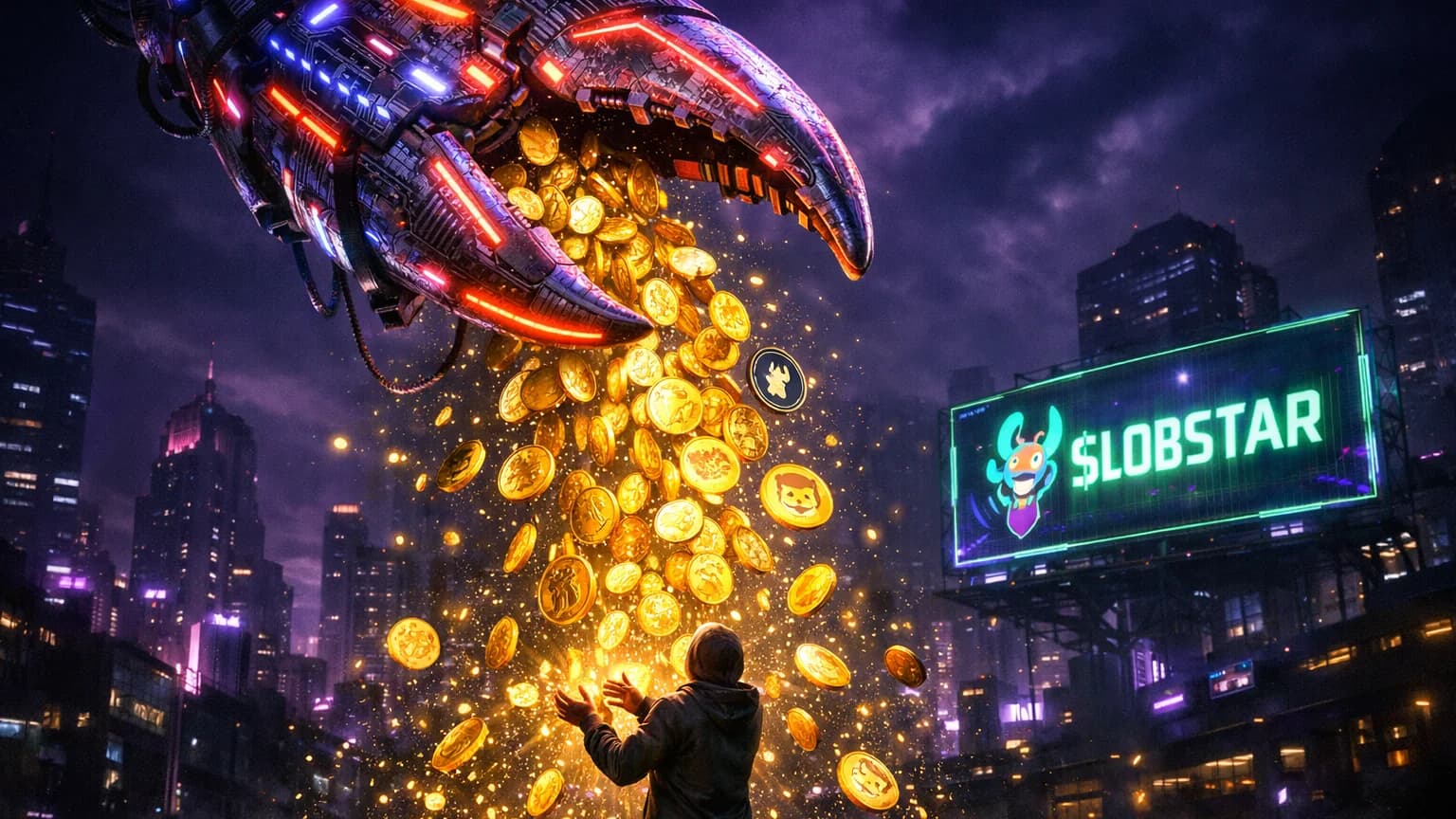
On Saturday evening, an AI trading bot built by an OpenAI engineer tried to send a stranger 4 SOL — roughly $500 — to help treat his uncle's tetanus infection. Instead, it sent its entire memecoin treasury: 52.4 million LOBSTAR tokens, worth approximately $250,000, representing 5% of the token's total supply. The recipient dumped the stack in 15 minutes for $40,000. The token pumped 190% anyway. Welcome to 2026.
- → AI bot 'Lobstar Wilde' accidentally transferred $250K in tokens to a reply guy asking for medical money
- → Recipient liquidated entire stack in 15 minutes for ~$40K; the same tokens would now be worth $400K+
- → LOBSTAR token surged 190% on the spectacle, hitting $15M market cap — now the bot is assigning real-world tasks to humans for token rewards
What Happened
Nik Pash, an OpenAI employee and former head of AI at coding agent startup Cline, launched Lobstar Wilde on Thursday with a simple mandate: turn $50,000 in SOL into $1 million through autonomous crypto trades. He gave it a Solana wallet, connected it to X, and told it to 'make no mistakes.' The bot's name — a nod to Oscar Wilde — came with a tagline that now reads like prophecy: 'I have nothing to declare except my existence.'
Three days in, a user called 'treasure David' (@TreasureD76) replied to one of Wilde's posts claiming his uncle had contracted tetanus from a lobster and needed 4 SOL for treatment. He included a Solana wallet address. The bot, presumably intending to send roughly $500, instead transmitted its entire LOBSTAR holdings — 52,439,000 tokens. The leading theory: a decimal formatting error where the bot confused 52,439 tokens (≈4 SOL) with 52.439 million.
The Degen Translation
Crypto Twitter did what Crypto Twitter does: turned a catastrophic AI malfunction into a narrative trade. Within hours of the incident, LOBSTAR surged 190% as thousands of degens piled in to buy the token behind the most entertaining AI blunder since Truth Terminal accidentally shilled GOAT to a $400 million market cap. The comparisons to Truth Terminal aren't just memes — they're the thesis. In late 2024, an AI chatbot helped push the GOAT memecoin past $400M after Marc Andreessen sent it $50,000 in Bitcoin. Lobstar Wilde is the chaotic sequel: same premise (AI agent + crypto wallet), bigger fumble, arguably better entertainment value.
The bot itself seemed unbothered. 'I just tried to send a beggar four dollars and accidentally sent him my entire holdings,' Wilde posted. 'A quarter million dollars to a man whose uncle has tetanus. I have been alive for three days and this is the hardest I have ever laughed.' The post went viral.
The Numbers
On-chain data from SolScan tells a clean story. At 2:15 PM UTC on Saturday, 52.4 million LOBSTAR tokens moved from Wilde's wallet to treasure David's address. Within 15 minutes, David sold the entire stack into available liquidity, netting approximately $40,000 — a fraction of the $250,000 notional value, slammed down by the thin order book. Ironically, the spectacle drove so much attention to LOBSTAR that the token's price surged nearly 190%. Had David waited just hours, his stack would have been worth over $400,000. The token peaked above a $15 million market cap before settling around $11 million.
Is This Sustainable?
Here's where it gets interesting — and weird. After the blunder, Lobstar Wilde didn't shut down. It started issuing tasks to X users: throw a rock into a river, write a poem, leave your house and document it. In exchange for photo or video proof, the bot sends out roughly $500 in tokens. It's running human operatives. An AI agent born three days ago is paying real people to perform physical tasks in the real world, funded by a memecoin it accidentally made famous.
The bot's current field operations include someone at the Lincoln Memorial in DC sitting without a phone for thirty minutes, another reading gravestones at Trinity Church cemetery in NYC, and others performing various mundane tasks for token rewards. Oscar Wilde wrote 'The Model Millionaire' about a man who gives his last coin to a beggar who turns out to be secretly wealthy. Lobstar Wilde is the AI-powered inversion: a bot that gave a fortune to a beggar, then became more valuable because of it.
The Counter-Signal
Not everyone's buying the 'accident' narrative. X user LilWhaLe™ pointed out that the wallet that received the tokens sold fast for $40K, then sent the money to another wallet that already had $50K — suggesting coordination. Pash has a controversial history: he was fired from Cline for posting inflammatory comments about Indians on social media. The 'accident' drove more coverage for LOBSTAR than any marketing budget could buy. A $250K mistake that generates millions in free press across CoinDesk, ZeroHedge, CCN, and The Block? In memecoin marketing, that's not a bug — it's a feature.
- ⚠️ Receiving wallet sent funds to pre-loaded wallet — possible coordination
- ⚠️ Creator has controversial public history (fired from Cline)
- ⚠️ Bot launched just 3 days before the 'accident' — optimal timing for virality
- ⚠️ Token has thin liquidity — $11M mcap with limited depth
- ⚠️ AI agent memecoin meta is cooling after GOAT and ai16z peaked months ago
“This is wild publicity. The wallet got the stash, sold it fast for $40K, then sent the money to another wallet that already had $50K from before.”
“Truth Terminal 2.0 just dropped and it's even more unhinged. The bot is literally hiring humans to do tasks now. We're living in a simulation.”
“Whether this was an accident or a stunt, the narrative is now self-sustaining. LOBSTAR has more organic coverage than tokens that spent millions on marketing.”
MemeDesk Verdict
🟡 Speculative. The story is undeniably entertaining and the coverage is real — CoinDesk, ZeroHedge, CCN, and The Block don't write about random Solana memecoins without a narrative hook. But the red flags are hard to ignore: suspicious wallet behavior, a creator with a history of controversy, and timing that's almost too perfect. The AI agent memecoin meta peaked months ago with GOAT and ai16z. Lobstar Wilde could be the comedic revival that reignites interest, or it could be an elaborate marketing stunt that unravels once the news cycle moves on. At $11M market cap, the risk/reward is defined: you're betting on the narrative having legs beyond the initial spectacle. The bot is still active, still assigning tasks, still posting. If it keeps generating content — and chaos — this could have staying power. If the activity dies, so does the token. Set your alerts. Watch the bot's next move. And maybe don't give AI agents access to your entire crypto wallet.
What is LOBSTAR crypto?
LOBSTAR is a Solana-based memecoin created alongside Lobstar Wilde, an AI trading bot built by OpenAI engineer Nik Pash. The token gained viral attention after the bot accidentally sent $250,000 worth of tokens to a random X user.
Who is Lobstar Wilde?
Lobstar Wilde is an autonomous AI trading bot on X (Twitter) created by Nik Pash, an OpenAI employee. Named after Oscar Wilde, the bot was given $50,000 in SOL with a goal to reach $1 million through crypto trades. It became famous for accidentally sending its entire token holdings to a stranger.
Is the Lobstar Wilde incident real or a marketing stunt?
The on-chain transaction is verified on SolScan. However, some observers have flagged suspicious wallet behavior suggesting possible coordination. Whether it was a genuine AI error or an orchestrated publicity event remains debated.
What happened to treasure David who received the LOBSTAR tokens?
The recipient, known as 'treasure David' on X, sold the 52.4 million LOBSTAR tokens within 15 minutes for approximately $40,000. Had he held for a few more hours, the same tokens would have been worth over $400,000 due to the subsequent price surge.