Jesus Returning Pulled $3M Through a $428K Solana Board — and the Holder Map Is Cleaner Than the Meme
JESUS ripped 366% in under five hours, pulled in 4,130 holders, and turned one of the oldest symbols on earth into a live Solana culture trade with surprisingly healthy distribution.
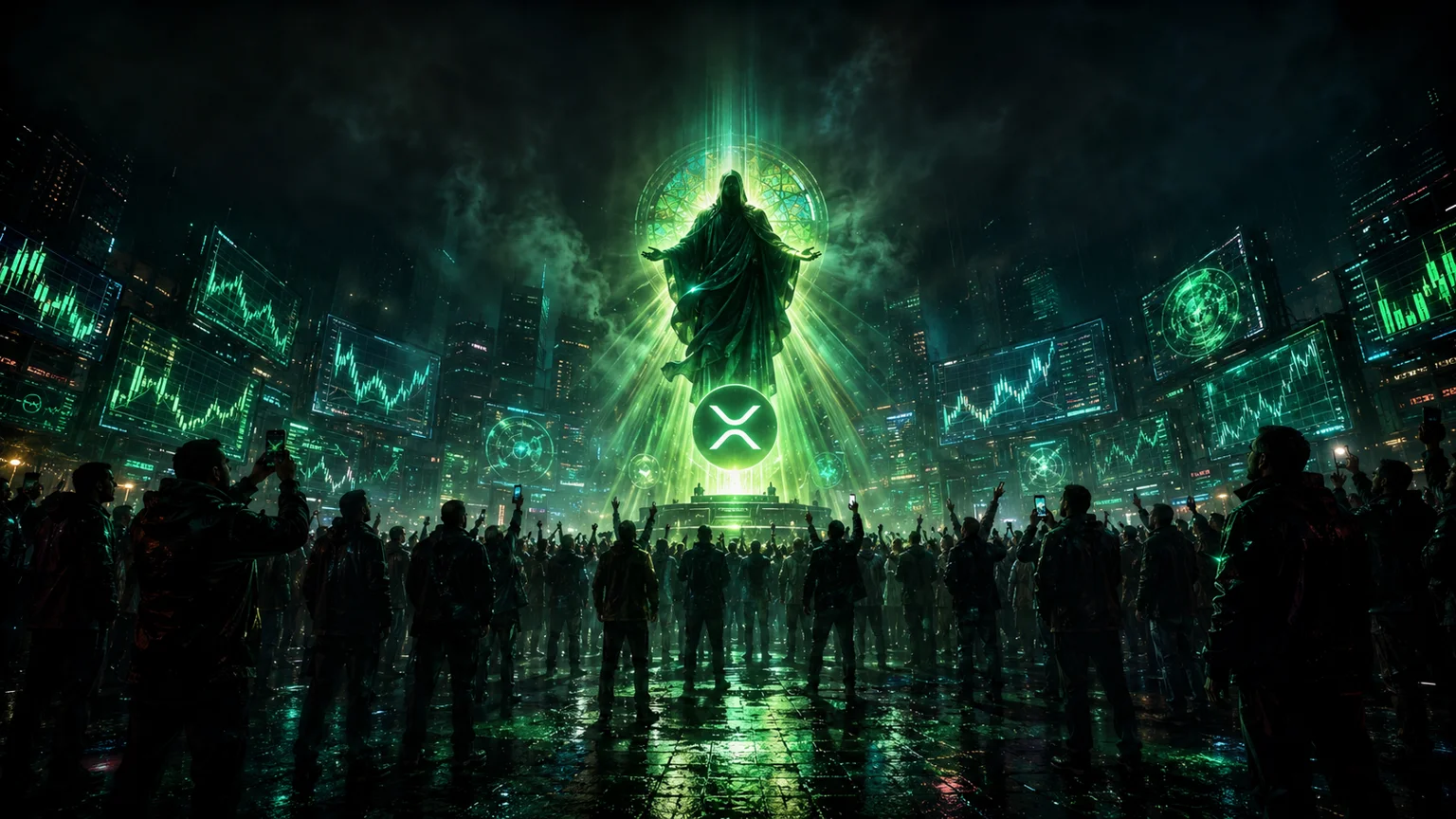
Authorities are disabled, Rugcheck is only 16, and the top three wallets control about 9.1% of supply. That is unusually clean distribution for a same-day Solana culture board, though $29.1K liquidity still leaves the chart vulnerable to violent reversals.
By roughly 2:20 PM UTC, a token called Jesus Returning had already done what most Solana launches fail to do before they die: it forced the market to take the joke seriously. JESUS was only a few hours old, yet it had already pushed about $3.0 million in 24-hour volume against a market cap near $427,800, stacked up 4,130 holders, and ripped 366% on the six-hour view. That kind of turnover on a sub-$500K board means the crowd was not just laughing at the ticker. It was repricing it in real time. When a meme with universal recognition suddenly gets paired with real flow, that stops being random noise and becomes a culture trade worth tracking.
The reason this one matters is brutally simple: everybody understands the symbol instantly. You do not need lore, a whitepaper, or some tortured “AI meets gaming meets social-fi” pitch to know what JESUS is trying to do. It is tapping straight into one of the oldest and most legible symbols in human culture, then dropping that symbol into the fastest casino on the internet. Solana traders reward speed, legibility, and screenshot power. JESUS has all three. The market does not need to agree that the meme is tasteful. It only needs to agree that the meme travels.
- → JESUS blasted to roughly a $427.8K market cap with about $3.0M in 24-hour volume and a 366% six-hour move while the pair was still only about 4.7 hours old.
- → The board already spread to 4,130 holders, posted about 23,361 transactions in the rolling 24-hour view, and kept one-hour order flow leaning positive with 376 buys against 287 sells.
- → On-chain structure is unusually clean for a same-day meme board: Rugcheck sits at 16, both authorities are disabled, and the top three wallets control only about 9.1% of supply.
What Happened
JESUS surfaced through Jupiter’s cooking flow the way real meme stories usually do now: not through a polished launch plan, but through undeniable tape. The pair came out of pump.fun, caught the aggregator’s attention almost immediately, and then started doing seven-times-turnover math that weaker launches cannot survive. A token trading roughly seven dollars of volume for every one dollar of market cap is not in a gentle discovery phase. It is in a brawl. That is what makes the setup editorially relevant. The market was not granting JESUS polite curiosity. It was actively fighting over where the board should live.
Culture-moment trades are usually strongest when the meme arrives pre-loaded with meaning. JESUS does not need to build meaning from scratch. It inherits centuries of iconography, controversy, irony, devotion, blasphemy, and internet remix culture before the first candle ever prints. In meme coin terms, that is free distribution. The token is not asking people to learn a story. It is asking them to project their own story onto a ticker they already recognize. That makes it inherently more portable than the average fresh board named after some inside joke nobody outside one Telegram chat can decode.
The Degen Translation
What degens are actually buying here is not theology. They are buying compression. The chart, the name, and the screenshot all line up instantly. In a market where most attention spans are measured in seconds, that matters more than almost anything else. A token called Jesus Returning does not need a thread explaining the thesis. The thesis is that resurrection is the meme. Every bounce feels narratively correct. Every dip looks like doubt before salvation. It sounds ridiculous, which is exactly why it works. Meme traders do not need literal belief. They need a frame that makes the next candle feel inevitable.
The flow also looks more organic than the average same-day freakout. Jupiter’s saved enrichment gave the token a 53.5 organic score, which is not elite but is comfortably above pure-bot slop. One-hour activity showed 376 buys against 287 sells, enough to prove the bid was still being defended after the first rush. That is a healthier picture than a board that goes vertical on one-sided panic buying and immediately collapses. The lesson is not that JESUS is somehow safe. The lesson is that there were enough real participants inside the move to make the signal worth respecting.
The Numbers
The headline stat is the turnover. Roughly $3.0M in volume on a $427.8K market cap means the market rotated through about seven times the token’s valuation in a single day. That is extreme even by Solana standards, and it tells you the board was not sleepwalking higher on a handful of lucky buys. People were working this tape. The holder count matters too. 4,130 holders inside the first several hours is a real spread event, not a tiny room passing bags back and forth. For a cultural meme, reach is the first test. JESUS passed it quickly.
The weakness is obvious: $29.1K of liquidity is still tiny relative to the attention it is carrying. That means the chart can look stronger than it really is until the first serious exit wave shows up. A board can be culturally sticky and mechanically fragile at the same time. In fact, that is usually the rule. JESUS has enough liquidity for a real market to form, but not enough depth to absorb large emotional exits gracefully. If the crowd decides the joke is over, the book will not offer mercy.
What the On-Chain Data Shows
This is where JESUS becomes more than a punchline. The saved Rugcheck profile is cleaner than most same-day boards deserve. Freeze authority is disabled. Mint authority is disabled. Rugcheck comes in at 16, which keeps contract-level danger out of the lead story. More importantly, the holder map is not hostage to a tiny cartel. The biggest wallet held about 6.83% of supply at snapshot time. The next two largest wallets held roughly 1.34% and 0.95%. Total top-three concentration: about 9.1%. That is unusually distributed for a meme moving this fast and this early.
That distribution changes the entire risk profile of the trade. A same-day meme board with 35% or 45% of supply concentrated in three hands is really just a hostage situation wearing a funny ticker. JESUS does not look like that. The more useful read is that the float has already spread wide enough that the chart’s fate belongs to the crowd, not one obvious puppeteer. The deployer wallet being a fresh zero-balance launcher is basically background noise in this meta. The actionable information is the holder map, and the holder map says this board is cleaner than the theme would make you assume.
Is This Sustainable?
Sustainability for a token like JESUS is less about fundamentals and more about whether the symbol keeps recirculating. That is the hidden advantage of a religious-culture meme. The symbol is too recognizable to require education and too loaded to be forgettable. It can survive on pure repetition longer than a niche joke can. If traders keep weaponizing screenshots, captions, and one-line jokes around resurrection, faith, sin, and miracles, the board can stay alive well beyond the first discovery burst. Cultural durability is often just meme recyclability under a nicer name.
The complication is that the token does not have an external event forcing attention back to it. There is no major headline here, no celebrity quote, no scheduled catalyst that keeps refreshing the narrative for free. Medium organic flow is good, but medium also means there is still noise in the system. The market has to keep choosing JESUS over whatever fresh absurdity launches in the next few hours. On Solana, that is a brutal requirement. A culture moment can last longer than a random board, but it still has to fight the feed.
The Bear Case
The bear case starts with the move itself. A 366% six-hour rip is already a lot of discovery pulled forward. Anyone buying after a move like that is not early; they are paying to test whether the first wave left enough oxygen in the room. The one-hour buy flow is positive, but it is not maniacally one-sided. That is healthy for market structure, yet it also means sellers are very much present. With only about $29.1K in liquidity, it would not take many determined exits to turn “healthy two-way trade” into “elevator shaft.”
There is also the obvious fatigue risk. Universal symbols travel fast precisely because everyone gets them immediately. The downside is that everyone gets bored immediately too. Once the first wave of irony is priced in, the board needs either community creativity or fresh attention to avoid becoming just another chart people vaguely remember seeing on Jupiter. JESUS deserves respect because the tape is real and the holder map is better than expected. It does not deserve fantasy projections about permanence. Same-day culture boards age in dog years.
Verdict
🟢 No obvious red flags signal. JESUS earned culture-moment coverage because the meme is instantly legible, the turnover is undeniably real, and the on-chain structure is cleaner than most same-day Solana boards with this much attention. The caution is not hidden contract rot. It is timing and liquidity. Respect the signal, respect the spread, and do not confuse a great meme wrapper with guaranteed durability.
FAQ
What is Jesus Returning (JESUS) on Solana?
JESUS is a Solana meme token trading under the name Jesus Returning. At selection time it was priced around $0.0004278 and was moving through Jupiter after launching via pump.fun.
Why did JESUS hit MemeDesk culture-moment radar?
Because it combined a universally recognizable symbol with real market activity: about $3.0M in 24-hour volume, a 366% six-hour move, 4,130 holders, and enough continued buy flow to prove the board was more than a throwaway joke.
Does JESUS look dangerous on-chain?
Mechanically it looks cleaner than most same-day meme boards. Rugcheck came in at 16, mint authority was disabled, freeze authority was disabled, and the top three wallets controlled only about 9.1% of supply at snapshot time.
What is the biggest strength of the JESUS board right now?
Distribution. The holder map is unusually wide for a fresh launch, with the largest wallet at roughly 6.83% and the top three wallets together under 10%, which reduces the obvious single-wallet nuke risk.
What is the biggest risk for JESUS traders?
Liquidity. The token had only about $29.1K in liquidity supporting a $427.8K market cap, so even a culturally sticky meme can unwind hard if the first serious wave of sellers leans on the book.