COMPASS Turned 40 Minutes of Solana Chaos Into $1.33M of Flow, but 42.0% of Supply Is Already Sitting in Three Wallets
The pump.fun launch ripped nearly 1,923% in under an hour while logging 28,081 swaps, a 72.0 organic score, and 972 holders. The contract itself looks clean. The problem is the holder map: the top wallet controls 21.83% and the top three wallets control 42.0% of supply, which means the story can flip from breakout to extraction very fast.
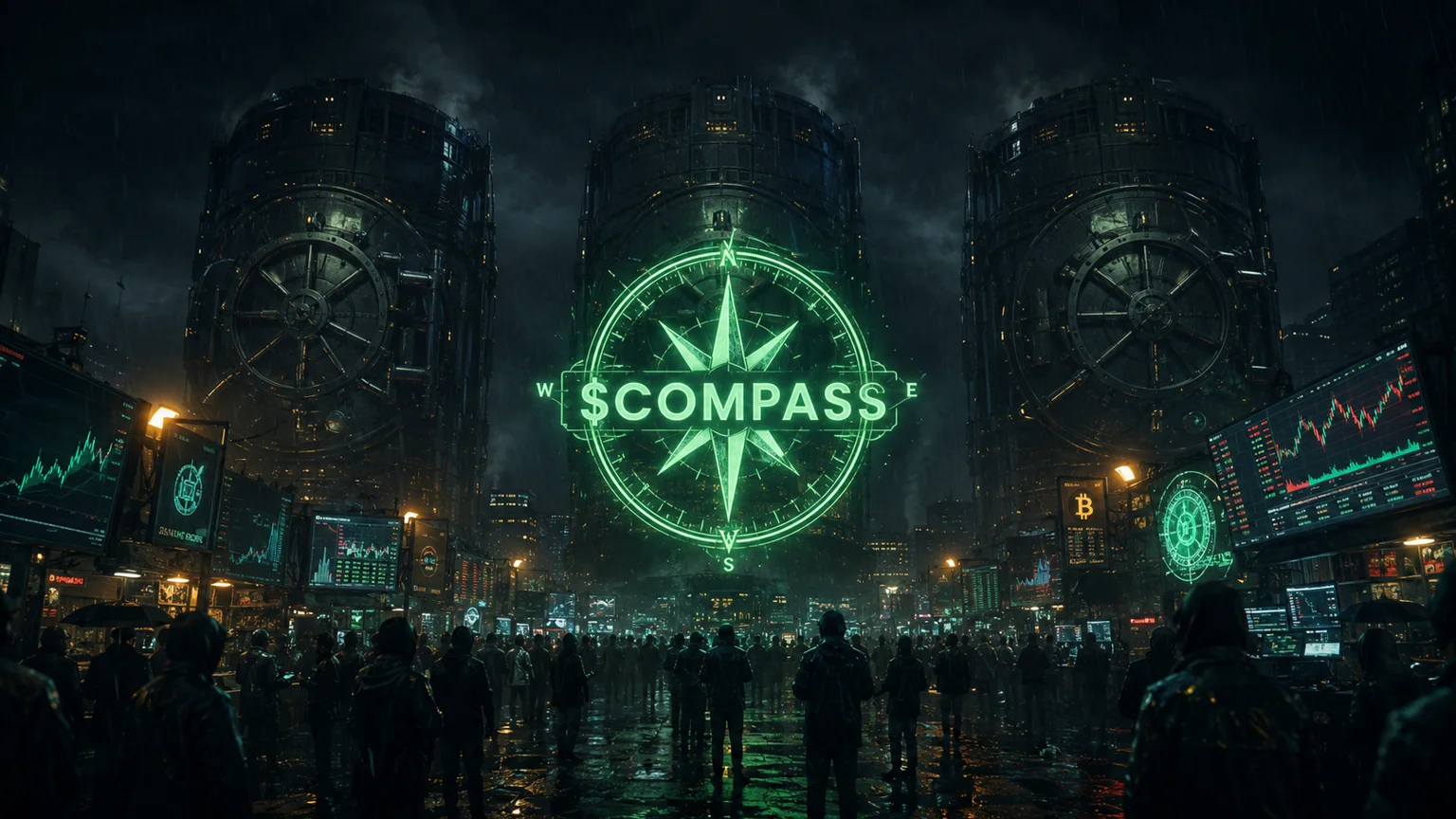
Rugcheck scores COMPASS at 1 with both authority keys disabled, but the holder map is aggressive: about 42.0% of supply sits across the top three visible wallets, including 21.83% in the top wallet alone. The contract is mechanically clean; the structural risk is concentrated ownership overwhelming a tiny 40-minute board.
By around 4:05 PM UTC on May 18, COMPASS had already done something that should make any launch trader both curious and suspicious. In roughly 40 minutes, the pump.fun board turned itself into a Jupiter Cooking name with about $1.33M in 24-hour volume, roughly $78.3K in market cap, and 28,081 tracked swaps. That is an absurd amount of traffic for a board that still barely counts as born. On the surface, it looks like the exact kind of launchpad chaos Solana specializes in: fast ticker, tiny denominator, instant narrative compression, and enough velocity to make late buyers believe they are still early.
The reason COMPASS deserves coverage is not that the chart went stupid. Plenty of fresh launches do that. It is that the move already contains the full split-screen reality of meme trading. The tape is strong enough to matter. The organic score is decent enough to avoid pure bot-dismissal. The contract profile is clean enough to avoid the obvious contract-trap story. But the holder map is nasty enough that this can still turn into a liquidation lesson almost on command. That tension is the trade. COMPASS is not a clean breakout. It is a live argument between crowd energy and concentrated supply, and both sides already have evidence.
- → COMPASS pushed about $1.33M in 24-hour volume through a board worth only about $78.3K less than an hour after launch, which is the kind of turnover ratio that forces itself onto every scanner worth reading.
- → The participation looks more organic than pure wash theater: 28,081 tracked swaps, a 72.0 organic score, 972 holders, and a buy ratio just above 51% suggest an actual crowd arrived.
- → The saved Rugcheck profile is mechanically clean, but the ownership map is not. The top wallet controls 21.83% of supply and the top three visible wallets control about 42.0%, which is enough concentration to dominate a board this small.
What Happened
COMPASS surfaced through Jupiter's cooking flow as a fresh pump.fun launch that skipped the polite early-discovery phase and went straight into public overdrive. The board was only around 40 minutes old, yet it had already attracted nearly 28,100 tracked swaps and a move of roughly 1,922.6%. Those numbers are cartoonish, but they matter because they say the market found the ticker immediately. A quiet launch can fake a percentage move off a microscopic starting point. It cannot fake this much repeated interaction. COMPASS became a crowd object almost instantly.
That crowd arrived on a very small base. A market cap of about $78.3K and liquidity near $12.8K mean almost every real decision leaves fingerprints on the chart. This is why the board moved so violently so fast. Too much attention was trying to squeeze through too little depth. The result was predictable: a vertical launch where the price response looked bigger than the capital behind it. That is not necessarily bearish. It is just the mechanical truth of early Solana boards. COMPASS became important because the market decided the ticker was worth bullying higher before the market structure had time to mature.
The Degen Translation
COMPASS is a perfect ticker for a crowd that loves turning direction itself into a meme. The word feels strategic without actually promising anything. It sounds like navigation, timing, orientation, alpha, and destiny all at once, which is exactly the kind of semantic nonsense meme traders adore when the chart is already green. No one needs a lore bible to repeat COMPASS on the timeline. The name does the work. It lets people project whatever version of 'this points the way' they want onto the board, and that flexibility matters when a token has less than an hour to earn its mythology.
That is why this reads as a culture board and not just a launch statistic. Culture trades do not need mainstream validation. They need repeatable language. COMPASS gives traders a symbol they can turn into a directional joke, a market metaphor, or a fake-serious signal generator with almost no friction. On pump.fun, that kind of memetic adaptability can matter more than any project page ever will. The board does not have to make sense. It has to stay quotable. For about 40 minutes, COMPASS clearly did exactly that.
The Numbers
The turnover ratio is the first number that changes the read. About $1.33M in 24-hour volume on a board worth roughly $78.3K means the market churned nearly seventeen times the token's market cap before the launch had even reached its first birthday hour. That is absurd, and absurdity is the point. Boards like this become interesting because the denominator is so tiny that moderate real attention can create insane-looking numbers. COMPASS earned that attention quickly enough that the scanner could not ignore it.
The second useful number is 72.0. That organic score is not holy scripture, but it is high enough to push back against the laziest bearish read. Combined with 28,081 tracked swaps and 972 holders, it suggests the board was not just being propped up by a handful of automated loops. There was actual participation here. The buy ratio at 51.2% also matters for that reason. Buyers were stronger than sellers, but not in a fake one-sided way. The market was trading the board, not merely decorating it.
Still, the liquidity number is the knife under the table. Roughly $12.8K in liquidity is brutally thin for a board absorbing this much attention. That is how you get the headline move, and that is how you later get the ugly lesson. The same tiny depth that allows a 1,922.6% sprint also means a couple of motivated wallets can make the chart feel broken on the way down. COMPASS is not interesting because it solved this problem. It is interesting because the market clearly decided to trade the problem anyway.
What the On-Chain Data Shows
Mechanically, COMPASS clears the baseline contract check. Rugcheck scores the token at 1. Freeze authority is disabled. Mint authority is disabled. No saved danger-level items appeared in the profile used for this article. That matters because it keeps the thesis honest. If COMPASS hurts people from here, the explanation does not have to be hidden contract nonsense. The obvious structural problem sits in plain sight where it belongs: the ownership map.
That ownership map is aggressive enough to dominate the entire board. The largest visible wallet holds 21.83% of supply. The second holds 15.9%. The third holds 4.27%. Together, that is about 42.0% across the top three visible wallets. None of those rows were flagged as insiders in the saved snapshot, but the distinction only softens the story so much. On a board with roughly $12.8K of liquidity and a sub-$80K market cap, concentration is concentration. A few big wallets do not need insider tags to become the market's central risk.
The deployer wallet itself is correctly boring, and it should stay that way unless something exceptional appears. No meaningful creator-token history is needed to explain this chart. The useful on-chain takeaway is already obvious without pretending the creator address is a personality test. COMPASS has a clean mechanical profile and a hostile cap table. That combination is actually more tradeable than a dirty contract, but it is also more psychologically dangerous because traders can talk themselves into ignoring the ownership issue as long as the candles stay vertical.
Is This Sustainable?
Sustainability depends on whether the crowd keeps treating COMPASS like a symbol worth repeating instead of a board that already had its joke. The ingredients for continuation exist. The ticker is strong. The volume is undeniable. The transaction count and organic score say the board found real market participation quickly. If enough traders keep using COMPASS as a directional meme and the flow stays broad enough to absorb some profit-taking, the token can remain expensive longer than sober math suggests. That is how culture boards work. They stay alive by remaining socially useful.
The bear case is simpler and more brutal. A board this concentrated and this thin does not need narrative failure to break. It only needs one or two large holders deciding the sprint was good enough. With 42.0% of supply in the top three visible wallets, every continuation thesis has to negotiate with a cap table that can overpower the rest of the crowd. That is why the right tag here is speculative instead of green. The contract itself is fine. The market structure is the danger. When the cleanest part of the board is the code and the dirtiest part is ownership, you trade the chart with your eyes open or you become the candle somebody else sells into.
Verdict
🟡 Speculative — COMPASS deserves attention because the volume, swap count, and organic score are too strong to dismiss as random launch noise. But the board is structurally hostile. Rugcheck 1 and disabled authority keys remove the contract-trap story, yet about 42.0% of supply already sits across the top three visible wallets on a board with only about $12.8K in liquidity. That makes continuation possible and extraction just as live.
FAQ
What is COMPASS on Solana?
COMPASS is a Solana meme token trading under contract address Cz4tg3cbQWf3zn9Pr5tJfchaMATLB6265cT1yzk2pump. MemeDesk flagged it after the token turned a 40-minute pump.fun launch into roughly $1.33M in daily volume.
Why is COMPASS a culture-moment story?
Because the ticker is instantly legible and flexible enough for the timeline to turn it into a directional meme. That kind of repeatable language matters when a board has less than an hour to become socially sticky.
Is the COMPASS contract clean?
Mechanically, yes. The saved Rugcheck profile used for this article scores COMPASS at 1 with both freeze authority and mint authority disabled and no saved danger-level issues.
What is the biggest risk on COMPASS right now?
Holder concentration. The top visible wallet controls 21.83% of supply and the top three visible wallets control about 42.0%, which is a lot of power over a board with roughly $12.8K in liquidity.
What would strengthen the COMPASS thesis from here?
Broader distribution while volume stays elevated. If the board can keep attracting real participation without the same concentrated wallets dominating every move, the setup becomes much healthier very quickly.