
$ARTHUR Turns a Day-Old Stonk.fun Board Into a $5.9M Volume Test
$ARTHUR is not trading like a sleepy launchpad meme: the Stonk.fun token is up 358% in 24 hours, has a high organic score, and still needs to prove that the bid can survive after the first rotation cools.
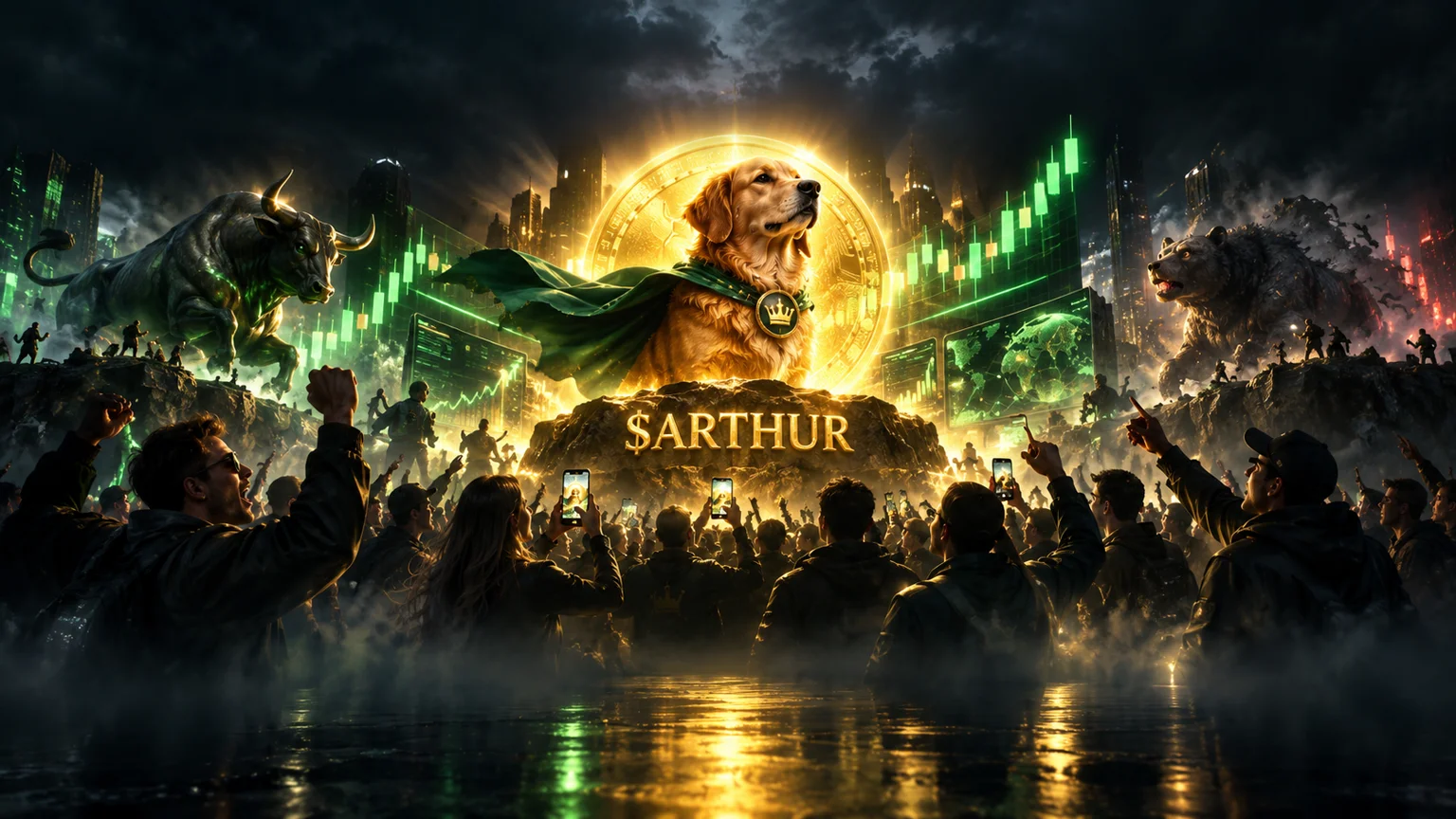
Top three visible holders control about 11.5% of supply, with mint and freeze authority disabled.
$ARTHUR is the kind of Stonk.fun board that forces a second look because the chart is not the only loud number. The token is barely more than a day old, yet the tape already shows a $1.59M market cap, roughly $5.87M in 24-hour volume, and another 44% push in the last hour of the snapshot. That is a lot of turnover for a small Solana meme, especially when the liquidity pool is still only about $132.4K. The simple read is that traders are not just marking up a thin pair; they are actively rotating through it. The harder read is whether that activity is durable demand or a fast Stonk.fun culture bid that disappears once the early scoreboard resets.
The cleanest angle on $ARTHUR is organic volume anomaly. A launch can print green candles with a tiny buyer cluster, but this one has 58,922 transactions over 24 hours and 1,229 trades in the latest one-hour window from the snapshot. Buys led sells 673 to 556, which is not an absurd one-way imbalance, and that matters. A ridiculous buy ratio can look bullish for five minutes before revealing that nobody is providing a real two-sided market. $ARTHUR is messier in a healthier way: buyers are pressing, sellers are taking exits, and the board is still repricing upward.
- → $ARTHUR is up 358.2% over 24 hours with about $5.87M in volume against a $1.59M market cap.
- → The organic score sits at 84.1, a high reading for a token that is only about 26 hours into public trading.
- → On-chain checks are cleaner than the average microcap: mint authority and freeze authority are disabled, while the top three visible holders sit around 11.5%.
The Arthur Bid Is About Turnover
A one-day meme coin normally has one of two personalities. It is either a pure candle that outruns its own liquidity, or it is a noisy board with enough real trading to make the next leg worth watching. $ARTHUR currently leans toward the second bucket. The 24-hour volume is more than three times the market cap, which means the token is changing hands aggressively instead of sitting inside a sleepy holder base waiting for a single whale to move the price. That can be powerful when fresh buyers keep arriving, but it also means the market is already hot enough for early wallets to recycle supply into every green candle.
The Stonk.fun context matters because these boards can turn into short, violent attention auctions. Traders are not always buying a grand narrative; they are buying the scoreboard, the ticker, the live chat energy, and the idea that a meme can move before the rest of Solana notices. $ARTHUR has the advantage of a simple name that reads instantly and a ticker that does not need an explanation. That sounds basic, but in a launchpad environment, low-friction identity can be the difference between a token people remember and a ticker that gets lost in the queue of five-minute pumps.
$ARTHUR is doing large turnover for its size, not just a clean percentage move. That makes the next few hours about market digestion: can the token keep attracting new buyers after early sellers have already been given a profitable exit?
What the On-Chain Data Shows
The on-chain profile is the reason $ARTHUR earns a cleaner read than most fresh Solana memes, but cleaner does not mean risk-free. The holder count is 3,272, which is respectable for a roughly 26-hour-old market. The visible top three holders control about 11.5% combined, with the largest listed wallet at 3.93%, the second at 3.92%, and the third at 3.68%. That is concentration worth monitoring, yet it is not the kind of single-wallet overhang that immediately turns every pump into a hostage situation. The broader top-holder figure in the market snapshot is 23.0%, so there is still a meaningful supply cluster near the top, just not an obvious one-wallet kill switch in the data provided.
Authority checks are the strongest part of the profile. Mint authority is disabled, so the token does not show the open-ended supply risk that can wreck holders without warning. Freeze authority is also disabled, which removes the nastier transfer-control risk that still appears too often in low-float meme launches. The normalized rug score is 1, and the risk list is empty in the available profile. Those are good signs, but they are not a buy signal by themselves. A meme coin can have a clean contract and still trade like a trap if liquidity is too thin or if the early holder map starts distributing into every push.
The Liquidity Door Is Still Narrow
The bear case starts with the liquidity number. A $1.59M market cap sitting on about $132.4K of liquidity can move fast in both directions. That does not invalidate the signal; it defines the trade environment. When volume is this large relative to liquidity, the market can look deep because the tape is active, then suddenly feel thin when the bid steps back. For $ARTHUR, the real test is not whether another candle can print. It is whether the pool can absorb profit-taking without turning a normal pullback into a confidence break.
The one-hour data is useful here. There were 673 buys and 556 sells, a 54.8% buy share. That is bullish enough to explain the 44.1% one-hour move, but not so lopsided that the tape looks like pure buyer exhaustion. Sellers are active. Exits are happening. The market is simply clearing those exits at higher prices for now. If that balance flips, $ARTHUR can unwind quickly because the same turnover that gives it life also gives early holders constant chances to leave.
Why This Counts as a Culture Meme Bid
$ARTHUR does not need a complicated thesis to work for a short window. The appeal is clean mascot energy, a familiar human name, and a Stonk.fun market that already made enough noise to draw repeat flow. That is why the article type fits as a culture moment rather than a pure technical launch note. Meme buyers often rotate toward the tokens that feel easiest to spread in group chats, easiest to say out loud, and easiest to turn into edits. A ticker can be funny without being overbuilt, and $ARTHUR benefits from being simple enough to become a running joke if the chart keeps giving traders reasons to care.
Still, culture only compounds when price action gives it oxygen. If $ARTHUR stalls, the name alone will not protect the floor. The token needs the next phase to look less like a first-day scoreboard chase and more like a market that can hold attention through chop. That means volume staying elevated, liquidity not getting pulled apart by large exits, and the holder count continuing to broaden. Without that, the story becomes familiar: clean early metrics, huge first-day move, then a slow fade as the fastest wallets move on to the next board.
The Watch Level From Here
The next useful read is whether $ARTHUR can hold a market cap above the low seven-figure zone while keeping volume meaningful. A token doing nearly $6M in daily turnover can survive a lot of selling if the bid remains broad. It cannot survive if that volume is mostly the same early crowd handing bags back and forth while liquidity stays shallow. The difference will show up quickly: either the buy-sell balance remains close while price bases, or every bounce starts requiring more volume for less upside.
For now, the cleaner contract profile gives $ARTHUR room to be judged on market behavior rather than immediate authority risk. That is a better starting point than most day-old memes get. The caution is that a low rug score and disabled authorities do not remove reflexivity. At this stage, the token is still a small, fast Solana market with a narrow liquidity door. The bullish version is an organic Stonk.fun runner that keeps pulling in traders because the tape stays active. The bearish version is a first-day culture pop that already spent most of its easy attention.
$ARTHUR gets a clean watchlist rating because the current data shows strong organic volume, disabled mint and freeze authority, a low rug score, and no obvious single-holder overhang in the top three wallets. The risk is market structure, not contract hygiene: liquidity is still thin for the amount of volume moving through the pair, so the next leg depends on whether buyers keep absorbing exits after the first-day repricing.
Why is $ARTHUR on the radar now?
$ARTHUR is about 26 hours old in the snapshot and already shows $5.87M in 24-hour volume, a $1.59M market cap, and a 358.2% daily move. That combination makes it stand out from normal launchpad noise.
Is the $ARTHUR contract profile clean?
The available profile shows mint authority disabled, freeze authority disabled, a normalized rug score of 1, and no listed risk flags. That is cleaner than average, though meme-token market risk remains high.
What is the main risk for $ARTHUR?
Liquidity depth is the main issue. About $132.4K in liquidity is thin relative to the market cap and 24-hour turnover, so a shift in buyer demand could make the chart move sharply in either direction.
What would improve the $ARTHUR setup?
A stronger base, continued holder growth, steady volume after the first-day spike, and no sudden increase in top-holder concentration would make the signal more convincing.