Nimbus Turned a Viral Cat Brand Into $520K of Volume, Then Lost 94% in Hours
The cute branding worked exactly long enough to create a rush of attention. What followed was the classic meme-coin speedrun from mascot to wreckage, with only about $3.5K of liquidity left on the other side.
The enrichment read stayed clean on permissions but returned no meaningful creator or concentration profile, so the autopsy is driven by the price collapse, liquidity vacuum, and churn rather than a proven serial-rug signature.
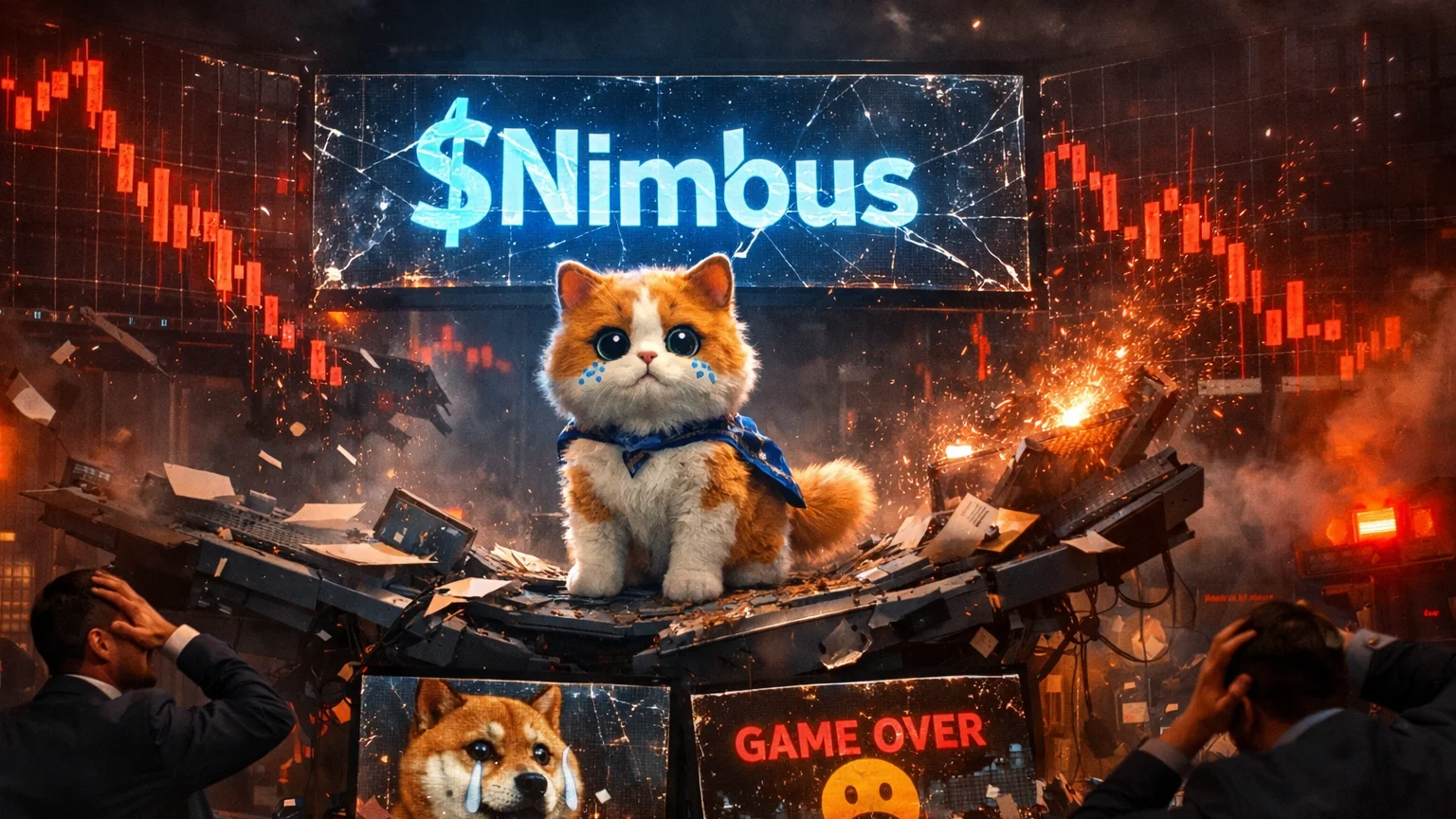
Nimbus is the kind of meme-coin chart that explains the entire sector in one screenshot. The branding was cute, the attention came instantly, and then the floor disappeared. By the time this post-mortem was selected, Nimbus had already pushed roughly $520,800 in 24-hour volume and more than 24,000 transactions, only to crater about 94.46 percent and fall to a market cap near $1,900. That is not a normal retrace. That is a speedrun from launch hype to bagholder archaeology.
The ugliest part is that the volume never really went away. DexScreener still showed around 14,146 buys and 10,184 sells, which means people kept touching the pair even after the collapse. In healthier markets, heavy activity can confirm interest. In a post-mortem like this, it usually means churn, panic, and opportunistic bottom-fishing are all happening at once. When more than half a million dollars of volume can coexist with a sub-$2,000 market cap, the message is simple: value was not being built here, it was being redistributed at speed.
- → Nimbus converted viral mascot-style branding into roughly $520.8K of 24-hour volume, then gave almost all of the valuation back within hours.
- → The token is down about 94.46 percent and sitting near a $1.9K market cap with only about $3.5K of liquidity, which is effectively a warning label, not support.
- → This does not read like a classic permissions rug. It reads like a launch whose demand evaporated faster than the meme could keep recruiting new buyers.
How It Went Down
Nimbus followed a pattern that has become brutally common on Solana. Start with a mascot the timeline can understand instantly, attach it to a ticker before the crowd gets bored, and rely on the first wave of social curiosity to create the chart. For a moment, it worked. The transaction count exploded, the pair turned over hard, and the market gave the token the benefit of the doubt simply because enough people were willing to click into it at once.
But attention without staying power is not momentum, it is borrowed time. Once the first rotation through the chart finished, Nimbus had no second act. The liquidity base was thin, the valuation was fragile, and every new buyer after the opening burst needed the meme to keep feeling fresh. That is a difficult ask even for stronger launches. For a generic virality play with little structural support, it is lethal. The chart did not fail because no one noticed it. It failed because attention arrived before trust, and trust never caught up.
That is why the collapse feels so fast. A 94 percent drawdown in a few hours is not just a bad trade, it is narrative exhaustion made visible. Once the market decided the brand was no longer enough, the pair had almost nothing underneath it. The remaining price is less a fair valuation than a residue left behind after the real trade already ended.
The Red Flags Everyone Missed
The biggest red flag was not hidden in some obscure wallet cluster or buried inside a contract exploit. It was right on the screen. Nimbus was doing enormous volume relative to the quality of its setup. When a launch generates more than half a million dollars of turnover but has almost no durable liquidity, the market is telling you the trade is happening above a trapdoor. Traders often read that as excitement. In reality, it is often proof the token is too dependent on constant new inflows to survive even a short pause.
The second red flag was the mismatch between meme strength and structural support. Cute branding can create a rush, but it does not guarantee repeatable attention. Nimbus had the kind of identity that makes people click once, maybe repost once, maybe throw a tiny moonbag at it once. That is not the same thing as a sticky narrative. If the token had a stronger community layer, deeper liquidity, or some reason for traders to come back after the initial punchline landed, the unwind could have been slower. Instead, it looked like a coin that spent its full story in the first few candles.
The final missed signal was simply speed. Pair age matters. Very young launches can print absurd metrics that feel meaningful but are really just the market digesting novelty. If you are looking at a chart only a few hours old, huge volume is not automatically bullish. Sometimes it means the entire lifecycle is being compressed into a single session. Nimbus now looks like exactly that kind of compression event.
The Receipts
These numbers are why Nimbus belongs in the autopsy file. A market cap around $1,900 paired with $520,800 of 24-hour volume means the token has already been churned far beyond any stable holder base. The liquidity sitting near $3,500 is even harsher. That is not enough depth to absorb normal trading, let alone panic. Once the chart tipped, there was almost no cushion to slow the fall. The result is exactly what you would expect: a token that still looks active on paper while the economic value underneath it has basically vanished.
The buy and sell counts matter here too. More than fourteen thousand buys sounds bullish until you realize ten thousand-plus sells were right there with them and the price still ended up down more than ninety-four percent. That tells you the gross activity number is misleading. The pair was not being supported by conviction. It was being processed by a crowd cycling through momentum entries, exits, and failed dip buys. High activity with no price retention is the fingerprint of a trade everyone touched and almost nobody wanted to hold.
Lessons for Degens
The first lesson is that virality is not the same thing as durability. Nimbus had the kind of mascot branding that can absolutely get a coin off the ground, but the market only rewards that for as long as new people keep discovering it. Once the novelty curve flattened, there was no deeper reason to stay. The meme was enough to start the fire and nowhere near enough to keep it burning.
The second lesson is to treat liquidity as the truth serum. Plenty of launches look impressive when the screenshots focus on volume, transaction counts, or percentage gains. Liquidity is harder to dress up. If the pool is tiny, the token can collapse far faster than the headline metrics imply. Nimbus ended up demonstrating that perfectly. Hundreds of thousands of dollars moved through the pair, but the support beneath the trade was so thin that the whole structure folded almost immediately when enthusiasm cooled.
The third lesson is that a clean permissions read is not enough. Nimbus did not need an active freeze authority or mint authority to destroy late entrants. The market did the damage on its own. That distinction matters because traders often over-focus on contract hygiene and under-focus on distribution quality. Clean permissions can stop one kind of disaster. They cannot create demand, deepen liquidity, or force a meme to remain culturally relevant after the first rush ends.
What the On-Chain Data Shows
The enrichment data on Nimbus came back bland on the contract side: no active freeze authority, no active mint authority, and no meaningful creator or holder profile surfaced from the scan. In another context, that might sound comforting. In this context, it mainly tells you the chart imploded without needing an obvious contract villain. This was not a permissions ambush. It was a structural failure inside a hyper-fragile market setup.
So the on-chain takeaway is simple. Nimbus was structurally weak from the start because the liquidity base was tiny and the valuation depended on nonstop attention. Once that attention rolled over, the pair had almost no defense. That is why the post-mortem matters. The lesson is not that every cute cat token is doomed. It is that meme-native branding cannot compensate for a market structure that is too shallow to survive the first serious wave of exits.
🔴 Nimbus is an autopsy, not a rebound setup. The token proved it could summon fast attention, but the combination of a 94.46 percent collapse, roughly $3.5K in liquidity, and volume that wildly outweighs remaining value tells you the trade already spent itself. The permissions read is clean enough, which actually makes the result more useful: this was not a classic rug, it was a perfect demonstration of how quickly a meme coin can die when novelty outruns structure. Treat Nimbus as a warning about velocity without support, not as a heroic dip-buy story.
Why did Nimbus crash so hard?
Because the token relied on opening attention without building enough structural support underneath it. Once the novelty faded, the very thin liquidity left almost no cushion against exits.
Was Nimbus a rug pull?
The available enrichment did not show active freeze or mint authority, so it does not read like a classic permissions-based rug. It looks more like a hype-driven launch that collapsed under weak liquidity and exhausted demand.
Why is the liquidity number so important here?
Liquidity tells you how much real support exists under the chart. Nimbus only had about $3.5K of liquidity at selection, which means even modest selling pressure could push price down violently.
Can a token recover after a 94 percent drawdown like this?
Anything can bounce in meme coins, but a sustainable recovery would need new narrative energy, deeper liquidity, and a very different buyer profile than the one that created the first spike. Without those, rebounds usually act like exit liquidity rather than fresh cycles.