IRyS Printed $874K in Volume Before a 94% Collapse, Then Holder Concentration Finished the Job
The chart looked alive for a few frantic hours. The structure underneath it never was. IRyS turned launch hype, shallow liquidity, and extreme wallet concentration into a fast Solana wipeout.
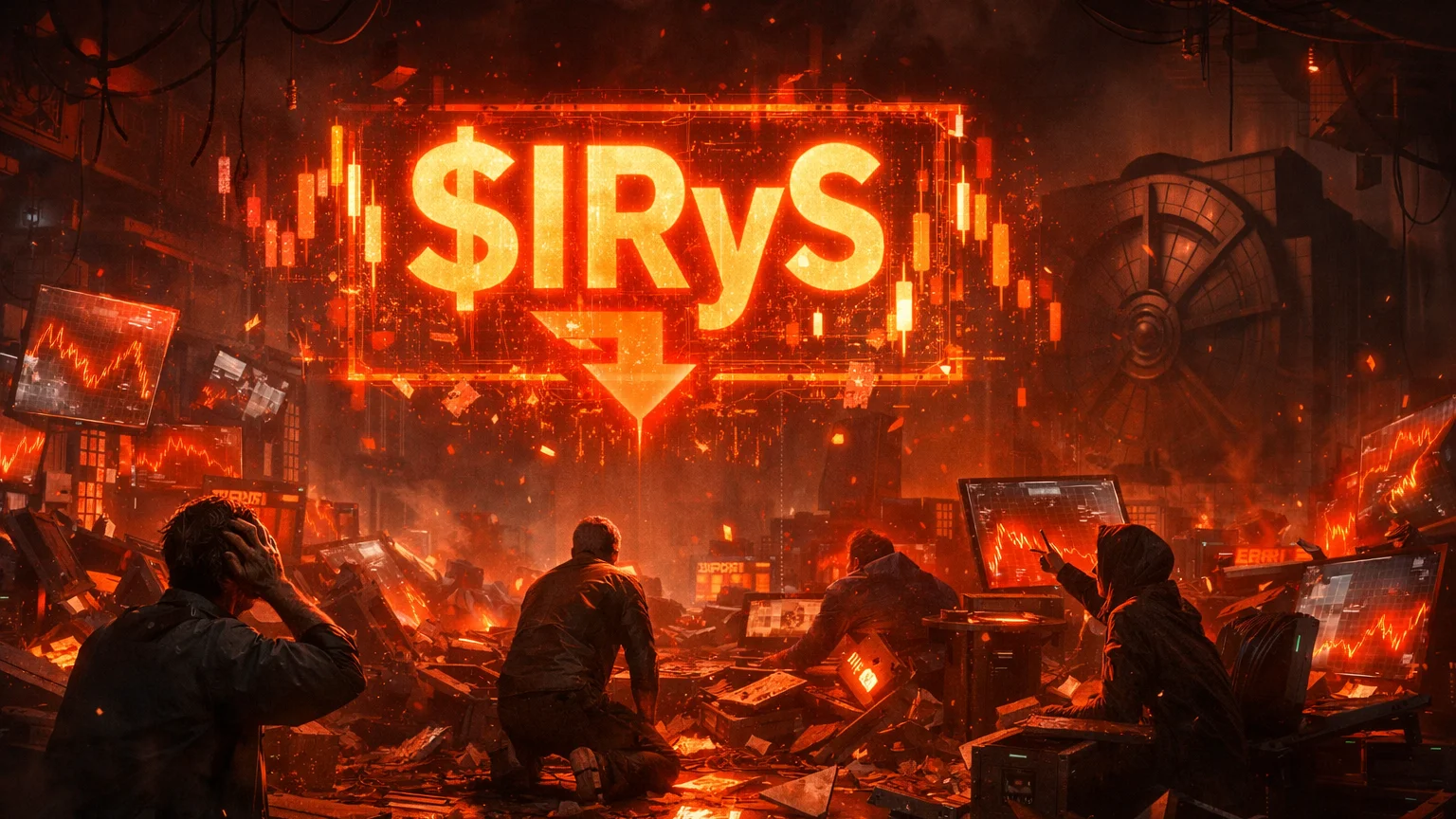
Top holder concentration is extreme and supports the wipeout narrative.
IRyS is what happens when meme coin momentum outruns market structure by a mile. The Solana token managed to print roughly $874,000 in 24-hour volume, pull in enough attention to look tradable, and then crater 94.17% until the market cap was barely above $2,000. What makes this one worth covering is not just the size of the collapse. It is how cleanly the wreckage explains the mechanics. Thin liquidity, a tiny surviving float, and absurd holder concentration turned a live chart into a dead collectible in hours.
- → IRyS generated about $874K in turnover before collapsing to a roughly $2K market cap, which means real money flowed through a structure that could not support it
- → The token now sits on only about $3.7K in liquidity, so even if attention returned, the market depth is too weak to absorb meaningful selling pressure
- → The killer number is holder concentration: the top wallet controls 90.26% of supply, which means the post-crash market is effectively captive
How It Went Down
The usual lifecycle of a bad Solana meme launch is messy. IRyS was cleaner than that. The token caught a burst of volume fast enough to look like it might be building a real trading loop. That is the bait. When a fresh pair starts printing six-figure turnover, traders assume price discovery is happening, fresh wallets are rotating in, and the market will decide where the next leg belongs. But volume without supporting depth is not discovery. It is friction. It creates the impression of validation while making the unwind even more violent once the crowd realizes there is no real floor underneath the move.
IRyS never needed to become a large-cap story to hurt people. At this end of the market, damage happens because participants underestimate how little liquidity sits behind the chart. A token can show a decent tape, bounce around enough to trigger FOMO entries, and still be structurally doomed if the pool is too thin and the supply gets cornered. That is exactly what happened here. As traders churned through the pair, the surviving ownership became more and more concentrated until the market was effectively reduced to a hostage situation.
By the time the chart finished rolling over, the numbers were ridiculous. Market cap was down near $2,044. Liquidity was around $3,705. The 24-hour price change was sitting at minus 94.17%. Those figures do not describe a healthy correction. They describe termination. Once a meme coin gets that small while the supply is effectively controlled by one address, the debate is over. The token is no longer trading on narrative. It is trading on whether anyone foolish enough to buy believes somebody else will be even later.
The Red Flags Everyone Missed
The easiest mistake degens make is treating a live chart as proof of legitimacy. IRyS punished that habit hard. Nearly $874,000 in turnover sounds like adoption if you do not check what the market cap and liquidity look like afterward. But that mismatch was the warning. When a token cycles huge volume and still ends up with only a few thousand dollars of surviving liquidity, it means the market was never converting attention into durable ownership. It was just passing the bag around faster than people could process what was happening.
The second red flag was concentration. This is the part that matters more than almost anything else in a post-mortem because concentration decides whether there is even a market left. IRyS ended with one wallet holding 90.26% of supply. Even allowing for the usual weirdness in Solana token accounting, that is not a warning light. It is the event itself. At that point, price becomes cosmetic. The token is no longer a shared asset with many participants. It is a sealed room with one person holding the key.
The third red flag was liquidity poverty. Roughly $3.7K in liquidity is microscopic, especially after a token already flashed enough turnover to suck in momentum traders. Low liquidity does not always mean a project is malicious, but it does mean the cost of being wrong is brutal. In IRyS, thin liquidity amplified every bad outcome. It made exits harder, price swings steeper, and the final collapse faster. Traders love upside convexity in small caps. They forget that the downside uses the exact same math.
The Receipts
The contract itself was not waving the loudest possible technical red flags. There was no active freeze authority. There was no active mint authority. The rug score landed at 27, which is low enough that a lazy trader could talk themselves into thinking the setup was survivable. That is the trap. Technical cleanliness is not the same thing as a healthy market. IRyS did not need an obviously poisonous contract to fail. It only needed a weak pool, unstable ownership, and enough short-term attention to create a believable illusion of life.
The deployer wallet is not even the interesting part here. Fresh wallets with no balance are normal on Solana meme launches. The useful data lives in supply control. The top three tracked holders combined for 119.5% in the available report, which usually means LP or system-style accounting overlap is being included, but the headline still stands: supply was wildly concentrated and the largest wallet was dominant enough to break the market on its own. When a token reaches that state, every other stat becomes secondary.
Lessons for Degens
First, stop treating volume as character. IRyS proves again that turnover is not trust. Traders see six-figure or seven-figure churn and assume a crowd has voted on quality. That is nonsense. Volume only tells you people interacted with the pair. It says nothing about whether liquidity is deep enough, distribution is broad enough, or ownership is stable enough for the chart to survive a reversal.
Second, check concentration before chasing the second candle. Meme coin traders obsess over entry timing and still skip the single stat that most directly determines whether the exit stays open. If one wallet is carrying an overwhelming share of supply, you are not trading a meme. You are renting access to someone else's inventory. On IRyS, that rental agreement ended the second the crowd stopped showing up.
Third, remember that tiny liquidity pools create fake confidence on the way up and real pain on the way down. Small pools make charts look explosive because every marginal buy can move price. That same sensitivity means the unwind is savage once momentum breaks. The right way to read low-liquidity moonshots is not as proof you found a hidden gem. It is as proof you are standing on a very narrow ledge.
There is a more brutal takeaway here too. Post-mortems like IRyS are not rare edge cases anymore. They are the default outcome when traders outsource judgment to velocity. The market has trained people to react first and inspect later because sometimes the first five minutes really do contain the entire opportunity. But that habit only works if you also know which structural filters can kill a setup instantly. Concentration, liquidity depth, and exit conditions are three of those filters. Ignore them and every fast chart starts looking like alpha when half of them are just cleverly decorated sinkholes.
IRyS deserves to be remembered for that reason. Not because it was the biggest blowup of the week, but because it was such an efficient one. The token showed exactly how a meme can look active, tradable, and alive right up until the moment the market discovers it was only renting motion. That is why these wipes keep happening. Traders keep confusing movement with health. IRyS stripped the illusion away in public.
🔴 IRyS is a clean post-mortem because the final numbers remove all ambiguity. Nearly $874K of turnover ended in a token with a roughly $2K market cap, around $3.7K in liquidity, and one wallet controlling 90.26% of supply. That is not a temporary drawdown. It is a completed extraction cycle. The contract did not need exotic danger flags because the real failure was structural. The chart looked alive long enough to attract traders, then concentration and thin liquidity did what they always do.
What happened to IRyS?
IRyS was a Solana meme token that printed roughly $874,000 in 24-hour volume before collapsing 94.17%. It now sits near a $2,000 market cap with about $3,700 in liquidity, which leaves almost no real market behind the ticker.
Why is the top-wallet number such a big deal for IRyS?
Because the largest tracked holder controls 90.26% of supply. Once ownership is that concentrated, the token stops functioning like a broad market and starts functioning like inventory controlled by one participant.
Did IRyS fail because of contract permissions?
Not primarily. The visible profile showed no active freeze authority and no active mint authority. The real problem was structural: thin liquidity, a tiny surviving market cap, and overwhelming concentration after the launch hype faded.
Can a token like IRyS recover after a 94% wipeout?
In theory anything can bounce, but practically this kind of setup is usually finished. A token that small, that illiquid, and that concentrated has no durable foundation for a healthy recovery.