One Wallet, 84% of Supply, and a 94% Crash: Inside the Ainu Ken Rug Pull
25,000 transactions in under four hours. $641K in volume. And one address holding 84.34% of every token in existence. Ainu Ken isn't a cautionary tale — it's a textbook.
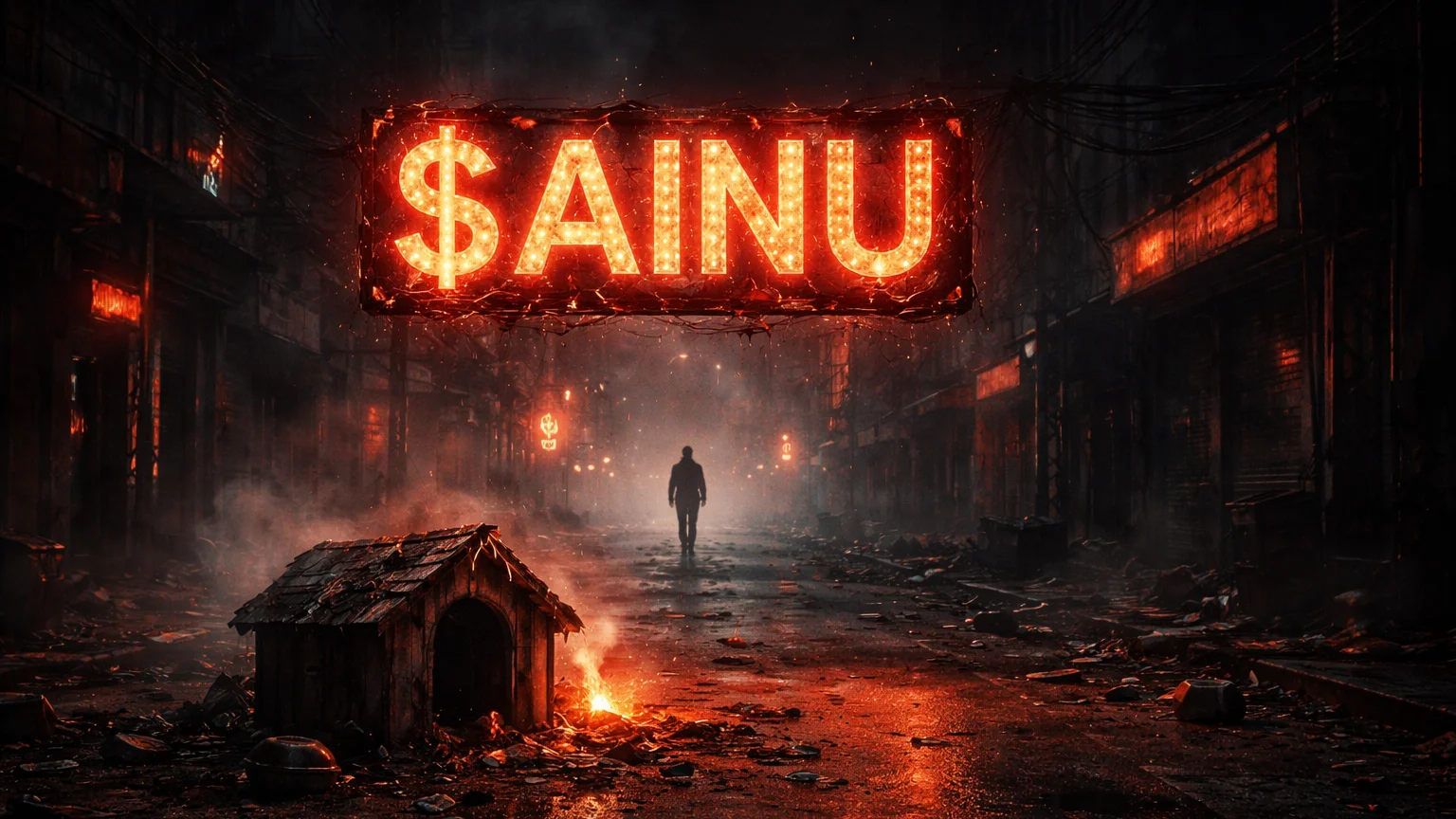
Ainu Ken launched on pump.fun sometime around 12:25 PM UTC on March 18. It had a website (ainukensol.fun), an X community page, and the kind of cute dog branding that's become standard-issue for Solana meme tokens trying to catch a viral wave. Within four hours, 25,949 transactions had executed. $641,000 in volume had flowed through. And the token had crashed 94% from wherever its peak was, leaving the market cap at $2,397 — not $2.4 million, not $24K. Two thousand, three hundred and ninety-seven dollars. The entire project is now worth less than a used MacBook Pro.
- → One wallet controls 84.34% of total $AINU supply — the most extreme concentration we've covered
- → $641K volume and 25,949 transactions in under 4 hours, now sitting at a $2,397 market cap
- → Top 3 wallets hold 88.7% combined — there was never a real market, just an illusion of one
How It Went Down
The timeline follows a pattern so predictable it could be generated by algorithm. Launch with just enough infrastructure to look legitimate — a website, social links, themed branding. Allow initial buying pressure to build the chart. Let the green candles attract momentum traders and sniper bots. Then let the dominant wallet either sell into the liquidity or simply stop providing buy-side support. The result: a chart that goes up fast, peaks briefly, and collapses permanently.
The Red Flags Everyone Missed
Except "missed" is generous — these flags weren't hidden. They were screaming from the on-chain data from minute one.
The single most damning number: one wallet — address UDpiZgXDGZo24rkNHCBeHCdSM7jHBWqqceMP85DPvZn — holds 84.34% of the entire $AINU supply. Not 8.4%. Not even 48%. Eighty-four point three four percent. This wallet alone could crash the token to zero at any moment, and the remaining 15.66% of supply split across every other holder would be powerless to stop it. The second-largest wallet holds 2.47%. The third holds 1.89%. Combined top-3 concentration: 88.7%.
To put this in perspective: when MemeDesk covers tokens with top-3 concentration above 50%, we flag it as a major risk. Most healthy meme tokens sit between 5-15% top-3 concentration. $MEI, which we covered in the same scan cycle, has 3.7%. Ainu Ken's 88.7% isn't a risk — it's a guarantee. There was never a scenario where this token succeeds for retail. The 84% wallet was always going to be the exit, not the floor.
The Receipts
The on-chain evidence doesn't require sophisticated forensics. The deployer wallet (3oLp8yTPK4My9V71e9EVD99TahFRwXDkr6BkG2sSgkqp) currently holds zero tokens — standard for pump.fun launches, and not inherently suspicious on its own. But the Rugcheck score of 25 — while numerically low — misses the real story. Rugcheck's automated analysis didn't flag the 84% wallet as an insider, likely because the wallet wasn't technically linked to the deployer through on-chain transaction history. This is a known gap in automated risk tools: concentration that doesn't trace back to the deployer through direct transfers gets classified as "not insider" even when it functionally is.
Freeze authority is disabled. Mint authority is disabled. On paper, these look like positive safety signals — the deployer can't freeze transfers or inflate supply. But when one wallet already controls 84% of existing supply, these protections are meaningless. You don't need freeze authority when you own everything. The $4,079 in remaining liquidity tells the final chapter: even the liquidity pool has been nearly emptied. At the token's peak volume of $641K, there may have been $50-100K in liquidity. Now there's four thousand dollars. Someone drained the pool on the way out.
The Infrastructure of Legitimacy
Ainu Ken came equipped with more infrastructure than most pump.fun launches: a custom website at ainukensol.fun and an X community page at x.com/i/communities/2034197792516952373. In 2026, these are cheap to set up — a landing page takes minutes with templates, and X communities are free. But their presence serves a specific psychological purpose: they make a bot-launched token feel like a project. A buyer seeing a website and social links is less likely to check the holder distribution than a buyer seeing a naked contract address.
The buy-to-sell ratio of 55.3% buys (14,338 buys vs 11,611 sells) across the token's entire lifetime might look healthy in isolation. But volume-weighted, the sells were devastating — the 84% wallet didn't need many transactions to drain the liquidity pool. It just needed large ones. Meanwhile, the 14,338 buy transactions were likely a mix of sniper bots hitting the launch automatically, copy-traders following initial momentum, and a handful of actual humans who saw a green chart and aped in.
Lessons for Degens
First: check holder distribution before you check the chart. A 500% gain means nothing if one wallet can erase it in a single transaction. DexScreener shows holder counts. Solscan shows the actual distribution. Rugcheck shows concentration percentages. These tools take thirty seconds to check. Ainu Ken's 84% single-wallet concentration was visible from the moment of launch — every buyer who lost money had access to this information and chose the chart instead.
Second: a low Rugcheck score is necessary but not sufficient. $AINU scored 25 — technically "low risk" — because the automated checks focus on freeze authority, mint authority, and direct deployer-to-insider wallet links. It doesn't catch indirect concentration. If you see a Rugcheck score under 30, that means the deployer set up the token correctly. It doesn't mean the token is safe to buy. Always cross-reference the score with actual holder data.
Third: volume is the easiest metric to fake and the most misleading to trust. $641K in volume sounds impressive for a new launch. But volume generated by a small number of large wallets trading against thin liquidity isn't organic demand — it's a performance. The 25,949 transactions sound like broad market participation until you realize that automated wallets can execute hundreds of small transactions per minute. Transaction count without unique wallet analysis is noise.
Fourth: social infrastructure costs nothing. A website and an X community page used to signal that a team was invested in a project. In 2026, they signal that someone spent fifteen minutes setting up a facade. If a token has social links but zero actual social engagement — no tweets from real accounts, no Telegram group with organic discussion, no CT coverage — the infrastructure is set dressing, not substance.
🔴 Confirmed Rug Pull — 84.34% of supply in one wallet. 88.7% top-3 concentration. $641K in volume drained to a $2,397 market cap and $4,079 in liquidity. Every structural indicator pointed to this outcome from launch. The deployer created a token with clean authorities (no freeze, no mint) and a low Rugcheck score, then allowed a single wallet to accumulate the vast majority of supply. Whether that wallet is the deployer operating through an intermediary or a coordinated partner is ultimately academic — the result is the same. $AINU was never a tradable asset. It was a mechanism for extracting value from automated buyers and momentum chasers. The dog is dead. Don't pet it.
What happened to Ainu Ken (AINU) crypto?
$AINU launched on pump.fun on March 18, 2026, generated $641K in trading volume, then crashed 94% within four hours. One wallet holding 84.34% of total supply effectively controlled the entire market, and the token is now trading at a $2,397 market cap.
Was Ainu Ken a rug pull?
The evidence strongly suggests yes. A single wallet accumulated 84.34% of supply, the top 3 wallets controlled 88.7% combined, and liquidity drained from an estimated $50-100K at peak to $4,079. The concentration level made a rug pull outcome near-inevitable regardless of the deployer's stated intentions.
How to spot a rug pull on Solana pump.fun?
Check holder distribution on Solscan or Rugcheck before buying. If any single wallet holds more than 10-15% of supply, or top-3 concentration exceeds 30-40%, the token carries extreme rug risk. Also verify that volume is coming from diverse wallets, not a handful of large addresses trading against each other.
Is a low Rugcheck score safe?
A low Rugcheck score means the token's smart contract doesn't have obvious exploit vectors like freeze authority or mint authority. It does NOT mean the token is safe to trade. Rugcheck doesn't always catch indirect concentration — where one wallet holds most of the supply without a direct on-chain link to the deployer. Always check actual holder distribution separately.