$WEN Is Winning the Fast-Twitch Solana Board, but the Cashtag Collision Still Needs a Real Holder Handoff
$WEN ripped into the morning with roughly $1.05M in 24-hour volume on a $416.5K market cap only about two hours after launch, and watched-wallet buying helped put it on the screen early. The harder read is whether a board built around a recycled symbol, thin liquidity, and a 20.69% top holder can graduate from attention trade to something sturdier.
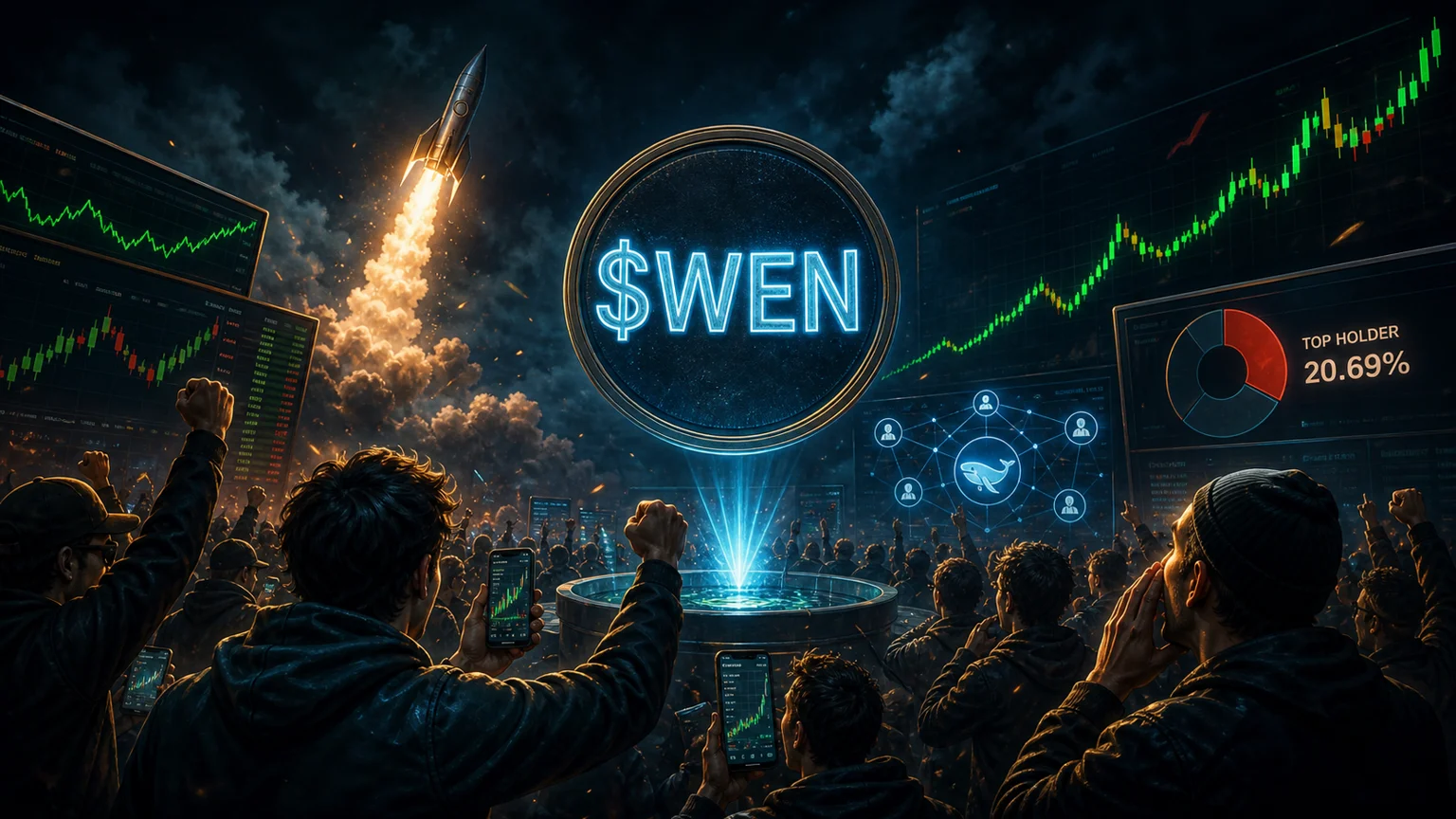
$WEN is not flashing the ugliest Solana contract warnings because freeze authority is off, mint authority is off, and the saved Rugcheck score sits at 29, but the symbol reuse matters. The board is asking traders to handicap a recycled cashtag, a 20.69% top holder, and only about $48.9K in liquidity while attention is arriving faster than ownership is distributing.
$WEN is doing the exact thing fast-twitch Solana boards are designed to do: force itself into the conversation before anybody has time to decide whether the move is durable. Only about two hours after launch, the token was already trading near a $416.5K market cap with roughly $1.05M in 24-hour volume and a 1,376% burst on the saved read. That kind of acceleration will always earn a look. The more interesting question is what kind of look it deserves.
The headline read is easy. Watched wallets were there early, the tape moved hard, and the symbol is familiar enough to create instant recognition. The harder editorial read is that $WEN is also leaning on a copycat-cashtag dynamic before it has fully earned its own identity. Rugcheck flagged the token for using a verified symbol, which means this is not just a meme board fighting for attention against other fresh launches. It is also borrowing a ticker that already carries history and reflexive mindshare.
That does not make the move fake. It does change the burden of proof. A clean new board can get away with a little ambiguity if the holder map broadens, liquidity deepens, and the first buyers do not choke the trade. A recycled symbol board has to prove even more because part of the bid may come from the recognition shortcut itself. $WEN has real flow underneath it, but it still needs a genuine holder handoff before the tape looks sturdier than the joke.
- → $WEN hit the saved read at roughly a $416.5K market cap with about $1.05M in 24-hour volume while the pair was still only around 2.0 hours old, which makes the board live by any Solana standard.
- → KayTheDoc and Value & Time both bought during the same early burst between 2026-06-24 03:26 UTC and 2026-06-24 03:26 UTC, giving the board a real watched-wallet breadcrumb before it became a normal screenshot trade.
- → Freeze authority is off, mint authority is off, and the Rugcheck score sits at 29, but the holder map still matters more than the permissions read because the top wallet controls 20.69% and the symbol itself carries a copycat warning.
Why the Board Got Loud So Fast
Timing explains a lot of the early excitement. The first watched-wallet buys landed when the board was still young enough that every fill mattered. KayTheDoc's tracked wallet hit twice at 2026-06-24 03:26 UTC, spending a combined roughly $137.37 for more than 661,000 tokens. Seconds later, Value & Time followed with another entry around $34.34. None of that size is market-defining on its own. In fresh Solana tape, that is not the point. What matters is that the right kind of eyes found the pair before the broader room did.
That is usually the phase where a board decides whether it will mature into a real conversation or remain an intra-wallet curiosity. $WEN passed the attention test immediately. Volume cleared $1M, the price sprinted, and the buy ratio stayed slightly better than even at about 54.3%. Those are healthy signs for a pair this young because they show the token was not surviving on one isolated wallet impulse. The market actually turned over.
Still, early attention is not the same thing as durable sponsorship. Watched-wallet prints tell traders the board was discovered by people who move quickly. They do not tell traders whether those same participants plan to stay, whether new buyers can absorb early supply, or whether the next audience is buying the meme, the ticker, or both. That distinction matters more on a board like $WEN because the recycled symbol lowers the friction for curiosity while doing nothing to improve the underlying structure.
What the On-Chain Data Shows
The contract shell is neither perfect nor alarming. Freeze authority is off, which removes one of the ugliest same-day Solana risks because the developer cannot simply halt transfers if the board turns chaotic. Mint authority is off too, which matters because fresh meme buyers should never have to wonder whether supply can be expanded into their momentum. Those two checks alone keep $WEN out of the obvious contract-joke bucket.
The Rugcheck score of 29 is where the read gets more nuanced. That is not a disaster score, but it is not a pristine one either. The flagged issue is the copycat-token warning tied to symbol reuse, and that matters because ticker familiarity can create a false sense of legitimacy. Traders scrolling too fast do not always separate cultural recognition from actual project differentiation. On Solana, that confusion can be a feature of the trade for a while. It can also become the reason the move struggles to hold once the easy novelty is gone.
Holder structure is the bigger practical question. The top visible wallet sits at 20.69%, which is enough concentration to matter in any same-day board. The next two visible buckets in the saved profile are much smaller at 4.4% and 2.53%, putting the visible top-three cluster around 27.6%. That is not the worst cap table MemeDesk sees on a fresh launch, but it is enough to keep the read honest. One wallet can still set the tone if it decides the joke has already paid.
Liquidity is the second pressure point. About $48.9K under a board doing more than $1M in 24-hour turnover is workable when momentum is one-way. It becomes far less comfortable when the trade asks late buyers to absorb profit-taking. The market has already shown it can attract traffic. The open question is whether it can absorb exits without turning the same velocity that powered the move into the thing that breaks it.
Why the Cashtag Collision Matters
Cashtag collisions are not automatically disqualifying in meme land. Sometimes they are part of the entire cultural payload. The market loves a familiar hook, and a recycled ticker can accelerate discovery in the same way a recognizable mascot or celebrity reference can. The problem comes when the recognition layer does more work than the actual board structure. Then traders are not really buying a developing market. They are buying the speed of confusion and the reflex of pattern matching.
$WEN is sitting right on that line. The Wendy's joke is clear enough to travel, the ticker is already encoded into crypto memory, and the launch tape has enough watched-wallet validation to keep the room from dismissing it. That combination is exactly why the board matters today. It is also why the next phase matters more. If the token keeps broadening its holder base and can defend volume without leaning on the same first wallets, the copycat warning becomes a footnote. If the handoff stalls, the recycled symbol starts to look less like a meme advantage and more like borrowed oxygen.
This is where discipline matters. A fast board with a familiar ticker can keep going simply because the room stays amused longer than skeptics expect. That is a real possibility for $WEN. But a meme that wins attention through recognition has to win conviction through structure. Otherwise every bounce becomes harder to trust than the last one.
$WEN does not have the ugliest contract profile on the screen because freeze authority is off and mint authority is off, but the setup is still fragile.
A 20.69% top holder, only about $48.9K in liquidity, and a copycat-symbol warning mean the board can turn from clever joke to crowded exit quickly.
If the ticker recognition pulls in buyers faster than the holder base decentralizes, the move risks becoming a short-lived attention trade instead of a durable handoff.
What Has to Happen Next
The clean upgrade path for $WEN is straightforward even if it is not easy. Liquidity needs to rise enough that exits do not feel theatrical. New holders need to absorb supply so the top wallet matters less with every passing hour. And the board needs to keep printing real activity after the novelty of the ticker wears off. If that happens, traders can stop talking about the collision and start talking about a meme that actually built its own tape.
Until then, the yellow rating fits. There is too much real activity here to wave the token away as empty noise. There is also too much structural uncertainty to upgrade it into a cleaner launch read. $WEN earned a spot on the radar because the board was early, active, and discovered by the right kind of wallets. It stays speculative because the market still has to prove the joke can survive once attention starts demanding more than recognition.
$WEN is a speculative launch-radar board because the early tape is real but the structure is still incomplete. Watched-wallet entries arrived before the wider room, the pair pushed roughly $1.05M in 24-hour volume, freeze authority is off, and mint authority is off. The reason this stops short of green is the mix around it: a copycat-symbol warning, a 20.69% top holder, and only about $48.9K in liquidity. The board deserves attention, but it still needs a genuine holder handoff before the cashtag collision becomes more than the story.
What is $WEN on Solana?
$WEN is the ticker for Wendy's Co on Solana, trading under contract address 66pQgfLHEfbHSBgYSZSrKEdJHHaGiYbgCtNbz48Apump. At the saved read it was trading near a $416.5K market cap.
Why is $WEN on launch radar?
Because the token forced a same-day reaction with roughly $1.05M in 24-hour volume, a 1,376% move, and watched-wallet entries that landed around 2026-06-24 03:26 UTC while the pair was still very young.
What does the on-chain profile look like for $WEN?
The saved contract profile is mixed rather than broken. Freeze authority is off, mint authority is off, and Rugcheck scored the token at 29, but the same report flagged a copycat-token warning and showed a top wallet controlling 20.69% of supply.
What is the biggest risk on $WEN right now?
The biggest risk is that a recycled ticker and thin liquidity pull in attention faster than the holder base decentralizes. If the top wallet starts leaning on the board before more supply spreads out, the trade can get crowded quickly.