$UPLON Printed Real Solana Volume, but the Cooldown Is Here and the Meme Has to Carry the Next Leg
Uplon Musk pushed roughly $3.12M in first-day turnover and still sits near a $121.6K market cap, which is enough to prove the board was more than a one-minute novelty. The problem is that the easy upside already got spent: the latest tape shows a 44.9% six-hour drawdown even with about $29.9K in liquidity, so the next chapter depends less on shock value and more on whether the Elon parody brand can keep attracting fresh buyers after the first sprint faded.
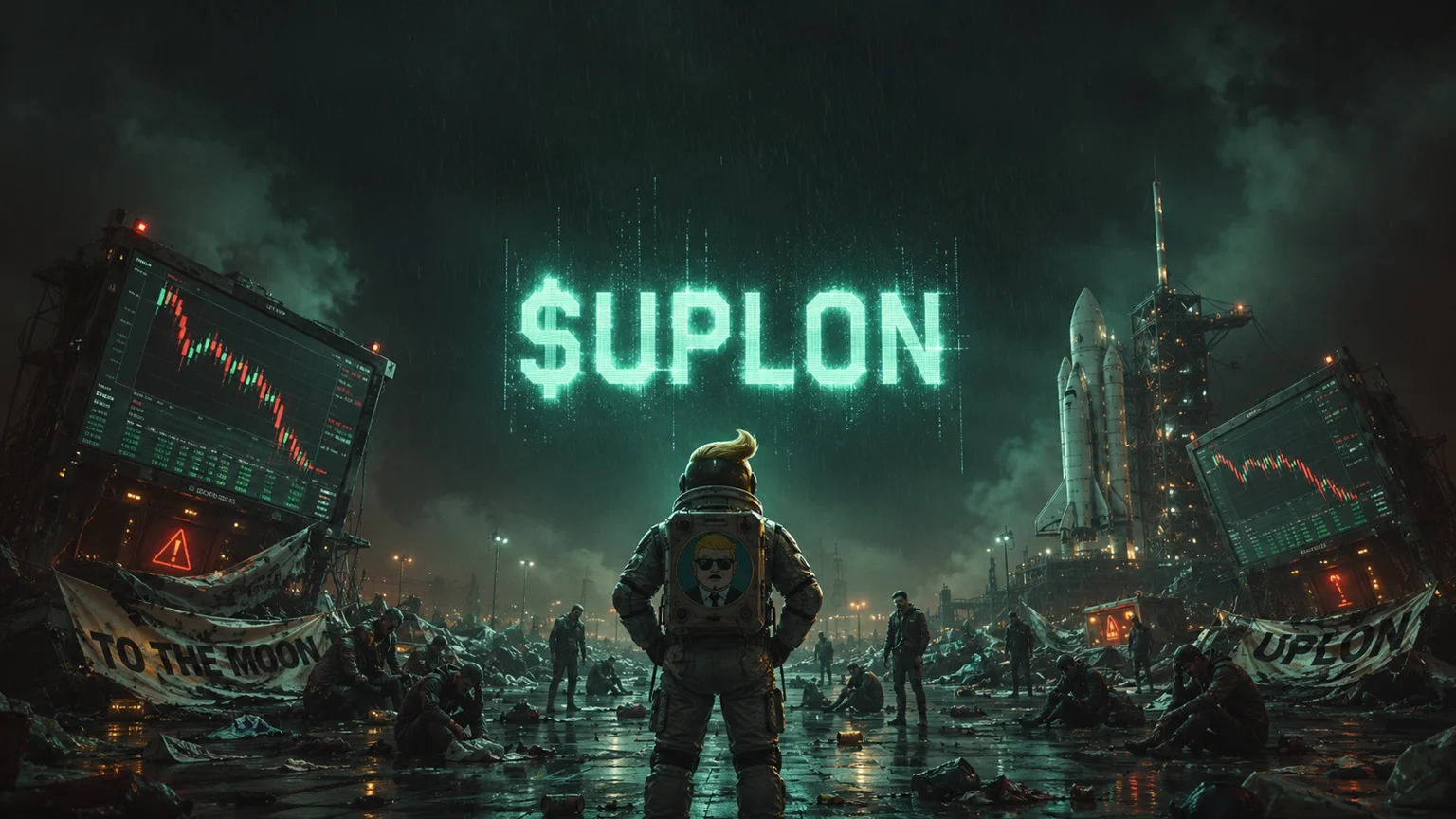
$UPLON has no active freeze or mint authority, carries a rug score of 1, and shows only about 14.2% concentration across the top three visible wallets, which is cleaner than average; the real risk has shifted from obvious contract issues toward whether demand can recover after a hard intraday cooldown.
$UPLON already did the part most Solana memes never manage. It printed scale. Roughly $3.12M in first-day volume is not random drift, and it is definitely not the profile of a board that only lived for a screenshot. Uplon Musk reached enough people, fast enough, to turn an Elon parody into a real trading event. That alone makes the token worth covering, because boards that can command that much turnover in the first day always have some combination of brand recognition, timing, and speculative reflex working in their favor.
The problem is that the market has already moved on from asking whether the launch was real. It was. The harder question now is what survives after the adrenaline drains out of the first move. The latest tape shows $UPLON down 44.9% over the last six hours and 26.7% over the last hour even while the pair still holds about $29.9K in liquidity. That is the tell. This is no longer a launch-discovery story. It is a post-pump exhaustion story where the board needs a fresh reason to matter after the initial joke and momentum wave already got monetized.
- → $UPLON has already pushed roughly $3.12M in first-day volume, which proves the board reached real traders instead of surviving on one isolated burst.
- → The current market cap sits around $121.6K with roughly $29.9K in liquidity, but the latest tape is also down 44.9% over six hours, so the easy upside has already been spent once.
- → The on-chain profile is cleaner than average with freeze authority off, mint authority off, a rug score of 1, and only about 14.2% concentration across the top three visible wallets, which means the current risk is less about contract dirt and more about demand fatigue.
Why the First Day Numbers Still Matter
The bullish case for $UPLON begins with one simple fact: the board already attracted enough churn to prove the meme was not a dead-on-arrival throwaway. First-day volume near $3.12M is substantial for a token still trading around a $121.6K market cap. That kind of turnover means there was broad participation, real flipping, and enough curiosity to keep the pool active far beyond the opening minutes. In meme markets, you cannot fake that level of attention for long. Either the board catches a social reflex or it does not. $UPLON clearly did.
The name helped. Elon-adjacent parody tickers are still one of the easiest ways to compress a joke into an instant trading thesis, especially when traders do not need a long explanation to understand what they are betting on. A meme like Uplon Musk arrives with a built-in read. That matters because first-session Solana speculation is mostly about compression. The faster a board tells its own story, the faster liquidity can arrive. $UPLON passed that test early, and the combination of a website, Telegram, and X presence made the launch feel more organized than the average anonymous burner board.
DexScreener also still shows active boosts on the pair, which is a useful detail because it confirms some of the reach is being supported deliberately instead of arriving only through organic redistribution. That is not automatically bearish. Plenty of teams pay to keep a hot board in front of more eyes. It does, however, change the read. When a token is being actively boosted after the first burst, the market has to separate paid visibility from genuine renewed demand. Those are not interchangeable forms of strength.
The Board Already Spent a Lot of Excitement
This is the part of the chart that matters more than the launch story. Even after a 129% day, the board is currently in visible cooldown. The last six hours gave back nearly 45%, and the last hour alone slipped another 26.7%. That does not mean the token is finished. It means the market is done paying for novelty at the same price it paid during the first rush. Traders who only look at the 24-hour candle will read momentum. Traders who look at the sequence will read exhaustion trying to decide whether it becomes a reset or a fade.
The decent news is that the pool is not microscopic. Around $29.9K in liquidity gives $UPLON a better chance to stabilize than a board trying to survive on four-figure depth. The bad news is that the volume-to-liquidity relationship is still extreme. When millions of dollars of turnover are sitting on a pool under $30K, the board can reprice hard in both directions because the story is doing more work than the structure. During the rise that feels powerful. During the cooldown it can feel like gravity showed up all at once.
That is why the next leg, if it comes, will have to look different from the first one. The first move ran on compression, novelty, and aggressive participation. A recovery move has to run on stickier sponsorship. It needs traders who did not get paid on the first sprint to decide the board is still worth pressing. That is a higher bar than simply getting everyone excited in the first place.
What the On-Chain Data Shows
The good news is that the contract-level read is not the reason to be worried. Freeze authority is off. Mint authority is off. The saved rug score is 1. The creator summary does not show a serial deployer pattern either, with creator token count at 0 in the current selection data. For a first-day Solana meme, that is a relatively calm foundation. The market does not need to trade around a live mint switch or a dev permission overhang here.
The holder map is also cleaner than average. The top visible wallet sits around 11.72%, while the next two visible lines are just 1.48% and 0.96%. That leaves the top three visible wallets at roughly 14.2% combined, which is a much healthier distribution than most same-day boards can claim. When holder concentration is that light, it reduces the odds that one obvious cluster can bully the entire chart on command. In other words, the board is not structurally dirty. It is simply cooling off.
That distinction matters because it changes how the token should be judged. If the holder map were ugly and the dev retained dangerous permissions, the bearish read would be simple. Here the bearish read is more subtle. The contract is cleaner. The holders are cleaner. The freeze and mint settings are cleaner. Yet price is still fading. That tells you the market is processing supply and attention, not panicking over obvious on-chain red flags. For traders, that is a much more interesting failure mode because it can reverse if demand returns. It can also keep bleeding if the meme itself stops feeling fresh.
Where a Second Leg Would Have to Come From
A real recovery on $UPLON probably does not come from the same traders who already farmed the first leg. It comes from the meme proving it still travels. The Elon parody angle is instantly legible, and that gives the board a better chance than average of attracting fresh eyes after a reset. The question is whether those fresh eyes become actual buyers or just more spectators watching a chart that already had its big moment.
If the board starts absorbing sellers while liquidity stays near current levels or improves, the cleaner holder map becomes an asset again. A token with only about 14.2% top-three concentration does not need a miraculous distribution cleanup before it can bounce. That is an advantage. But the board still needs proof that buyers are choosing to come back after seeing the cooldown, not before it. Until that happens, the stronger interpretation is that $UPLON is between phases and trying to figure out whether it deserves another one.
$UPLON no longer needs to prove that people noticed it. It needs to prove the joke still converts into fresh demand after the first rush already paid out.
That is why the current rating stays speculative even though the contract profile looks relatively clean. The easy part of the trade already happened, and the current chart is asking for a second thesis beyond first-day excitement. Traders should treat the cleaner on-chain structure as permission to keep watching, not as a reason to stop demanding evidence. If the board rebuilds with buyers stepping back in and liquidity holding up, the story can change fast. If not, $UPLON becomes another reminder that a good meme and huge first-day volume still do not guarantee a durable second act.
$UPLON matters because it already proved it could command real volume and because the current on-chain profile is cleaner than average, with freeze authority off, mint authority off, a rug score of 1, and only about 14.2% top-three holder concentration. The rating stays speculative because the board is in a real cooldown now, not just a harmless pause, and the next leg depends on renewed demand rather than on the first-day novelty that already got spent.
What is $UPLON on Solana?
$UPLON, branded as Uplon Musk, is a newly launched Solana meme coin that pushed roughly $3.12M in first-day turnover and is now trading around a roughly $121.6K market cap.
Why is $UPLON rated speculative if the on-chain profile looks clean?
The contract and holder map look cleaner than average, but the chart is already in a meaningful cooldown with a 44.9% six-hour drawdown, so demand fatigue matters more than obvious contract risk right now.
What would improve the $UPLON read from here?
The most important upgrade would be renewed buying after the cooldown while liquidity holds or improves, because that would show the meme can attract a second wave instead of living only off its first-day burst.