$STRONGER Is A Wipeout Read Now, Not A Rebound Candidate
The dollar meme collapsed to about $4.8K market cap with only $6.5K in liquidity and a holder map dominated by the top wallets. The cleanest move is treating it as a warning label.
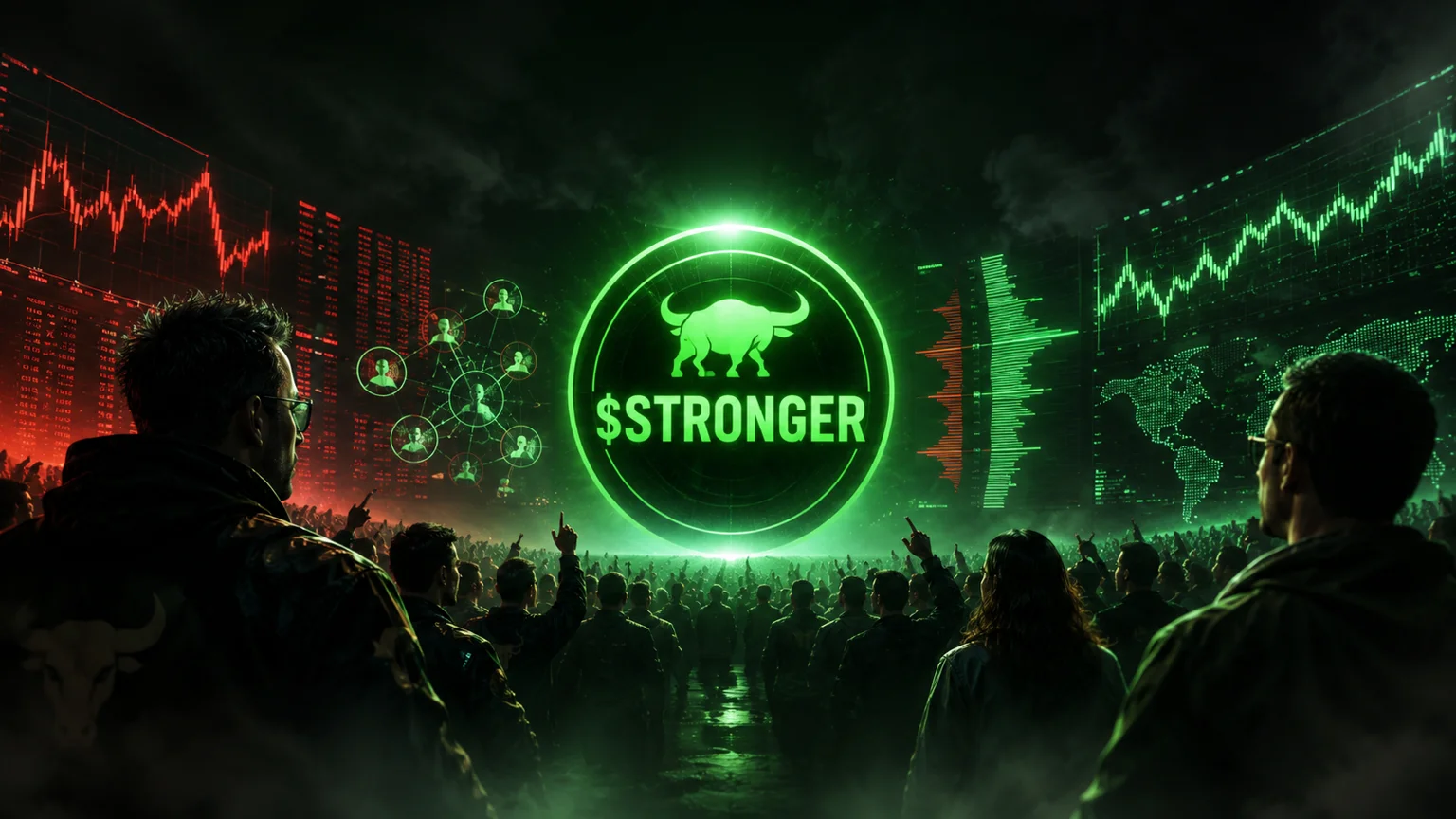
Rugcheck scores STRONGER at 501 and flags low LP-provider depth. The live holder map is the real problem: the top three holder lines add up to about 98.5%, with one line above 66%, while liquidity is only about $6.5K.
$STRONGER is the article where the rewrite should not try to rescue the coin. The old version was too polite. The updated data makes the read blunt: this is no longer a launch trying to prove itself. It is a collapse trying to find a bid after most of the market has already left. The token is sitting near a $4.8K market cap with roughly $6.5K in liquidity, and the holder map is extreme enough that any rebound needs to be treated as a trade against danger, not evidence of strength.
- → $STRONGER has round-tripped from the earlier watch zone to roughly $4.8K market cap, turning the setup into a post-collapse read.
- → The holder count is only 360, and top-three concentration near 98.5% makes the float structure the main problem.
- → Freeze authority and mint authority appear inactive, but that does not matter much when liquidity and holder concentration are this poor.
The Chart Already Answered The First Question
The first question for a low-cap launch is whether it can turn initial attention into a tradable market. $STRONGER answered badly. A token that falls to a $4.8K market cap after an earlier $298K read is not in a normal pullback. It is in damage-control territory. At this size, even small buys can create deceptive green candles, and small sells can erase them. That makes the chart visually tempting but structurally weak.
This is where meme traders get trapped. They see a token down heavily and assume the upside must be asymmetric. Sometimes that works. More often, the collapse happened because the market learned something the chart is still trying to hide. In $STRONGER, the problem is not just price. It is the combination of tiny liquidity, low holder count, and extreme concentration. That is not a dip. That is a broken market looking for another round of attention.
What the On-Chain Data Shows
The on-chain read is ugly even if the permission checks are not. Freeze authority and mint authority appear renounced, which is normally worth noting as a positive. Here it barely changes the conclusion. The holder map dominates the article. With only 360 holders and top-three concentration near 98.5%, the token does not have a healthy public float. The market is too dependent on too few wallets, and that makes any candle suspect until proven otherwise.
Liquidity near $6.5K is another problem. A pool that small cannot support serious buying or selling without heavy slippage. It can create the illusion of a violent recovery, but it can also trap traders who enter on a screenshot and discover there is no depth when they need to exit. That is why the holder and liquidity numbers matter more than the token name. The setup is structurally hostile.
Why The Dollar Meme Failed The Joke
The dollar-is-stronger concept had an obvious hook, but a meme hook only matters if the market can carry it. $STRONGER failed that test. The theme did not translate into durable demand, and the data now reads like the crowd moved on faster than the chart could stabilize. When a meme loses both attention and liquidity, the ticker becomes decoration. Traders are left with a low-depth pool and a concentrated holder map.
The irony is that the theme could still produce bounce attempts. Wipeout charts attract gamblers. A low market cap makes every small buy look dramatic, and the dollar meme can be recycled into a comeback narrative. That is exactly why the article needs to be stricter. Bounce potential is not the same as quality. A rebound from this base would still be a high-risk microstructure trade, not a restored thesis.
What Would Need To Change
For $STRONGER to become more than a warning label, the holder map would need to improve first. That means wider ownership, less visible top-wallet pressure, and liquidity deep enough to absorb normal exits. A higher candle alone would not fix anything. The market would need proof that buyers are building a real base rather than simply taking turns trying to flip a dead chart.
The problem is that low-liquidity tokens often cannot prove that cleanly. A few wallets can move the chart, and the same few wallets can crush it. Unless liquidity expands meaningfully, any green move risks being a mirage. Traders who insist on watching it should watch the pool before the price. If liquidity does not improve, the chart is mostly theater.
The contract permissions are not the headline. The headline is a $4.8K cap, $6.5K liquidity pool, 360 holders, and top-three concentration near 98.5%. That is enough to keep this in danger territory even if the ticker gets another bounce.
The Only Trade Here Is A Hazard Trade
$STRONGER can still bounce because anything this small can bounce. That is not the same as being worth a quality rating. The better classification is hazard trade: possible movement, poor structure, and a very high chance that late buyers become the liquidity. If the token somehow rebuilds holder distribution and pool depth, it can be reviewed again. Until then, the data says caution first.
Why A Bounce Would Not Change The Rating
The hard part with $STRONGER is that a bounce is easy to imagine and still not useful. At a market cap this low, a handful of buys can move the chart enough to look like a comeback. That does not repair the holder map, and it does not create depth. The rating should change only if the structure changes. Until liquidity expands and ownership becomes less concentrated, every bounce is just a low-depth reflex. Traders can scalp that if they want, but it does not deserve a quality label.
$STRONGER is not back in action. It is a wipeout read with a concentrated holder map and a pool too thin for serious conviction. The inactive freeze and mint authorities are not enough to rescue the setup. Any bounce should be treated as speculative danger, not evidence that the dollar meme is stronger.
Can $STRONGER still bounce from here?
Yes, but low-cap bounces are not the same as quality. With liquidity this thin, even small buys can create dramatic moves that do not hold.
What is the biggest red flag?
The holder map. Top-three concentration near 98.5% means the float is heavily controlled, which makes any move vulnerable to a few wallets.
Why mention freeze and mint authority if the article is bearish?
Because clean permissions are useful context. In this case, they do not outweigh the weak liquidity and extreme holder concentration.