$SAVIOURS Hit $171K in an Hour, but the Holder Map Is the Real Story
A watched wallet stepped into $SAVIOURS before the broader feed lit up. If that early bid turns into a real culture squeeze, the next move can still be violent; if the concentrated holder base becomes the exit route, late buyers are the liquidity.
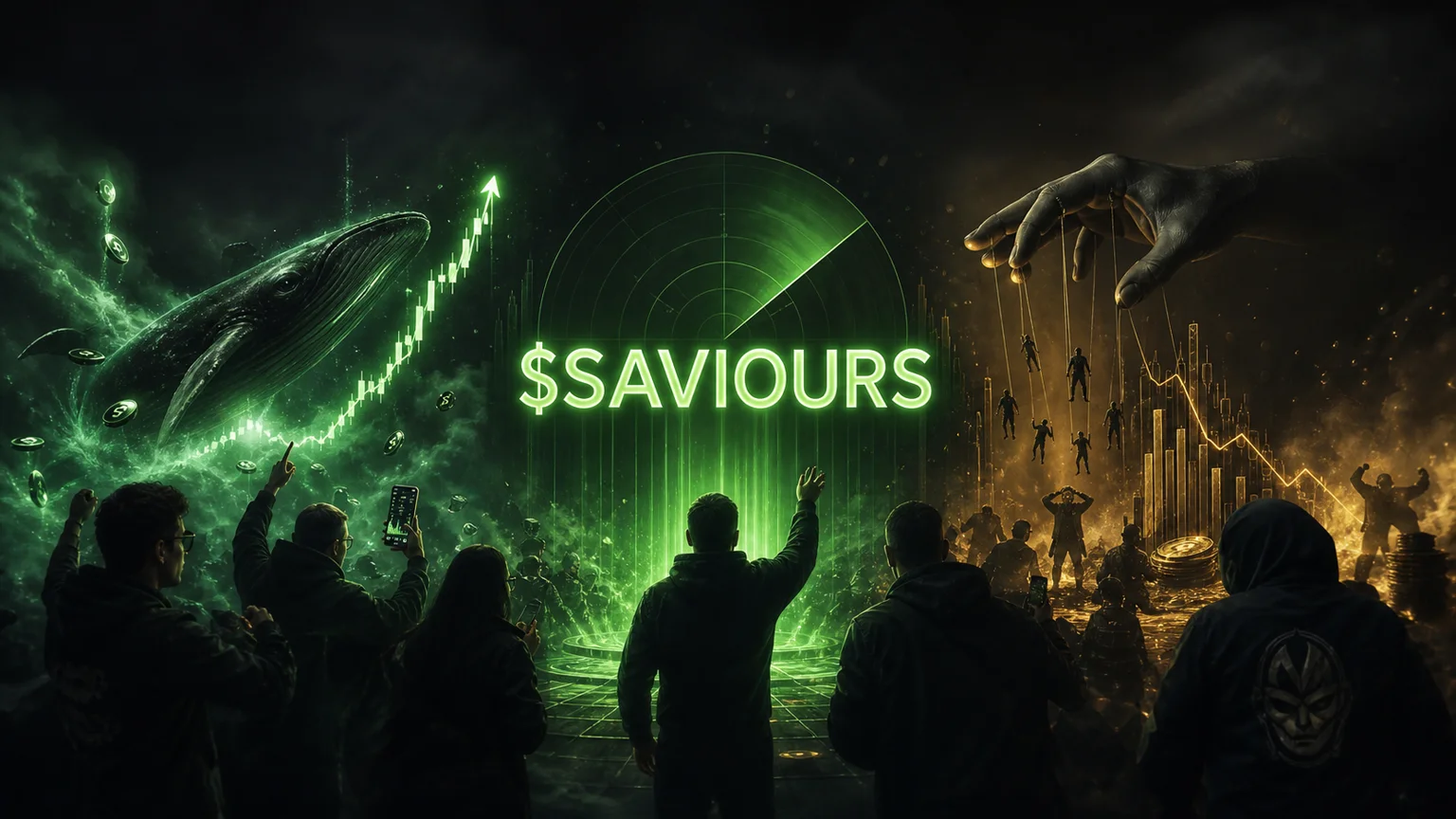
The liquidity pair holds 38.14% of supply, while the next two wallets hold 10% each, leaving the top three addresses at 58.1% combined even with freeze and mint authority disabled.
By 1:05 AM UTC on July 1, $SAVIOURS had already done the part meme launches need in order to earn a second look: it moved fast enough to force traders to ask whether they were seeing a real early bid or just a compact burst of turnover inside a tiny float. The Solana token printed roughly $171K in market cap, $31K in liquidity, and almost $864K in turnover while the clock still said the project was barely more than an hour old. The sharper detail is not just the speed. A watched wallet tied to Cupsey showed two buys at 4:43:06 AM UTC on June 30, spending a combined roughly $496 before the broader stream treated $SAVIOURS as a real radar name. That does not make the token blessed, and it definitely does not make it safe. It does tell you this launch was not purely random churn. Someone traders already watch was early, the chart responded instantly, and now the question shifts from whether the move happened to whether the structure underneath it can absorb the attention it just earned.
- → $SAVIOURS reached roughly $171K market cap with $864K in turnover while still inside its first two hours of life.
- → The watched Cupsey wallet bought about $496 worth at 4:43 AM UTC, well before the token looked like a normal late feed chase.
- → Freeze authority is off and mint authority is off, but the holder map is crowded enough that any exit from the top wallets can still turn this into a trap.
Why $SAVIOURS Forced Its Way Onto Radar
There are plenty of Solana launches that post a big first candle and disappear into the graveyard before anyone can even decide what the meme was supposed to be. $SAVIOURS stood out because the early ingredients lined up in a way degens actually pay attention to. The symbol is clean, the name is readable, the chart went vertical quickly enough to attract rotation, and the liquidity was not microscopic compared with the market cap. The buy ratio also leaned constructive, with buyers accounting for a little over 56% of the early flow instead of the kind of dead-even chop that usually points to round-tripping wallets. Add the Cupsey-linked accumulation and the story becomes less about a random pump.fun blip and more about a token that got an informed nudge before the crowd. That matters because launches in this size range do not need a giant catalyst to double again. They need a believable reason for speculators to think they are still early, and an observed wallet stepping in before the token became obvious is exactly the kind of detail that keeps a tiny market cap on watchlists.
The Numbers That Actually Matter
The easiest way to get fooled by a fresh Solana runner is to stare at the percentage move and ignore the ratio between liquidity, turnover, and ownership. The good news for $SAVIOURS is that the volume was real enough to matter. Nearly $864K in turnover against a roughly $31K liquidity pool means people were actually trading it, not just printing a lazy mark-up on no flow. The less comfortable part is how little room that still leaves if momentum cools. At this size, a few motivated sellers can change the personality of the chart in a hurry, especially after a move of roughly 430% in the early session. That is why the Cupsey wallet detail matters so much. If the early buyer stays patient and the next round of interest comes from organic meme hunters instead of one-wallet echo, $SAVIOURS can keep squeezing because the float is so small. If the same crowd decides the first pop was the trade, the exit door gets narrow instantly. Small caps do not need a fatal flaw to dump. They just need the next buyer to arrive a few minutes late.
What the On-Chain Data Shows
This is where the read on $SAVIOURS gets more nuanced than the headline candle. The enriched dev profile is cleaner than the typical throwaway meme launch in two important ways: freeze authority is disabled and mint authority is disabled, which cuts out two of the lazier contract-level games degens have to worry about on day one. The normalized Rugcheck score also came in at 1 on the enriched profile, a much calmer read than the rougher early security snapshot that initially tagged the name for concentration risk. That cleaner contract setup is worth something. It means the bear case is not coming from an obvious switch the deployer can flip. The bear case comes from ownership. The top holder list shows the liquidity pair at 38.14% of supply, then two separate wallets at 10% each, putting the top three addresses at 58.1% combined. Even if one of those addresses is structural liquidity, the practical result is the same for traders trying to judge risk: a lot of supply influence sits in very few hands. The broader security view also warned that the top 10 users control more than 50% of supply. So the on-chain picture is mixed in the way that matters most for an early runner. Holder concentration is high, freeze authority is off, mint authority is off, and there is no evidence from the available data that the creator is running a serial factory of other meme launches. That does not erase the concentration issue. It just means $SAVIOURS looks more like a crowded cap than a blatantly broken contract.
- Cleaner contract settings reduce the easy rug vectors.
- High holder concentration keeps the chart vulnerable even without an obvious contract exploit.
- For a token this small, distribution matters more than slogans.
Who Showed Up Early
The most useful participation signal in the selection data is the Cupsey-linked wallet activity. Two buys hit at the exact same second, 4:43:06 AM UTC on June 30, for a combined token haul of a little over 4.55 million $SAVIOURS and a combined dollar outlay just under $500. That is not whale-size capital, but it is not supposed to be. What matters is sequencing. In micro-cap Solana launches, a watched wallet arriving before the token becomes widely visible often matters more than the raw dollar amount, because these names move on timing and narrative density rather than on deep capital pools. A small early buy can be enough to tell the rest of the market that somebody who lives inside the meme trenches noticed the token before they did. That is exactly the sort of detail traders screen for when deciding whether a first-hour runner deserves another look. It also raises the bar for the next participants. A token that already had informed eyes on it needs new demand that is broader than the first insider circle, otherwise the chart turns into a handoff between the earliest buyers and the last people to notice the move.
Why the Exit Door Still Matters More Than the Meme
The temptation with a launch like $SAVIOURS is to focus on the best version of the story: decent liquidity for its size, a watched wallet buy, disabled freeze authority, disabled mint authority, and a price curve that tells every fast-twitch trader there could be another leg if the meme sticks. The problem is that this same setup can reverse for equally mechanical reasons. When top holders control a large chunk of supply, momentum names often stop behaving like open auctions and start behaving like staged exits. That does not require bad intent from the team. It just requires a few concentrated wallets deciding their work is done. The disciplined way to read $SAVIOURS here is to separate contract cleanliness from market cleanliness. Contract cleanliness says there is no obvious mint lever, no freeze lever, and no immediate deployer history screaming serial rug. Market cleanliness is less settled. The holder base is still tight, the liquidity is still light relative to the turnover it just absorbed, and the market cap is still small enough that every new seller matters. If this token keeps attracting attention and the holder map widens over the next trading window, the setup improves fast. If concentration stays heavy while the first buyers start distributing, the same compressed float that helped the pump becomes the reason the chart falls apart.
MemeDesk Verdict
🟡 Speculative. $SAVIOURS has the kind of first-hour ingredients that can keep a Solana launch alive: real turnover, a watched wallet arriving early, freeze authority disabled, mint authority disabled, and no obvious serial-deployer stain in the available profile. But the holder concentration is too heavy to give this a cleaner rating today. In practical terms, this is a launch-radar name worth stalking for distribution improvement, not a token that has earned blind trust. If the holder map opens up while liquidity holds, the read gets stronger. If the same few wallets stay dominant, the next squeeze can become the exit.
FAQ
What is $SAVIOURS on Solana?
$SAVIOURS is a newly launched Solana meme token trading under the name The Saviours. At the time of this write-up, it had reached roughly $171K in market cap with about $31K in liquidity and nearly $864K in turnover during its first hours on market.
Why does holder concentration matter so much for $SAVIOURS?
Holder concentration decides who controls the exit door in a tiny-cap token. The enriched profile showed the liquidity pair at 38.14% of supply and the next two wallets at 10% each, so the top three addresses controlled 58.1% combined. Even with freeze authority off and mint authority off, that kind of ownership concentration can still create sharp downside if those wallets start selling.
Who bought $SAVIOURS early?
The selection data showed two buys from a Cupsey-linked watched wallet at 4:43:06 AM UTC on June 30. The combined spend was just under $500, but the significance is timing rather than size: the wallet appeared before $SAVIOURS looked like a broad late-chase token.
What would make the $SAVIOURS setup improve from here?
The biggest upgrade would be better distribution. If more wallets absorb supply, the top holder share comes down, liquidity holds near or above current levels, and the token keeps printing real turnover without one-sided exits, the case becomes stronger. Without that broadening, the same compressed float that powered the first surge can become the main risk.