
$RONIN Is Trying to Rebuild After a 60% Solana Flush
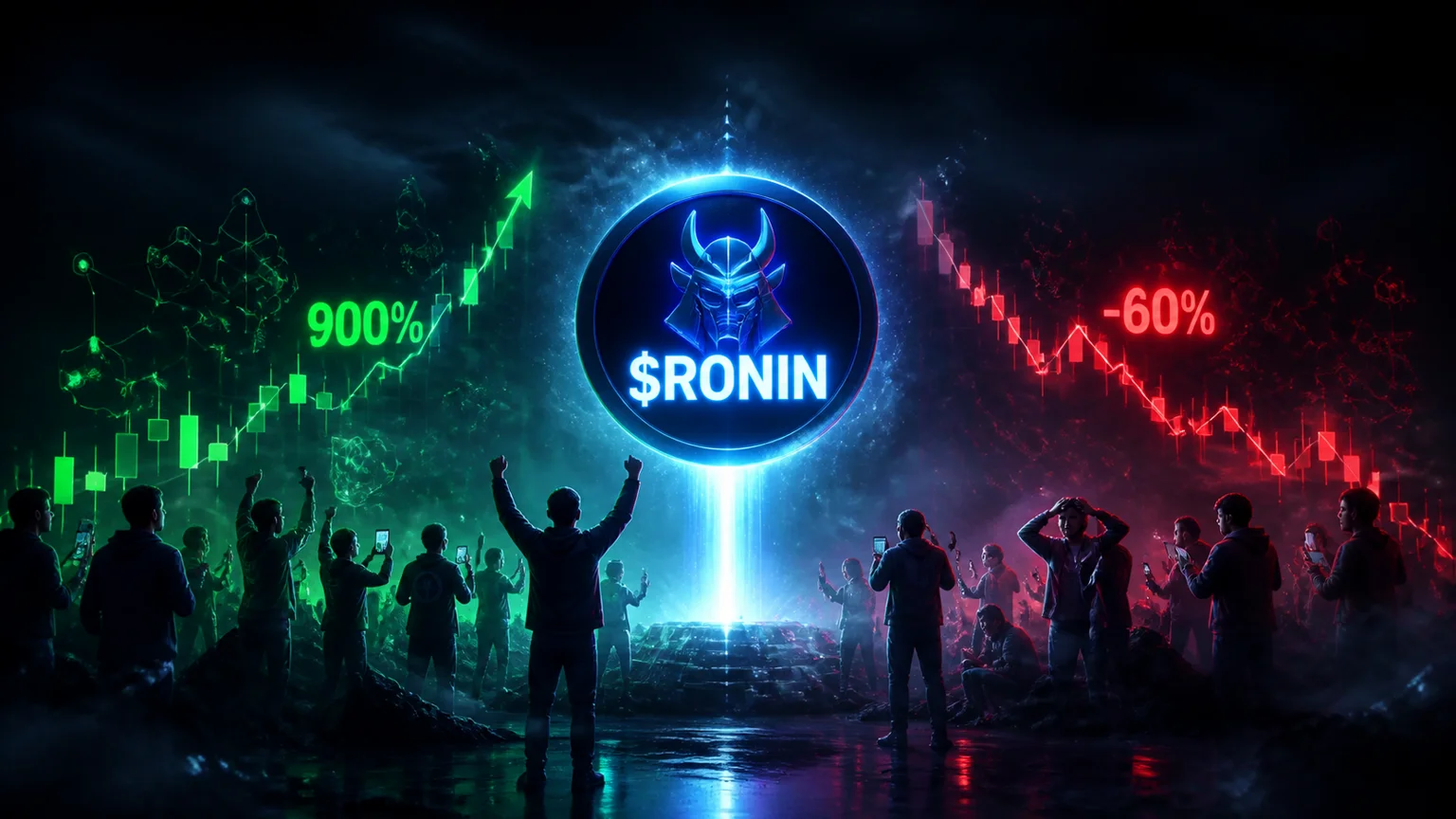
$RONIN ripped almost 900% over six hours, then fell nearly 60% over the daily window. The live question is whether this is a culture-meme bid finding its second leg or a thin-liquidity exhaustion trade after the easy candle already printed.
Mint and freeze authority are disabled, Rugcheck shows a 22 score, and the top three listed wallets control about 37.0% of supply.
$RONIN is giving traders the kind of chart that looks exciting until the exit math gets real. The Solana meme is roughly six days old, trading around a $1.15M market cap, and still showing a huge short-term burst: about +53.3% over one hour and +895.5% over six hours in the latest snapshot. That would normally be enough to pull every momentum account into the room. The problem is the same tape also shows a -59.7% move over 24 hours. $RONIN is not a clean breakout story. It is a post-pump exhaustion test with enough bounce left to be dangerous on both sides.
That makes the editorial read narrower than the green candle. $RONIN has real volume, but not a deep exit door. It has disabled mint and freeze authority, but a holder map that still gives a few wallets meaningful control over the next move. It has culture-meme energy because the name is immediately legible to crypto-native traders, yet the chart has already punished late entries once. The live question is whether fresh buyers are rebuilding a second leg after the first flush, or whether the rebound is simply letting earlier holders sell into renewed attention.
- → $RONIN is near a $1.15M market cap with about $769.9K in 24-hour volume, giving the token active turnover after a violent drawdown.
- → The tape is split: +895.5% over six hours, +53.3% over one hour, and still -59.7% over 24 hours.
- → Mint authority and freeze authority are disabled, but the top three listed holders control about 37.0% of supply against only $42.9K in liquidity.
A Rebound With a Trapdoor
The important thing about $RONIN is not that it moved. Plenty of pump.fun launches move. The important thing is that it moved after already showing a brutal daily flush. A token can fall 60% and still bounce hard because short-term supply gets exhausted, sidelined traders chase the first reversal, and market makers or large holders let the chart breathe. That is tradable, but it is not the same as healthy. A six-hour surge near 900% tells you attention returned quickly. A daily candle still down nearly 60% tells you the earlier sell pressure was not imaginary.
This is why $RONIN should be read as a liquidity trap risk rather than a simple momentum flag. With roughly $42.9K in liquidity, the token can move fast in either direction. That makes every buy wave look larger than it would in a deeper pool, and it makes every sell cluster more punishing once bids thin out. The $769.9K daily volume number is large relative to the pool, which means the market is actively recycling inventory. The bullish version is that new demand is eating the float. The bearish version is that the same attention is giving large holders repeated chances to exit without killing the chart in one move.
Why Degens Are Still Watching
$RONIN has one thing many meme launches never get: a name that works instantly in crypto culture. Ronin already carries gaming-chain baggage, trader recognition, and a clean visual identity in the mind before the token explains anything. That kind of cashtag collision can matter in meme markets. Traders do not need a whitepaper to understand why the name might catch a bid. They only need the chart to keep rewarding attention long enough for the meme to travel.
The market data gives that attention a reason to exist. $RONIN is not sitting in a dead corner with a few bot prints. The snapshot shows 3,759 transactions over 24 hours, 347 holders, and an organic label in the middle of the range rather than the bottom. Buys and sells over the latest hour lean sell-heavy, with 74 buys against 100 sells, but price was still up over that hour. That tension is exactly the point. Either buyers are absorbing pressure more aggressively than the transaction count suggests, or the next wave of selling has not landed yet. Both versions can produce a violent next move.
What the On-Chain Data Shows
The on-chain profile is mixed rather than ugly. Rugcheck data shows freeze authority disabled and mint authority disabled, so the two most obvious Solana control risks are not active in the profile. The listed Rugcheck score is 22, with no named risks shown in the provided profile. That gives $RONIN a cleaner contract-control read than many launchpad memes. It does not make the token safe, and it does not erase the market-structure problem created by thin liquidity after a massive move.
Holder concentration is where the caution comes back. The largest listed wallet holds about 18.94% of supply. The second listed wallet holds about 14.24%, and the third sits near 3.83%. Together, the top three listed holders control about 37.0%. None of those wallets are flagged as insiders in the provided profile, but concentration still matters when liquidity is only around $42.9K. A holder map like this does not need malicious intent to pressure price. It only needs one large wallet to decide the rebound is liquid enough to sell into.
The dev wallet read is notable mostly because it should not be overplayed. The creator wallet is listed as 3xfHXYiPMJQUYqF23cHJUMPkQEjoQ6W2f9L5i1XPXb7r, creator token count is shown as zero, and the profile does not list a serial-deployer trail. That is cleaner than a wallet with a long graveyard of abandoned launches. Still, the creator wallet is also the largest listed holder at 18.94%, which means the market has to treat dev-side supply as part of the live risk map. For $RONIN, the permissions look cleaner than the distribution.
The Exhaustion Read
Post-pump exhaustion does not mean a token must go lower immediately. It means the easy part of the move already happened, and every new buyer is now competing with people who have much better entries. $RONIN has already printed the kind of percentage move that changes holder behavior. Early buyers do not need another 10x to feel rich. They only need enough rebound liquidity to reduce exposure. That is why the daily drawdown matters more than the one-hour candle by itself.
The cleanest bullish path is a controlled reset: $RONIN holds above the post-flush range, liquidity does not vanish, and daily volume stays high without market cap bleeding lower. In that version, the 60% daily drop becomes the first washout before a more durable culture-meme bid. The weaker path is more common in this part of the market. Volume stays loud, price chops lower, and the chart keeps giving short-lived reversals until attention rotates elsewhere. The current data does not settle that argument. It only says the argument is active enough to watch.
$RONIN has cleaner authority settings, but the combination of 37.0% top-three holder concentration and $42.9K liquidity means the next sell wave can matter more than the headline pump.
What Would Change the Signal
For $RONIN to improve from speculative to clean, the next UTC sessions need to show absorption instead of just volatility. The most constructive read would be market cap stabilizing above the current zone, liquidity holding or expanding, and the holder count growing without top wallets becoming more dominant. The buy/sell balance also needs to stop leaning like a bounce being sold. A token can survive one ugly daily candle if new demand arrives quickly. It cannot survive repeated rebound selling forever.
The downgrade path is just as clear. If liquidity drops, the exit door gets narrower. If the top holder or second holder starts pressing supply into every green candle, the holder map becomes the story. If volume remains high while market cap keeps sliding, the active tape stops looking like rebuilding demand and starts looking like distribution. $RONIN does not need a perfect chart from here, but it does need evidence that the latest rebound is more than a reflex bid after a violent flush.
$RONIN earns a speculative launch-radar read. The token has a strong culture-meme name, major short-term momentum, real daily volume, disabled mint authority, and disabled freeze authority. The caution is equally clear: a near-60% daily drawdown, thin $42.9K liquidity, only 347 holders, and about 37.0% supply concentration across the top three listed wallets. This is not a clean green-light tape. It is a post-pump exhaustion setup where the next move depends on whether buyers can absorb supply after the first dramatic washout.
What is $RONIN?
$RONIN is a Solana meme token launched through pump.fun, with the contract address 2JVEVXoRsskapZ8T56MjMNJq6Dk3feEUYSRmzkkipump.
Why is $RONIN moving?
$RONIN showed a sharp rebound in the latest data, rising about 53.3% over one hour and 895.5% over six hours, even though the 24-hour move was still down about 59.7%.
What does the on-chain profile show?
The provided profile shows disabled mint authority, disabled freeze authority, a Rugcheck score of 22, no listed named risks, and about 37.0% concentration across the top three listed holders.
What is the biggest risk for $RONIN?
The main risk is that the rebound becomes exit liquidity. Thin liquidity and meaningful holder concentration can turn a post-flush bounce into another sell window if demand fades.