$PalletTown Turns Pokemon Nostalgia Into A Fast Solana Tape Test
$PalletTown graduated from Pump.fun with a $133K market cap, 950 holders, and a clean-looking authority profile. The harder question is whether the nostalgia bid can survive its first post-ATH reset.
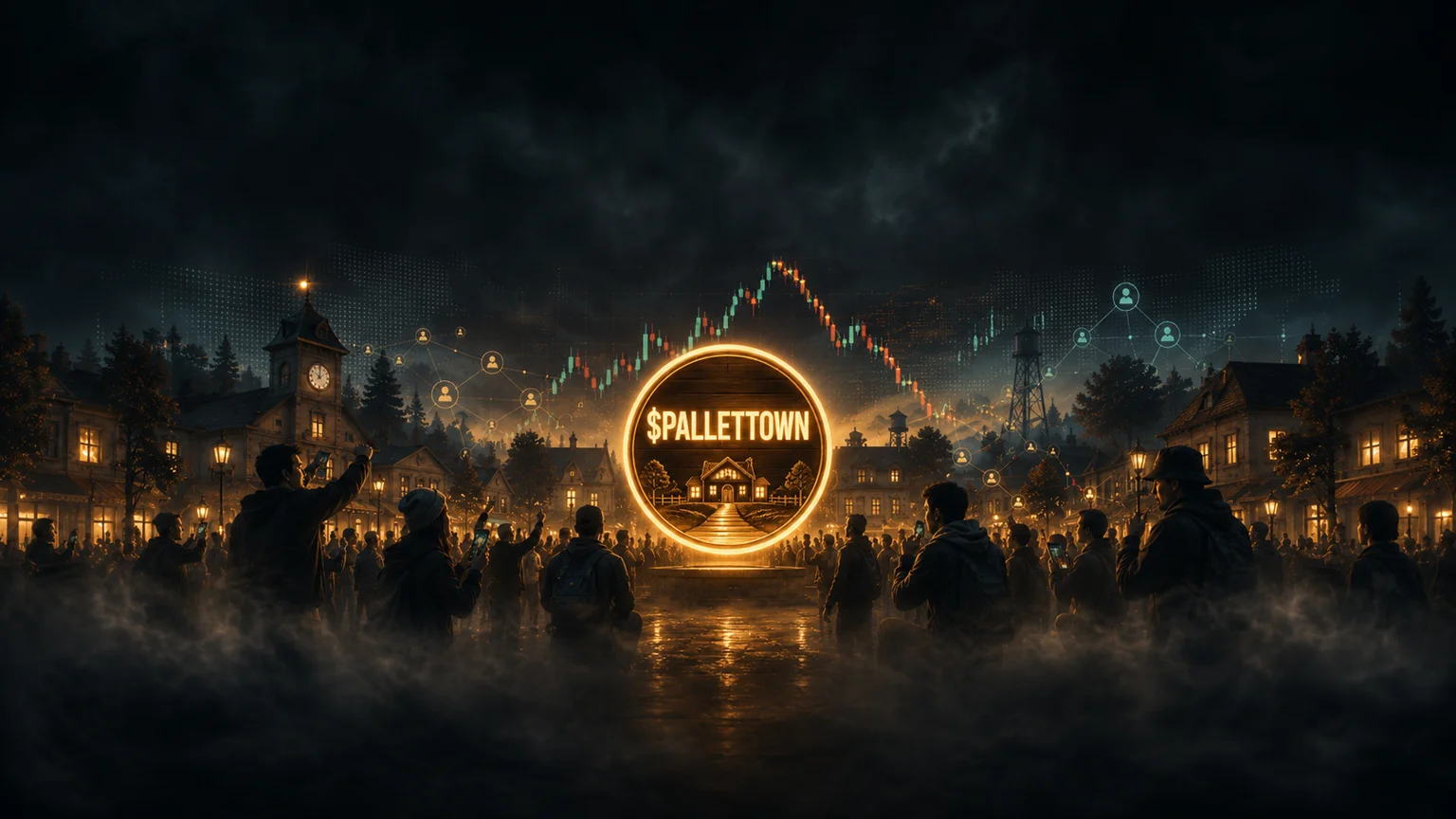
Authority settings are clean and the top-three holder concentration is below the danger zone, but the first wallet still controls a meaningful 13.19% of supply.
$PalletTown is not trying to sell the market a complicated thesis. It is leaning into the oldest gaming-memory trade on the internet: the place where the adventure starts, the map opens up, and everyone thinks they are still early enough to matter. That is why this launch deserves a cleaner read than the usual ticker blur. The coin moved from a Pump.fun launch into a roughly $133K market cap snapshot in about 11 minutes, tagged an early $247.6K market-cap high, then pulled back more than 46% from that peak. For a fresh Solana meme, that sequence is not automatically bearish. It is the first real handoff from impulse buyers to people deciding whether the joke has a second scene.
The angle is culture-meme bid, not deep utility. $PalletTown has a name that instantly explains itself, a token image built for timeline recognition, and enough early holder spread to avoid the ugliest kind of one-wallet chart. That does not make it safe. It means the first read is cleaner than the average speedrun launch where the chart is already hostage to one deployer setting, one oversized insider pocket, or one sniper wall. The trade now is less about discovering $PalletTown and more about watching whether nostalgic attention turns into repeat volume after the first flush.
- → $PalletTown reached a $247.6K early market-cap high, then reset toward $133K, putting it about 46.3% below that first peak.
- → The launch had 950 holders in the early snapshot, with the top three visible holders combining for about 16.9% of supply.
- → Freeze authority and mint authority both show false in the available Solana profile, and Rugcheck returns a very low risk score of 1.
The Nostalgia Trade
Pokemon references are dangerous in meme markets because everyone understands them too quickly. That is the upside and the trap. A clean cultural hook reduces the time it takes for a buyer to explain the trade to the next buyer, which matters when attention is moving in minutes. $PalletTown does not need a lore thread or a technical explainer. The name already carries the opening-town nostalgia, the childhood-console memory, and the broader internet habit of turning any shared reference into a ticker.
That kind of meme can run before it has a community because recognition does part of the distribution work. The risk is that recognition can also fade fast. Plenty of launchpad tokens get one clean joke, one green candle, and one wave of buyers who never return. The stronger version of the $PalletTown setup would show buyers defending the first retrace, new wallets entering without the holder map tightening, and social traffic becoming more than recycled nostalgia. The weaker version is simpler: the early high becomes the only high, and the chart starts trading like a collectible image with no bidder depth.
Why The Pullback Matters
The early drawdown is the most useful part of this signal. A token that only goes vertical for 11 minutes tells you almost nothing except that launch buyers can click fast. A token that gives back 46.3% from its first high and still keeps attention is more informative. It forces the market to reveal whether the first wave was pure reflex or whether people actually want exposure after seeing the first exit.
$PalletTown's current market-cap zone is small enough to move violently on modest buying, but also small enough that weak liquidity can punish late entries. The available 24-hour volume snapshot is only about $4.36K, which is not enough on its own to call this a durable runner. That makes the next few UTC hours more important than the headline pump. The clean version would be a higher-low attempt with volume expanding into the rebound. The ugly version would be a slow bleed where every bounce gets sold before the nostalgia hook can recruit fresh demand.
What the On-Chain Data Shows
The Solana profile is the reason $PalletTown gets a cleaner rating instead of a default speculative tag. The available Rugcheck data shows freeze authority set to false and mint authority set to false. In plain terms, the profile does not currently show the two authority switches that usually make a fresh Solana meme immediately untradeable for anyone who checks the contract before the chart. Rugcheck's normalized score is 1, which is about as low-risk as that metric gets, though a low score is still a contract read, not a promise about future price behavior.
The holder map is not perfect, but it is not screaming either. The largest listed wallet holds 13.19% of supply, while the next two visible wallets sit at 2.04% and 1.71%. Combined, the top three come to roughly 16.9%. That is concentrated enough to matter if the first wallet sells into thin liquidity, but it is far from the 50% plus clusters that turn a meme coin into a hostage situation. The available profile also shows no sniper count in the early enrichment and no listed insider flags on the top three holders.
The deployer read is also quiet. The creator wallet is listed as H49p8SqcBXZATwp2svSz7SjVzGHsoaWvcEjiSAHxZxU2, and the available profile does not show a history of creator tokens. That matters because a serial deployer pattern can change the whole article: the story stops being the meme and becomes the factory behind the meme. Here, the data does not force that angle. The cleaner concern is narrower and more practical: holder concentration is acceptable for a fresh launch, authorities look clean, but liquidity depth is not yet visible enough to treat the chart as hardened.
The Buyer Psychology
Small nostalgic memes often trade in two waves. The first wave is recognition: people see the name, understand the joke, and buy because the chart is still low. The second wave is identity: holders start acting like the meme belongs to them, replying with the ticker, clipping images, making derivative posts, and giving the chart a reason to exist after the first candle. $PalletTown is between those waves. The first wave clearly happened. The second has not been proven.
That is why the volume number matters so much. A $133K market cap with a clean authority profile can still fail if nobody shows up after the first burst. The market needs to see whether the Pokemon framing becomes a repeatable social object or just a launch gimmick. A good meme does not only make people smile; it gives them something easy to post while the chart is moving. $PalletTown has that raw material, but the holder base now has to turn it into pressure.
The cleanest bull case is not that $PalletTown already won. It is that the token survived its first reset with a contract profile that does not immediately sabotage the nostalgia bid.
Where This Can Fail
The bear case is straightforward. $PalletTown is still extremely early, still small, and still dependent on attention that can rotate away without warning. The first top holder at 13.19% is not a disaster, but it is large enough to shape the chart if liquidity stays thin. The lack of a visible liquidity figure in the selection data also limits confidence. Market cap screenshots can look impressive at this scale while the actual exit door remains narrow.
There is also the broader launchpad problem. A familiar meme can attract fast buyers, but fast buyers often sell into the first group that arrives after them. If $PalletTown cannot reclaim momentum near its earlier high, the same nostalgia that made it easy to buy can become easy to abandon. A clean authority profile reduces contract risk; it does not solve demand risk, liquidity risk, or the normal violence of a sub-$250K meme chart.
The Editorial Read
$PalletTown earns a watchlist slot because the setup is simple, the on-chain profile is cleaner than most early Solana launches, and the first retrace gives the market a real test instead of just a vertical screenshot. The story is not that a Pokemon-flavored token deserves a premium. The story is that a recognizable cultural meme launched with enough early holder spread and authority cleanliness to make the second-leg question worth tracking.
The next upgrade would come from visible liquidity, stronger volume, and a reclaim attempt that does not immediately get sold. The downgrade would come from holder concentration increasing, the largest wallet distributing into every bounce, or volume staying too thin to support the market cap. Until then, $PalletTown sits in the cleaner end of the fresh Solana meme basket: not proven, not endorsed, but meaningfully less messy than the average chart trying to turn one joke into a market.
$PalletTown is a clean launch-radar watch, not a free pass. The nostalgia hook is instantly legible, the authority settings look clean, and the top-three holder concentration is manageable for an early Solana meme. The chart still needs real second-leg demand before the Pokemon bid becomes more than a fast launch trade.
What is $PalletTown?
$PalletTown is a Solana meme coin launched from Pump.fun with a Pokemon-inspired nostalgia angle and the contract address FBudQtQvaGX7ok7tD29wG2zH37H4Ee2rbyNREw7Tpump.
Why is $PalletTown on MemeDesk radar?
$PalletTown reached an early $247.6K market-cap high, pulled back to about $133K, and showed a cleaner authority and holder profile than many fresh Solana meme launches.
Is $PalletTown safe?
No meme coin should be treated as safe. The available data shows freeze authority and mint authority set to false with a low Rugcheck score, but liquidity, demand, and holder-selling risk still matter.
What would make the $PalletTown signal stronger?
A stronger signal would include rising volume, visible liquidity depth, a defended higher low, and a reclaim attempt toward the early high without the holder map becoming more concentrated.