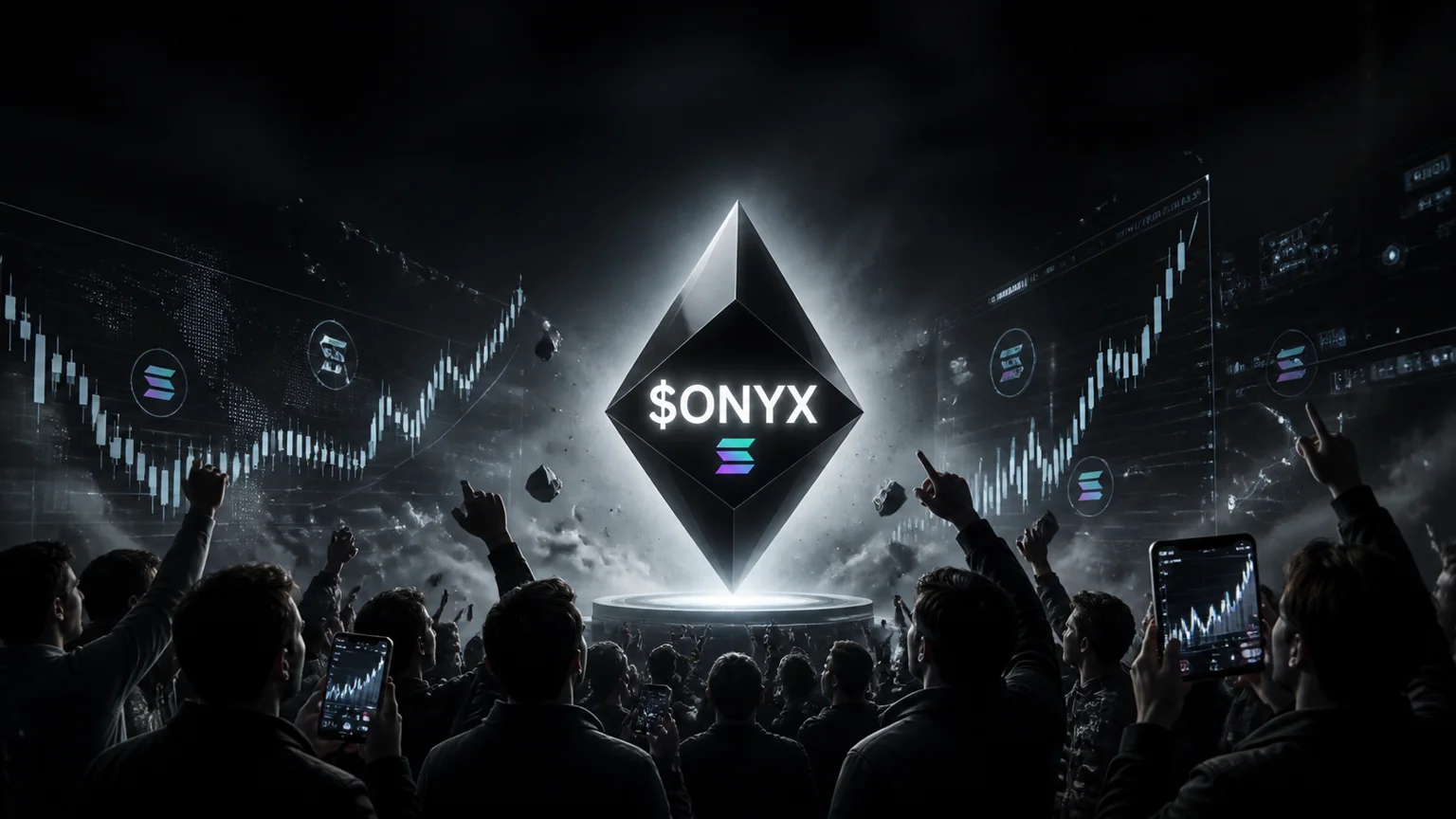
$ONYX Reprices 437% as Old Launches Become the New Bid
$ONYX is not a one-hour microcap stunt. It is a 37-day-old Solana runner doing $4M volume, and that makes the story a narrative reprice rather than another first-candle chase.
Clean authorities, low Rugcheck score, and top-three holder concentration near 15.8% make the on-chain profile cleaner than the average Solana runner.
$ONYX is the more useful kind of Solana signal: not brand new, not dead, and suddenly repricing hard enough that the market has to explain itself. ONYX COIN is about 37 days old, trades from the Moonshot lane, and was sitting near an $8.65M market cap in the latest UTC snapshot. The tracked 24-hour move was +437.5%, with another +39.4% in the latest hour.
That makes $ONYX a narrative-reprice article, not a pure launch-radar chase. The token already had time to fade into the background. Instead, it is doing $4.01M in 24-hour volume with nearly $198.95K of liquidity and 14,417 holders. When an older meme starts trading like a new launch without carrying the usual first-hour contract mess, the question changes. This is no longer about whether anyone noticed. It is about whether the second leg has enough real demand to survive profit taking.
- → $ONYX traded around an $8.65M market cap after a 437.5% tracked 24-hour reprice.
- → The market structure is deeper than most fresh launches: about $198.95K liquidity, $4.01M volume, and 14,417 holders.
- → Freeze authority and mint authority are disabled, Rugcheck shows a low score, and the top three listed holders are near 15.8%.
The Rotation Is Toward Survivors
The easiest meme trades are usually first-candle games: catch the ticker early, hope the pool expands, and get out before the holder map bites. $ONYX is a different read. A 37-day-old token that suddenly moves 437.5% is telling traders that older Moonshot names can still get repriced when liquidity, holder count, and turnover line up. That is the narrative shift. The market is not only rewarding new launches. It is also reaching back for survivors with enough structure to support a second act.
The current data supports that read. $ONYX is not moving from a $30K base with a $5K pool. It is moving from a multimillion-dollar board with almost $199K of liquidity and six figures of hourly transactions. The token logged 106,441 transactions over the tracked 24-hour window. That much churn does not automatically make the move healthy, but it does separate the setup from the tiny-pool lottery names that can be bent by a handful of wallets.
The Numbers Have More Weight
$ONYX's volume is not small, but the more important part is the relationship between volume and liquidity. About $4.01M in 24-hour volume against $198.95K in liquidity is still aggressive, yet it is a far more tradable ratio than the microcap launches where volume is dozens of times larger than the entire pool. A second-leg meme does not need to be calm. It needs enough depth that the chart is not completely hostage to the first seller.
The buy-sell split is the one note that keeps this from becoming an unqualified green-light read. The tracked hour showed 4,191 buys and 7,502 sells, with buys around 35.8% of the flow. That means the reprice is already meeting distribution. The difference is that $ONYX has enough liquidity and holder breadth to make that fight meaningful. Sellers are showing up, but they are not yet erasing the whole move.
What the On-Chain Data Shows
$ONYX has the cleaner on-chain profile in this selection. Rugcheck data shows freeze authority as false and mint authority as false. The normalized score is 1, and the available profile does not list active risk flags. That matters because a second-leg reprice becomes much easier to respect when the contract controls are not flashing obvious danger.
Holder concentration also looks more workable than the average Solana runner. The largest listed holder is 7.29%, followed by 4.43% and 4.07%, putting the top three near 15.8%. That is not perfectly distributed, but it is a long way from the one-wallet boards that define the worst launch traps. With 14,417 holders in the snapshot, $ONYX has a broader base for the market to work through.
The dev profile does not show a notable deployer story in the available data. There is no reason to force a serial-deployer paragraph when the creator-token count is zero and the dev wallet field is not carrying the signal. The on-chain point is cleaner and more direct: disabled freeze authority, disabled mint authority, low Rugcheck score, and a top-holder map that is not screaming centralization.
Why the Organic Score Matters
$ONYX has an organic score of 65.3 with a medium label. That is not a perfect read, but it is strong enough to matter next to the rest of the board. The token is not only showing volume. It is showing volume with a holder count, liquidity base, and on-chain profile that make the reprice feel less mechanical. For a meme coin, that is often the difference between a candle and a campaign.
This is where the narrative gets sharper. Solana meme liquidity has spent months punishing traders who buy the first thing that moves. $ONYX suggests a different lane can still work: older launchpad names that survived the first cycle, kept a holder base, and then caught a new wave when the market rotated back toward recognizable tickers. It is still a meme, still volatile, and still capable of giving back a huge chunk. But the structure is better than the usual one-hour sprint.
$ONYX earns the cleaner read because the reprice is happening on a broader base: 14,417 holders, nearly $199K liquidity, disabled authorities, and top-three concentration near 15.8%.
What Can Break the Setup
The main risk is late-cycle chase. A 437.5% tracked move creates its own gravity. Traders who ignored $ONYX for weeks can suddenly treat it like discovery, even though the easy part of the reprice may already be behind it. The high sell count in the latest hour matters here. It says the market is not simply accumulating. It is actively rotating, taking profit, and testing whether new buyers can keep absorbing supply.
Liquidity also has to keep improving. $198.95K is meaningful for a Solana meme, but it is not endless when volume is running above $4M. If liquidity stalls while sellers stay active, $ONYX can still turn into a sharp retrace. The cleaner holder map reduces the risk of one address defining the chart, but it does not remove normal meme-cycle exhaustion. The next test is whether the token can hold a higher range after the first reprice day cools.
The Read
$ONYX is one of the better-looking second-leg setups because the story and the numbers point in the same direction. The token has age, real turnover, a larger holder base, deeper liquidity, and a cleaner authority profile. That does not make it safe. It does make it different from the usual thin-pool launch chase. If older Moonshot names become the next rotation lane, $ONYX is exactly the kind of chart traders will use as proof.
🟢 Clean — $ONYX has no obvious authority red flags in the available data, top-three concentration is manageable near 15.8%, and the reprice is happening with real liquidity and holder depth. The risk is not contract panic; it is post-pump exhaustion after a 437.5% tracked move.
What is $ONYX?
$ONYX is ONYX COIN, a Solana Moonshot token trading under contract 4yHhHQM1gEVSVFhMwE1oU93aWRbsKfuhzXMdG6h9moon.
Why is $ONYX different from a fresh launch?
$ONYX is about 37 days old, already has 14,417 holders, and is repricing with about $198.95K in liquidity rather than relying on a tiny first-hour pool.
What is the main risk for $ONYX?
The main risk is exhaustion after a fast 437.5% tracked 24-hour move. The contract read is cleaner, but sellers were active in the latest hour and liquidity still has to keep up.