
$Nascat's First-Hour Pump Is Already Testing the Cat Bid
$Nascat hit fresh Solana launch-radar tape with $428K in volume, clean authority data, and an immediate pullback that turns the next hour into the real test.
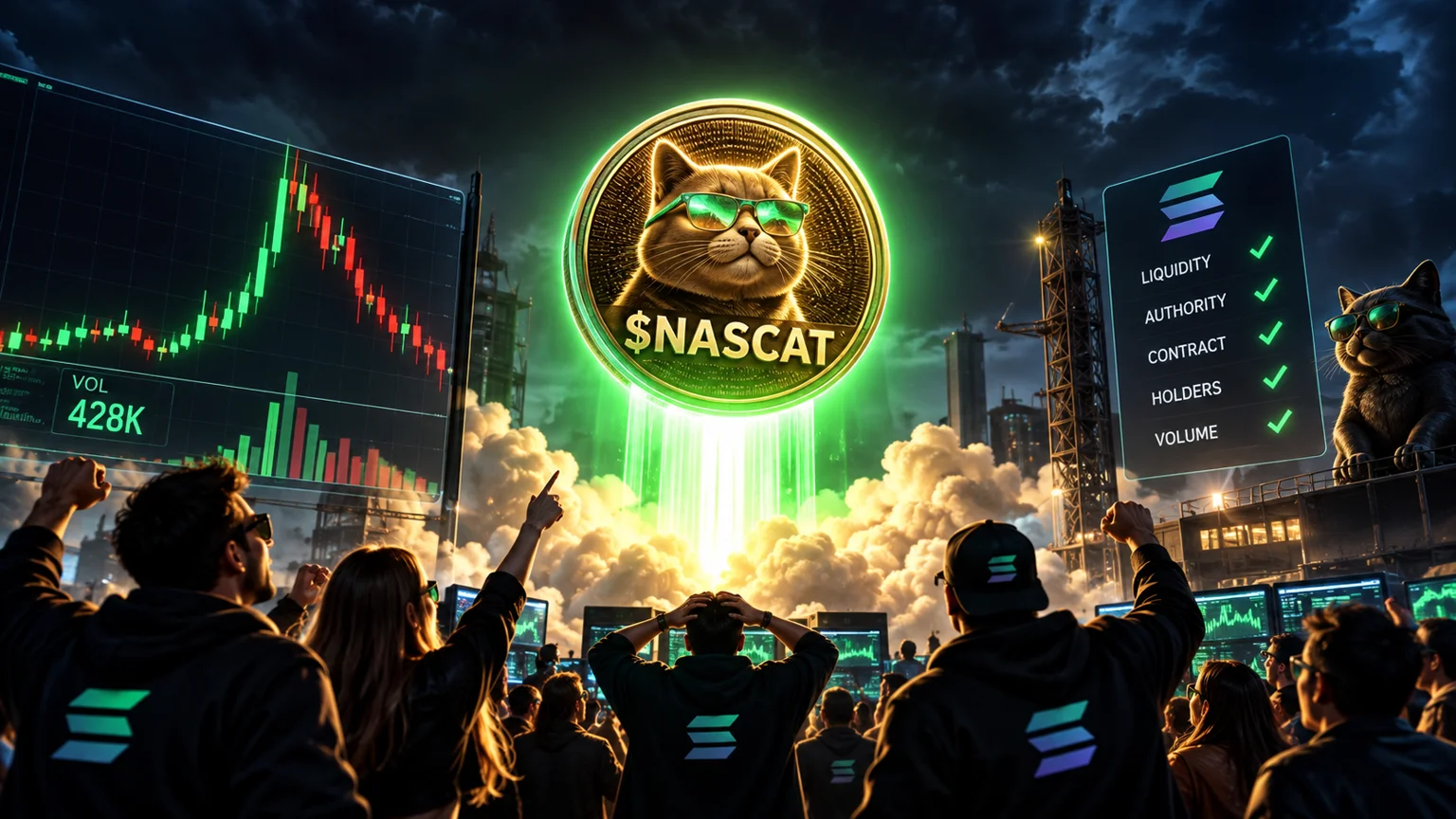
$Nascat is the kind of Solana launch that looks simple at first glance, then gets more useful when the first pullback arrives. The token showed up with the usual cat-meme packaging, a tiny market cap, and the kind of early transaction count that makes degen screens stop scrolling. The difference is not that $Nascat already proved anything. It has not. The difference is that the first data read is clean enough to make the selloff worth watching instead of instantly dismissing it as another throwaway pump.fun chart.
At 1:01 PM UTC, the pair was roughly 24 minutes old, trading around a $200.8K market cap with $37.2K in liquidity and $427.8K in 24-hour volume. That is a loud opening for a token this small. The tape also leaned sharply buy-heavy: 5,911 buys against 881 sells, or about 87% of counted transactions coming from buyers. Then the chart immediately gave back 27.48% over five minutes. That is the part that matters. $Nascat is not a victory lap. It is a live stress test.
- → $Nascat opened with $427.8K in volume against a $200.8K market cap, which is unusually loud for a first-hour Solana cat meme.
- → The first Rugcheck read is cleaner than average: mint authority disabled, freeze authority disabled, and a normalized score of 1.
- → The warning is price behavior, not contract structure: a -27.48% five-minute move means early buyers are already testing each other.
The Angle: Organic Volume Anomaly
The cleanest read on $Nascat is an organic volume anomaly, not a confirmed breakout. That distinction matters. Plenty of new Solana memes can print a green candle, spam a chart, and vanish before the second refresh. $Nascat's first pass has a different shape because volume is high relative to market cap, the buy count is lopsided, and the on-chain authority data does not immediately scream avoid. In a market where most microcap launches die from either structure or boredom, this one has at least earned a short window of attention.
The bear side is just as obvious. Buy-heavy transaction counts can be noisy on tiny launches. A market cap near $200K is not deep enough to absorb much panic. Liquidity near $37K helps, but it is still thin enough that a few aggressive sellers can make the chart look much worse than the headline numbers suggest. The point is not that $Nascat is protected from a rug or collapse. The point is that the first obvious problems are not where they usually are.
What Makes This One Different
The current Solana meme cycle keeps rewarding instantly readable characters. Cats remain one of the easiest cultural formats for a token to carry because the joke does not need a whitepaper, a roadmap, or a fake utility layer. $Nascat is playing that game directly: a cat brand, a simple ticker, a live website, and an X account. That is not enough to make a durable meme, but it is enough to explain why first-hour traders understood the trade without needing a thread.
The better question is whether the bid is only novelty or whether the market is trying to reprice a small, clean launch before the wider crowd notices. The $428K volume number is the reason $Nascat is worth writing up. When a token trades more than twice its market cap in volume this early, it usually means one of two things: either the launch is getting churned by short-term wallets, or a genuine pocket of traders is trying to establish a new meme before liquidity and social attention catch up. The five-minute dump leans toward churn. The clean authority data keeps the second path open.
The Numbers So Far
$Nascat's market cap and FDV are both listed around $200.8K, which keeps the setup firmly in high-volatility microcap territory. The price was near $0.0002008 at the snapshot, while liquidity sat around $37.2K. That liquidity-to-market-cap ratio is useful but not invincible. It gives traders a pool to work with, but it does not make the token resistant to sharp candles. On a launch this fresh, one wallet can still change the mood.
The transaction mix is the loudest bullish datapoint. A roughly 87% buy ratio across 6,792 counted transactions suggests $Nascat was not surviving on a single isolated candle. It had repeated participation. That said, early Solana microcaps can create misleading activity when bots, tiny entries, and rapid flips all hit the same pair. A buy count can confirm attention. It cannot confirm conviction. The only conviction test that matters now is whether the chart forms a higher base after the first hard shakeout.
The -27.48% five-minute move is why the rating stays speculative. A clean contract profile is valuable, but price action still has to prove that buyers are willing to defend the meme after the easiest green candle has already happened. If $Nascat reclaims momentum while volume stays elevated, the first dump becomes a normal launch reset. If volume fades while sellers keep leaning on the pool, the early volume starts to look more like exit liquidity than discovery.
What the On-Chain Data Shows
For a fresh Solana launch, the on-chain profile is the strongest part of the $Nascat read. Rugcheck data shows freeze authority disabled and mint authority disabled. That removes two of the most obvious mechanical risks traders screen for first: the ability to freeze transfers and the ability to mint more supply. It does not make the token safe, but it means the chart is not fighting those two immediate contract-level overhangs.
Holder concentration also looks cleaner than the average panic chart. The largest listed holder controls 9.42%, while the next two visible holders are both around 0.4%. The top three concentration comes in at 10.2%, with no insider flag shown on those listed wallets. That is not a guarantee of clean ownership, especially this early, but it is meaningfully different from the launches where a few wallets immediately control half the supply and everyone else is just renting a candle.
The normalized Rugcheck score is 1, and the enrichment did not surface listed risks or a history of the creator launching other tokens. The deployer wallet is visible, but the available data does not make the wallet itself the story. That is important editorially: not every token needs a forced deployer paragraph. Here, the useful conclusion is narrower. $Nascat has a cleaner contract and concentration profile than many tokens at this stage, while still living inside a market structure where liquidity is thin, the pair is extremely young, and price can move violently.
$Nascat's authority and holder data reduce some obvious contract worries, but the chart still needs to show that buyers can absorb the first wave of profit-taking.
The Setup From Here
$Nascat now has a simple market test: hold attention after the first scare. The ideal bull version is straightforward. Volume stays high, liquidity does not drain, the market cap stabilizes above the early base, and the next move up comes with real turnover instead of one thin wick. That would make the first pullback look healthy, especially for a token that moved fast enough to attract short-term sellers before the first hour was done.
That is why the next clean signal is not another green candle by itself. It is a defended range. A tiny Solana token can pump on novelty, but it survives by forcing sellers to chase back higher. If $Nascat can trade sideways with volume after a violent reset, the market is telling you the meme has buyers beyond the first sniper wave. If every bounce gets sold faster than liquidity can rebuild, the opening burst was probably the whole event.
Why Degens Are Watching
Meme traders do not need every launch to be revolutionary. They need a clean enough setup, a readable joke, and a reason to believe someone else will care in ten minutes. $Nascat checks the first two boxes better than most fresh charts. The website and X account give the meme somewhere to travel, but market attention is not the same thing as community.
The Solana cat lane is crowded, which cuts both ways. It means $Nascat does not need to educate the market; traders already understand the format. It also means the bar for sticking around is brutal. Every new cat token competes with a dozen other tickers, older memes with thicker liquidity, and whatever absurd character launches next. A clean first read gets $Nascat onto the watchlist. It does not give it a moat.
The Bear Case
The biggest risk is not hidden. It is speed. $Nascat moved quickly, attracted heavy volume, and then immediately printed a sharp five-minute selloff. That is exactly how new microcaps look when early wallets are happy to recycle liquidity instead of holding the meme. A $37.2K liquidity pool can look fine until several sellers hit it at once. The chart can go from clean to ugly before a slower trader finishes checking the contract.
There is also a difference between clean authority data and durable distribution. Top-three concentration at 10.2% is a good first read, but the holder map can change fast. Fresh launch supply can move between wallets, new clusters can form, and liquidity conditions can shift while the public chart still looks active. The best version of $Nascat needs more than low Rugcheck risk. It needs time, thicker liquidity, and evidence that the bid is not only a first-hour rotation.
$Nascat gets a speculative watch rating because the contract profile is cleaner than average and the first-hour volume is real enough to matter. The market cap is still tiny, liquidity is still thin, and the first pullback arrived fast. If buyers defend the range and volume keeps showing up, this becomes a stronger cat-meme launch read. If the next move is lower on fading interest, the opening burst was probably the trade.
What is $Nascat?
$Nascat is a fresh Solana cat-meme token trading from the contract 9e2g754kYeUjNuLkPuZUbUxyYwNhCr9iaKDPJbphpump.
Why is $Nascat on the MemeDesk radar?
$Nascat showed heavy first-hour volume relative to its market cap, a buy-heavy transaction mix, and a cleaner-than-average first on-chain authority read.
What is the main risk for $Nascat right now?
The main risk is market structure. $Nascat is still a tiny, fresh launch with thin liquidity and a sharp early pullback, so price can move hard in either direction.