85% Buy Ratio on a Token You Can't Even Type — $犬 Just Broke DexScreener's Language Barrier
A Unicode kanji ticker meaning 'dog' in Japanese just pumped 142% in 23 minutes with 8,200 buys against 1,406 sells. Either the bilingual meme meta just found its poster child, or 7,688 holders are about to discover that novelty tickers don't survive the overnight session.
Top holder owns 23.82%. Top 3 concentration at 40.1%.
At 9:51 PM UTC on March 30, a token with a ticker most Western traders can't type without copy-pasting graduated from pump.fun and started doing things that made DexScreener's trending algo sit up straight. The ticker is 犬 — the Japanese kanji for 'dog' — and in the 23 minutes since it hit open trading, it's up 142% with a buy ratio that looks like a typo: 85%.
- → 犬 ('dog' in Japanese) pumped 142% in 23 minutes with an 85% buy ratio — 8,200 buys vs 1,406 sells
- → 7,688 holders already in at an $84K market cap with $22.7K liquidity — absurd holder density for this size
- → Top 3 wallets control 40.1% of supply, with the leading wallet at 23.82% — heavy concentration on a token this young
What Makes This One Different
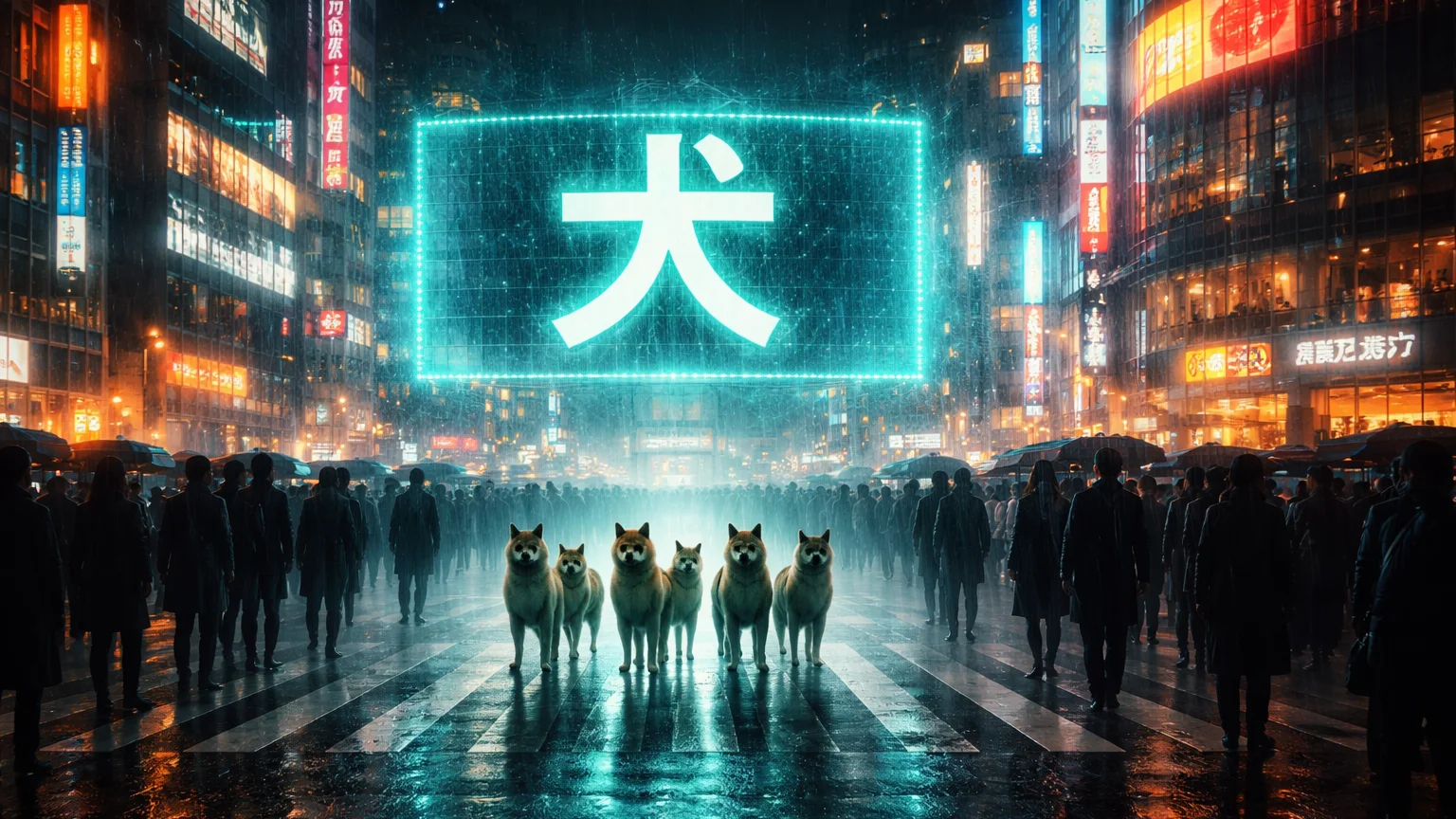
The gimmick is the ticker itself. 犬 is a single Unicode character — the CJK unified ideograph for 'dog.' It's the kind of play that immediately splits opinion: half of CT sees a clever cultural meme that bridges Eastern and Western degen communities, the other half sees a novelty that can't be searched, can't be hashtagged, and can't survive the attention economy.
Both sides have a point. Unicode tickers have worked before — the entire $BONK origin story involved a deliberately absurd presentation, and tokens with emoji or special-character tickers have carved out micro-communities by being inherently shareable. The friction of 'what even IS this ticker' becomes the marketing. Every screenshot, every confused comment, every 'how do I search for this' post is organic amplification.
The project is running exclusively through an X community page (not a standard account) and has no website. This is either radical minimalism or a sign that nobody's building anything behind the ticker. The X community format does one thing well: it creates a visible gathering point that shows member count and activity without requiring traditional social media management. For a 23-minute-old token, it's adequate. For a 24-hour-old token, it won't be.
The Numbers So Far
That 85% buy ratio is the headline number and it deserves scrutiny. 8,200 buys against 1,406 sells in 23 minutes means almost nobody is taking profit yet. In degen terms, that's either a sign of genuine conviction or a sign that the token is so early that sellers haven't had time to exist. At 23 minutes old, the latter is more likely — most holders literally bought in the last few minutes and haven't decided what to do yet.
The holder count is the genuinely unusual data point. 7,688 holders on an $84K market cap token means the average position is roughly $11. This isn't whale accumulation — it's mass micro-entry, likely driven by the pump.fun discovery feed and DexScreener's trending page. That kind of wide distribution can be a stabilizing force if the community builds, or meaningless if 7,000 of those wallets are snipers with $5 positions who never look at the token again.
Volume-to-market-cap ratio is nearly 2:1. The entire supply has effectively changed hands twice. Liquidity at $22.7K means a $3K market sell would visibly move the chart. This is sub-micro-cap territory where price action is more about individual wallet decisions than market dynamics.
What the On-Chain Data Shows
Rugcheck score: 16. Clean. No freeze authority, no mint authority, zero flagged risks. Standard pump.fun deployer with zero balance and zero other tokens — the bonding curve origin story that every pump.fun graduate shares.
The holder concentration tells a more interesting story. The top wallet sits at 23.82% — nearly a quarter of the supply in a single address. Second wallet holds 11.85%. Third through fifth are clustered at 4.47%, 4.27%, and 3.63%, and notably, positions three through five all resolve to the burn address (11111111111111111111111111111111), which means those tokens are permanently removed from circulation.
Adjusting for the burn addresses: the effective circulating supply is concentrated even more heavily in wallets one and two. That top wallet at 23.82% plus the second at 11.85% gives two addresses control of 35.67% of the supply that isn't burned. If either of those wallets sells into $22.7K of liquidity, the chart does something violent. The burn mechanism is a double-edged sword — it reduces sell pressure from those addresses permanently, but it also means the remaining liquid supply is more concentrated in fewer hands.
Who's In
The X community page is the only social anchor. No Telegram group, no website, no Discord. The community format on X shows member count and allows threaded discussion, but it's not the same as an active dev team posting updates. At this stage, 犬 is a pure community-driven play — it either builds its own culture or it dies when the DexScreener trending slot rotates.
The token name 'Japanese Dogs' paired with the kanji ticker positions this squarely in the dog-meta revival lane. Every cycle has its Inu moment — Shiba in 2021, the Solana dog season in early 2024, and now apparently 犬 in 2026. The question is whether a Unicode kanji ticker has enough memetic surface area to sustain a community, or whether it's a curiosity that trends for an hour and then gets lost in the pump.fun graveyard.
MemeDesk Verdict
🟡 Speculative — The 85% buy ratio is eye-catching but the token is 23 minutes old. At $84K market cap with $22.7K liquidity, you're not trading a market — you're trading a group chat. The 7,688 holder count is genuinely impressive for this size and age, suggesting wide organic discovery rather than coordinated whale entry. But the top two wallets control 35.67% of non-burned supply, and any serious exit from either one reshapes the entire chart. The Unicode ticker is the play here: if the meme catches, it has built-in virality from the sheer novelty of a kanji symbol on a price chart. If it doesn't, this is a pump.fun graduate with a cool ticker and 23 minutes of glory. Check back in 6 hours — if the buy ratio is still above 60% and holders are climbing, this earns a closer look.
What does 犬 mean?
犬 is the Japanese kanji character for 'dog' (pronounced 'inu' or 'ken'). It's used as the ticker symbol for a meme coin called Japanese Dogs on the Solana blockchain.
How do I buy $犬 token?
犬 trades on Solana DEXes like Jupiter and Raydium. The contract address is 8WcRG7xR4U3VaEhuZ2iEnpgbbStH9vAwLG9xoMepump. Copy the contract address since the ticker can't be typed on most keyboards.
Is $犬 (Japanese Dogs) safe?
The token has a Rugcheck score of 16 with no freeze or mint authority. However, two wallets control over 35% of the non-burned supply, liquidity is only $22.7K, and the token is under 30 minutes old. Treat this as an extremely high-risk micro-cap speculation.
What are burned tokens in the 犬 holder list?
Several top holder positions resolve to the Solana burn address (all 1s), meaning those tokens are permanently removed from circulation. This reduces effective supply but also concentrates the remaining tradeable tokens among fewer wallets.