
$HTTL Is Ripping Again, But One Visible Wallet Makes This Solana Reprice Harder to Trust
$HTTL has staged a violent second-life move with roughly $447K in 24-hour volume against a $77.4K market cap, but the cleaner contract profile has to be weighed against a top wallet near 18.6% and only about $10.7K in liquidity.
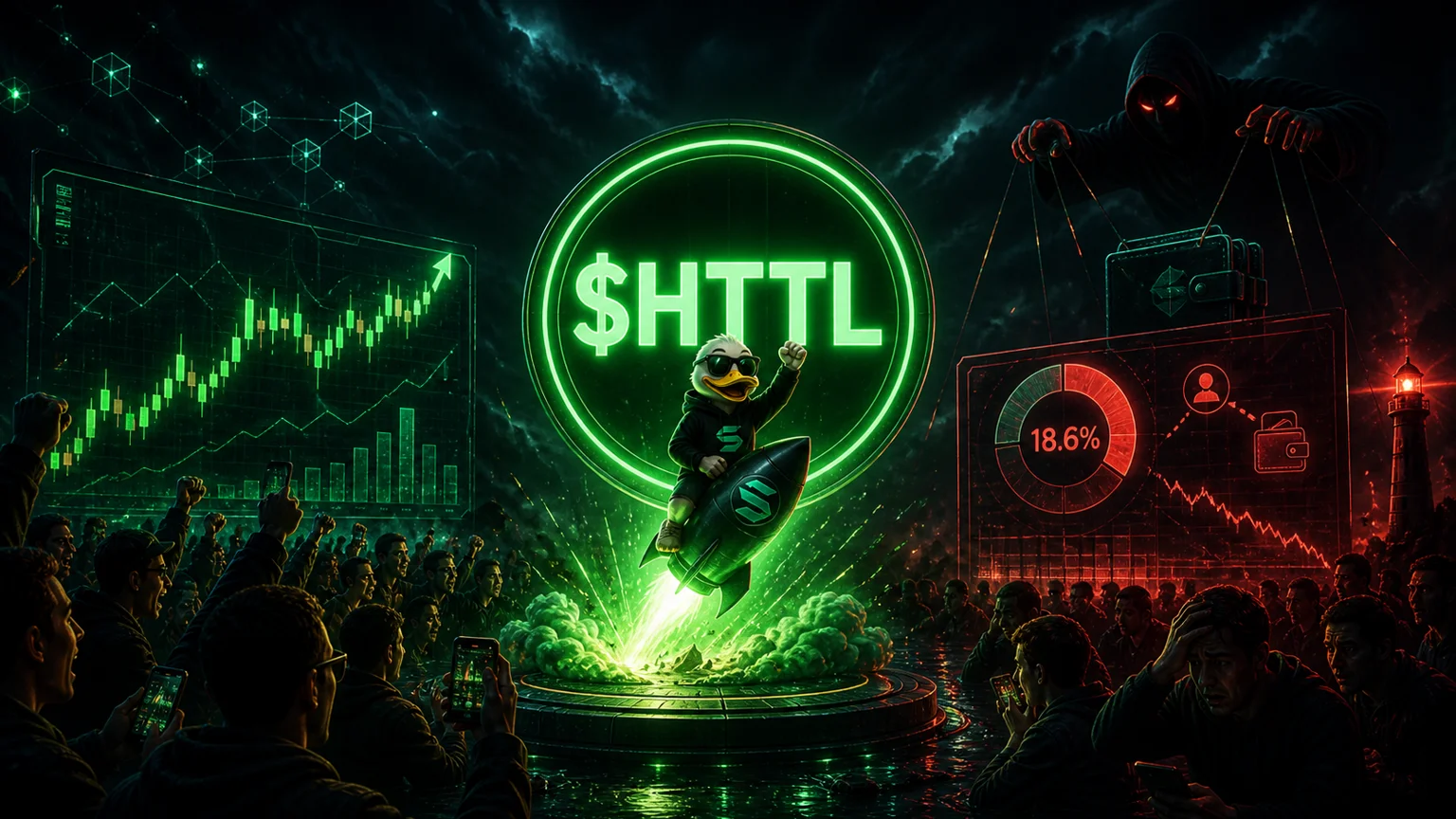
$HTTL shows no active freeze authority, no active mint authority, and a Rugcheck score of 1, but the largest visible wallet sits near 18.6% while liquidity is only about $10.7K.
$HTTL is back with exactly the kind of chart that makes Solana traders stop scrolling and then immediately check the holder map. The token, short for Have to take Losses, is roughly 44 days old and has suddenly repriced to about a $77.4K market cap on roughly $447K in 24-hour volume. The latest one-hour move is around 653%, while the 24-hour change is over 2,572%. That is the attraction. The complication is that the pool is still only about $10.7K and the largest visible holder sits near 18.6%.
That mix makes $HTTL a cleaner contract read but not a clean market-structure read. Freeze authority is disabled, mint authority is disabled, and the current Rugcheck score is 1. Those are the numbers traders want to see before giving a pump.fun revival any attention. But a token can pass the permission check and still trade like a trap if the liquidity is too thin or the ownership map gives one wallet too much influence over the next candle.
- → $HTTL is trading near a $77.4K market cap after roughly $447K in 24-hour volume, 8,558 daily swaps, and a latest-hour move of about 653%.
- → The contract profile is cleaner than the average panic board: freeze authority is off, mint authority is off, Rugcheck score is 1, and no insider flags appear in the top three visible holders.
- → The market-structure problem is still real: liquidity is only about $10.7K, and the largest visible holder controls roughly 18.6%, making this a holder concentration test rather than a blind green light.
The Name Fits the Trade
$HTTL has one advantage most throwaway tickers do not: the joke matches the risk. Have to take Losses is not pretending to be a polished brand. It is leaning into the exact psychology that drives these late revival boards, where traders know the move is dangerous and still want to see whether the pain trade can squeeze another leg. That self-aware packaging can matter in meme markets. It gives the chart a sentence people can repeat.
The market data says the sentence is spreading. A $77.4K market cap doing $447K in daily volume means the board is turning over aggressively. The 8,558 swaps show there is more going on than a single lazy wick. The one-hour buy ratio near 58.8% also says buyers were still leaning into the move during the latest snapshot, with 4,971 buys against 3,480 sells. For a small revival meme, that is enough activity to matter.
Still, $HTTL is not the same kind of read as a deeper pool runner. This is a small board moving fast. The volume is huge relative to the liquidity, which means the chart can change character almost instantly. The bull case is reflexive: if traders keep treating the name as a funny pain-trade banner, the tiny float and thin pool can keep exaggerating each wave. The bear case is also reflexive: if the bid hesitates, the same thinness can turn a normal exit into a nasty candle.
Volume Is Carrying More Weight Than Liquidity
The cleanest way to read $HTTL is through the imbalance between attention and depth. About $447K in daily volume against roughly $10.7K in liquidity is a violent ratio. It tells you the board is alive, but it also tells you every major decision is being made through a very narrow doorway. That is great for acceleration when buyers dominate. It is brutal when the rotation starts leaving.
The market cap is low enough that the next leg can still look explosive on a percentage basis. That is part of the appeal. A token at $77.4K does not need institutional-scale demand to double; it needs a committed pocket of Solana meme traders to keep pressing. But the same small base means the chart has very little cushion. If the pool does not grow with the move, $HTTL can print exciting candles and still punish late entries with ordinary selling pressure.
The holder count of 822 is useful but not decisive. It shows the token is not empty, especially for a 44-day-old pump.fun meme suddenly trying to rebuild attention. It does not yet show broad enough ownership to absorb a heavy top-wallet decision without stress. That is why this article is not about whether $HTTL has momentum. It clearly does. The article is about whether that momentum has enough structure underneath it to survive.
What the On-Chain Data Shows
The permission layer is the strongest part of the $HTTL read. Freeze authority is disabled, which means the token does not show the obvious transfer-freeze risk that can ruin a Solana meme without warning. Mint authority is disabled, which removes the obvious unlimited-supply concern. The Rugcheck score in the current profile is 1, and the developer profile does not show a serial-token history that needs to dominate the story.
The holder map is where the read gets harder. The largest visible wallet owns about 18.63%. The next two visible wallets sit around 2.89% and 2.43%, bringing the top three visible holders to roughly 24.0% combined. None of those first three visible wallets are marked as insiders in the current profile, which helps. But a near-19% first wallet on a $77K board with only $10.7K in liquidity is still a material overhang.
This is the difference between contract risk and market risk. The contract checks are good. The market mechanics are not as forgiving. A disabled freeze authority and disabled mint authority mean the token clears two big Solana meme filters. They do not make the pool deeper, and they do not make a large visible holder smaller. $HTTL is therefore speculative by structure: fewer obvious rug mechanics, but enough holder concentration and liquidity pressure to demand caution.
Why This Could Still Keep Running
The bull case for $HTTL is that small, self-aware memes can keep moving precisely because everyone understands the danger. The name gives the trade a built-in emotional frame, the volume proves traders are engaging with it, and the contract profile is cleaner than many tiny revival boards. If liquidity improves and the largest visible holder does not become active supply, $HTTL can graduate from a sharp squeeze into a more durable culture bid.
The organic score near 64.1 is also enough to avoid writing this off as pure machine churn. It is not elite, but it is not useless. A medium organic read with 8,558 swaps gives the tape a real audience. The buy side's latest-hour edge suggests traders were still willing to chase into the move rather than only using strength to exit. On these tiny boards, that can be enough to extend the window.
The problem is that the next proof point has to be structural, not theatrical. Another giant percentage candle would get attention, but it would not solve the core issue. $HTTL needs deeper liquidity, a calmer ownership read, and continued turnover after the first shock. Without that, the token can be right about the joke and wrong about the market.
$HTTL has a cleaner contract profile than the average tiny revival meme, but the largest visible holder and thin liquidity make the current move a stress test, not a solved setup.
That is why $HTTL stays speculative. The setup is worth tracking because the move has enough volume to be real and the contract data is not flashing the easy danger signs. The setup is not clean because the exit door is small and one visible wallet is large enough to shape sentiment. Traders watching the next UTC session should care less about whether the meme can print another shocking percentage and more about whether liquidity rises while the holder wall stays quiet.
$HTTL earns a speculative rating. The contract profile is strong for a tiny pump.fun revival: freeze authority off, mint authority off, Rugcheck score 1, and no insider flags in the top three visible wallets. The offset is market structure, with about $10.7K in liquidity and a largest visible holder near 18.6% on a board moving extremely fast.
What is $HTTL on Solana?
$HTTL, or Have to take Losses, is a pump.fun-origin Solana meme token that has returned to active trading after roughly 44 days.
Why is $HTTL speculative instead of clean?
$HTTL has clean contract permissions and a low Rugcheck score, but liquidity is only about $10.7K and the largest visible holder controls about 18.6%, which creates meaningful market-structure risk.
What would improve the $HTTL read?
The read improves if liquidity deepens, volume remains active across another UTC session, and the largest visible holder does not become heavy sell pressure.