$GOOB Found Watched Wallet Buyers Before the Crowd, and the Early Tape Looks Cleaner Than Most Fresh Solana Launches
By 2026-07-07 04:05 UTC, $GOOB was trading near a $130.8K market cap with roughly $890.6K in 24-hour volume and about $29.1K in liquidity after multiple watched-wallet buys hit the board in its first two hours. The structure is still young enough to stay speculative, but a Rugcheck score of 1 and top-three concentration near 37.5% make the setup cleaner than the average same-session Solana scramble.
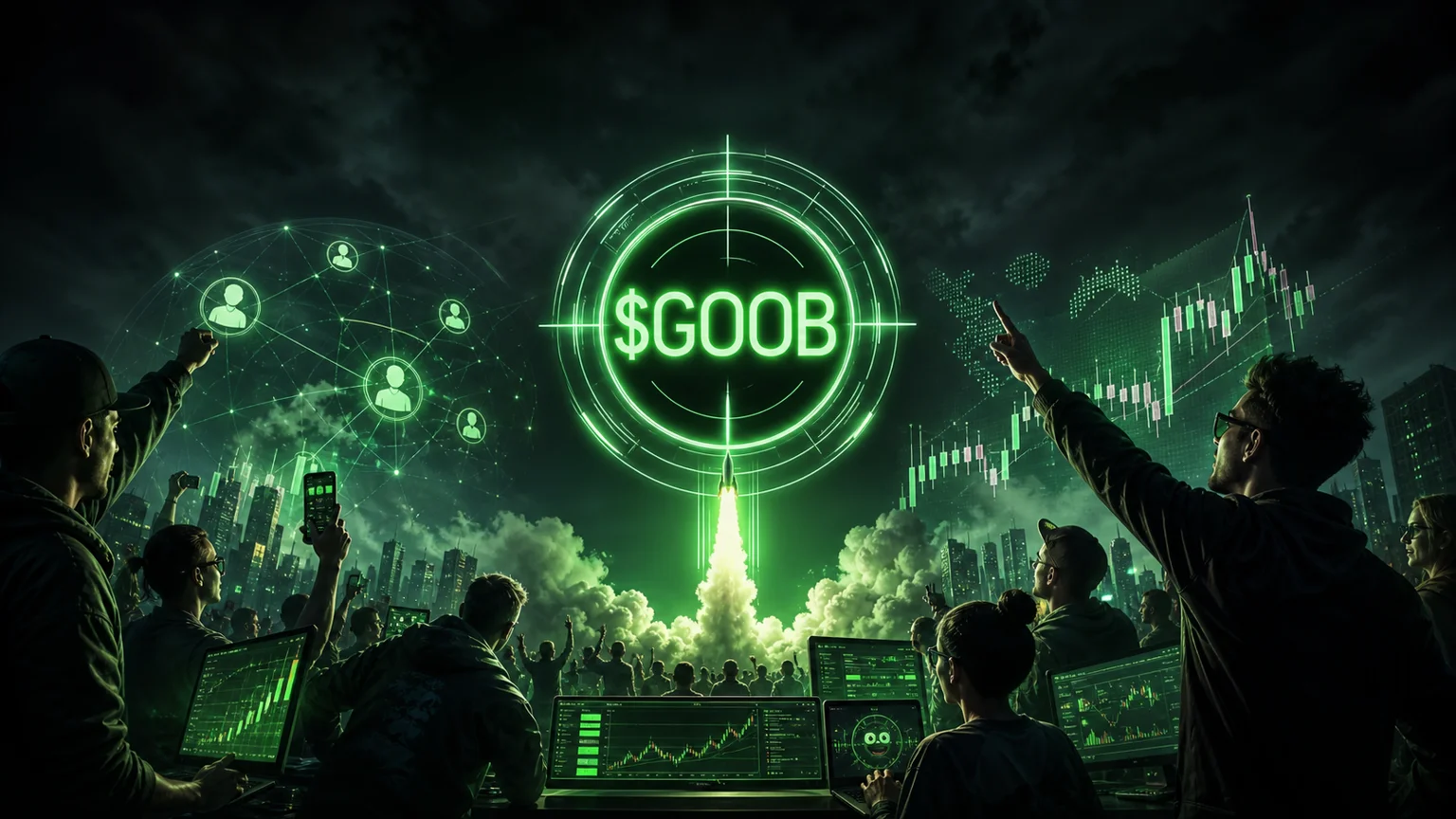
$GOOB shows a low saved Rugcheck score of 1 with freeze and mint authority both disabled, while the top three visible wallets control roughly 37.5% combined. The on-chain profile looks cleaner than average, but the board is still being held up by only about $29.1K in liquidity.
$GOOB did the hardest thing a fresh Solana meme can do: it attracted watched-wallet interest before it became ordinary timeline clutter. By 2026-07-07 04:05 UTC, the token was trading near a $130.8K market cap with roughly $890.6K in 24-hour volume and about $29.1K in liquidity, all while still only around 1.75 hours old. That is a tiny board in absolute terms, but it is not a quiet one. The move matters because the earliest visible flow came from wallets traders already track, which immediately gives the board a more serious discovery profile than the average launch that prints volume first and context later.
The cleaner-runner angle comes from what happened next. A lot of watched-wallet alerts on sub-$200K Solana memes still feel like lottery scratching. The board gets one recognized buyer, a few candles stack up, and everyone spends the next hour pretending the market structure is stronger than it is. $GOOB is not fully exempt from that trap. It still only has about $29.1K in liquidity supporting the move, which means exits can get ugly fast. But compared with the average same-session board, this one has better reasons to stay on radar. The volume is real, the on-chain profile is unusually calm, and the holder map is not immediately poisoned.
- → $GOOB reached roughly a $130.8K market cap on about $890.6K in 24-hour volume and roughly $29.1K in liquidity by 2026-07-07 04:05 UTC, while still inside its first two hours of trading.
- → Watched wallets were involved early: Cupsey-linked flow appeared between 2026-07-07 01:22 UTC and 2026-07-07 02:48 UTC, and a Doc wallet buy near 2026-07-07 01:27 UTC added a second recognizable footprint while the board was still small.
- → The structure looks cleaner than average for a fresh meme launch because Rugcheck scored the token at 1, freeze and mint authority are both disabled, and top-three concentration sits around 37.5%, though the pool is still thin enough to keep the board speculative.
Why the Early Watched-Wallet Buys Matter
Fresh meme tokens are usually impossible to separate in real time. Most of them launch with the same promise, the same tiny liquidity pool, and the same hope that a fast candle will substitute for conviction. What gives one board an edge is evidence that someone with a trackable habit of getting involved early decided this one was worth clicking before the rest of the feed caught up. In $GOOB's case, the saved signal shows Cupsey-linked wallets buying from as early as 2026-07-07 01:22 UTC, when prices were still near the low five-decimal range, followed by more activity around 2026-07-07 02:45 UTC and 2026-07-07 02:48 UTC as the board matured.
The Doc wallet buy around 2026-07-07 01:27 UTC adds another useful layer. That position was larger, with nearly $485.96 deployed into more than 13.55 million tokens at roughly $0.00003585, which means the wallet was not simply testing the waters after the move became obvious. It was willing to size into a board that was still proving itself. That matters because watched-wallet confirmation is more valuable when it clusters around the discovery phase instead of arriving after the crowd already turned the trade into a consensus chase.
None of that guarantees follow-through. It does, however, change the baseline. $GOOB is not just another low-cap meme asking traders to hallucinate quality into a fast chart. It has a visible trail of participants that many degens would rather follow than fade, and that alone is enough to explain why the board moved from random launch to legitimate radar candidate in a hurry.
The Volume Is Real, Even If the Exit Door Is Still Small
The tape tells a stronger story than the average microcap launch. Roughly $890.6K in 24-hour volume against a market cap near $130.8K means the board has already traded through itself multiple times. That is not what dead-on-arrival launches look like. It means traders kept revisiting the pair, and the buy ratio near 55.4% suggests the board remained more accumulative than distributive over the sampled period. A 295% move at this size is dramatic but not unusual. The interesting part is that the turnover was large enough to make the move feel tested instead of purely ceremonial.
The reason the board still cannot graduate to a clean rating is the same reason almost every fresh meme needs restraint from readers: the exit door is tiny. About $29.1K in liquidity is not fake, but it is absolutely small enough to punish anyone who reads activity as safety. A token can have a legitimate discovery story and still be structurally unforgiving. $GOOB fits that description. The board looks healthier than average on the way up, yet it still does not take much selling pressure to reverse the emotional tone of the chart.
That is why the right frame is cleaner, not safe. Traders can make money in boards like this precisely because the crowd tends to lump all fresh launches together. If a token has better tape and better on-chain structure than its peers, it deserves separate attention. What it does not deserve is a free pass from the normal rules of thin-liquidity risk. $GOOB has improved odds relative to the average launch. It does not have immunity.
What the On-Chain Data Shows
This is where $GOOB earns its headline. Rugcheck scored the token at 1. Freeze authority is disabled. Mint authority is disabled. Creator token count is zero in the saved profile. Those are all details traders want to see when a board is moving quickly, because they remove the most obvious contract-level ways a launch can betray holders while excitement is peaking. In a market where many fresh memes carry at least one ugly switch or a visibly dubious deployer footprint, $GOOB reads unusually calm.
The holder map is not perfect, but it is workable. The top visible wallet holds 20.69% of supply, the second row sits around 13.05%, and the third adds another 3.76%, taking top-three concentration to roughly 37.5% in the enriched dev profile. That is still enough concentration to matter, especially on a board this small. But it is a very different problem from the one seen on launches where a single wallet dominates most of the supply or where insider flags start filling the page. Here, the concentration profile looks like something traders can monitor rather than something they have to flee immediately.
That distinction is why the on-chain read actually changes the editorial tone. Many early runners get written off because the contract and holder structure are already telling you the party can only end badly. $GOOB does not carry that immediate smell. It carries a more ordinary version of Solana meme risk: young liquidity, meaningful but not fatal concentration, and the need for the board to keep attracting new participants if it wants to turn an early watched-wallet signal into a fuller market.
The Real Question Is Whether Better Structure Can Outlast First-Hour Excitement
The bull case for $GOOB is not complicated. Watched wallets found it early, volume expanded quickly, and the underlying contract setup looks cleaner than what traders usually have to tolerate in this bracket. If the board keeps layering in fresh participants, there is plenty of room for a token this small to reprice before the move starts feeling mature. The fact that recognized wallets were willing to participate while the pair was still early gives the story a legitimacy that pure chart-chasers alone cannot manufacture.
The bear case is also easy to understand, which is healthy. A board this young can lose its bid without any scandal. It only needs the next wave of attention to go somewhere else. When liquidity is about $29.1K, even cleaner-than-average structure may not save late buyers if momentum stalls. The top wallet at 20.69% does not have to do anything dramatic for the mood to change. The market simply has to decide it has seen enough for one session.
$GOOB looks better than most first-hour Solana launches because the on-chain file is calm and the early buyers were trackable. It still lives in the part of the market where cleaner structure and violent reversals can exist on the same chart.
Verdict
🟡 $GOOB deserves a close read because the early signal quality was stronger than usual: watched wallets were in early, 24-hour volume was already near $890.6K, and the saved on-chain profile showed a Rugcheck score of 1 with freeze and mint authority both disabled. The reason it stays speculative is simply age and depth. The pair was only around 1.75 hours old at the snapshot and still only had about $29.1K in liquidity supporting the move. That makes $GOOB a cleaner early runner than most, not a mature board that can be treated casually.
FAQ
What is $GOOB on Solana?
$GOOB is a Solana meme token trading at contract address HtEy3hN87RvDcW5RMa8XuC56JwXELcfKRm8HLwSHpump.
Why did $GOOB get noticed so quickly?
Because watched-wallet buyers were involved while the board was still early, including Cupsey-linked flow from 2026-07-07 01:22 UTC onward and a larger Doc wallet buy around 2026-07-07 01:27 UTC.
Does $GOOB look clean on-chain?
$GOOB looks cleaner than average for a fresh meme launch. The saved profile shows a Rugcheck score of 1 with freeze authority disabled and mint authority disabled, though the board still carries normal early-stage liquidity risk.
What is the main thing to watch on $GOOB now?
Whether the token can keep attracting fresh demand without the thin liquidity pool turning the first serious wave of selling into a harsh reversal.