$DragonWorm Is Still Printing Solana Size, but the Tape Already Looks Like a Post-Pump Exhaustion Test
$DragonWorm ripped to roughly $2.86M in 24-hour volume and a $1.62M market cap, yet the sharper read at 2026-06-11 16:15 UTC is that buyers are now being asked to absorb a brutal hourly reset instead of chasing a clean vertical breakout.
The biggest visible holder is a legacy pump.fun pool account at about 24.25%, and the top three visible addresses reach roughly 29.2% while freeze authority and mint authority remain disabled.
$DragonWorm already had the numbers to hit every Solana watchlist before the harder question even arrived. At the saved 2026-06-11 16:15 UTC read, the board had printed roughly $2.86M in 24-hour turnover, held close to a $1.62M market cap, and kept about $94.1K of liquidity on the main pumpswap pair. Those are not sleepy launch metrics. They create instant social proof and force traders to stop scrolling. The problem is that the chart no longer reads like a clean first discovery. It reads like the second act, where the market has to decide whether the first explosion was the beginning of a durable meme bid or simply the loudest part of the move.
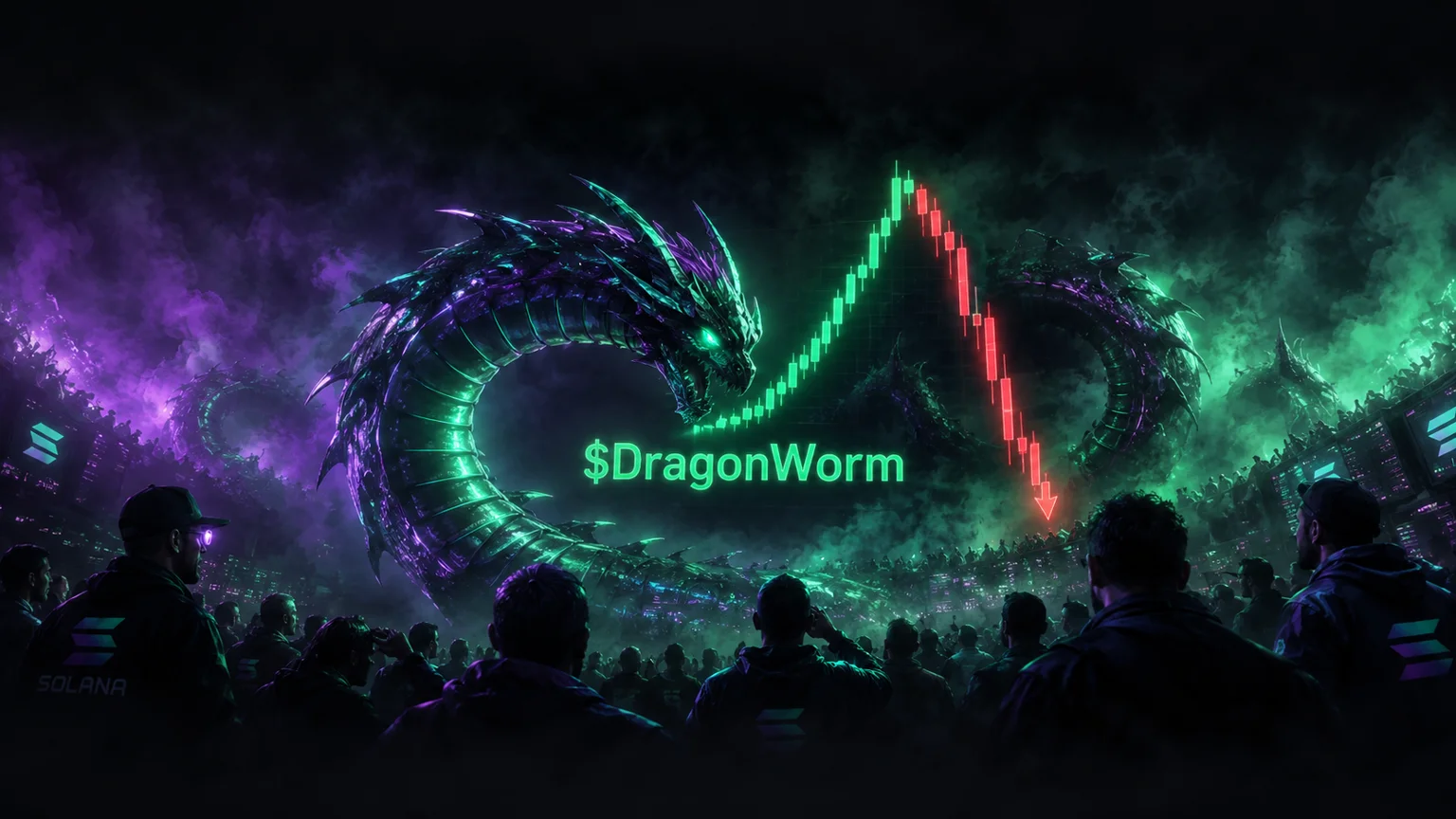
That is why the sharper angle here is post-pump exhaustion. The same snapshot showing a 5,614% day also showed a 48.48% one-hour drawdown. In meme terms, that is not a rounding error. It is the moment when a board stops rewarding blind urgency and starts punishing anyone who confuses a surviving chart with a fresh chart. A fast move can remain alive after a hit like that, especially when liquidity is closer to six figures than five, but the burden of proof changes. $DragonWorm no longer needs a storyteller. It needs buyers who are still willing to absorb inventory after early holders have already seen life-changing percentages flash across the screen.
- → $DragonWorm was still carrying roughly $2.86M in 24-hour volume and about $94.1K in liquidity at the saved 2026-06-11 16:15 UTC snapshot, so the board remains materially tradable by meme standards even after the first wave cooled.
- → The reset is the story now: a 48.48% one-hour drawdown after a 5,614% daily move turns the trade from breakout euphoria into an exhaustion test where fresh demand has to prove it is real.
- → On-chain permissions stay cleaner than the average panic board because freeze authority is disabled, mint authority is disabled, and Rugcheck scored the contract at 1, but that cleaner structure does not cancel the danger of late-cycle inventory rotation.
Why the Retrace Matters More Than the Pump
There are plenty of meme charts that explode and never deserve a second look. The reason $DragonWorm still merits one is simple: the board kept enough real size to make the retrace meaningful. Tiny liquidity stunts can crash 50% in an hour because there was never any true market there in the first place. This one was carrying almost $94.1K in liquidity and nearly 2,600 holders across the tracked read. That means the unwind happened inside a live market, not an empty shell. When a chart with real participation gets hit that hard, the retrace becomes a read on how strong the initial thesis actually was.
The daily percentage also needs to be read correctly. A 5,614% move looks seductive, but once a board has already shifted from discovery into distribution, old percentage gains matter less than whether the token can rebuild orderly demand after the easy screenshot phase is over. If new buyers only show up because they are anchoring to the prior high, the retrace usually gets worse before it gets better.
What the On-Chain Data Shows
The cleanest part of the setup is still the contract layer. Freeze authority is disabled. Mint authority is disabled. Rugcheck scored the token at 1. Those are exactly the permissions checks that stop an exhaustion story from instantly becoming a contract-risk story. In other words, the board can still fail for the normal reasons meme coins fail without carrying the extra overhang of an obvious admin switch. That matters because traders trying to judge a fatigued chart need to know whether they are betting on demand returning or gambling against a latent contract problem. Here, the bigger risk stays market-driven rather than permissions-driven.
Holder concentration deserves a more nuanced read than the raw top-wallet number suggests. The biggest visible holder in the Rugcheck snapshot sat near 24.25%, but that address maps to a legacy pump.fun pool account rather than a single speculative whale camping on the supply. The current pumpswap pool accounted for another 2.83%, and the next visible non-pool wallet came in near 2.08%. That pushes the top-three visible addresses to about 29.2%, which sounds heavy until the pool context is added back in. Liquidity vaults are supposed to hold size. The more practical question is whether real circulating supply outside those pools looks cornered. Based on the current snapshot, the answer is no. Concentration exists, but it does not read like one private cluster owning the entire outcome.
Where the Market Has to Prove Itself Again
The reason post-pump exhaustion is such a dangerous phase is that it looks deceptively safer than the initial chase. Traders see a chart that is already far off the highs and start telling themselves the risk has improved automatically. Sometimes that is true. Often it is just a different flavor of danger. In the first wave, the risk is paying absurd prices into raw momentum. In the second wave, the risk is assuming the violent seller was the last violent seller. $DragonWorm now sits in that exact zone. The next bid has to come from buyers who are comfortable stepping into a board after a brutal flush, not from people who are simply disappointed they missed the first candle.
This is where liquidity depth matters. About $94.1K is enough to keep a Solana meme board active and worth watching, but it is not enough to make the structure invulnerable. If another burst of sellers decides that the bounce is just a better exit, the pool can still turn the chart into a slide. The flip side is that the same liquidity depth gives the token a chance to reset in a way that smaller boards never get. Real volume can rebuild trust if the tape stabilizes. That possibility is why the token stays on radar instead of being written off as a dead spike.
The Bull Case Is a Reprice, Not a Replay
A lot of traders will make the mistake of expecting $DragonWorm to simply replay the move it already had. That is not how the better second legs usually work. They come back as reprices, not repetitions. The board does not need another 5,614% day to stay interesting. It needs to prove that the first mania phase left behind enough holders, enough liquidity, and enough cultural memory to support a more orderly bid. Dragon Worm is a name that can still travel because it is weird, visual, and easy to remember. If that meme portability combines with tighter trading and smaller drawdowns, the chart can earn a new chapter even without recreating the original blast radius.
That is also why the clean contract profile matters more now than it did on the way up. A Rugcheck score of 1, disabled freeze authority, disabled mint authority, and a creator wallet already at zero visible balance all help the board survive a harder second inspection. None of that turns $DragonWorm into a safe asset. It only means the comeback thesis does not depend on ignoring obvious contract landmines.
Why the Speculative Label Still Fits
The temptation after reading cleaner on-chain data is to overcorrect into confidence. That would be the wrong read. $DragonWorm still deserves a speculative label because exhaustion charts are fragile by definition. The market has already shown that it is willing to hit the board hard once momentum stalls, and there is no guarantee the first flush was enough. A token can have respectable liquidity, a broad enough holder map, and a harmless contract while still bleeding simply because the meme energy already peaked. Clean permissions are not the same thing as durable attention.
The next sessions matter because they will reveal whether this is rotation damage or narrative damage. Rotation damage heals if the board can survive a temporary attention vacuum and attract buyers back on better terms. Narrative damage is harder. That happens when the market decides the meme was only exciting in its first sprint and no longer has enough novelty to deserve capital. If $DragonWorm cannot steady after a move this large, the earlier volume becomes historical trivia instead of proof of staying power.
🟡 Speculative — $DragonWorm still has enough size to matter, but the story has shifted from explosive discovery to post-pump exhaustion. Roughly $2.86M in 24-hour volume, about $94.1K in liquidity, disabled freeze authority, disabled mint authority, and a Rugcheck score of 1 keep the setup cleaner than a typical panic unwind. The counterweight is the 48.48% one-hour drawdown, which says the board is now asking fresh buyers to absorb real distribution risk rather than simply enjoy momentum.
What is $DragonWorm on Solana?
$DragonWorm is the Dragon Worm meme token on Solana with contract address xLyhQfSW8UKjsJaisszVS5SRjVTmy9WiEVsq6Afpump. At the saved 2026-06-11 16:15 UTC snapshot it was trading near a $1.62M market cap with roughly $2.86M in 24-hour volume and about $94.1K in liquidity.
Why is the current read on $DragonWorm about exhaustion instead of pure momentum?
Because the same snapshot showing a 5,614% day also showed a 48.48% one-hour drawdown. That combination means the easy breakout phase is over and the next buyers have to prove the token can rebuild demand after a violent reset.
What does the on-chain profile look like for $DragonWorm?
The contract profile is cleaner than average: freeze authority is disabled, mint authority is disabled, the Rugcheck score is 1, and the creator wallet showed zero visible balance. The largest visible holder is a legacy pump.fun pool account, which makes the raw concentration look worse than a simple whale-control story.
What has to happen next for $DragonWorm to avoid turning into a dead spike?
$DragonWorm needs to hold enough liquidity to absorb sellers, narrow the violence of its retraces, and prove that buyers still care after the first mania wave. If the board cannot stabilize after this reset, the earlier volume will matter a lot less than traders expect.