$CHILLHOUSE Is Catching a Calm Solana Bid With Deeper Liquidity Than Usual
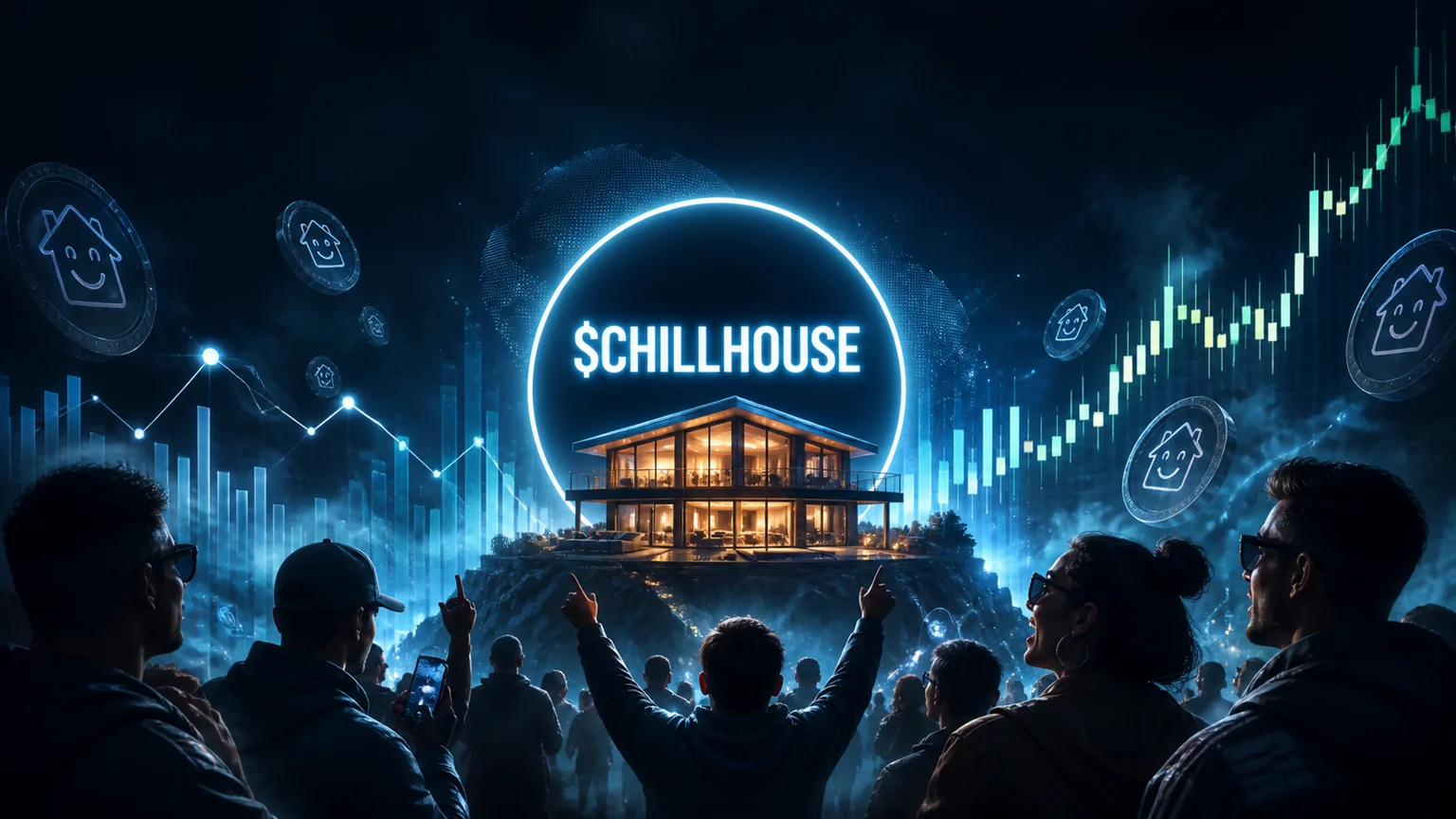
$CHILLHOUSE is acting less like a disposable pump.fun chart and more like an older meme getting repriced through liquidity, volume, and a manageable holder spread.
No major concentration risks surfaced in the current holder sample.
$CHILLHOUSE is not a screaming first-candle trade. That is the point. The token is 487 days old, came through pump.fun, and is now showing a 10% one-hour move around a $4.44M market cap. In this part of the Solana market, that kind of move is often more useful than a 90% vertical wick from a nameless launch. It means traders are revisiting an existing meme with enough history, liquidity, and tradable depth to make the setup measurable.
The current $CHILLHOUSE read is a clean runner-style liquidity reprice. The tracked pool shows roughly $368.1K in liquidity, while 24-hour volume is around $307K. That is a healthier base than most meme coins get when they reappear on radar. The chart still has to prove demand, but the market is not being asked to trust a paper-thin pool or a holder map that immediately looks captured by one wallet.
- → $CHILLHOUSE is trading near a $4.44M market cap after a 10% one-hour push, giving the move enough size to matter without putting it in late-stage mania territory.
- → The liquidity base is the headline: about $368.1K in tracked liquidity against roughly $307K in 24-hour volume.
- → Solana authority checks are clean in the supplied profile, with freeze authority off, mint authority off, and the top three holder sample near 17.7%.
The Calm Bid
The name helps the read more than it should. $CHILLHOUSE is trading like its own meme: not frantic, not thin, and not fully dependent on a single shock candle. A 10% hourly move is enough to flag rotation, but not so violent that every buyer has to assume they are the last one in. For an older meme, that tone matters. Repricing works best when the chart gives traders time to build a thesis instead of forcing them into a panic entry.
The mature age is also doing work here. A token that has been around for 487 days already passed the easiest failure point: instant abandonment. That does not make $CHILLHOUSE safe, and it does not mean the community is guaranteed to revive. It does mean the market is not looking at a completely untested contract with no chart memory. The current bid is a judgment on whether old Solana meme inventory can become desirable again in a market that keeps rotating through nostalgia, culture, and clean liquidity.
That is why $CHILLHOUSE is more compelling as a culture-meme bid than as a raw momentum chase. The market cap is already large enough that the token needs real participation to move. The liquidity is deep enough that the chart can absorb more than tiny buys. And the holder profile is not putting an obvious emergency label on the whole setup. The thesis is not “this is early.” The thesis is “this is seasoned enough to be judged by structure.”
What the On-Chain Data Shows
The current Solana profile gives $CHILLHOUSE a better starting point than most pump.fun revivals. Freeze authority is disabled, which removes the visible authority-level freeze risk that can scare off serious meme traders. Mint authority is also disabled, so the supplied profile is not flashing the classic unlimited-supply concern. Those checks are basic, but basic matters. A meme coin can survive weak branding for a while; it usually cannot survive obvious contract mechanics that make holders feel trapped.
Holder concentration is acceptable, though not invisible. The largest visible holder in the sample controls 8.04%, the second holds 4.99%, and the third holds 4.71%. Together, the top three sit around 17.7%. That is higher than the cleanest possible distribution, but it is not the kind of 40% or 60% cluster that turns every green candle into a hostage situation. None of the top three entries in the sample is marked as insider.
The normalized rug score is 1, with no listed risk items in the supplied profile. The creator-token count is zero in the data provided, so there is no strong reason to turn this into a serial-deployer warning. The deployer wallet should still be watched because every Solana meme deserves ongoing wallet discipline, but the current $CHILLHOUSE story is not a deployer exposé. It is a cleaner-than-average authority and holder check paired with enough liquidity to make the repricing worth monitoring.
Depth Before Hype
The most important number for $CHILLHOUSE is not the one-hour percentage. It is the liquidity. At roughly $368.1K, the token has a pool that gives the market more room to work. That does not prevent slippage in a fast meme tape, but it changes the quality of the trade. Small pools can make every buyer look brilliant until the exit arrives. Deeper pools force a cleaner question: is the demand actually there, or is the chart just drifting through recycled attention?
Volume is backing the question well enough for now. About $307K in 24-hour activity against $368K in liquidity is not a dead chart, and it is not an obviously overcooked churn machine either. The ratio says $CHILLHOUSE has enough turnover to deserve attention while still leaving room for the liquidity base to matter. If buyers keep rotating through without draining pool quality, the chart can keep earning looks. If volume spikes once and then disappears, the liquidity becomes less of a strength and more of a quiet exit path for older holders.
The clean setup would be a staircase rather than a blow-off. $CHILLHOUSE does not need a massive green candle to prove the point. It needs repeated UTC-session volume, a market cap that respects the new range, and liquidity that does not suddenly thin out after attention arrives. The better this trades slowly, the stronger the read becomes. A calm Solana meme bid can be more valuable than a violent one because it gives the market time to decide whether the community is actually returning.
Where It Can Crack
The first crack would be holder supply. A 487-day-old token has history, and history means wallets with different motives. Some holders may be believers, some may be forgotten positions, and some may be waiting for any bid to exit. A top-three holder sample near 17.7% is workable, but it still means a few wallets matter. If those wallets sell into every push, $CHILLHOUSE can look clean on paper and still trade heavy.
The second crack would be narrative thinness. Chill branding can carry a meme if the market wants relaxed culture coins, but a name alone does not keep volume alive. The token needs either visible community return, stronger chart persistence, or broader Solana meme rotation to turn a clean reprice into a durable move. Without that, the 10% hourly push becomes a nice alert and nothing more. Meme traders should respect the structure without pretending structure is the same thing as demand.
$CHILLHOUSE has the kind of profile that can earn a clean watch: disabled freeze and mint authority, meaningful liquidity, and a holder sample that is not immediately dominated by one wallet. The upgrade requires repeat demand, not just a polite green candle.
Final Read
$CHILLHOUSE gets a clean watch because the setup is supported by liquidity depth and a manageable on-chain profile. The strongest angle is a calm liquidity reprice: an older pump.fun meme showing renewed demand without the obvious authority risks that usually kill confidence. The bear case is that old holders use the bid as an exit and the culture angle fails to expand. The next test is simple: sustained UTC-session volume, stable liquidity, and a market cap that does not immediately surrender the move.
Why is $CHILLHOUSE moving now?
$CHILLHOUSE printed a 10% tracked one-hour move while sitting near a $4.44M market cap, with enough liquidity and 24-hour volume to make the reprice worth watching.
Is the $CHILLHOUSE on-chain profile clean?
The supplied Solana profile is cleaner than average: freeze authority is off, mint authority is off, the normalized rug score is 1, and the top three holder sample is about 17.7%.
What is the main risk for $CHILLHOUSE?
The main risk is older-holder supply. A mature token can have wallets waiting to sell into renewed attention, so volume and liquidity retention matter more than the first green move.