CDOF Turned Strategic Petroleum Propaganda Into a $5.47M Solana Board Overnight — but Only 33 Swaps Built the Move
Chinese Digital Oil Fund is selling state-bulletin aesthetics, strategic-reserve cosplay, and an on-chain oil-registry narrative instead of another animal meme. If that macro parody catches on, the cleaner holder map and $214.3K liquidity give it room. If the 6,612% daily move was mostly a thin-float ceremony, late buyers are paying sovereign-wealth prices for a very small crowd.
CDOF has mint and freeze authority disabled, but Rugcheck still scored the token 51, so this is not the kind of board you treat as mechanically blessed just because the permissions look normal. The encouraging part is distribution: the largest visible wallet held 2.0% and the top three visible rows only 5.5% combined, which is far cleaner than the crowd size would suggest.
By around 1:00 AM UTC on May 27, CDOF had already become the kind of Solana board that makes you check the ticker twice before deciding whether the market has finally lost the plot or just gotten there ahead of you. Chinese Digital Oil Fund was trading near a $5.47M market cap after a 6,612% daily move, yet the pair had only processed roughly $105.4K in 24-hour volume and just 33 tracked swaps across about 9.1 hours. That combination is the story. This is not a normal crowd trade. It is a board that repriced violently with very little public participation, which means the upside and the fragility are both hiding in the same number.
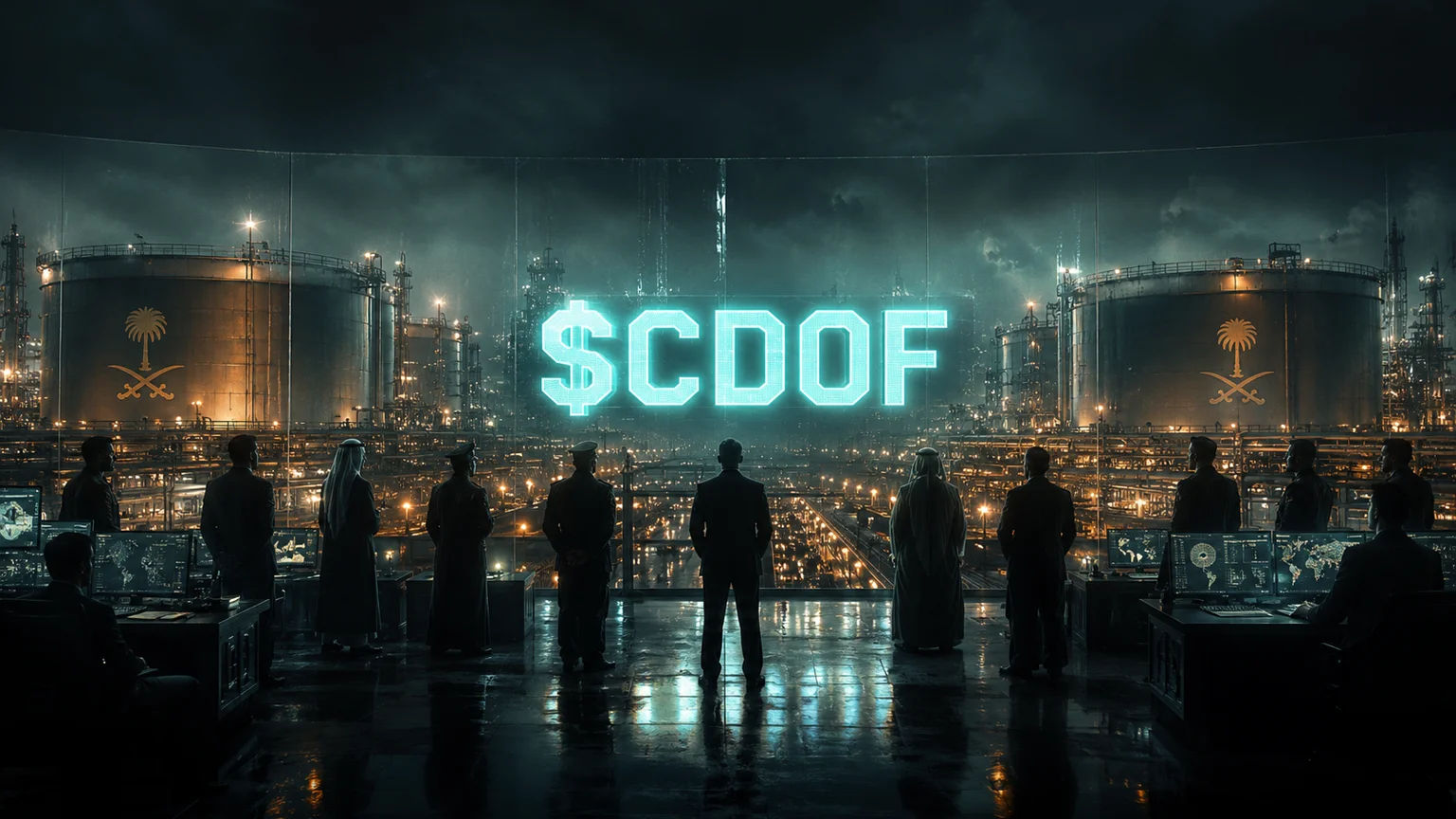
The narrative is at least original by meme standards. CDOF's site is dressed like a state bulletin: public information program, strategic petroleum inventories, transparent reporting, auditable updates, on-chain registry. Instead of selling another dog, cat, or celebrity derivative, it sells sovereign-reserve cosplay. The page talks about supply security, benchmark crude, governance disclosure, and oil-market terminology with a straight face. That is ridiculous, which is exactly why it can work. Solana traders have always had a weakness for institutional parody, especially when the parody is legible enough to feel like a macro joke and a meme coin at the same time.
- → CDOF re-rated to roughly $5.47M after a 6,612% daily move, but the tape only showed 33 tracked swaps and about $105.4K of 24-hour volume, so the move is real without being broad.
- → The project is not competing as another animal launch. It is competing as strategic-oil-reserve performance art on Solana, complete with policy language and state-program aesthetics.
- → The on-chain profile is mixed: distribution looks unusually loose with only 5.5% across the top three visible wallets, but Rugcheck still scored the token 51, which keeps the whole thing in speculative territory.
What Makes This One Different
CDOF works because it understands that meme traders are bored of obvious memes. A token pretending to be a strategic petroleum fund is not inherently smarter than a frog coin, but it feels fresher because it borrows the language of state power, reserves management, and commodity-market seriousness while living on the most unserious chain imaginable. That mismatch is the product. The project is effectively asking traders to buy a geopolitical roleplay and then watch the chart make the joke funnier.
There is also a cleaner social script here than most launches get. 'Chinese Digital Oil Fund' is instantly repeatable. You do not need to explain the visual. You do not need lore. You just need one sentence: somebody put a strategic oil reserve on Solana. That is enough to spark reposts, screenshots, and the kind of half-ironic conviction that powers strange boards longer than sober analysis expects. The strongest meme ideas are often the ones that sound like parody headlines from a broken financial newspaper. CDOF sounds exactly like that.
The Numbers So Far
The weirdest part of the board is the ratio between valuation and activity. A $5.47M market cap backed by only about $105.4K of 24-hour volume means the market is not constantly discovering price. It already repriced and then mostly stopped talking. That is why the 6,612% daily move needs context. The number is dramatic because the starting point was microscopic, not because an army of traders spent the night piling in. On average, those 33 tracked swaps worked out to a little over $3K per transaction. That is large enough to matter and small enough to remind you this was never a mass-participation event.
At the same time, the liquidity pool is not a toy. Roughly $214.3K in liquidity gives CDOF a much thicker seatbelt than the average same-day launch radar name. That matters because it means the board can absorb another wave of attention without instantly turning into dust. The buy ratio also leans hard to one side at 81.8%, with 27 buys against only 6 sells in the saved snapshot. But again, count is not crowd. Thirty-three swaps is still a tiny sample. The market has not really decided what CDOF is worth yet. It has only proven that a small number of people were willing to pay much more for the joke than the starting market expected.
What the On-Chain Data Shows
From a permissions standpoint, CDOF avoids the dumbest contract risks. Freeze authority is disabled. Mint authority is disabled. There were no saved danger-level or error-level warnings in the enriched profile used here. But the Rugcheck score still came in at 51, which is much less comforting than the scores attached to cleaner fresh launches this cycle. That does not automatically mean the token is broken. It does mean you should not confuse normal permissions with a fully settled on-chain read. This board still deserves a colder eye than the playful branding invites.
The distribution, on the other hand, is surprisingly civil. The largest visible wallet held 2.0% of supply. The next two held 1.96% and 1.49%. Combined, the top three visible rows accounted for only 5.5% of supply. For a board that just did a vertical repricing, that is unusually loose. Plenty of breakout meme charts are secretly cartel charts wearing a costume. CDOF does not look like that from the saved holder snapshot. If this token fails, the more likely explanation is not that one giant insider wallet nuked the pool. It is that the market never broadened beyond the first small cluster of believers.
The deployer story is, appropriately, not the point. There is no saved serial-deployer mystique worth turning into fake credibility and no giant dev wallet angle rewriting the trade. That leaves the real question standing in the open: can the narrative widen faster than the transaction count does? CDOF's holder map gives it structural breathing room. What it does not yet have is evidence of broad organic demand. That gap is where the opportunity and the trap live together.
Why the Oil-Fund Joke Can Travel
The bull case is that CDOF is exactly the kind of absurd financial meme crypto people like to adopt once they get tired of straightforward mascots. Strategic petroleum reserve language, sovereign-registry aesthetics, and pseudo-official market terminology all make the token feel like a satire of real finance rather than an escape from it. That gives it a different lane. If crypto Twitter starts treating the board like a joke about state balance sheets, macro posturing, or commodity-war cosplay, the name itself can carry distribution without needing a cute animal to do the work.
The structural case is better than the crowd stats suggest too. The holder map is clean, the pool is relatively deep, and the market cap is already large enough to feel like something happened but still small enough to move if the story catches a second audience. In other words, CDOF has the strange but valuable quality of already looking important before it has really become busy. If more traders decide the joke is worth joining, the first wave will suddenly look early rather than suspicious.
The Counter-Signal
The obvious bear case is that the whole move was basically a private ceremony that public traders are being asked to legitimize after the fact. A 6,612% daily move paired with only 33 swaps is not proof of mass adoption. It is proof that price can jump very far before the room fills up. If that room never fills, late buyers are left holding a $5.47M valuation built on a market that barely had to sweat to get there. The joke stays funny until someone asks how many actual participants were laughing.
The second risk is that CDOF may be too clever for its own good. Institutional parody travels best when the audience immediately understands both the reference and the reason to trade it. If the oil-fund thesis stays trapped inside a niche circle that appreciates the bit but does not meaningfully rotate capital, then the current price level starts to look ambitious very quickly. Rugcheck at 51 also keeps the setup from feeling clean enough to ignore. So the right posture here is not disbelief and not blind surrender. It is respect for a unique narrative paired with skepticism about just how much real market has formed underneath it so far.
Verdict
🟡 Speculative — CDOF has one of the sharper concepts on the screen right now: strategic petroleum reserve parody, cleaner distribution than most breakout launches, and enough liquidity to survive a second look if the story catches. But the board is also a warning label dressed as a macro meme. A $5.47M market cap built on only 33 tracked swaps is not broad conviction. It is a thin room with loud pricing. If more traders decide the oil-fund joke is worth chasing, CDOF can keep repricing. If not, this starts to look like a sovereign narrative stamped onto very narrow participation.
FAQ
What is CDOF on Solana?
CDOF stands for Chinese Digital Oil Fund, a Solana meme token trading under contract address CDoFug7K6gYgiotXw1vcyfc9p4rdAxnbbj2DcH5AE4az. The project site frames it as a strategic petroleum fund and public-information registry on-chain.
Why did CDOF hit launch radar?
Because the token exploded to roughly a $5.47M market cap after a 6,612% daily move while still showing only about $105.4K in 24-hour volume and 33 tracked swaps. That kind of repricing with so little participation is unusual enough to demand attention.
Does CDOF look clean on-chain?
Mixed. Freeze and mint authority were disabled in the saved profile, and the visible holder map looked unusually loose, but Rugcheck still scored the token 51, which keeps it firmly in high-risk territory.
What is the biggest risk on CDOF right now?
Breadth. The token's valuation already moved a long way before many traders arrived, so the key risk is that the market cap stays high while public participation never really expands.
What would strengthen the CDOF thesis from here?
More real flow. If transaction count rises, volume catches up to valuation, and the clean holder distribution holds while the oil-fund narrative spreads, then the current move starts looking less like a thin-float event and more like a durable meme repricing.