$BULLSCAN Has the Cleanest Runner Board of the Cycle, but the Next Session Still Has to Prove It
At the 2026-07-10 19:05 UTC selection snapshot, $BULLSCAN was trading near a $265K market cap with roughly $2.08M in 24-hour volume, about $29.6K in liquidity, and a pair age just under 49 hours. The Bullscan meme already has serious rotation behind it, and the more important surprise is how little the holder map fights the move compared with most fresh Solana boards.
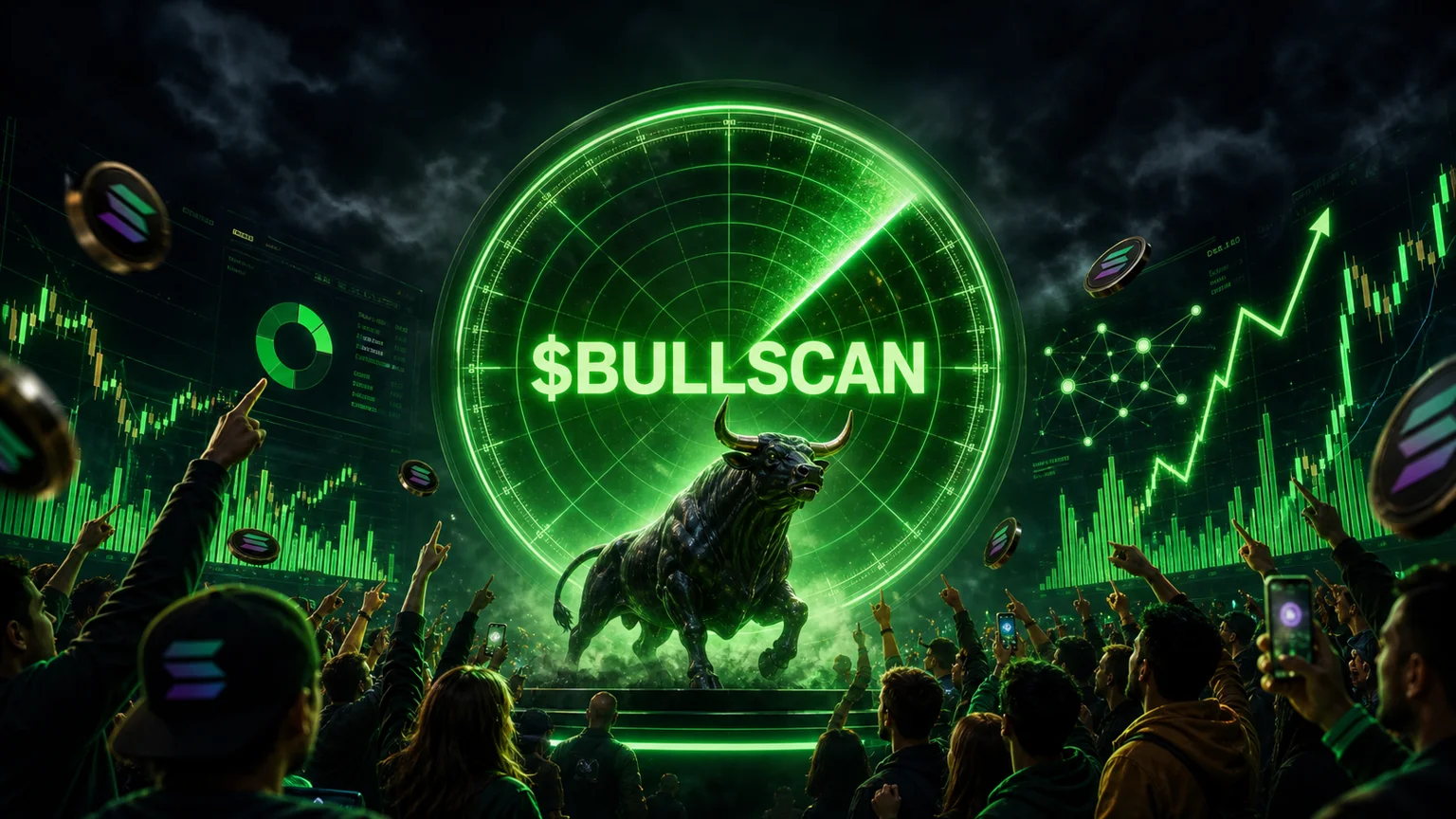
Rugcheck scored the contract at 1 with freeze authority off, mint authority off, zero visible creator balance, and only about 12.8% concentration across the top three visible wallets.
$BULLSCAN does not need much time to make its case. By the 2026-07-10 19:05 UTC selection snapshot, the Solana board was already trading near a $265K market cap while printing roughly $2.08M in 24-hour turnover, about 38,231 transactions, and close to 2,916 holders. Those are not just flashy launch numbers. They are numbers that suggest the market has already accepted the token as a real object of rotation instead of a novelty chart waiting for one last screenshot before vanishing.
The more important part is what is not fighting the move. Most fresh Solana runners can manufacture eye-catching turnover and still carry a cap table that makes the whole board feel like borrowed time. $BULLSCAN reads differently. The contract profile is quiet, the visible creator balance is zero, and the top wallets are much less dominant than usual for a token this young. That does not guarantee continuation. It does mean the next session gets to be decided by crowd behavior first instead of by obvious structural poison.
- → $BULLSCAN hit the selection snapshot at roughly $265K market cap with about $2.08M in 24-hour volume, which is an unusually strong turnover profile for a board that is not yet even 49 hours old.
- → The clean read comes from structure: Rugcheck scored the contract at 1, freeze authority is off, mint authority is off, the creator balance is zero, and the top three visible wallets control only about 12.8% of supply.
- → The risk is no longer obvious contract or holder-map sabotage. The risk is whether a board that already processed this much volume can keep attracting two-way trading after the easiest first rotation has already happened.
Why $BULLSCAN Has Stayed in Rotation
The meme works because it flatters the exact audience most likely to trade it. A name like $BULLSCAN sounds like a joke about the market looking for its next heroic chart, and that makes it instantly legible to the same crowd already living inside scanners, trending lists, and pair tabs. In meme trading, self-referential tickers often travel well because they turn the trader's own behavior into part of the meme. That reflexive quality gives the board a better chance of surviving the first spike.
Age matters here as well. At roughly 48.8 hours old, $BULLSCAN is far enough from launch to have survived the pure bonding-curve excitement phase, but not so old that the room assumes it already missed its best move. That middle window is valuable. A token in it can still recruit new traders on momentum alone, yet it has enough history for the market to ask whether the board can act like a continuing trade instead of a one-cycle stunt. The 24-hour change of about 118.6% says the answer is at least not obviously no.
The Turnover Is Bigger Than the Board
The best bullish data point is simple: the board has already traded many times its market cap without instantly falling apart. Roughly $2.08M of turnover against a $265K valuation means the market has been willing to recycle this ticker relentlessly. That kind of flow matters because it turns a meme from a chart into a venue. Traders are not just reacting to one candle. They are using the token as a place to do business, and a board that becomes a place tends to last longer than one that only becomes a screenshot.
The buy ratio being slightly under 50% is actually useful context instead of a flaw. With buyers and sellers closer to balance, the tape looks negotiated rather than ceremonial. That is healthier than the kind of one-sided launch where nobody sells because nobody is really there. Two-way trade means profit-takers have already had chances to leave and the board is still alive. It does not remove downside. It does suggest the current price is being argued over by a real crowd rather than pinned in place by thin theater.
What the On-Chain Data Shows
Mechanically, $BULLSCAN is about as calm as a sub-two-day Solana board can realistically be. Freeze authority is off, so the issuer cannot suddenly lock transfers. Mint authority is off, which removes the cleanest route to surprise dilution. Rugcheck scored the contract at 1, and the selection profile did not surface any visible active risks. That does not mean the token is safe in the ordinary sense of the word. It means the chain is not currently offering an obvious reason to dismiss the move before the market gets to debate it.
The holder map is even better than the permission set. The top visible wallet holds about 7.77% of supply, with the next two around 3.02% and 2.04%. That puts the top three at about 12.8% combined, which is refreshingly distributed by the standards of young Solana memes. Just as important, the visible creator balance is zero. That changes the emotional texture of the board. Traders are still taking market risk, but they are not also being asked to pretend that one obvious wallet hovering over a third of supply is somehow irrelevant.
Holder count strengthens that read. Roughly 2,916 holders in just under two days says the board has already spread across a broad enough audience to behave like a crowd trade. The liquidity pool near $29.6K is not deep in an institutional sense, but it is meaningfully more usable than the paper-thin pools that usually accompany boards in this market-cap range. Put together, the on-chain picture is why $BULLSCAN earns a clean label. The holder distribution, freeze authority status, mint authority status, and Rugcheck score all point to a market that can succeed or fail on crowd demand rather than on obvious hidden controls.
Why the Cleaner Holder Map Changes the Trade
A cleaner cap table does not make a meme inevitable. It makes it interpretable. With $BULLSCAN, traders can focus on the only question that really matters at this stage: whether the board can keep pulling enough new attention to justify another leg. That is a much healthier setup than spending the whole trade waiting for a creator wallet to sneeze on the order book. The market still has to decide if the meme deserves a second session. It just gets to make that decision without one giant wallet forcing the answer ahead of time.
This distinction matters because clean boards often produce more honest failure as well as more honest upside. If $BULLSCAN stalls from here, the likely reason will be ordinary exhaustion. The crowd may simply decide it has already extracted the easiest move, especially after a day that saw more than $2M in volume. That kind of failure is still painful, but it is different from a structurally compromised board where the chart never really belonged to the crowd. Here, the crowd genuinely has the steering wheel.
$BULLSCAN is one of the rare microcap Solana boards where the bullish case and the mechanical case are saying roughly the same thing: the market can keep trading this because the structure is not obviously hostile.
The Next Test Is Whether Volume Stays Two-Way
The next useful read is not whether the token can print another green hour. It is whether the board can remain busy without becoming manic. Healthy continuation would probably look like volume staying elevated, holder count still climbing, and liquidity expanding enough that fresh buyers stop treating every entry as a dare. If that happens, the current market cap can still look small relative to the attention the board has already captured.
The warning sign would be a different mix: cooling turnover, a shrinking holder-growth curve, and a chart that starts depending on abrupt spikes instead of consistent trade. That would suggest the first rotation already extracted most of the available energy. Clean structure helps, but it cannot force a market to care forever. What it can do is give the board a fair shot at a second life. Right now $BULLSCAN still has that shot, which is more than most sub-two-day Solana runners can say.
🟢 Clean — $BULLSCAN earns a green structural read because the setup is unusually orderly for a young Solana runner: roughly $2.08M in 24-hour turnover, close to 2,916 holders, about $29.6K in liquidity, freeze authority off, mint authority off, a Rugcheck score of 1, zero visible creator balance, and only about 12.8% concentration across the top three visible wallets. That is not a promise of upside. It is a sign that the board gets to live or die on real crowd demand rather than on obvious contract or holder-map sabotage.
What is $BULLSCAN on Solana?
$BULLSCAN is a Solana meme token trading near a $265K market cap at the 2026-07-10 19:05 UTC selection snapshot. The ticker leans into market-scanner culture, which helps explain why it spread quickly among active meme traders.
Why are traders paying attention to $BULLSCAN?
The token processed roughly $2.08M in 24-hour turnover with more than 38,000 transactions and around 2,916 holders in less than two days. That level of rotation usually keeps a board on screens even after the easiest launch burst has passed.
What does the on-chain profile say about $BULLSCAN?
The contract profile is notably calm: freeze authority is off, mint authority is off, Rugcheck scored it at 1, the visible creator balance is zero, and the top three visible wallets control only about 12.8% of supply.
Why is the rating clean instead of speculative?
The main difference is structure. $BULLSCAN still carries meme-market risk, but the holder map and contract permissions look cleaner than most young Solana boards, so the trade depends more on whether crowd demand persists than on obvious structural traps.