$ayyaiyai Printed a Real Organic Volume Shock on Solana, but the Next Test Is Whether Liquidity Can Catch Up
At the 2026-06-25 13:00 UTC snapshot, $ayyaiyai was trading near a $161.9K market cap after roughly $558.4K in 24-hour volume with about $29.1K in liquidity less than an hour after launch. The holder map looks cleaner than the average first-session meme sprint. The harder question is whether the board can keep absorbing attention without turning a fast discovery move into a slippage trap.
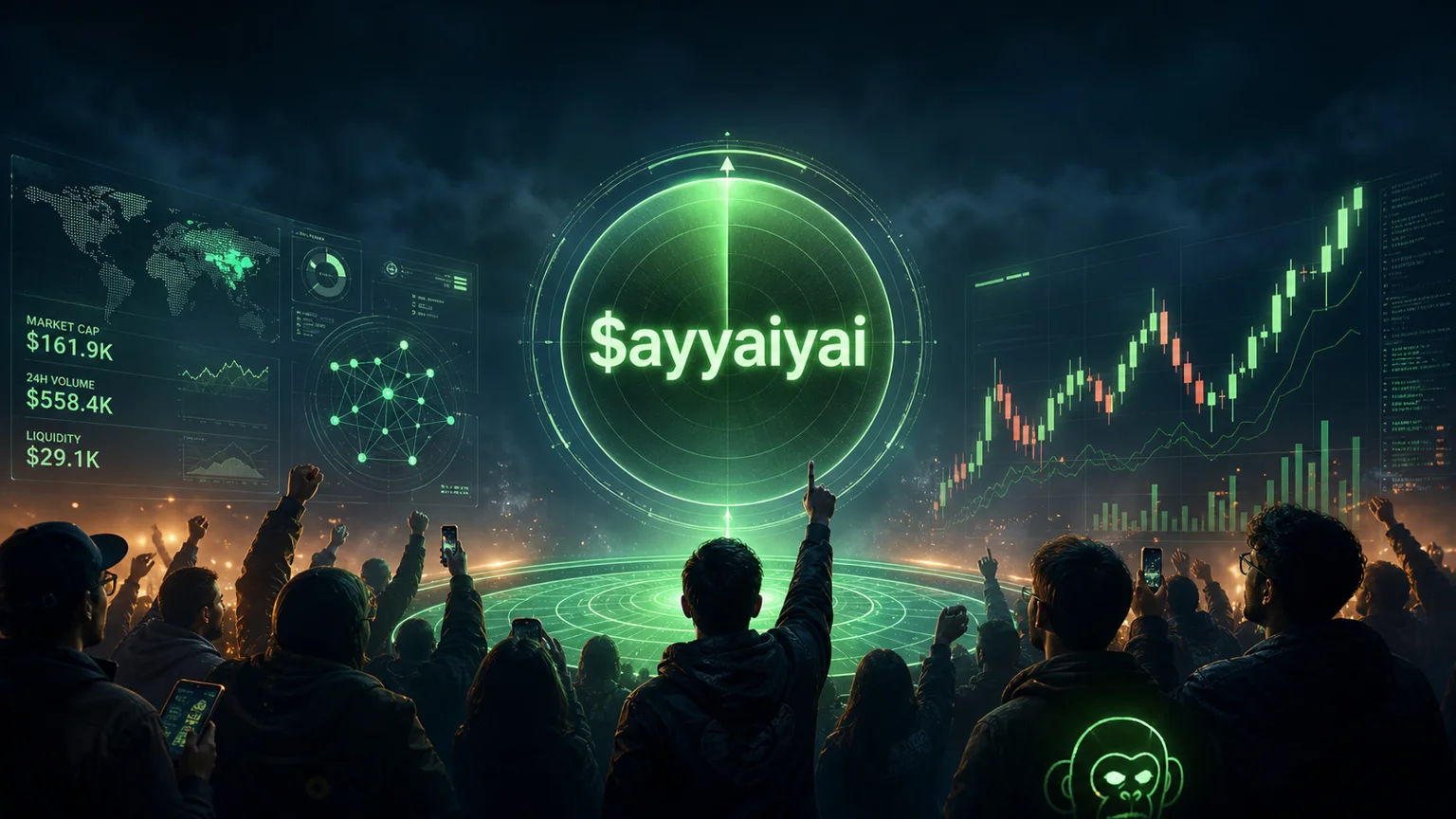
$ayyaiyai keeps the obvious contract risk muted with freeze authority disabled, mint authority disabled, and a Rugcheck score of 1. The profile is cleaner than most same-hour Solana launches, but the real watchpoint is market depth: liquidity was only about $29.1K even as turnover ripped past $558.4K.
The reason $ayyaiyai deserves a harder look is not the name, the AI meme wrapper, or even the headline percentage move. It is the mismatch between how early this board still was and how aggressively the market decided to trade it anyway. At the 2026-06-25 13:00 UTC snapshot, the token was sitting near a $161.9K market cap with roughly $558.4K in 24-hour turnover, about $29.1K in liquidity, and a 218% daily move while the pair was only around 0.72 hours old. That is not ordinary first-session noise. It is an organic volume anomaly, and those deserve respect even when they look chaotic.
A lot of fresh Solana launches can print one sharp move if enough curious wallets decide the ticker is funny for ten minutes. What they usually cannot do is keep the tape active enough that volume starts dwarfing market cap before the board has any right to feel established. $ayyaiyai already crossed that threshold. The turnover figure was more than three times the headline valuation, which means the market was not treating this as a single lucky wick. Traders kept revisiting the pair, paying up, taking profits, and coming back again.
- → $ayyaiyai pushed roughly $558.4K in 24-hour turnover on a market cap near $161.9K while the pair was only about 0.72 hours old, which is the clearest sign that the board became a real intraday obsession instead of a one-candle accident.
- → The saved on-chain profile looks cleaner than the average same-hour Solana meme board, with freeze authority off, mint authority off, a Rugcheck score of 1, and top-three visible holder concentration near just 10.2%.
- → The setup still belongs in speculative territory because liquidity was only about $29.1K, so the next phase depends on whether depth can widen before the attention cycle starts punishing late entries.
Why This Volume Spike Matters More Than the Meme Wrapper
The market sees hundreds of launchpad graduates and fair-launch experiments every day. Most disappear because the trade never becomes bigger than the joke. $ayyaiyai is interesting because the market acted first and explained itself later. That kind of order matters. When volume starts arriving before a polished narrative does, it usually means the board hit some primitive tradable nerve. Maybe it was the AI-adjacent branding. Maybe it was the speed of the first move. Maybe it was simply the fact that everyone could understand the ticker instantly. Whatever the trigger, the room treated it like a live board, not a placeholder.
That distinction matters because there is a huge editorial difference between a token that is only being screenshotted and a token that is actually being worked. Screenshots create viral moments, but worked boards create repeated transactions. The latter is what matters for anyone trying to judge whether a launch can earn a second shift of attention instead of dying with the first adrenaline burst. $ayyaiyai, at least at this saved read, was being worked. Buyers and sellers both kept showing up, and that is why the turnover line matters so much more than the surface-level joke.
What the On-Chain Data Shows
The first thing the saved profile tells you is that the obvious contract-level sabotage vectors were not the story here. Freeze authority was disabled. Mint authority was disabled. Rugcheck scored the board at 1. Those checks do not make a meme token safe, but they do remove the most boring reasons a trade collapses. If this board fails, the failure is much more likely to come from crowd behavior and market structure than from a hidden admin switch.
The holder map is what makes the read unusually constructive for something this young. The top visible wallet held 8.94% of supply in the saved snapshot, while the next two visible wallets held only 0.71% and 0.57%. That takes top-three concentration to roughly 10.2%, which is far looser than the average same-hour launch trying to fake legitimacy with a tiny float and an overfunded insider cluster. In other words, $ayyaiyai did not need a brutally squeezed cap table to manufacture the first pump. That alone separates it from a lot of disposable launch tape.
The catch is that the board is still trading on shallow depth. Liquidity around $29.1K is enough for discovery, but it is nowhere near enough to pretend size can move through the pair gracefully. That matters because a board with a clean holder map can still punish late participants if too much attention reaches it before liquidity scales. The healthier interpretation is that $ayyaiyai has earned a second look because the ownership structure is not obviously rotten. The cautious interpretation is that the market may be trying to run a bigger narrative through a still-small exit door.
The saved transaction mix adds to that balancing act. The pair logged 6,384 buys against 4,240 sells, which works out to a buy ratio just over 60.0%. That is strong enough to prove real directional demand, but it is not so one-sided that the tape looks fake. The more useful read is that the board was active, accessible, and still contested. Those are often the healthiest early conditions for a meme token that wants to keep trading after the first rush.
Where the Trade Can Still Break
The seductive mistake with a board like $ayyaiyai is to see the clean shell and loose holder map and assume the hard work is done. It is not. Early quality only matters if the next wave of demand arrives in a way the market can absorb. That is why liquidity is the central pressure point. If turnover keeps exploding while depth stays pinned near the same level, the board becomes vulnerable to the exact kind of whipsaw that turns an exciting launch into a late-entry punishment chamber.
That is also why the small five-minute fade inside a massive daily move matters. A 10.68% dip over the shortest saved window does not kill the setup. It does remind you how fast a board this young can reprice once the first impulse cools. The market already proved it can discover the token. Now it has to prove it can keep a stable enough bid underneath the discovery. Without that, even a cleaner-than-average launch can become a chart everybody remembers for the wrong reason.
$ayyaiyai has the kind of first-hour profile that traders like to romanticize: strong turnover, a clean Rugcheck read, freeze authority off, mint authority off, and a holder map that is far less concentrated than usual.
The danger is that liquidity was still only about $29.1K while the market was trying to trade more than half a million dollars through the pair.
If attention outruns depth, even a relatively clean launch can flip from organic volume anomaly into a slippage trap before the crowd realizes the exit is smaller than the hype.
What a Cleaner Upgrade Would Look Like
For the board to deserve a greener read later, the next round of evidence needs to come from structure, not another dopamine spike. That means liquidity has to expand with the audience. It means the holder map has to stay distributed while more size comes in. It means the buy pressure cannot rely only on launch reflexes. If those things happen, the current anomaly starts to look like legitimate price discovery around a board the market actually wants to keep trading.
If they do not happen, the downgrade path is straightforward. The same crowd that created the turnover headline can just as easily create a vacuum once the joke stops feeling fresh. That is the danger on every fast Solana meme move, and it is why the cleanest possible first-hour contract profile still does not grant automatic trust. $ayyaiyai has earned attention. It has not earned forgiveness from the laws of shallow liquidity.
$ayyaiyai earns a speculative rating because the saved read contains both a genuinely strong early signal and a very clear structural limit. On the bullish side, the board printed roughly $558.4K in turnover on a market cap near $161.9K, kept freeze authority off, kept mint authority off, posted a Rugcheck score of 1, and showed top-three visible holder concentration near only 10.2%. Those are better ingredients than most first-hour Solana launches ever manage. What keeps the badge yellow is depth. With liquidity around $29.1K, the market still has to prove this organic volume shock can mature into a board with a wider exit door instead of a crowd squeeze that punishes the last wave of buyers.
What is $ayyaiyai on Solana?
$ayyaiyai is a newly launched Solana meme token trading under contract address 53iWWxcn7aXdqveJZA7uxWV6kGBLWrCU9PdZ1NAtpump. At the 2026-06-25 13:00 UTC snapshot, it was trading near a $161.9K market cap.
Why does MemeDesk call this an organic volume anomaly?
Because the pair pushed roughly $558.4K in 24-hour turnover while the market cap was only about $161.9K and the pair was still less than an hour old. That kind of turnover-to-valuation mismatch usually means the market kept actively trading the board instead of only reacting to one lucky candle.
What is the main on-chain risk on $ayyaiyai right now?
The main risk is not freeze authority or mint authority, because both were disabled in the saved profile. The bigger issue is liquidity: at about $29.1K, the pool was still shallow relative to the amount of attention the board was pulling in.
What would improve the $ayyaiyai setup from here?
A healthier next read would show liquidity widening, the holder map staying distributed, and continued volume arriving without violent slippage. That would suggest the board is maturing into a broader trade instead of only surviving on first-hour excitement.