$ACM Drew Two Fast Wallets and $1.1M of Solana Volume, but the Real Trade Still Runs Through Two Giant Holders
At 2026-07-05 07:15 UTC, $ACM looked like the exact kind of Solana board that can keep late traders glued to DexScreener for another hour: about $1.20M in market cap, roughly $86.3K in liquidity, and more than $1.12M in first-day turnover after early buys tied to Zemrics and TobxG. The problem is that almost 43% of supply still sits with the top two wallets, so the next move depends less on whether the meme can trend and more on whether the ownership map can stop acting like a private voting bloc.
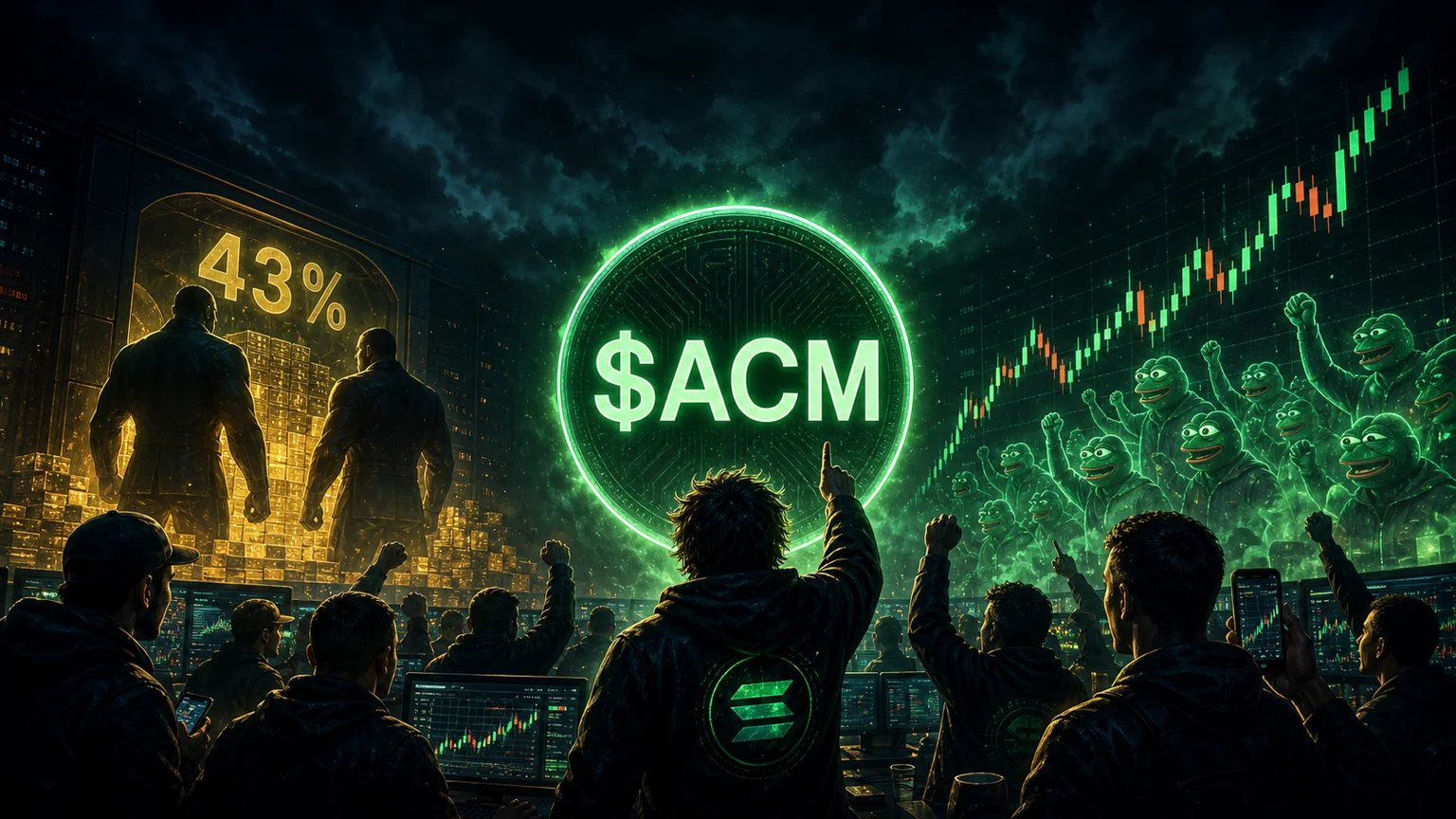
$ACM has freeze authority off and mint authority off, but the top two wallets still control 42.77% of supply and the top three wallets sit near 45.59%, which is a lot of power for a board carrying only about $86.3K in liquidity.
The easiest way to misread $ACM is to treat it like a pure meme story. The branding is loud, the chart is louder, and the first-day numbers are exactly the kind of numbers that convince traders they are staring at a board with unfinished upside. By 2026-07-05 07:15 UTC, $ACM had already pushed roughly $1.13 million in turnover against about $86.3K in liquidity and a market cap near $1.20 million. That is enough tape to get people interested even before the wallet context shows up. Once the wallet context does show up, the story becomes much sharper. Zemrics bought around 05:49 UTC, then TobxG followed with two clips just after 05:55 UTC. Those are not random timestamps. They are the part of the chart where fast money was still making its decision while the broader crowd was only beginning to notice the board.
That early flow is why $ACM belongs on the radar at all. The wallet activity hit before the token had fully settled into a public momentum trade, and the market validated that interest with nearly $1.0 million of hourly turnover afterward. In meme markets, that sequence matters. The wallets do not need to buy huge size to shape the narrative. They only need to signal that the first read was worth paying for. $ACM got that vote, then immediately printed the kind of 3,660% day-one move that drags in the second wave of traders who do not want to believe they are already late. The problem is that fast attention and healthy structure are not the same fact. $ACM has the first one locked in. The argument now is whether the second one ever arrives.
- → $ACM turned early wallet interest into roughly $1.13M of 24-hour volume, about $86.3K in liquidity, and a market cap near $1.20M in under two hours.
- → The contract-level read is cleaner than average for a same-day Solana sprint: freeze authority is off, mint authority is off, and the developer wallet does not show a retained balance.
- → The live risk is ownership, not permissions. The top two wallets control 42.77% of supply, the top three wallets sit near 45.59%, and that concentration can dominate a board this thin.
Why $ACM Drew Fast Money
The chart explains part of it on its own. A token that can turn sub-penny pricing into a seven-figure market cap while still carrying only mid-five-figure liquidity is always going to look explosive to momentum traders. $ACM also had something a lot of fast Solana launches never get: readable timing from known wallets. Zemrics paid roughly $1,576 at about $0.000186 per token. TobxG followed a few minutes later with two buys around $0.000336 to $0.000338. When the board is this young, those timestamps matter more than the notional.
That is why the move cannot be written off as an empty candle. The buy ratio was about 53.3%, the one-hour volume alone sat near $994.7K, and the board was still less than two hours old. In plain terms, this was not a dead pool enjoying a few lucky prints. A real crowd showed up. The reason that matters is not because volume automatically turns into durability, but because it gives $ACM a plausible path to a second leg if the structure underneath it can stop looking so top-heavy. Meme traders will forgive a lot when the first expansion phase feels organic enough. They do not forgive a holder map that keeps reminding them the room may still belong to two people.
What the On-Chain Data Shows
The first on-chain read is relatively constructive. Freeze authority is disabled. Mint authority is disabled. The developer wallet does not show a lingering token balance, which removes the ugliest version of the usual Solana launch anxiety. Rugcheck scoring around 30 is not pristine, but it is also not a flashing disaster on its own. If the only question were whether the contract still had obvious switch-based danger, $ACM would grade out better than a lot of same-cycle meme boards.
The second on-chain read is why the rating stays yellow. One wallet owns 22.08% of supply. Another wallet owns 20.69%. Together they control 42.77% before the third-largest wallet is even counted. Once the pair wallet is included, the top-three concentration reaches roughly 45.59%. That is not a background detail. It means the board can look active, social, and liquid right up until one or two oversized holders decide the chart has already paid them enough. On a token carrying only about $86.3K in liquidity, those percentages matter far more than a comfortable trader would like. The contract shell may be clean enough, but the ownership shell is still making all the important decisions.
Why the Wallet Flow Still Matters
The bullish case for $ACM is not complicated. Early wallets saw enough here to buy before the board became obvious, and the market rewarded that interest with enough volume to prove the token was not just being batted around by one or two insiders. When a new meme can translate early informed-looking flow into broad churn this quickly, it deserves real attention. That is especially true when the meme itself is recognizable enough to keep attracting fresh clicks once the first screenshots start circulating. $ACM has already shown that people will trade the ticker, not just observe it.
The reason the wallet story cannot close the case by itself is that the same board is still structurally narrow. A market can be real and still be fragile. $ACM lives in that gap right now. The wallet activity says there was genuine early conviction. The holder map says conviction from the rest of the market still needs to broaden if this is going to behave like a durable runner instead of a brilliant one-cycle squeeze.
Where the Structure Can Still Fail
This is the part late traders usually try to negotiate with. They see a market cap north of $1 million, assume the token has already graduated from micro-cap fragility, and forget how little liquidity is actually standing behind the headline. Roughly $86.3K in liquidity is enough to support a fast meme, but it is not enough to make concentrated supply irrelevant. If one of the two largest wallets decides to trim into strength, the board will feel much smaller than its turnover suggests. That is not a rug thesis. It is simply how thin meme markets translate concentration into price damage.
$ACM is worth watching because the early wallet timing was sharp and the volume response was real.
What keeps the signal speculative is that the top two wallets still own 42.77% of supply while the token carries only about $86.3K in liquidity.
That is enough concentration to turn a strong board into a harsh exit lane if the next round of demand does not broaden ownership quickly.
What Would Make the Next Leg Real
The upgrade path for $ACM is not another dramatic candle by itself. Plenty of tokens can print one more vertical move before collapsing into their own holder map. What would actually improve the read is evidence that liquidity is thickening, hourly turnover is staying constructive without immediate air pockets, and the ownership profile is becoming less dependent on the two oversized wallets currently steering the room. If that happens, the early buys from Zemrics and TobxG start looking like the first chapter of a broader meme repricing. If it does not happen, then the same early timing that made the chart exciting will also define who got paid and who showed up late.
That is why the cleanest way to frame $ACM right now is as a live Solana test. The board has social readability, enough first-day volume to matter, and no immediate freeze or mint authority problem hanging over it. It also has a holder profile that can cancel a lot of that goodwill very quickly if the market decides to lean on it. For anyone pretending the structure is already comfortable, the data is saying something much harsher.
🟡 Speculative — $ACM earns real attention because early buys tied to Zemrics and TobxG arrived before the broader move, then the board backed that timing with roughly $1.13M in turnover and a run to about $1.20M in market cap. It stays speculative because the top two wallets still control 42.77% of supply, the top three wallets sit near 45.59%, and that ownership shape is too influential for a token carrying only about $86.3K in liquidity.
What is $ACM on Solana?
$ACM is Aladdin’s Castle Meme Coin, a new Solana meme token trading under contract address 4PRz3EwhbjrrX6YksMDuUzrXT51pr7CQtXNCravhpump.
Why is $ACM on MemeDesk radar right now?
$ACM drew early wallet activity tied to Zemrics and TobxG, then expanded to roughly $1.13M in 24-hour turnover and about a $1.20M market cap within its first two hours of life.
Does $ACM have obvious contract-level danger signs?
The main permission switches look cleaner than average. Freeze authority is disabled, mint authority is disabled, and the developer wallet does not show a retained balance.
What is the biggest risk in the $ACM setup?
Ownership concentration. The top two wallets control 42.77% of supply and the top three wallets are near 45.59%, which means a small number of holders can still dominate price behavior.
What would improve the $ACM read from here?
A healthier setup would mean deeper liquidity, steadier hourly turnover, and a holder map that becomes less dependent on the two largest wallets. That would show the market is broadening beyond the first wave of fast money.