$9QRI Is A 592-Day Reprice, Not A New Launch Chase
With a multi-million market cap, deep liquidity, and a large holder base, $9QRI belongs in a different bucket from the launch-radar names. The risk is whether the reprice is already crowded.
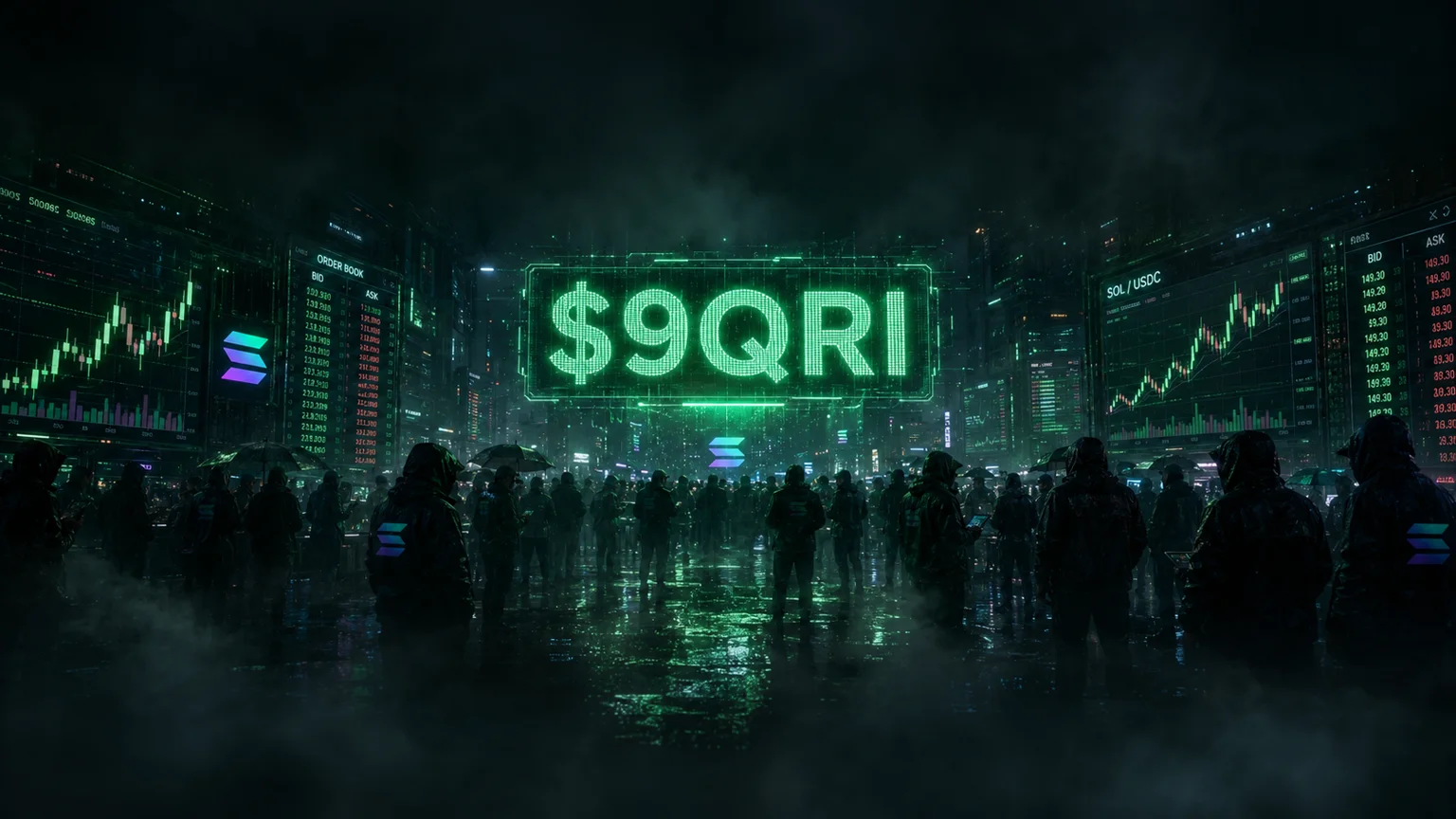
Rugcheck gives 9QRI a clean score of 1. The token has about 37,398 holders, renounced authorities, and roughly 10.8% top-three concentration, which makes the holder map much healthier than the fresh-launch names in this batch.
$9QRI is the outlier in this set because it should not be judged like a fresh launch. The token is not a tiny pool fighting for its first hour of attention. It is a 592-day asset that has moved into a larger narrative reprice. That changes the article completely. The key question is not whether the contract can survive day one. The question is whether the market is repricing an older token into a new attention cycle, or whether traders are walking into a crowded move after the easy leg.
- → $9QRI is around $2.92M market cap with roughly $388K in liquidity, which is far deeper than the low-cap launch names.
- → The holder base is large at about 37,398 holders, while top-three concentration near 10.8% looks comparatively healthy.
- → Freeze and mint authority appear inactive, so the debate shifts from contract risk to narrative timing and buyer exhaustion.
This Is A Rotation Story
The strongest part of the $9QRI read is that it has history. A 592-day token does not behave like a new launch. It has prior holders, old bag memory, past chart levels, and a different kind of liquidity profile. When these older tokens wake up, the move is usually about narrative rotation. Traders start looking for assets that were ignored, survived long enough to matter, and suddenly fit the current market mood.
That makes $9QRI more credible than a random microcap, but also more complicated. Older tokens can reprice hard because their supply is already distributed and the market can rediscover them quickly. They can also fail hard because old holders use new attention as an exit window. The article has to measure both. Longevity is useful, but it is not a free pass.
What the On-Chain Data Shows
The on-chain profile is much stronger than the usual launch-radar file. Liquidity around $388K gives the market actual room. A holder base near 37,398 means the token already has wide ownership. Top-three holder concentration around 10.8% is reasonable for a meme asset, and freeze authority plus mint authority appear inactive. That combination moves $9QRI out of the pure danger bucket and into a real narrative-shift watch.
The important word is watch. Stronger data does not mean unlimited upside. It means the market has enough structure for the move to be debated seriously. At nearly $3M market cap, $9QRI is not being discovered from zero. It is being revalued. That means every new buyer needs to ask whether they are entering before the next rotation leg or after the crowd already found it.
Why The Depth Matters
Liquidity is the reason $9QRI reads differently. A $388K pool can absorb far more normal trading than the shallow Solana launches that break on ordinary exits. This does not make it safe, but it means price action is more informative. If buyers defend levels in a deeper pool, that matters. If sellers overwhelm the pool despite the depth, that also matters. The market is less theatrical here and more measurable.
The holder base also makes the chart more interesting. With tens of thousands of holders, $9QRI has enough distribution to support a broader narrative. That does not remove sell pressure from old wallets, but it lowers the chance that a few addresses define the entire asset. For a meme token, that is a meaningful advantage. It gives the market something to build on if the narrative keeps spreading.
The Risk Is Late Rotation
The danger with a narrative reprice is that the story becomes obvious right when the risk-reward gets worse. Traders see the age, the holder count, the liquidity, and the move, then decide it must be safer than the small names. That is partially true, but it can become the trap. Older tokens often have patient holders who waited months for liquidity to return. When attention arrives, some of those wallets sell into it.
The next quality test is whether $9QRI can consolidate after the reprice without liquidity draining or volume collapsing. A healthy narrative shift should leave a higher floor behind it. A crowded reprice usually leaves one violent candle and then a slow bleed as old holders distribute into late confidence. The difference will show up in support, not slogans.
The best confirmation would be a higher base, liquidity holding near the current depth, and holder count continuing to widen while top-three concentration stays contained.
How To Rank This Against The Batch
$9QRI ranks above most of the launch names because its market is deeper and its holder map is cleaner. It should not be treated like a low-cap lottery ticket. It is closer to a reprice candidate where timing matters more than basic survival. That is a higher-quality setup, but it also means the easy discovery discount is gone.
What A Healthy Reprice Should Look Like
A healthy $9QRI reprice should look more mature than a launch pump. It should produce defended pullbacks, steady liquidity, and a holder base that does not suddenly become more concentrated as price rises. The market does not need the token to move vertically to prove strength. It needs the move to leave structure behind. That is the difference between an older asset being genuinely revalued and an old holder base finally getting a convenient exit window.
This is also why $9QRI should be watched over multiple sessions, not judged on a single candle. Older tokens can take longer to show whether the reprice is real because there are more historical holders, more prior levels, and more emotional baggage in the chart. The good news is that the liquidity gives the market room to reveal the truth.
The better trader posture is to respect the reprice without romanticizing it. $9QRI has the profile to keep moving, but the best entries usually come when the market proves support after attention cools.
$9QRI is legitimately back in play as a narrative reprice. The liquidity, holder base, and authority checks make the setup much cleaner than the smaller Solana launches. The caution is timing. A strong older token can still punish late entries if the reprice is already crowded.
Why is $9QRI not a normal launch-radar article?
Because the token is roughly 592 days old and already has a large holder base. The story is rediscovery and repricing, not day-one survival.
What makes $9QRI cleaner than the others?
Liquidity near $388K, about 37,398 holders, and relatively contained top-three concentration around 10.8%.
What could break the bullish read?
A failed consolidation after the reprice, liquidity draining, or old holders using the renewed attention as an exit window.