CryptoGodJohn Just Dragged ARC Back Into the Solana AI Conversation, and the Liquidity Is Still Real
The post was really about EITHER, but ARC was the benchmark John reached for when he talked about Solana AI runners. That matters because AI Rig Complex was still sitting near a $74.7M market cap with about $2.05M in 24-hour volume and roughly $4.03M in liquidity. It also matters because the top three wallets control 65.2% of supply, so the structure is much uglier than the nostalgia trade looks.
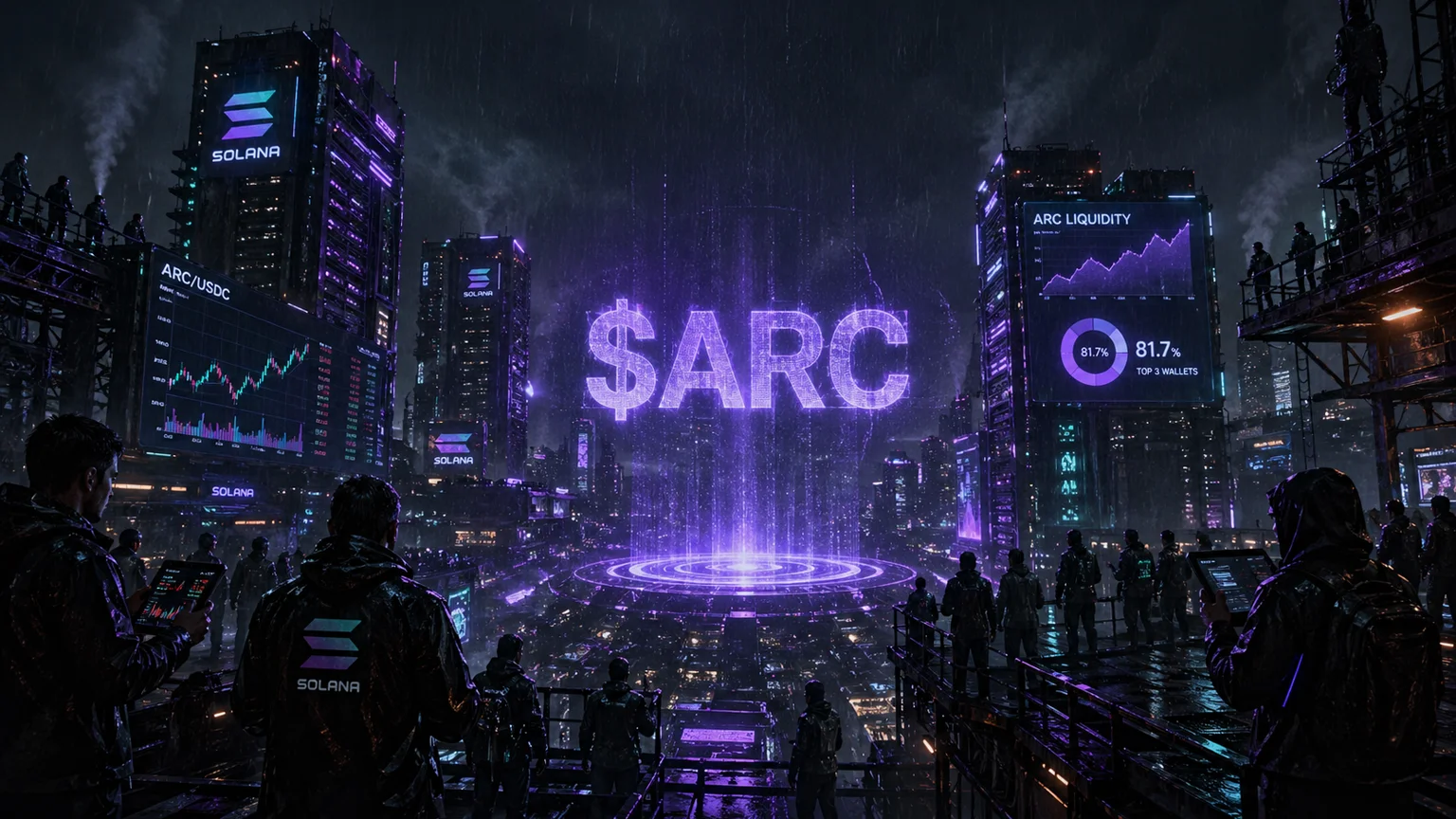
ARC still trades with real depth, but one wallet controls 43.7% of supply, the top three hold 65.2% combined, and Rugcheck still flags unlocked LP plus concentration risk. This is a benchmark chart with serious structural baggage.
At 9:36 PM UTC on April 27, CryptoGodJohn did something traders notice immediately even when the post is technically about another ticker. He used ARC as the benchmark. His thread was really pitching EITHER, but the line that stuck was this: Solana AI had not had a runner since ARC last ran to $400M+. In meme markets, benchmark mentions matter because they remind the board which old winner still owns a piece of collective memory. ARC was not dragged back into the feed as a dead relic. It was named as the last serious AI benchmark on Solana, and the chart underneath that reference still had enough size to matter.
That is why ARC deserves a second look even if John did not say he was aping it today. The token was still sitting near a $74.7M market cap with roughly $2.05M in 24-hour volume and about $4.03M in liquidity when this cycle was selected. Those are not courtesy numbers left behind by bagholders. They tell you ARC is still liquid enough for real rotation capital, recognizable enough for CT to reuse as shorthand, and old enough that traders already know the headline: this thing once mattered. When a sector theme wakes up again, the first capital usually does not hunt for the most obscure name. It revisits the benchmark everyone already remembers.
- → CryptoGodJohn did not make ARC the new bag in his post, but he did make it the benchmark again, and benchmark mentions are often enough to drag old winners back onto active screens.
- → ARC still had roughly $2.05M in 24-hour volume against about $74.7M in market cap and roughly $4.03M in liquidity, so this is not a ghost chart trying to fake relevance.
- → The structural problem is brutal: the top three wallets control 65.2% of supply, one wallet alone holds 43.7%, and Rugcheck still lands at 64 with unlocked-LP risk on the board.
What They're Seeing
What the board is really seeing here is not a clean direct KOL buy call. It is arguably more useful. John's post framed Solana AI as a live lane again and used ARC as the last runner important enough to set the measuring stick. That gives ARC a different kind of signal: not fresh conviction from a single buyer, but renewed relevance inside a sector conversation. In fast meme markets, relevance is the raw material that turns into bids. If traders start asking which old AI names still deserve screen time, ARC is already first in the sentence because the benchmark was spoken out loud for them.
ARC also has something newer microcaps cannot fake: memory. Traders remember the earlier move to the $400M area because huge old winners burn themselves into CT culture. That memory cuts both ways, but it absolutely helps attention travel. A fresh launch has to explain itself from scratch. ARC only has to remind people what it used to be. When the broader AI lane starts heating up off something like Nvidia strength or a new infrastructure narrative, old winners often get the first sympathy flow because they feel safer, more legible, and easier to size than whatever launched this morning.
The Number That Should Scare You
The number that ruins any lazy bull case is 65.2%. That is how much supply sits in the top three wallets. One holder alone controls 43.7%. That is not a footnote. It is the whole structural argument against treating ARC like some mature sector leader. A benchmark mention can attract traders, but it cannot fix a cap table like this. The more the market treats ARC like the default AI proxy again, the more important those wallets become because every breakout is happening underneath a very concentrated ownership structure.
Rugcheck makes the same point in a less diplomatic way. ARC lands at 64, flags a large amount of unlocked LP, and warns that the top ten holders own more than 70% of supply. Freeze and mint authority are both disabled, which helps, but that does not make the setup clean. It means the danger is not a clownish contract toggle. The danger is distribution. ARC can absolutely trend while the structure looks ugly. Meme markets do that all the time. But when the structure is this top-heavy, late buyers are always underwriting someone else's option to leave.
Why This Matters Right Now
Timing is why this still matters. John tied his AI comment to a broader read that Nvidia was breaking out of a monthly consolidation and that AI could go higher from here. Whether or not traders agree with every part of that macro take, the downstream effect is simple: if CT wants an AI board again, it will start by naming the runners it already trusts to carry attention. ARC fits that bill better than most tokens because it is not trying to introduce a brand-new joke. It already owns a piece of the lane's history. That matters in a market where narrative speed is usually more valuable than narrative originality.
The other thing that matters is depth. Plenty of old winners get referenced and nothing happens because the chart underneath the memory is dead. ARC is not dead. Roughly $2.05M in daily turnover and about $4.03M in liquidity mean the token still has enough market to absorb fresh interest without instantly collapsing into a spready mess. That is exactly why benchmark mentions can turn into real trades. Traders know they can get in and out. If the AI sector rotation broadens, ARC does not need to become the newest idea on the board. It just needs to become the easiest recycled idea with enough liquidity to matter.
What the On-Chain Data Shows
The deployer wallet itself is not the story here. There is no obvious serial-launch flex worth building mythology around, and zero creator-token history is the default state for meme launches anyway. What matters is concentration and liquidity control. Freeze authority is off. Mint authority is off. Good. But the top holder owns 43.7%, the next two wallets add 13.1% and 8.36%, and Rugcheck still throws danger-level warnings around unlocked LP and high holder concentration. That is why the right way to read ARC is as an attention asset with a structural handicap, not a structurally clean token rediscovered by smart money.
That distinction matters because old benchmarks tend to feel safer than they are. Traders see the familiar ticker, the historic move, the seven-figure volume, and the big liquidity number, then mentally round that into quality. The chain does not let you do that. The chain says ARC is tradeable, not trustless. If the AI conversation keeps widening, the chart can still run hard. If attention slips or one of the major wallets gets impatient, the same familiarity that made ARC easy to buy will make the unwind brutally obvious.
The Counter-Trade
The clean bear case is that this signal belongs to EITHER, not ARC. John was not telling followers to chase ARC right now. He was using ARC as the measuring stick for a different AI setup. That means traders have to separate narrative relevance from direct sponsorship. ARC may get sympathy attention from the benchmark mention, but sympathy attention is thinner than first-choice conviction. If the market decides the new AI money should stay in fresher names while ARC remains the old example everyone references, the token can stay liquid, famous, and structurally ugly without actually getting the next explosive leg bulls want.
The bull case is that being the benchmark is exactly the point. When a sector returns, the old winner often rerates before the cleaner newcomer because the board already knows how to talk about it. ARC does not need John's portfolio stamp to benefit from that. It just needs traders to hear the reference, remember the old move, and decide the easiest AI name to rotate back into is still the one that already made history once. That is not as pure as a direct KOL buy call, but it is still a real social signal. In meme coins, remembered winners often get paid before deserved winners do.
Verdict
🟢 No obvious red flags attention signal, ugly structure. ARC is back in the conversation because a major CT account just used it as Solana AI's benchmark, and the token still has enough liquidity and volume to matter if the lane wakes up. The problem is the same one the chain keeps screaming about: 65.2% top-three concentration, a 43.7% top wallet, and unlocked LP risk. This is a credible rotation candidate, not a clean conviction hold.
FAQ
What is ARC crypto?
ARC is AI Rig Complex, a Solana meme token trading under contract address 61V8vBaqAGMpgDQi4JcAwo1dmBGHsyhzodcPqnEVpump. In this cycle it was sitting near a $74.7M market cap with about $2.05M in 24-hour volume.
Did CryptoGodJohn actually call ARC?
Not as a fresh buy. His post was really about EITHER, but he used ARC as the last major Solana AI runner and benchmark. That still matters because benchmark references can drag old winners back into active rotation.
Why does a benchmark mention matter for meme coins?
Because meme money usually flows first into names traders already recognize. When a large CT account names the old winner in a hot sector, the market gets reminded which ticker already owns the lane's memory.
What is the biggest risk on ARC now?
Holder concentration. One wallet controls 43.7% of supply and the top three wallets hold 65.2% combined, while Rugcheck still flags unlocked-LP risk.
What would strengthen the ARC thesis from here?
The cleanest confirmation would be broader Solana AI rotation plus sustained volume holding above the current baseline. If traders keep revisiting old AI benchmarks instead of only chasing fresh launches, ARC becomes much easier to rerate.