$271K Volume on a $31K Cap: WERLD Is Solana's Latest One-Word Fantasy — and the Holder Map Is Rough
WERLD has the exact shape scanner degens chase: four hours old, up 1,083% in a single hour, and simple enough to understand in one glance. The catch is brutal: only about $6.9K of liquidity sits under the move while the top three wallets control 53.3% of supply.
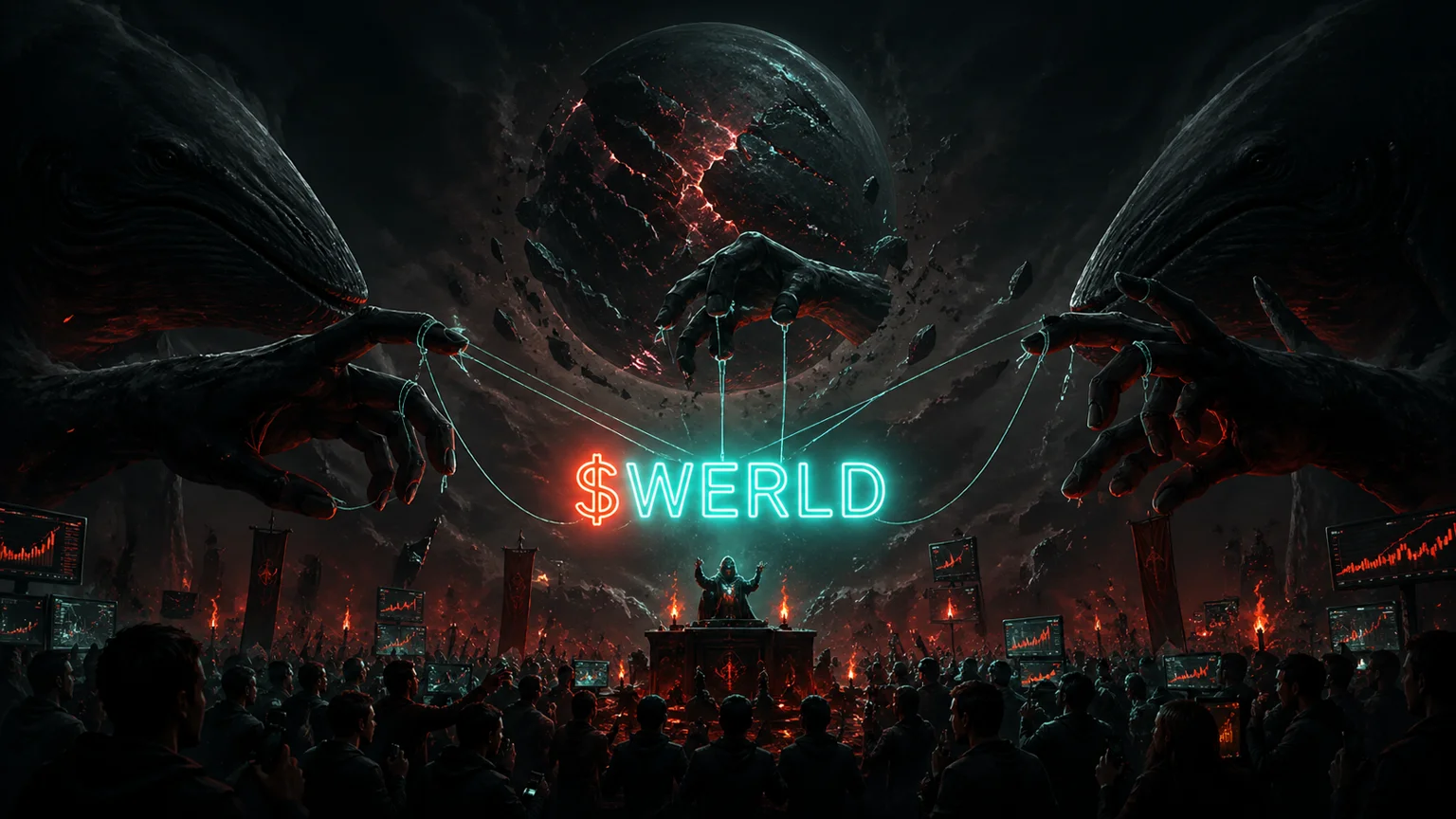
Permissions are clean, but the top three wallets control 53.3% of supply, liquidity is only about $6.9K, and Rugcheck still scores the setup at 60. That is a squeeze structure, not a healthy market structure.
By around 4:02 AM UTC on April 28, WERLD had turned a tiny Solana launch into the kind of chart that forces every scanner trader to at least stop scrolling. The token was only about four hours old, yet it had already pushed roughly $271,615 in 24-hour volume, tagged a market cap near $31,121, and ripped 1,083% in a single hour. That is absurd turnover for something this small. It means the market did not just notice the ticker. It dogpiled the ticker.
The attraction is obvious. WERLD is a one-word meme with almost no friction. It sounds huge, final, and weirdly universal. Misspelling world as werld makes it feel internet-native without making it unreadable. That combination matters in meme markets because the best low-context tickers are the ones traders can explain with a single laugh and a single screenshot. WERLD does not need lore, a mascot, or a fake product deck. The name itself is the pitch.
- → WERLD did about $271.6K in volume on a market cap of roughly $31.1K, which means the token traded around 8.7 times its own size in a single day.
- → The meme works because one-word, totalizing tickers always tempt degens into projecting a bigger story onto a very small chart.
- → The structure is ugly: only about $6.9K of liquidity backs the move, Rugcheck scores it at 60, and the top three wallets control 53.3% of supply.
What Happened
WERLD came through the same pump.fun discovery funnel that mints dozens of disposable names every day, but it separated itself fast because it was both legible and small enough to go vertical on almost no capital. Once the obviously scammy headline bait got ignored, WERLD became the cleanest remaining breakout on the board. That matters because scanner traders do not need a perfect story. They need a chart that looks alive and a meme they can repeat without embarrassment. WERLD offered both.
There is also something CT-friendly about the scale of the word itself. World is too big a concept for any sane token to own, which is exactly why a microcap can use it as rocket fuel. A ticker like WERLD lets buyers pretend they are not just chasing another throwaway coin. They are buying a symbol that feels expansive, almost foundational, while still costing less than the average lunch to move. That fantasy gap between grand branding and microscopic market cap is where a lot of Solana heat begins.
The timing helped too. A four-hour-old chart with a four-digit hourly candle is precisely the kind of thing that forces indecision into motion. Nobody looking at a move like that feels comfortable. They either ape because they think a second squeeze is coming, or they freeze because they know one wallet can detonate the whole structure. Tokens that create that tension tend to attract even more flow because the debate itself becomes the marketing.
The Degen Translation
WERLD is not being priced as a project. It is being priced as a maximalist mood. Degens love tickers that feel bigger than the actual coin because it gives them room to invent the narrative in real time. A dog coin tells you what it is. A name like WERLD can mean domination, reset, new map, new order, or just a funny way to say this chart owns your timeline now. The ambiguity is a feature.
That is why the market cap matters as much as the move. At roughly $31K, WERLD sits in the sweet spot where almost every buyer can still pretend they are early. It does not take institutional money, coordinated whales, or a long runway to create eye-watering percentage moves from that base. It takes a few determined pockets of momentum and a meme that sounds larger than life. WERLD has both.
The problem is that the same tiny base that makes the chart exciting also makes it structurally dishonest. A coin this small can feel like the center of the market while still being barely deep enough to absorb one medium-sized exit. That is why microcap culture trades are always double-coded. The candle screams opportunity. The plumbing screams trap. Smart traders read both at the same time.
The Numbers
The most important ratio in the setup is volume against market cap. WERLD traded roughly 8.7 times its own market cap in a day. That tells you this is not a sleepy chart sitting untouched after launch. Real money, at least by microcap standards, was cycling through it aggressively. When a token of this size turns over that hard, the market is effectively fighting over who gets to define the first real price zone.
The time-frame split is just as telling. A 236.8% day is already wild. A 1,083% one-hour burst layered on top means the acceleration came late, not early. That usually points to scanner discovery and social spillover rather than a launch that was immediately fully priced. In plain English, WERLD did not just pop out of the gate. It found a second wind when more traders noticed the chart. That can extend further, but it can also mean the easiest money has already been made and the dumbest money is arriving now.
Liquidity is the number that ruins the fantasy. About $6,900 in pool depth under a $31,100 market cap is paper-thin even by Solana standards. It means the chart can sprint because there is almost no friction, but it also means there is barely any road if sentiment turns. Traders looking only at the percentage candles will call this explosive. Traders looking at the actual pool will call it fragile. Both are correct.
What the On-Chain Data Shows
At the permission layer, WERLD avoids the two instant-death buttons that make many microcaps untradeable. Mint authority is off. Freeze authority is off. That means the contract does not show the most obvious forms of creator control. If that were the whole story, the setup would be much easier to respect. It is not the whole story.
The real issue is concentration. The top wallet controls 23.05% of supply. The second wallet controls 20.69%. The third controls another 9.58%. Together that is 53.3% in just three hands, and Rugcheck also flags broader ownership risk because the top 10 wallets hold more than 70% of supply. None of the visible top holders are flagged as insiders, but that does not rescue the structure. On a token with less than $7K in liquidity, concentrated ownership is not a side note. It is the main event.
The deployer wallet itself is not notable enough to justify the usual forced drama. A fresh wallet with no special history is normal in meme land. What matters is that the market has built a loud breakout on top of a holder map that is still extremely top-heavy. Rugcheck's 60 score captures that tension pretty well. WERLD is not screaming obvious contract abuse. It is screaming market-structure risk. That distinction matters because a token can keep pumping while still being a terrible place to get stuck.
Is This Sustainable?
The bull case is simple and dangerous. WERLD is still microscopic. The name is broad enough to invite every kind of projection. And when a coin with a $31K market cap has already proven it can attract over $271K in volume, another wave of scanner traffic can push it violently higher before the structure has time to stabilize. The same shallow pool that makes the chart untrustworthy also makes it capable of another absurd squeeze.
The bear case is even simpler. One of the top wallets sells size, liquidity caves, and late buyers learn the difference between price and depth the hard way. There is no real buffer here. No large pool. No broad distribution. No clean on-chain profile strong enough to neutralize the ownership risk. WERLD can absolutely print higher from this level. That does not make it healthy. It makes it combustible.
So the real question is not whether WERLD can move again. It obviously can. The real question is whether the next move belongs to momentum buyers or to the wallets already sitting on the float. When concentration is this high, the chart is never fully public. It is always partly a negotiation with the biggest holders. That is why WERLD deserves attention as a live signal but not trust as a clean setup.
Verdict
🔴 Shill-risk setup. WERLD has the perfect surface-level ingredients for a microcap mania trade: a universal meme, a tiny market cap, and enough turnover to keep scanner degens piling in. But the plumbing underneath it is nasty. Liquidity is only about $6.9K, the top three wallets control 53.3% of supply, and Rugcheck still scores the token at 60. That does not mean the chart cannot squeeze harder. It means the squeeze lives on borrowed time and borrowed trust.
FAQ
What is WERLD crypto?
WERLD is a Solana meme token that surged on Jupiter cooking feeds after printing roughly $271.6K in 24-hour volume on a market cap near $31.1K. It is a pure meme trade rather than a utility project.
Why is WERLD getting attention?
Because the ticker is simple, the move was violent, and the market cap is still tiny enough for traders to believe another squeeze is possible. One-word memes are easy for CT to spread quickly.
What is the biggest risk in WERLD right now?
Holder concentration. The top three wallets control 53.3% of supply, which is a huge amount for a token with only about $6.9K in liquidity.
Is WERLD a clean on-chain setup?
Not really. Freeze and mint permissions are off, which helps, but Rugcheck still scores the token at 60 and flags severe ownership concentration plus low liquidity.
Can WERLD still go higher?
Yes. Tiny concentrated memes can squeeze much farther than they deserve. The issue is that the same structure that enables upside can collapse brutally if one large wallet exits.