
Mary Printed a 347% Solana Burst, but the Holder Map Is Doing Most of the Talking
The Tasmanian Devil lit up launch radar with roughly $68.6K of turnover and a 48.42% one-hour move, yet a 38.72% top wallet, 48.3% top-three concentration, and reported zero liquidity make this a risk-first board, not a clean chase.
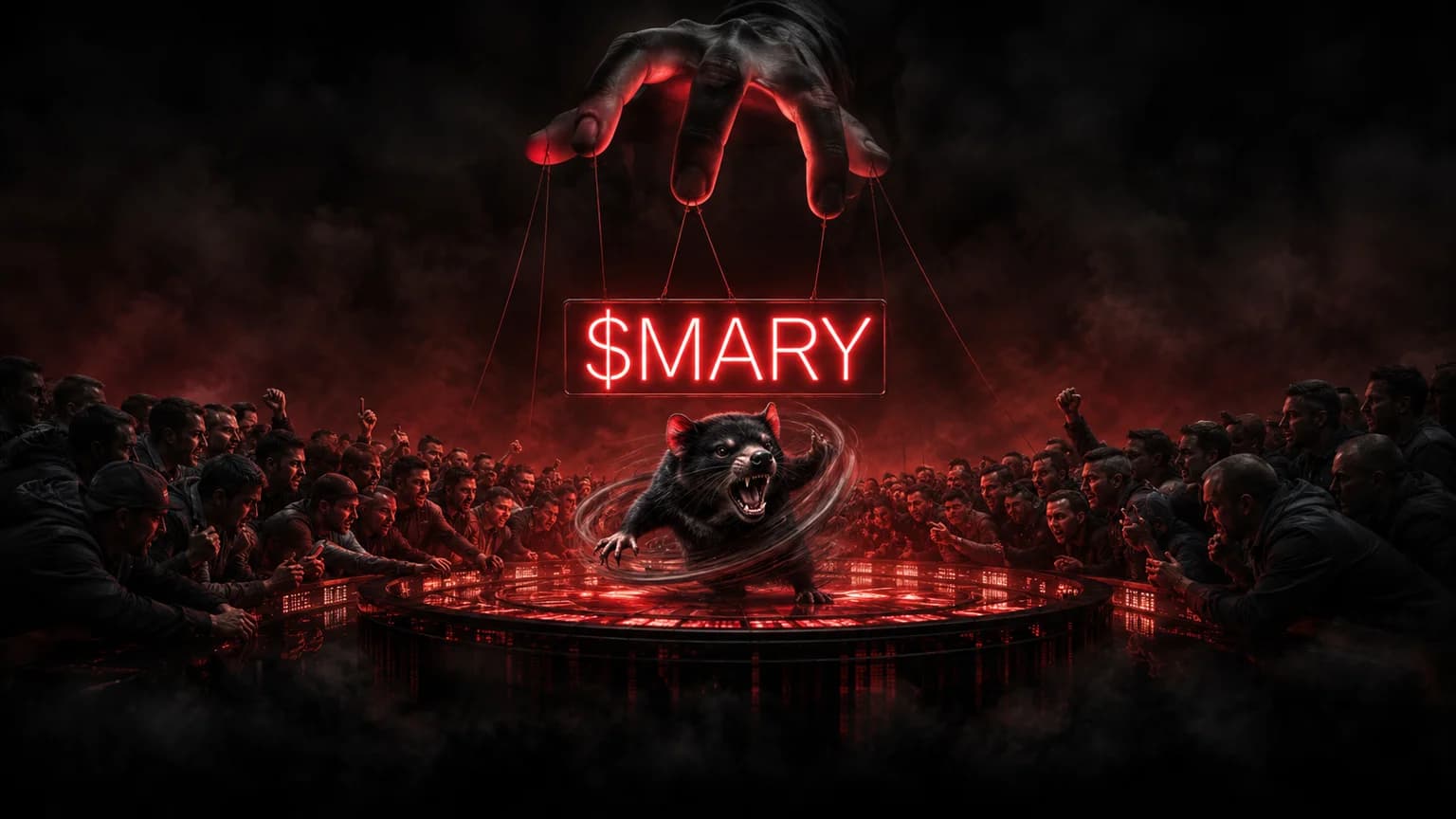
Rugcheck scores Mary at 1 with freeze authority disabled and mint authority disabled, but the market structure is still hostile: the top visible wallet controls 38.72% of supply and the top three visible rows hold 48.3% combined while liquidity was reported at zero in the saved selection.
Mary has the kind of chart that tricks people into thinking every problem can be solved with enough momentum. The Tasmanian Devil showed roughly $68.6K in 24-hour volume against a market cap near $12.4K, which sounds explosive because it is. DexScreener also saved a 347% daily move, a 48.42% one-hour push, and a pair age of only about 1.06 hours at the 1:04 PM UTC selection on June 3. On a superficial read, that is exactly the sort of launch-radar tape traders rush to rationalize after the move has already happened. On a structural read, it is a tiny board with a very loud chart and almost no margin for error.
The market is not debating whether Mary can move. It already moved. The real question is whether the move deserves trust, and the answer right now is no. The setup is too thin, the holder map is too heavy, and the reported liquidity is too weak to let the green percentage do all the persuasion. A micro-cap can absolutely keep climbing from here if attention remains irrational enough. But a chart this young with a 38.72% top wallet is not a clean momentum story. It is a concentration story wearing a momentum costume.
- → Mary forced itself onto radar with about $68.6K of turnover on a market cap near $12.4K, which means the tape was active even if the underlying board was microscopic.
- → The setup is structurally ugly: reported liquidity was zero in the saved selection, the top visible wallet held 38.72% of supply, and top-three concentration reached 48.3%.
- → Rugcheck is clean at the contract level with freeze authority disabled and mint authority disabled, but contract cleanliness does not rescue a board when the holder map can still dominate every candle.
A Tiny Board Can Still Trap Size
One of the easiest mistakes in Solana meme trading is assuming that huge percentage moves and healthy market structure usually arrive together. They do not. In fact, the smallest boards often print the most violent numbers precisely because they are fragile. Mary only needed a modest amount of real buying pressure to look spectacular on paper. That is what happens when the denominator is tiny. A trader staring only at the percentage chart may see a breakout. A trader staring at execution risk sees a pool that can become hostile the second even one larger wallet decides it has seen enough.
That matters here because the bullish interpretation is obvious and cheap. The token is new, people can understand the Looney Tunes-coded reference immediately, and the first burst was strong enough to make the board feel alive. The harder interpretation is the one that actually pays later: if this many people can crowd into such a small chart so quickly, what happens when the same crowd tries to leave? Boards like this do not fail because the meme suddenly becomes incomprehensible. They fail because the exit door was never built for the number of people now pretending they can use it at once.
The Tape Looks Better Than The Foundation
If you want the bullish case, it starts with turnover. Processing roughly 5.5 times the market cap in 24-hour volume is a sign that the token was not completely ignored after launch. The buy ratio was around 57.9%, and the transaction count reached 1,788 in the saved window. Those are the numbers bulls point to when they argue that a higher market cap can still be discovered from here. They are not wrong that active flow exists. They are wrong if they think active flow automatically creates safety.
The reported zero-liquidity line is the part nobody should wave away. Sometimes fresh listings show messy data, and sometimes small pools get misread for a moment. Even with that caveat, zero is not a number you want attached to a board that already ran 347% in a day. If the data is correct, the chart is a minefield. If the data is partially stale, the burden is still on bulls to prove actual depth exists. Either way, a responsible read cannot treat Mary as a normal chase candidate while that figure remains on the screen.
What the On-Chain Data Shows
The strange part about Mary is that the contract-level read is not the problem. Rugcheck scores it at 1. Freeze authority is disabled. Mint authority is disabled. There are no preserved danger flags in the enriched profile. That matters because it removes the lazy version of the bear case. This is not a token that immediately fails the basic contract-permission sanity check. If it breaks, it is more likely to break because of ownership structure and liquidity than because someone left an obvious admin switch turned on.
Ownership structure is enough to keep the read red anyway. The top visible wallet controls 38.72% of supply. Add the next two visible rows and top-three concentration reaches 48.3%. That is not slightly heavy. That is almost half the board inside three lines. Creator history is not especially alarming, with only two prior creator tokens saved in the profile, but it also does not provide a reputation premium strong enough to offset the concentration problem. When nearly half the visible supply can be mapped to a three-wallet cluster, every buyer is volunteering to trade inside somebody else's decision tree.
Why The Holder Map Changes The Trade
A lot of launch-radar names deserve a yellow rating because the structure is mixed. Mary does not. Mary deserves a red framing because the biggest risk is not hypothetical. It is already in the cap table. A 38.72% top wallet can choose to behave well for hours and still leave every later buyer living on borrowed confidence. The market does not need an outright rug to get hurt. It only needs one holder with too much inventory and too little patience.
That is why the same volume that makes the chart look exciting can make it more dangerous. Fast turnover creates the illusion of depth, especially when traders keep seeing green candles and assume someone larger is supporting them. But on boards this small, activity can just mean the token is being passed around inside a room that is too crowded for its own size. If Mary keeps running, the concentration problem does not disappear. It compounds. Bigger numbers attract later buyers, later buyers rely on thinner trust, and thinner trust breaks hard the second one major wallet decides the upside was good enough.
The Only Bull Case Left
There is still a path where Mary squeezes further. The meme is legible, the first wave of attention clearly arrived, and a board this small can overextend on pure reflex if the timeline keeps feeding it oxygen. If real liquidity appears, if the holder map loosens, and if the token can hold gains after the first mania candle, the current read can improve. That is a lot of ifs, but micro-caps do not need elegant theses to keep moving for another few hours.
The problem is that none of those repairs are visible yet. Traders chasing here are not buying a clean runner and managing ordinary volatility. They are betting that a structurally bad board can stay irrational longer than its own cap table wants to cash out. Sometimes that works. It is still not the same thing as a strong setup. Mary has enough heat to stay on radar. It does not have enough evidence to graduate into a trustworthy trade.
Verdict
🔴 Shill — Mary has momentum, but the momentum is sitting on top of the kind of structure that turns late entries into exit liquidity. Roughly $68.6K in daily volume on a $12.4K market cap proves traders noticed it. A 38.72% top wallet, 48.3% top-three concentration, and reported zero liquidity prove they should still be careful. Rugcheck being clean with freeze authority disabled and mint authority disabled matters, yet it does not solve the actual problem. This is not a contract-permission scare. It is a holder-map scare, and that is enough to keep the board red until the structure improves.
FAQ
What is Mary on Solana?
Mary is the ticker for The Tasmanian Devil, a Solana meme token trading under contract address sp525r6C9koUZ28oqFeu4F8JbqxuFwcoKWmGzbbpump. At the June 3 selection snapshot taken at 1:04 PM UTC, it sat near a $12.4K market cap after a violent early move.
Why is Mary on launch radar if the read is negative?
Because the tape was undeniably active. The token printed about $68.6K in 24-hour volume and a 347% daily move while the pair was barely an hour old. Radar coverage does not mean endorsement. It means the board is moving enough to deserve analysis.
Does Mary look clean on-chain?
Cleaner at the contract-permission level than many fresh launches. Rugcheck scored it at 1 with freeze authority disabled and mint authority disabled. The risk is not an obvious contract switch. The risk is who already controls the supply.
What is the biggest red flag on Mary right now?
Holder concentration. The top visible wallet controls 38.72% of supply, and the top three visible rows hold 48.3% combined. That is a huge amount of influence for such a small board, especially when reported liquidity is still zero.
What would need to change for Mary to look better?
The board needs real liquidity, looser distribution, and proof that it can hold activity after the first rush. Until those show up, the current setup remains a momentum chart sitting on fragile ownership structure.