Doorbell Chud Turned a Niche Joke Into a $1.94M Solana Culture Breakout
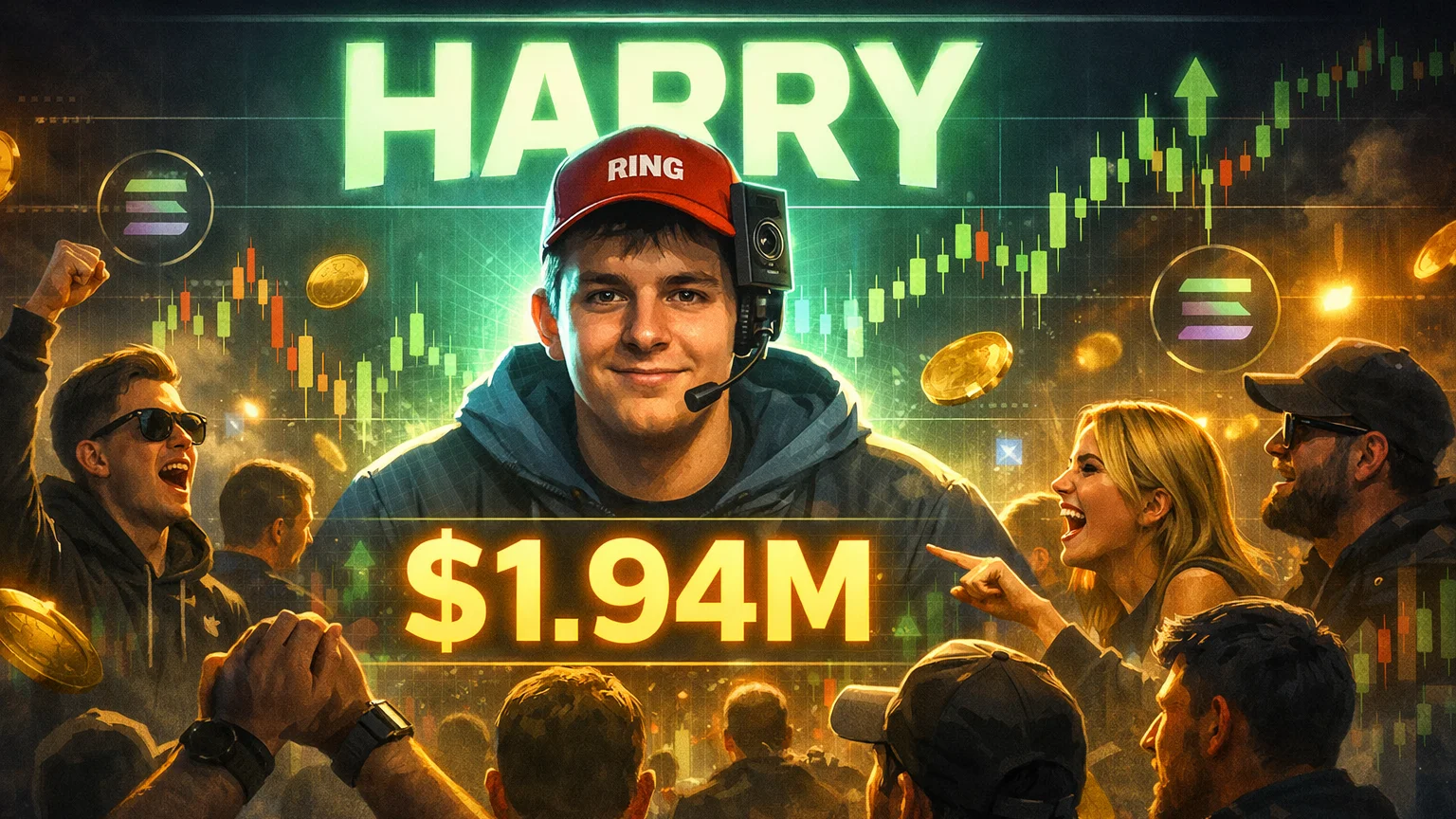
HARRY is what happens when meme traders decide a hyper-specific internet reference is worth real money. Nearly $1.94M in 24-hour volume, a high organic score, and 28,929 transactions say this was more than one lucky candle.
The contract permissions are clean, but concentration still matters because the top three wallets hold 43.81% of supply in a thin, attention-driven market.
HARRY is the kind of Solana trade that explains the current meme market better than a week of polished market commentary. Doorbell Chud is not trying to sell a product, a roadmap, or a fake infrastructure thesis. It is a weirdly specific internet fragment that traders decided was funny enough, odd enough, and transmissible enough to deserve real order flow. That decision pushed the token to roughly $677,700 in market cap while 24-hour volume surged to about $1.94 million. In a cycle packed with generic animal reruns and tired celebrity derivatives, that matters. It suggests the market is still willing to pay up for raw specificity when the joke feels native to the feed rather than focus-grouped for a landing page.
The bigger signal is not just the price candle. It is the shape of participation. HARRY logged nearly 28,929 transactions, held a buy ratio a little above 56 percent, and posted an organic score above 83. That is the profile of a culture coin people were actually touching, not just a chart being cosmetically inflated by a tiny cluster of wallets. Meme traders care about that distinction because the first leg of a culture move can always be manufactured, but the second leg needs humans. Humans have to keep repeating the joke, forwarding the screenshot, and deciding this niche reference deserves another round of attention. That is what turns a micro-cap oddity into a real market read.
- → Doorbell Chud reached roughly $677.7K market cap on $1.94M in 24-hour volume, which is serious turnover for a token built on a hyper-specific meme reference.
- → The setup looked unusually organic for a fresh culture coin. HARRY printed 28,929 transactions and an organic score above 83, suggesting broad trader participation rather than a tiny cluster of wash flow.
- → The risk is still obvious. Liquidity is only about $59.8K and the top three wallets control 43.81% of supply, so boredom or coordinated exits could hit the chart hard.
What Happened
The culture setup here is simple and that is exactly why it worked. Doorbell Chud feels like a piece of internet debris, the sort of reference that seems too niche for outsiders but instantly legible to the people marinating in timeline absurdity all day. Those are often the strongest meme premises because they do not need explanation. They only need recognition. If enough traders feel the same tiny pulse of familiarity or confusion at the same time, the token becomes a coordination point. HARRY appears to have found that pocket. Within roughly 46 hours of pair age, it was already trading like a live social object instead of another forgotten launchpad listing.
That matters because most new meme coins fail on the distribution step, not the creation step. Anybody can spin up a ticker. Very few can become a phrase people want to repeat. HARRY cleared that first distribution bar. The 43.39 percent one-hour gain, 83.03 percent six-hour move, and 258.08 percent 24-hour surge tell the story of acceleration, but the more interesting read is why people were willing to keep aping a token with no utility wrapper. The answer is that the meme itself was the wrapper. Traders were not buying fundamentals. They were buying the possibility that a deeply online joke could keep replicating for one more session, maybe two, maybe longer if the internet decided the phrase had staying power.
The Degen Translation
Meme traders are still paying the highest premiums for things that feel both stupid and specific. Broad jokes are cheap now because everyone has seen a thousand versions of them. Hyper-specific jokes are scarce because they carry the thrill of inside knowledge. Doorbell Chud sits right in that sweet spot. It is weird enough to stop a scroll, simple enough to repeat, and empty enough that traders can project whatever version of the joke they want onto it. That is not a flaw. In meme-coin markets it is often the product.
This is also why HARRY reads as a culture-moment article rather than a standard launch recap. The real signal is not that another pump.fun graduate found buyers. The signal is that traders are still rewarding low-context internet weirdness over cleaner narratives. If you are trying to read where the money wants to rotate, that matters. It means novelty still wins when novelty feels like something a chat group would naturally pass around. HARRY is not teaching the market a new theme. It is reminding the market that pure memetic transmission remains one of the fastest ways to manufacture attention on Solana.
The Numbers
The standout metric is turnover. A token around $677,700 in market cap doing roughly $1.94 million in 24-hour volume means the market chewed through the float multiple times in a single day. That is usually where real meme signals first become visible. It shows the chart is being actively negotiated, not simply printed upward and abandoned. HARRY also logged almost 29,000 transactions, which is a serious activity number for a sub-$1M coin and another clue that the move reached beyond a tiny whale cartel.
The organic score above 83 is just as important. It does not make the token safe, but it does suggest the flow was less synthetic than the average launchpad mania burst. High-organic setups tend to matter more because they imply a broader human audience is involved. That gives the trade a chance to survive beyond the first adrenaline spike. The weak point is still the depth of market. About $59,800 in liquidity is enough for upside theatrics and also more than fragile enough for sharp downside once attention slips. HARRY is not a stable equilibrium. It is a live attention contest in a thin order book.
What the On-Chain Data Shows
The contract permissions read cleaner than plenty of fresh Solana memes. Freeze authority is off, mint authority is off, and the Rugcheck score sits at 16, which is low enough that there is no obvious contract-level panic signal baked into the setup. The developer wallet also shows zero balance, which means there is no easy dump-risk story centered on a still-loaded creator wallet. That is the good news, and it matters because a culture trade this fragile does not need extra structural poison layered on top.
But the more useful on-chain takeaway is concentration. The top three wallets control 43.81 percent of supply, with the largest wallet alone holding 20.69 percent. None of those wallets are flagged as insiders in the available read, but the concentration is still real. That means HARRY can look organically alive while remaining vulnerable to a relatively small number of holders deciding the meme has peaked. Holder count around 1,468 is respectable for a live culture coin, yet distribution is not broad enough to neutralize concentration risk. That tension is the setup in one sentence: the meme looks clean enough to matter, but the float is still thin enough to hurt.
Is This Sustainable?
Sustainable is always a dangerous word for a coin whose entire moat is being a more specific joke than the next ticker over. Still, HARRY has two things going for it. First, the meme format is reusable. People can keep posting it without needing a new event to justify the reference. Second, the tape already proved there is an audience willing to transact around that reference at scale. Those two facts are enough to keep the door open for another leg if Solana timeline energy stays weird.
What would strengthen the case is continued turnover with stable liquidity and fresh holder growth. What would break it is equally obvious: the chat groups move on, liquidity remains thin, and a handful of concentrated wallets decide to cash out into fading curiosity. HARRY is worth paying attention to because it captures where meme traders still find edge. They are not just buying mascots. They are buying the smallest possible units of internet culture when those units feel contagious enough to spread. Whether that contagion lasts another day is the trade.
Verdict
🟢 HARRY deserves respect as a real culture breakout because the participation was broad, the turnover was heavy, and the organic score suggests genuine trader interest rather than pure theater. But it is still a thin market with meaningful wallet concentration, so the same weirdness that powers the upside can also make the unwind brutal. Treat Doorbell Chud as a live read on where Solana attention is rotating, not as a low-risk conviction hold.
Why is HARRY more than a random pump.fun coin?
Because the move was backed by real activity metrics. Nearly $1.94M in 24-hour volume, 28,929 transactions, and an organic score above 83 point to broad participation rather than a purely staged spike.
What is the biggest risk in the setup?
Thin liquidity and concentration. The token only has about $59.8K in liquidity, and the top three wallets control 43.81% of supply, so a small number of exits could hit price hard.
Does the contract show obvious permission risk?
Not from the available on-chain read. Freeze authority and mint authority are disabled, and the Rugcheck score is relatively low at 16.
What would confirm HARRY still has another leg?
More turnover, new holders, and signs that the meme itself keeps circulating across chats and feeds. Culture trades survive when the phrase remains contagious after the first pump.