Green Light District Is Up 208% in Five Hours, but the Wallet Map Looks Wilder Than the Name
GLD has a meme traders understand instantly: nightlife branding, a tiny board, and enough velocity to make small caps feel bigger than they are. The problem is concentration. A token can ride culture for a while, but a 63 Rugcheck score and heavy dev-linked control keep the floor unstable.
Authorities are disabled, but the saved risk snapshot still shows a 63 Rugcheck score, roughly 51.5% top-three concentration, and about 42.7% dev-linked balance. That makes the culture hook tradable but structurally fragile.
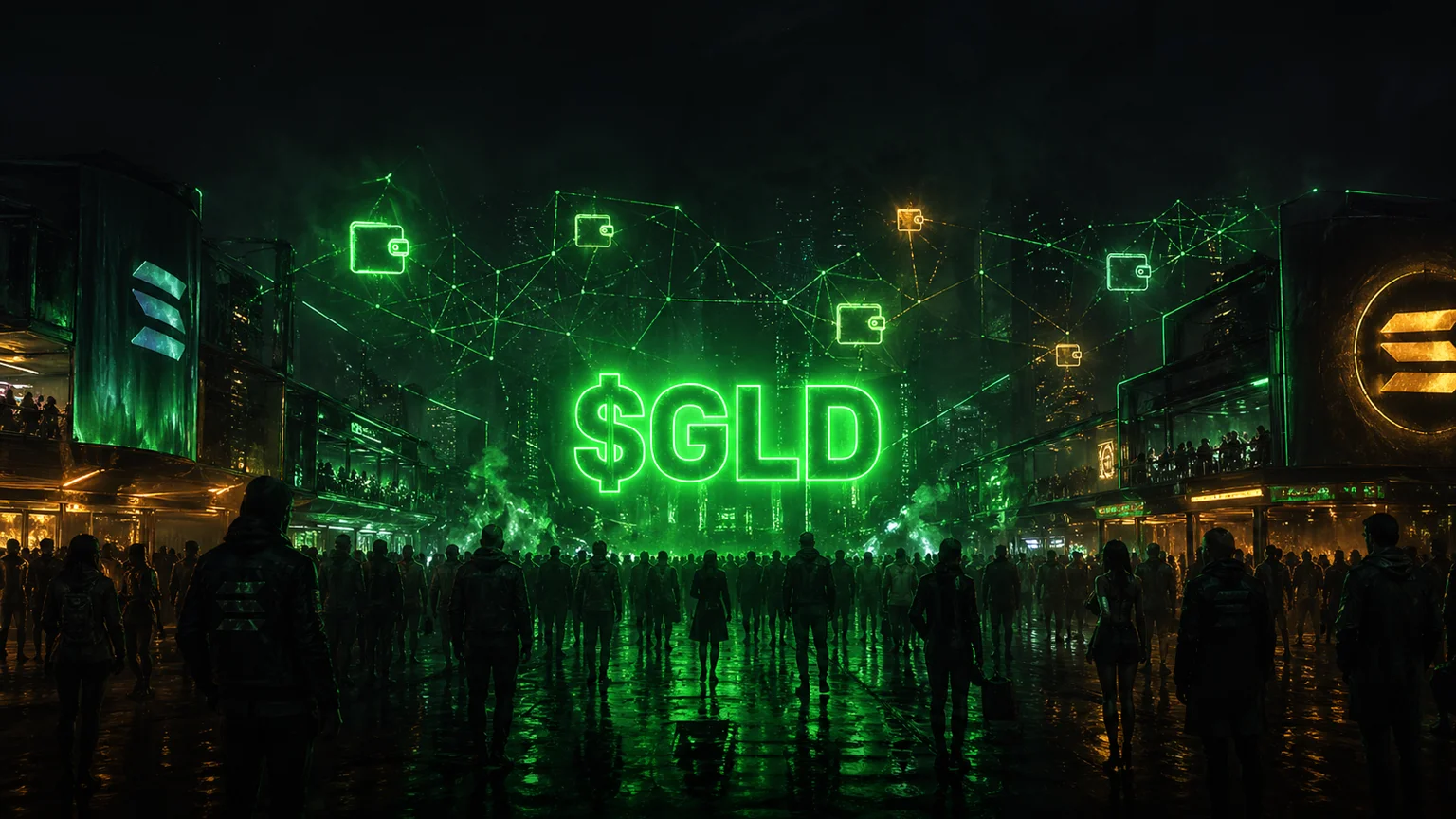
A little after 10:55 AM UTC, Green Light District was sitting around a $150,576 market cap after only about five hours of trading on Solana and roughly $445,056 in 24-hour volume. That alone would be enough to put a fresh pump.fun name on watch. What makes GLD more interesting is that the meme already knows what it wants to be. Green Light District is not a mascot coin or a pseudo-serious AI parody. It is a permission structure turned into a ticker. The name practically tells traders to loosen up, hit buy, and treat the board like a late-night zone where hesitation is the only social mistake.
That gives GLD a real culture-moment angle. Some meme coins win because they are absurd. Some win because they are legible. GLD fits the second bucket. Traders do not need a thread to explain it. They hear Green Light District and immediately understand the implied mood: nightlife, indulgence, motion, and zero guilt about joining the crowd. In a market that often rewards the easiest possible emotional shortcut, that matters. The problem is that good branding does not clean up a bad holder map, and this token's holder map is where the story gets messy fast.
- → GLD climbed about 208% in its first five hours on Solana while printing roughly $445.1K in 24-hour volume on only a $150.6K market cap.
- → The meme travels because the name does the work for you. Green Light District feels like a ready-made nightlife joke with enough identity to spread beyond pure chart tourists.
- → The structural risk is heavy: the saved audit snapshot shows roughly 51.5% top-three concentration, about 42.7% dev-linked balance, and only around $16.2K in liquidity.
What Happened
GLD came through the familiar pump.fun route, then quickly found enough turnover to matter. By the time it hit selection, the token had already logged 15,196 transactions and about 1,120 holders, while the price sat roughly 208% above its initial level. That is a serious amount of touch for a board this young. It tells you the coin escaped the launchpad bubble quickly enough to become a real object of attention rather than just another throwaway ticker dying in private.
The hourly tape is also useful. GLD was down about 14% in the last hour even while still showing a huge six-hour and 24-hour gain. That means the board is already in the stage where the first wave of conviction is colliding with the first wave of exits. This is usually the moment when a meme either proves it has enough story to survive rotation or reveals that the entire move was just a launch sugar high. The market has not settled that question yet, which is exactly why GLD is still worth covering.
The Degen Translation
Green Light District works because it sells permission, not complexity. The meme says yes before the chart does. Traders do not need a thread to decode it. They hear the name and immediately get the mood: nightlife, indulgence, motion, and zero guilt about joining the crowd. That gives GLD a clean identity to pass to the next buyer, which is often the whole edge in fast Solana launches.
That matters more than it sounds. A lot of fresh Solana memes fail because they ask the market to care about a brand-new character or a too-online joke that never escapes its first room. GLD skips that problem. Green Light District is a concept with existing emotional texture. People already know the vibe. That allows the chart to inherit a mood before the project has earned anything. In meme markets, inherited mood is often enough to create the first serious run.
The trap is that culture can hide bad structure for a while. Traders will forgive a lot when a name feels easy to pitch and the first candles are green. They will forgive much less once the wallet math starts showing through. That is the core GLD tension. The meme is clean. The ownership picture is not. So every bullish read on the narrative has to be measured against the possibility that the board is being carried by a story much stronger than its distribution.
The Numbers
The top-line figures explain why GLD got selected at all. A token doing nearly three times its market cap in daily turnover inside its first five hours is not invisible. Even more important, the activity is broad enough to suggest the coin is being passed around aggressively rather than simply parked in one clique. 15,196 transactions is real touch. That kind of throughput tells you the board has already escaped obscurity, which is the first hurdle every fresh Solana meme has to clear.
The liquidity figure is where the optimism needs a leash. About $16,182 of liquidity under a $150,576 market cap is a thin cushion for a board that just trained traders to expect instant follow-through. It means the 208% gain is both impressive and fragile. A token can feel liquid when it is going up because new buys keep repainting confidence. The real test comes when sellers want cash at the same time. On GLD, that test would get ugly quickly if the first larger wallets decide to use the nightlife narrative as their exit soundtrack.
The buy ratio is healthy but not euphoric. At roughly 55.2%, buyers are still winning, just not by enough to call the move carefree. That is actually useful. It means GLD has already entered a more honest phase where the market is debating price instead of simply submitting to it. If the board can keep traffic high while surviving that debate, the culture thesis gets stronger. If not, the volume will start looking like an expensive farewell party.
What the On-Chain Data Shows
This is where the story turns from fun to dangerous. The saved dev profile shows mint authority disabled and freeze authority disabled, which clears the most basic contract-control fear. But the Rugcheck score still comes in at 63, and the risk list is not subtle. Low liquidity is flagged. Large amounts of unlocked LP are flagged. High ownership concentration is flagged more than once. That is a profile telling traders the board may be tradable, but it is not structurally clean.
The concentration read is the real problem. The stored snapshot puts the top three holder slots at roughly 51.5% combined, with the biggest slot alone at 25.77%. Jupiter's saved enrichment data also points to about 42.7% dev-linked balance. Those are not numbers you tuck into a footnote. They are the setup. When a meme coin has that much weight near the top and only about $16K in liquidity, every green candle has to be read alongside the possibility that the people with the largest stack are letting the story mature before they cash it.
The deployer wallet itself is not noteworthy because it is famous. It is noteworthy because the board still appears meaningfully tied to concentrated control. That is exactly the kind of detail traders ignore when the branding is catchy and volume is strong. GLD may keep ripping anyway. Culture trades do that all the time. But the correct chain read is not that this token is secretly safer than it looks. It is that the culture hook is currently outrunning a very unstable ownership structure.
Is This Sustainable?
The bull case is straightforward. GLD has a memorable name, enough traffic to keep its board relevant, and a meme structure that does not require explanation. That combination is stronger than many first-day Solana launches ever get. If buyers keep treating the token like an open invitation to degen and if distribution broadens while volume stays hot, the current $150.6K market cap can still look early. Microcaps with legible branding do not need much fresh capital to double again.
The bear case is even easier to state. A nightlife meme with thin liquidity and heavy top-end control can feel amazing right until it doesn't. If the dev-linked share starts trimming into strength, or if one of the largest holder slots decides the first pump was enough, the chart can unwind faster than the meme can recruit replacements. That is what makes GLD different from a cleaner culture trade. The narrative is not fighting obscurity. It is fighting wallet math.
Sustainability here is less about whether the joke works and more about whether the board can broaden before the concentrated side gets impatient. If GLD keeps adding holders and survives more two-way action without the cap imploding, traders will give it more benefit of the doubt. If volume cools before distribution improves, the culture thesis collapses back into a standard pump.fun warning label.
🟡 Speculative, with a better meme than structure. Green Light District has the kind of instantly legible nightlife branding that gives microcaps a chance to travel, and the first five-hour volume proves the market noticed. But the saved risk snapshot is ugly: roughly 51.5% top-three concentration, about 42.7% dev-linked balance, a 63 Rugcheck score, and only around $16.2K in liquidity. GLD can still run. It just cannot be treated like a clean board while those numbers sit under the dance floor.
FAQ
What is Green Light District on Solana?
Green Light District, ticker GLD, is a fresh Solana meme coin launched through the pump.fun ecosystem. Its appeal is mostly cultural: the name instantly signals nightlife, permission, and degen behavior without needing extra lore.
Why did GLD get covered as a culture moment?
Because the token is not just moving on price. It is moving on a recognizable social vibe. GLD climbed about 208% in its first five hours while doing roughly $445.1K in volume, and the name itself is easy for traders to repeat and frame.
What does the current risk profile look like for GLD?
The saved snapshot shows mint and freeze authority disabled, but it also shows a 63 Rugcheck score, low liquidity, high concentration, and about 42.7% dev-linked balance. That makes GLD tradable, but far from structurally safe.
What is the biggest danger for GLD right now?
Concentration. When the top side controls a large share of supply and the liquidity pool is only around $16.2K deep, exits can distort the chart quickly. That matters more than the meme quality if the biggest wallets choose to sell.
What would improve the GLD thesis from here?
The strongest improvement would be broader holder distribution, continued high transaction activity, and evidence that the board can absorb selling without losing its culture hook. If the market keeps growing while concentration stops mattering, GLD becomes a more credible second-leg candidate.