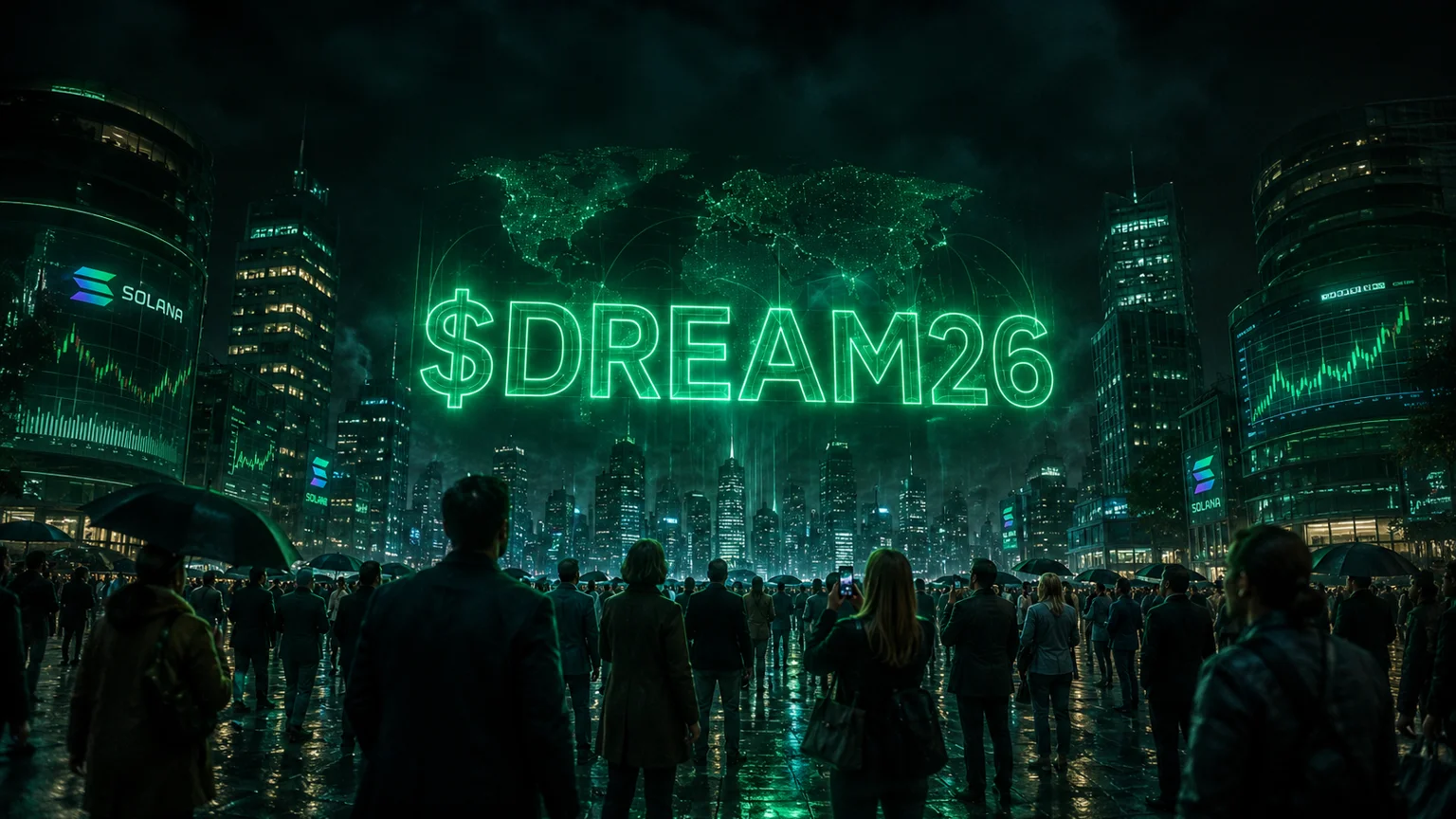
DREAM26 Turned a 2026 Dream Narrative Into $1.0M of Solana Volume in Under Three Hours
At selection, One World, One Dream was trading around a $755.6K market cap after a 947% daily burst, 11,737 tracked transactions, and a 64.1% buy ratio. Rugcheck looked clean and the top-three wallets controlled only 5.8% combined, which shifts the real risk away from contract rot and toward the usual first-night question: can raw narrative momentum survive the first hard round of profit-taking?
Rugcheck scores DREAM26 at 16 with mint and freeze authority both disabled, no stored danger-level flags, and a saved top-three holder concentration of just 5.8%. For a first-night Solana board, that is unusually loose distribution.
By around 4:04 PM UTC on May 20, DREAM26 had already done the one job every fresh Solana board has to do before anyone bothers building a bigger thesis around it: it forced itself onto the tape. One World, One Dream was trading near a $755.6K market cap after roughly $1.0M in 24-hour volume and a 947% daily move, with 11,737 tracked transactions crossing a pair that was only about 2.8 hours old. Those are not sleepy launch numbers. They are the kind of first-night stats that make traders stop doomscrolling long enough to ask whether a throwaway narrative is about to become the next live rotation.
The pitch is almost offensively simple, which is part of why it works. DREAM26 packages a 2026 optimism slogan into a ticker that feels instantly legible on CT: hopeful enough to screenshot, vague enough for everyone to project their own lore onto it, and fast enough on the chart to make the story feel real before anyone can overthink it. That matters because meme-token momentum is rarely driven by complexity in the first hours. It is driven by whether the market can summarize the trade in one breath. DREAM26 can. When a board makes semantic sense and the candles show up at the same time, degens do not wait for committee approval.
- → DREAM26 earned launch-radar attention the old-fashioned way: roughly $1.0M in 24-hour volume against a market cap near $755.6K while the pair was still less than three hours old.
- → The tape was active, not theatrical. A 64.1% buy ratio across 11,737 tracked transactions says buyers were not just landing one dramatic sweep and calling it a movement.
- → The contract read is unusually clean for a first-night Solana board. Rugcheck scored the token at 16, both authority keys were disabled, and the top three wallets controlled only 5.8% combined.
What Makes This One Different
Most fresh boards get attention by choosing between two lanes: they either lean on a meme everybody already understands, or they brute-force the chart hard enough that people forgive the lack of a story. DREAM26 is interesting because it is managing both at once. The 2026 dream narrative is broad, aspirational, and easy to remix, which gives the board immediate meme portability. At the same time, the volume-to-age profile says this was not just an aesthetic win. Roughly $1.0M of turnover in under three hours tells you the market was already testing whether the slogan could convert into actual flow instead of settling for cheap engagement screenshots.
The other differentiator is that the usual first-night structural ugliness is not screaming at you from the holder map. Plenty of low-cap launches print attractive candles and then immediately dare you to ignore a cap table that looks like three wallets in a trench coat. DREAM26's saved profile does not read like that. The top-three holder concentration sits at just 5.8%, no stored danger-level risks were flagged, and the contract permissions are clean. That does not make the board invincible. It does mean traders are looking at a much more honest version of the usual Solana gamble, where the biggest risk is still momentum decay rather than obvious contract rot.
The Numbers So Far
The first number that matters is turnover. DREAM26 pushed about 1.33 times its own market cap in daily volume while the pair was still only 2.8 hours old. That tells you the board was not floating upward on one lucky burst. It was being actively repriced in public. The 64.1% buy ratio adds another useful layer. Buyers were winning the aggression battle, but not by such an absurd margin that the tape looks fake. Combined with 11,737 transactions, the picture is not of a dead pool being gamed by a couple of wallets. It is of a small board getting real attention fast enough to become socially alive.
Liquidity around $71.1K is enough to make the move meaningful without making it comfortable. That is the sweet and dangerous part of a launch like this. The pool is deep enough that traders can convince themselves this is a real market, yet still thin enough that continued demand can stretch the chart hard if momentum keeps compounding. At the same time, first-night boards that have already moved 947% do not need a scandal to retrace. They just need energy to cool off for a few candles. DREAM26 has already proven it can attract buyers. The next test is whether that demand was front-loaded curiosity or the beginning of a board people actually want to keep rotating through.
What the On-Chain Data Shows
Mechanically, DREAM26 clears the easy disqualifiers. The saved profile shows freeze authority disabled and mint authority disabled, which strips out the laziest version of the rug case immediately. Rugcheck scoring the token at 16 with no stored danger-level flags is not a guarantee of good behavior, but it does matter. On Solana, a huge amount of garbage can be eliminated just by checking whether the basic contract permissions are hostile. DREAM26 passes that test cleanly. If this board breaks later, the first explanation is much more likely to be market behavior than admin-key abuse.
The real surprise is how loose the holder map looks for something this young. The saved top-three read is only 5.8% combined, and none of those visible wallets were marked as insiders in the stored profile. That is unusually civilized for a first-night meme coin. It means traders are not being asked to pretend a deeply concentrated cap table is somehow healthy just because the candles are green. The deployer story is also correctly boring. Creator history is empty, creator-token count is zero, and there is no notable dev-bag signal worth romanticising. For meme coins, that is normal. The important read is that the market structure looks tradeable without needing a fantasy about a genius founder behind it.
Why This Launch Matters
DREAM26 matters because it shows how hungry the market still is for simple narratives that feel forward-facing instead of purely ironic. A lot of fresh boards this cycle have leaned on nihilism, inside jokes, or exhausted mascots. DREAM26 swings the other way. It sells a soft-focus dream of the near future, and the market is apparently willing to pay attention as long as the chart keeps validating the mood. That is useful information beyond one token. It suggests traders are still open to broader symbolic themes if the board arrives with enough velocity and does not insult them with an instantly broken structure.
It also matters because clean structure changes how a chart gets discussed. When the first thing everyone sees is an awful holder map or dangerous authority keys, the conversation turns defensive immediately. DREAM26 avoids that. The bull case can stay focused on momentum, participation, and meme portability because the easy structural attacks are weak. That is a real advantage in the first 24 hours of a launch, when attention is scarce and traders are looking for a fast reason to dismiss most new boards. DREAM26 is not getting that fast dismissal for free, which buys it time the average launch never earns.
What Can Break It
The cleanest way for DREAM26 to fail is not through contract drama. It is through exhaustion. A board that runs 947% in its opening window can still round-trip brutally if the next wave of buyers decides the slogan was better than the trade. That is the hidden problem with elegant narratives: they travel fast, but they also get fully understood fast. Once the meme is digested, the chart has to keep doing real work. If turnover slips, if the buy ratio normalises lower, or if the first serious profit-takers meet a thinner order book than expected, the same speed that made DREAM26 exciting can start working in reverse.
The second risk is that traders overread the cleanliness of the on-chain profile as safety. Clean permissions and loose distribution make the board more respectable than the average fresh launch. They do not give it a moat. DREAM26 still has to prove that the 2026 dream narrative can survive past its opening adrenaline rush and keep attracting people who were not there for the first green candles. If that narrative loses urgency, the chart becomes just another first-night winner trying not to become tomorrow's forgotten screenshot. Respect the structure. Do not confuse it with permanence.
🟢 No obvious red flags signal — DREAM26 has the rare combination of first-night velocity and an on-chain profile that does not immediately insult your intelligence. Roughly $1.0M in volume, a 64.1% buy ratio, Rugcheck 16, and only 5.8% sitting in the top three wallets make this cleaner than the average fresh Solana board by a wide margin. That does not make it safe. It makes the risk more honest. If this fails, it is far more likely to be from momentum fading than from obvious structural rot.
FAQ
What is DREAM26 on Solana?
DREAM26 is the ticker for One World, One Dream, a fresh Solana meme token trading under contract address CuAgWRcsKuNBoXLvytiRc1BQ4yF19gcxkX8ufmHNpump. At selection it was sitting near a $755.6K market cap after roughly $1.0M in 24-hour volume and a 947% daily move.
Why did DREAM26 make MemeDesk launch radar?
Because it paired strong narrative clarity with real first-night flow. The token printed about 11,737 tracked transactions, a 64.1% buy ratio, and more than its own market cap in daily turnover while the pair was still only around 2.8 hours old.
Is the DREAM26 contract clean?
The stored on-chain snapshot says the basic contract permissions are clean. Freeze authority is disabled, mint authority is disabled, Rugcheck scored the token at 16, and there were no saved danger-level risks in the profile used for this article.
What is the main risk on DREAM26 right now?
Momentum failure after a violent first move. The board has already run 947%, so the bigger threat is not obvious contract abuse but whether demand stays strong once the first round of profit-taking arrives.
What makes DREAM26 unusual versus other fresh Solana launches?
The holder map looks much cleaner than normal for a board this young. The saved top-three wallets controlled only 5.8% combined, which removes one of the most common early warning signs that usually hangs over launch-day meme coins.