BOSS Turned the "Pay Me" Workplace Meme Into a 399% Solana Sprint in 37 Minutes
BOSS turned a universal paycheck gripe into a tiny $24.4K Solana board with about $102.8K in volume before the first hour was even done. If the meme keeps recruiting every underpaid timeline degen in sight, the float is small enough to keep whipping higher; if the serial-deployer baggage matters, this board can get fired just as quickly.
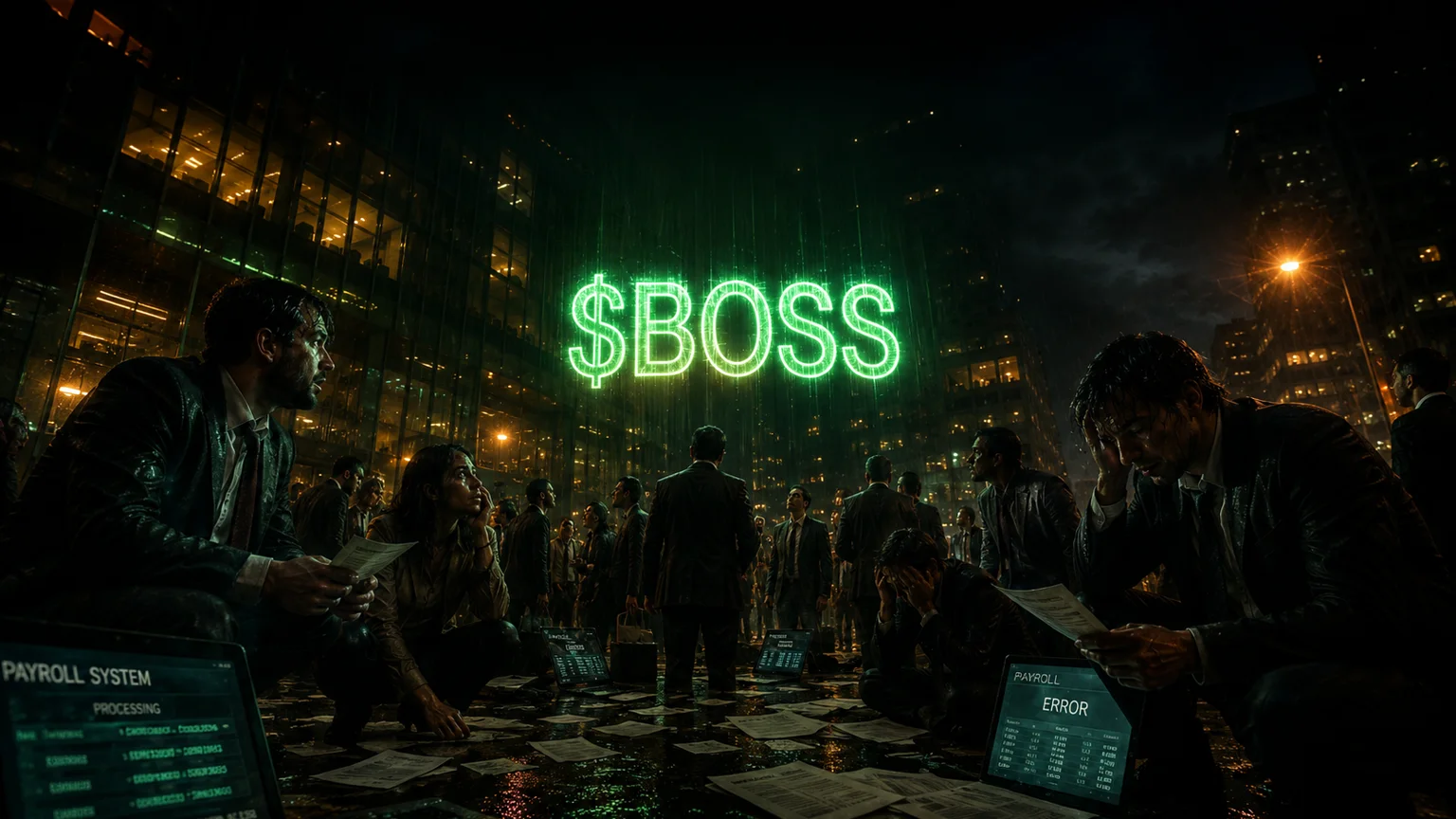
Rugcheck scores BOSS at 81, both authority keys are disabled, but the saved profile still carries two danger-level warnings: creator history of rugged tokens and low liquidity. The creator wallet is linked to 50 token launches, and the top three wallets still control 36.7% of supply.
By roughly 7:04 AM UTC, BOSS had already done the one thing every fresh Solana meme is begging to do: compress itself into a sentence the market understands instantly. The token, branded as pay me boss, was trading around a $24.4K market cap with about $102.8K in 24-hour volume while the pair was still only about 37 minutes old. That is not just a green candle. That is a first-hour board getting discovered through a joke nobody needs explained. Everybody understands the phrase. Everybody understands the mood. And when a microcap can turn a shared complaint into a ticker before the timeline gets bored, the chart usually moves first and asks deeper questions later.
BOSS works because it is not trying to be clever. It is doing the opposite. "Pay me boss" is the kind of phrase that already lives inside every bad job, every late invoice, every underpaid freelance rant, and every group chat where somebody is half joking and half serious about wanting their money. Meme coins do best when the symbol arrives preloaded with emotional context, and this one absolutely does. Traders do not have to decode some niche lore thread or pretend a random animal drawing has hidden cultural depth. They see the phrase, feel the frustration, and know exactly how the meme wants to travel.
- → BOSS ripped about 398.6% in its first 37 minutes, pushing roughly $102.8K in turnover on a board worth only about $24.4K.
- → The meme is brutally efficient: pay me boss is a universal complaint, which means the token can recruit attention before anyone has time to overthink the setup.
- → The authorities are renounced, but Rugcheck still scores the token 81 and flags both low liquidity and a creator history of rugged tokens, so the biggest risk sits in the people around the contract rather than the contract shell itself.
What Happened
The first thing that jumps out is how little resistance the meme faced on the way into the market. BOSS came through the Jupiter Cooking lane as a brand-new pump.fun board and immediately found enough traders to print a 398.6% move inside the opening hour. That is a serious repricing event for a board this small. The token only needed about $24.4K in market cap to get attention, but it still managed to process more than four times that in turnover almost immediately. When a microcap starts cycling its own valuation over and over before it is even an hour old, it means the market is not treating it like a cute experiment. It is fighting over it.
The reason the fight started so fast is that BOSS arrives with built-in narrative clarity. Plenty of launches spend their first hour trying to teach the market what the joke is supposed to be. This one skipped the lecture. The phrase already belongs to internet labor culture, payment grievances, and that very online mix of irony and real resentment that travels well in screenshots. Solana traders love compression, and few things compress better than a meme that sounds like a text message somebody actually sent this week. That makes BOSS more than a random ticker. It makes it a familiar emotion with a chart attached.
The Degen Translation
The degen version of this story is simple: traders are not just buying a phrase, they are buying the speed at which that phrase can spread. A good culture board does not need a roadmap or a perfect mascot. It needs emotional shorthand. BOSS has that. It taps the same part of the brain that makes workplace memes, overdue-payment jokes, and anti-grind posts go semi-viral in every platform format from X replies to TikTok voiceovers. Once a token can borrow that existing circulation, it no longer depends on one caller to carry the load. The meme starts doing some of the distribution work by itself.
That matters because first-hour moves usually come from recognition, not scholarship. Traders are seeing a phrase they already know, noticing the board is tiny, and making the same calculation at once: if the joke catches, the float is small enough to go stupid before consensus forms. BOSS is not elegant, but it is legible, portable, and shamelessly tied to a feeling a huge number of people already share.
The Numbers
The turnover ratio is why BOSS cannot be dismissed as a single-wallet prank. About $102.8K in 24-hour volume against a $24.4K market cap means the market had already churned through more than four times the full board value in well under an hour. That is hectic, but it is also meaningful. A meme this new only gets that kind of velocity when traders are repeatedly stepping in, stepping out, and forcing price discovery to happen in public. The board is small enough to swing violently, yet active enough that people are not just staring at it from the sidelines.
The participation profile is more mixed than the headline number suggests, which is why BOSS stays yellow. Holder count at 296 is solid for a 37-minute-old token, and 3,778 total transactions show the pair was getting plenty of touches. But the buy ratio was only 51.3%, not some overwhelming one-way stampede. People were buying the meme, yes, but enough people were also fading the first burst that the chart still had to earn its next leg.
The other number that matters is the organic score. Jupiter's read sat around 56.8, which is respectable without being pristine. In plain English, that means the move did not look like pure bot theater, but it also did not look like a spotless grassroots miracle. Combined with only about $8.2K in liquidity, the implication is straightforward: BOSS is tradable because people care, not because the structure is safe. Thin liquidity can launch a board fast. It can also turn every exit into a panic lesson the moment the market stops laughing with you.
What the On-Chain Data Shows
This is where the story gets less cute. The saved Rugcheck profile scores BOSS at 81, which is ugly enough that it has to matter. Freeze authority is disabled. Mint authority is disabled. Those are good mechanical signs, and they reduce the obvious admin-risk nightmare scenario. But the profile still carries two danger-level warnings: creator history of rugged tokens and low liquidity. In other words, the contract shell is not the main villain here. The surrounding behavior might be. That is a very memecoin problem, and it is exactly the kind of distinction traders miss when they stop at authority checks and call it due diligence.
The creator history is the most notable part because it is actually unusual in a useful way. The wallet attached to the deployment is linked to 50 token launches in the saved snapshot, and Rugcheck directly flags rugged-token history on top of it. That is the clearest warning label on the board. The meme may be relatable. The hands behind the deploy are not automatically trustworthy just because the phrase is funny.
Holder structure adds another pressure point. The largest wallet controls 27.11% of supply, and the top three visible wallets control 36.7% combined. That is enough concentration to turn low liquidity into a real weapon. The best possible reading is that the meme keeps attracting fresh wallets faster than the biggest holder gets impatient. The worst reading is that a board built on universal wage rage still ends up answering to a tiny table of people who can change the tone with one ugly exit. BOSS does not look like an admin rug setup. It looks like a social meme strapped to a fragile cap table, which is not the same thing as safe.
Is This Sustainable?
Sustainability depends on whether BOSS graduates from a funny first-hour chart into a meme people keep reusing after the initial surprise wears off. There is a real path for that. Workplace resentment is evergreen, and the phrase pay me boss is broad enough to keep resurfacing every time some poster complains about clients, employers, or the economy. If the timeline starts adopting the token as a shorthand reaction image rather than just a one-off trade, the tiny size of the board gives it room to keep moving in outsized percentages. That is the bull case in one sentence: a meme this legible does not need much oxygen to stay burning.
The bear case is even easier to understand. Low liquidity, a 27.11% lead wallet, a Rugcheck score of 81, and a deployer tied to 50 prior launches is enough baggage to turn any cooldown into a bloodbath. BOSS does not need to be an explicit rug to hurt people. It only needs the next round of buyers to slow down while one big wallet decides their morning has already gone well enough. That is why the right posture here is respect for the cultural compression and suspicion toward the surrounding structure. The meme is strong. The trust assumptions are not.
🟡 Speculative — BOSS deserves attention because the meme lands instantly, the board already turned over more than four times its own market cap, and 296 holders touched it before the first hour was done. What stops this from looking clean is everything around the joke: only about $8.2K in liquidity, a 27.11% lead wallet, a Rugcheck score of 81, and a creator profile flagged for rugged-token history. This is a live culture trade, not a comfortable one.
FAQ
What is BOSS on Solana?
BOSS is the ticker for pay me boss, a freshly launched Solana meme coin trading under contract address GsnQiBJxdGPMfYGTjss8aoeBW5sfsJCUeyUCD5USpump. At selection time it was sitting near a $24.4K market cap after roughly 37 minutes of trading.
Why did BOSS move so fast?
Because the meme is instantly legible. Pay me boss is a phrase people already use online, so the token did not need a lore thread or a caller to explain why the joke might spread.
What are the main numbers to watch on BOSS?
The key figures were about $102.8K in volume, $8.2K in liquidity, 3,778 transactions, 296 holders, a 51.3% buy ratio, and top-three wallet concentration of 36.7%. Those numbers explain both the speed and the fragility.
Is the BOSS contract clean?
Mechanically, the big authority switches were off: freeze authority and mint authority were both disabled. The bigger concern came from the saved profile around the contract, which scored 81 on Rugcheck and flagged creator history of rugged tokens plus low liquidity.
What breaks the BOSS setup from here?
The obvious failure mode is thin liquidity meeting impatient large holders. If attention cools while a concentrated wallet exits, BOSS can unwind much faster than the meme can recruit new buyers.