
KIYAMA Collapsed 95% in a Day, Turning a Soft Anime Launch Into a $331K Exit-Liquidity Lesson
The branding looked gentle, the volume looked real, and the chart still ended up where bad micro-cap charts usually end up: almost zero. KIYAMA is a clean reminder that a pretty wrapper does not save a weak market structure.
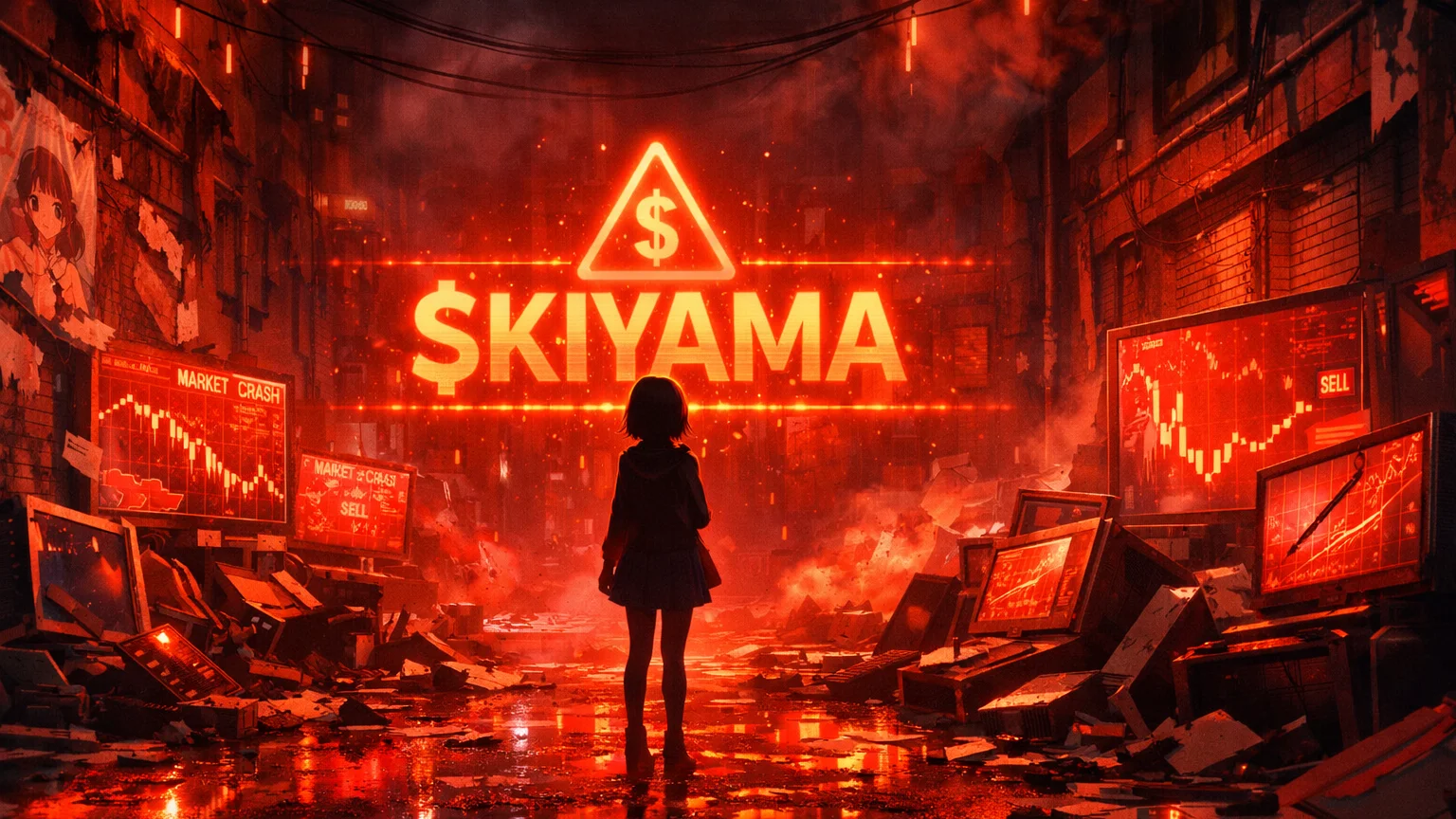
No useful deployer signal surfaced. The real story is the collapse itself: thin liquidity, brutal unwind, and no durable bid after the opening attention burst.
KIYAMA had the kind of surface-level setup that tempts traders into lying to themselves. Anime-style branding, an emotional character hook, enough early volume to feel alive, and a chart that briefly looked like it might become the next tiny identity meme people could rotate through for a few hours. Instead it printed the more familiar ending. Roughly $331,700 in 24-hour volume flowed through the pair, and the token still finished down 94.37% with a fully diluted value of about $2,000 and just $3,500 in liquidity left behind. That is not a pullback. That is a wipeout.
This is exactly why post-mortems matter in meme coins. A lot of bad launches do not fail because the theme was awful. They fail because the chart structure underneath the theme was too weak to survive the first rush of extraction. KIYAMA did not need a villain with a cartoon mustache. It just needed enough people to believe the wrapper before the bid disappeared. Once that happened, the whole story collapsed into what it always was: a thin pair with no margin for disappointment.
- → KIYAMA pushed roughly $331.7K in 24-hour volume and still ended the day down 94.37%, which tells you traffic alone was never the same thing as conviction
- → Liquidity finished near $3.5K and FDV near $2.0K, leaving the token functionally dead even though thousands of trades likely cycled through it during the opening burst
- → The lesson is boring but expensive: a soft aesthetic and fast activity do not rescue a micro-cap meme coin once the first wave of sellers realizes there is no second wave behind them
How It Went Down
KIYAMA launched into an environment that still rewards anything capable of generating a coherent first impression. Anime-adjacent meme projects can work when they carry a recognizable persona and enough social energy to make people feel like they are buying into a character instead of a ticker. Early traders clearly thought that was on the table here. Volume built fast enough to make the pair visible, and for a brief window the launch looked like it might settle into the usual speculative pattern: quick discovery, first flush of buyers, then a test of whether attention could harden into a real community.
It never got that far. The same speed that made KIYAMA interesting also made it fragile. When a token is this small, the first real pocket of selling does not just cool momentum. It tears a hole straight through it. Once the chart rolled over, there was not enough liquidity or enough stubborn demand to cushion the drop. Price did what bad low-liquidity charts do when the crowd realizes the joke may already be over. It fell harder and faster than most late entrants could react.
The result is ugly in a very plain way. A token can survive a rough first retrace if there is still a reason for people to step in. KIYAMA ended up with the opposite read. The pair bled down to roughly a $2,000 valuation. That kind of ending tells you the market did not see a comeback story waiting under the surface. It saw an empty room after the party.
The Red Flags Everyone Missed
The first red flag was structural, not emotional. KIYAMA never had enough liquidity to support the kind of volume being thrown at it. Around $3,500 in liquidity left at the end of the move is a brutal number because it tells you how thin the pair really was. A chart can look energetic while still being one decent sell wave away from total collapse. That was the hidden truth here.
The second red flag was narrative depth, or the lack of it. KIYAMA had a mood and a look, but those are not the same thing as a durable reason to keep buying. Lots of meme coins can survive on style for twenty minutes. Far fewer can survive the next hour when traders start asking whether anyone new is still coming. Once the first burst of novelty faded, there was not enough evidence that the token had a broader social loop behind it.
The third red flag is the oldest one in the book. Big volume on a tiny chart feels like confirmation, but it can just mean the market is chewing through itself. When volume massively outweighs the size of the actual pool, traders should stop celebrating and start asking who will still be there after the first round of flips. KIYAMA answered that question the hard way.
The Receipts
The trade count is almost funny in hindsight. More than 13,000 buys versus 6,500 sells sounds healthy if you stare at it without context. In reality it is a reminder that transaction counts can flatter garbage. A market can be busy and still be terrible. It can attract a crowd and still fail. It can even show a heavy buy count while the overall structure is already breaking. KIYAMA managed all three.
The dev-wallet data does not give us a dramatic mastermind story, and that is fine. Not every collapse needs one. There is no useful deployer profile signal here, no obvious authority abuse, and no special on-chain confession waiting to be discovered. Sometimes the cleanest explanation is the correct one: a micro-cap meme coin launched, traders chased the opening action, and there was not enough real depth underneath it to support the move. The chart did the rest.
That matters because traders often waste time hunting for a cinematic reason after the damage is already done. KIYAMA does not really need a secret backstory. The market structure was weak, the valuation was microscopic, and once momentum cracked, the token had nowhere to hide. That is the receipt.
Lessons for Degens
First, stop treating volume as validation. If a token does hundreds of thousands in turnover while the actual liquidity pool remains tiny, that should increase your suspicion, not relax it. Volume tells you people showed up. It does not tell you the trade is good. KIYAMA is a bright little disaster proving the point.
Second, aesthetics are not moat. A soft anime presentation can make a launch feel more human, more curated, and more worth betting on than the average trash ticker. None of that matters if there is no durable market behind it. Good art and a weak pool still equal a weak trade. That is brutal, but the chart does not care about your affection for the wrapper.
Third, respect how fast the floor can vanish in micro-caps. Once a pair gets thin enough, the difference between a live trade and a dead coin is measured in minutes, not days. Late entrants always think they have time. Usually they do not. If the token has not already built a reason for the next buyer to care, the unwind comes with a knife.
Verdict
🔴 KIYAMA is a clean post-mortem because the chart tells the whole truth. Roughly $331.7K in volume was not enough to save a token that never built durable support under the first burst of attention. The anime framing may have drawn traders in, but the market structure underneath it was paper-thin, and once momentum broke the pair collapsed into a near-worthless shell. This was not a misunderstood gem. It was exit liquidity dressed nicely.
What happened to KIYAMA?
KIYAMA was a fresh Solana meme coin that generated roughly $331.7K in 24-hour volume before crashing 94.37% and ending near a $2.0K FDV with about $3.5K in liquidity. In plain English, it died fast.
Was KIYAMA a rug pull?
There is no obvious contract-level rug evidence in the data surfaced here. The cleaner read is that KIYAMA was a structurally weak micro-cap launch that lost its bid and collapsed under its own thin liquidity. For traders caught late, the outcome felt the same anyway.
Why did so much volume not help the token survive?
Because volume and support are different things. A lot of people traded KIYAMA, but the liquidity base was too shallow and the narrative was not strong enough to keep new demand replacing sellers after the first momentum burst faded.
What is the main lesson from KIYAMA?
Do not confuse a good wrapper with a good trade. A themed launch can look cleaner than random meme sludge and still collapse if the pool is thin, the valuation is fragile, and there is no durable second wave of buyers behind the first rush.