$754K Volume on a $54K Token in Under 5 Hours — Did AI Signal Bots Just Create Their Own Pump?
Yuri the Space Monkey is either proof that algorithmic meme-picking works, or the most expensive demonstration of self-fulfilling prophecy in micro-cap history.
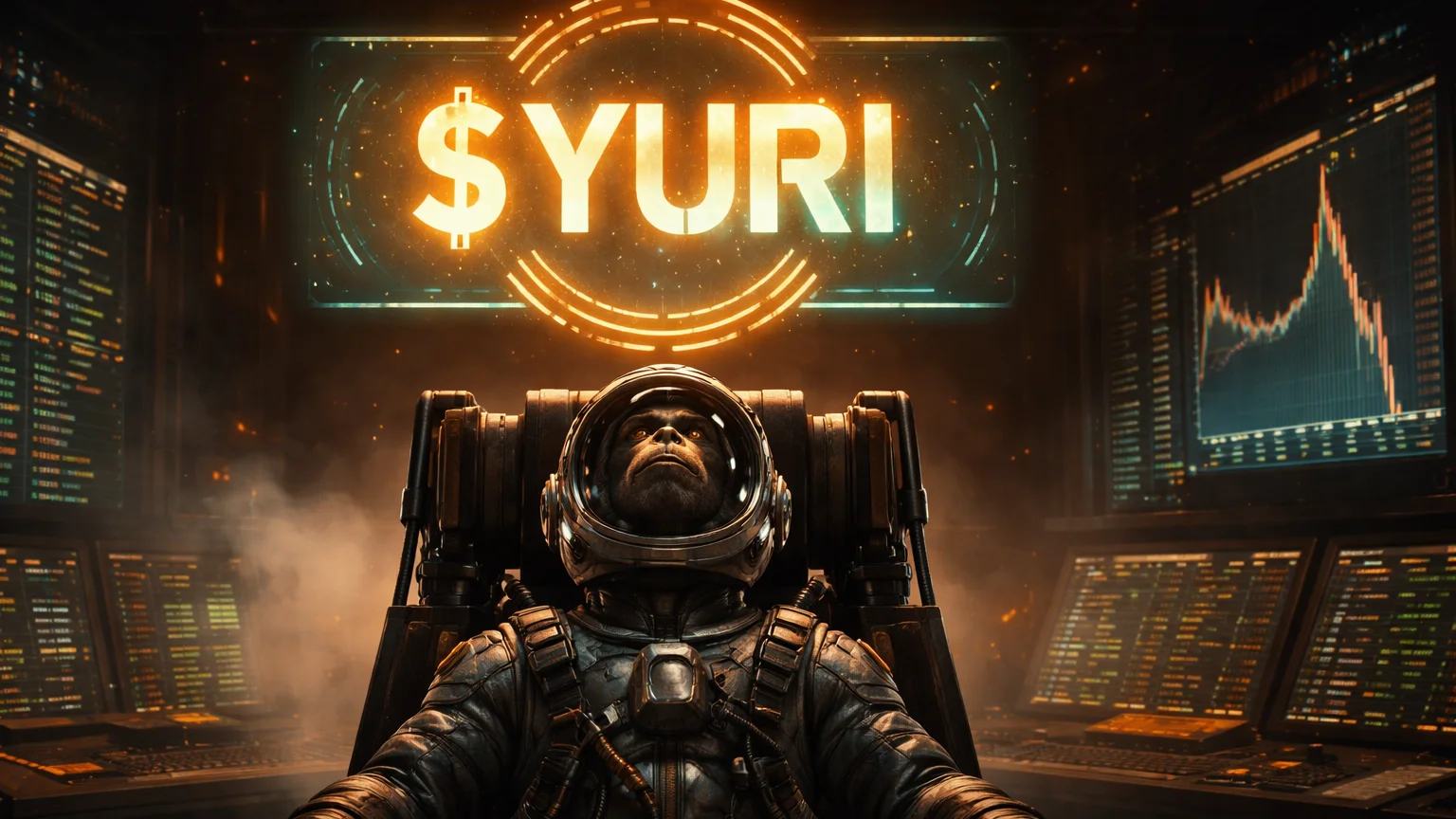
At 8:30 PM UTC on April 3rd, a token called Yuri — themed after a space monkey destined for a suborbital mission — appeared on DexScreener's trending radar. Within 4.6 hours, it had racked up $754,000 in trading volume on a market cap that never cracked $55,000. The volume-to-mcap ratio hit 14x. That doesn't happen organically. Something was feeding this thing trades at a pace that defied its size, and the fingerprints point to algorithmic coin-picker tools treating YURI as their latest signal-generated conviction play.
- → YURI posted $754K in DEX volume on a $54K market cap in under 5 hours — a 14x volume-to-mcap ratio that screams bot-driven activity
- → The token is riding the AI-assisted meme-picking narrative, where signal bots surface micro-caps and their own followers create the pump
- → Top two wallets hold 39% of supply, and the token dropped 42% in the last hour — the algo-driven momentum may already be unwinding
What Makes This One Different
YURI isn't different because of its theme — space monkeys aren't exactly uncharted meme territory. What's different is how it surfaced. X posts position it explicitly as an "AI-selected" meme gem, a token that algorithmic screening tools flagged as having the right combination of freshness, narrative alignment, and launch mechanics to warrant attention. The pitch isn't "ape this monkey coin." It's "the machines picked this one for you."
This taps into one of 2026's more interesting micro-narratives: the idea that AI coin-picker tools — bots that scan launch mechanics, social signals, and on-chain data — can identify winners before the CT hivemind catches on. The promise is systematic alpha. The reality is murkier. When a signal bot surfaces a token to its followers, and those followers all ape in simultaneously, you get exactly what YURI's chart shows: a violent spike on absurd volume, followed by an equally violent retracement once the algorithmic attention moves elsewhere.
The question that makes this worth covering isn't whether YURI is a good token. It's whether AI signal bots are creating self-fulfilling prophecies — tokens that pump because they were selected, not because they have any independent reason to exist. YURI is the case study.
The Numbers So Far
Let's unpack what 16,799 transactions in 4.6 hours actually means: that's roughly 61 trades per minute, sustained, on a token with $18K in liquidity. This is not retail discovery. This is automated trading infrastructure hammering a micro-cap with machine-gun precision. The 58.3% buy ratio looks modest, but in context, it means the selling pressure has been significant — and it's showing in the price. After the initial +65% surge, YURI has given back 42% in the last hour alone.
The liquidity situation is thin. $18.6K backing a token that just processed three-quarters of a million in volume means slippage on any meaningful exit is brutal. The ratio between volume and liquidity suggests most of this activity is high-frequency, small-size trades — consistent with bot swarms rather than whale accumulation.
What the On-Chain Data Shows
Rugcheck gives YURI a near-perfect safety score of 1 — no freeze authority, no mint authority, clean launch mechanics. On paper, this is as safe as a pump.fun token gets. But the holder distribution tells a different story.
The top two wallets control 39% of total supply. Wallet 7whh6A holds 20.69% and wallet 7hei1H holds 18.29%. Neither is flagged as insider, but two wallets commanding nearly 40% of a micro-cap creates significant dump risk. If either wallet decides to take profit — and on a token that's already bleeding from its high — the remaining $18K liquidity pool would get drained fast. The third-largest holder sits at a much more reasonable 4.79%, which means the concentration risk is specifically in those top two positions.
No freeze or mint authority is genuinely positive. The deployer can't rug by freezing transfers or inflating supply. But in the micro-cap meme space, the rug vector is rarely smart contract abuse — it's simply large holders selling into thin liquidity. And with 39% in two wallets against $18K in LP, the math isn't complicated.
Who's In
YURI has an X community page with an active following, and the token's narrative is being amplified through AI-focused crypto channels that position it as a systematically-selected play. The real-world hook — NanoRacks' planned suborbital launch of "Yuri the monkey" — gives the meme a tangential anchor to an actual news event, though the connection between a space company's monkey and a Solana shitcoin is, to put it charitably, thematic rather than official.
The absence of major wallet accumulation from known smart money addresses is notable. The 16,799 transactions are spread across what appears to be a large number of small wallets — consistent with either genuine grassroots interest from signal bot followers, or a single operator running multiple wallets to simulate organic activity. Without deeper wallet clustering analysis, it's impossible to distinguish between the two.
The Signal Bot Thesis
Here's what makes YURI more interesting as a phenomenon than as a trade. The AI coin-picker narrative creates a feedback loop: a bot identifies a token → the bot's followers buy → the buying validates the bot's selection → more followers trust the bot → the next selection gets even more volume. It's the meme coin version of index inclusion — being selected is the catalyst, not any underlying value.
The problem is that these loops are inherently unstable. The initial selection drives concentrated buying, which creates the chart pattern that attracts momentum traders, which creates more volume. But the moment the bot's audience moves to the next pick — and they always do — there's nothing structural holding the price. No locked liquidity commitment, no treasury, no product. Just attention, and attention is the most mean-reverting asset in crypto.
YURI's 42% hourly retracement might be the first evidence of this cycle completing. The signal fired, the followers bought, the chart spiked, and now the attention is migrating. What's left behind is a token with clean launch mechanics, thin liquidity, concentrated holders, and a chart that looks like a completed pump rather than an early accumulation.
The Bear Case
The 42% hourly dump happened while volume was still elevated. That means sellers were actively distributing into buyer demand — the kind of pattern you see when informed wallets use retail inflows as exit liquidity. The top two wallets' combined 39% position is more than enough supply to push this to zero against $18K in LP. And the "AI picked this" narrative only works once — the next bot signal will redirect attention to a different token, and YURI loses its only demand driver.
There's also the question of whether the volume is real. 16,799 transactions in 4.6 hours on a $54K token, with many of those likely being sub-$50 trades, pattern-matches wash trading or bot-generated volume designed to trigger DexScreener's trending algorithm. If the volume is manufactured, the entire thesis collapses — it's not that AI picked a winner, it's that someone gamed the metrics to make it look like AI picked a winner.
🟡 Speculative — YURI is more interesting as a case study in AI signal bot dynamics than as a trade. The volume numbers are eye-catching but likely algo-driven, the 42% hourly dump suggests the initial momentum has already faded, and 39% holder concentration against $18K liquidity is a setup for further bleeding. Clean Rugcheck score (1) means no smart contract risk, but the real risk here is simpler: attention moved on. If you're in, you're betting the bots come back for a second round. History says they rarely do.
What is Yuri (YURI) crypto?
YURI is a Solana-based meme coin themed around a space monkey, inspired by NanoRacks' planned suborbital mission involving a monkey named Yuri. It launched on pump.fun and gained attention through AI-assisted coin-picker tools that flagged it as a signal-worthy token.
Why did YURI pump so fast?
YURI's rapid price surge appears driven by algorithmic signal bots that identified the token and surfaced it to their followers simultaneously. This created concentrated buying pressure that generated $754K in volume within 4.6 hours on a tiny market cap — a classic self-fulfilling prophecy pattern.
Is YURI safe to buy?
YURI has a Rugcheck safety score of 1 with no freeze or mint authority, meaning the deployer cannot rug via smart contract mechanics. However, the top two wallets hold 39% of supply against only $18K in liquidity, creating significant dump risk. The token also dropped 42% in its most recent hour of trading.
What are AI signal bots in crypto?
AI signal bots are automated tools that scan new token launches, on-chain data, and social signals to identify tokens with potential momentum. When these bots share their picks with followers, the resulting coordinated buying can create rapid price spikes — raising questions about whether the bots are finding winners or creating them.