SeekerClaw: The AI Agent Tool That Accidentally Became a Meme Coin
An open-source AI agent for Solana's Seeker phone graduated from Pump.fun with $847K in volume — and the line between utility and degen play just got blurrier
In a market where most meme coins are born from a Photoshop'd animal and a prayer, SeekerClaw arrived with something almost unheard of in the degen trenches: actual code. The token — $SeekerClaw — launched on Pump.fun less than four hours ago and has already ripped 240% with $847K in trading volume. But what makes this one worth the editorial ink isn't the chart. It's the GitHub repository sitting behind it.
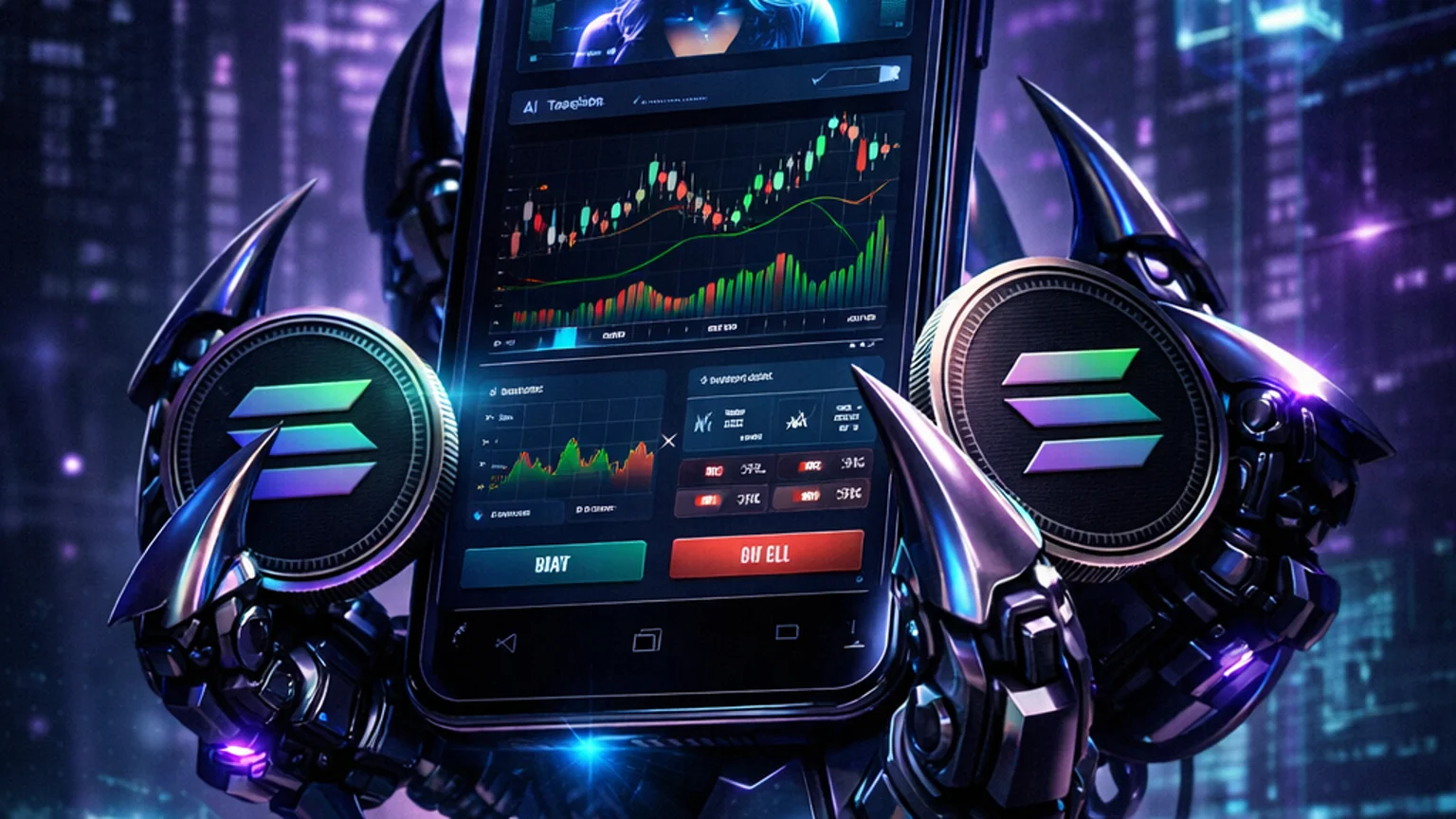
SeekerClaw is an open-source AI agent framework designed specifically for Solana Mobile's Seeker phone. The project embeds a Node.js-powered AI agent inside an Android app, running as a persistent foreground service. Through a Telegram bot interface, users can ask questions, control their phone, execute Solana trades via Jupiter, schedule tasks, and monitor wallets — all running locally on the device. 56 tools. 35 skills. Claude-powered. Built in Kotlin. And somehow, it ended up as a pump.fun meme coin.
• $847K volume in under 4 hours on Pump.fun — 7.2x volume-to-mcap ratio, extremely high even by degen standards
• Unlike 99% of pump.fun tokens, there's a real open-source project behind it — an AI agent framework for Solana's Seeker hardware
• Anonymous developer (sepivip on GitHub), no KOL calls yet, $27K liquidity — pure microcap discovery phase
What Makes This One Different
The meme coin space is drowning in AI-themed tokens. Every other launch slaps "AI" in the name and calls it innovation. SeekerClaw is different because the tool actually exists. The GitHub repo at github.com/sepivip/SeekerClaw contains a fully-documented Android application with screenshots, architecture diagrams, and working code. The project description reads: "Turn your Solana Seeker into a 24/7 personal AI agent." It's built for Android 14+, uses Kotlin 2.0, integrates with Anthropic's Claude API, and includes native Solana wallet functionality with Jupiter DEX integration.
This is a rare breed in meme token land: a project that could legitimately stand on its own as a developer tool, but chose the pump.fun launchpad route instead of a traditional token launch. Whether that's guerrilla marketing genius or the developers realizing the meme was worth more than the tool — that's the debate CT is having right now.
The Seeker phone itself is Solana Mobile's second-generation crypto phone, succeeding the Saga. It's positioned as the hardware layer for Solana's mobile-first DePIN vision. Solana Mobile recently announced a $125K developer challenge with an SKR integration track, with submissions due March 9th — creating a real ecosystem moment around Seeker development. Building an AI agent specifically for this device taps into two of the strongest narratives in crypto right now: AI agents and DePIN infrastructure.
The Numbers So Far
For a token that's barely four hours old, SeekerClaw's on-chain metrics tell an interesting story. The price sits at $0.0001177 with a market cap of $117K and $847K in 24-hour volume. That volume-to-mcap ratio of 7.2x is extremely high — even by pump.fun standards — suggesting either genuine discovery-phase interest or coordinated volume manipulation.
The 56% buy ratio indicates slightly more buying pressure than selling, but it's not the lopsided 70%+ ratio you'd see in a pure bot-driven pump. With 2,601 unique buyers against 2,199 sellers, there's reasonable distribution across wallets. However, the liquidity at $27K is dangerously thin — a single $5K sell order would move the price meaningfully. This is pure microcap territory where volatility is the feature, not the bug.
The pair launched on PumpSwap, Pump.fun's native AMM, which means it graduated from the bonding curve phase — a milestone that roughly 2-3% of pump.fun launches achieve. Graduation itself is a signal: enough buying pressure was generated to move the token past the bonding curve threshold and into open market trading.
The AI Agent Narrative: Substance or Smoke
SeekerClaw's value proposition isn't the token — it's the premise that your phone should be an autonomous crypto agent. The tool promises wallet monitoring with real-time alerts via Telegram, Jupiter swap execution directly from the AI agent, task scheduling for automated on-chain actions, local execution where the agent runs on-device rather than in the cloud, and persistent memory with learning across sessions.
This positions SeekerClaw at the intersection of three hot narratives: AI agents (the meta that launched GOAT, ai16z, and dozens of imitators), DePIN (physical infrastructure meeting crypto), and Solana Mobile (the hardware play that most traders have written off but keeps shipping product). The convergence of these narratives is potent — at least in theory.
The question every degen should be asking: does the code actually work? A GitHub repo with screenshots isn't the same as a functioning product. The repository shows Kotlin source code, Claude API integration, and Solana wallet management — but without independent verification, user testimonials, or security audits, the technical claims remain exactly that: claims. The crypto space is littered with impressive whitepapers and well-structured GitHub repos attached to tokens that went to zero.
It's worth noting what SeekerClaw is NOT claiming: there's no roadmap promising exchange listings, no tokenomics with utility burn mechanics, no governance structure. The token appears to be a pure meme play built on top of a real tool. Whether that honesty is refreshing or concerning depends on your risk appetite.
This absence is simultaneously the bull case and the bear case. For bulls: the token is still undiscovered, creating an early-entry opportunity if a notable KOL picks it up. The open-source narrative gives callers a "legitimate" angle that pure meme plays don't offer. For bears: in the current meme coin market, KOL adoption is often the difference between a token that 10x's and one that slowly bleeds to zero. Four hours without a single notable mention is a yellow flag in a market where CT scouts are watching DexScreener 24/7.
The token's social presence is also thin. Its "Twitter" link on DexScreener points to an X Community rather than a dedicated project account — suggesting this was developer-launched without a marketing team or community management strategy. There's no Telegram group listed, no Discord, no dedicated website beyond the GitHub repo.
The combination of real code + anonymous developer + microcap liquidity + no KOL support creates a genuinely ambiguous risk profile. This isn't a clear rug setup — the code is open source, the contract is standard pump.fun, and there are no obvious red flags in the on-chain data. But it's also not a confident entry: anonymous team, no social proof, thin liquidity, and the kind of micro market cap where a single coordinated sell can wipe out 50% of value in minutes.
When Developer Tools Become Meme Coins
SeekerClaw raises a meta-question that's becoming increasingly relevant in the Solana ecosystem: what happens when actual developer tools start launching on Pump.fun? Historically, the boundary between utility tokens and meme coins was clearer. DeFi protocols launched on proper launchpads with vesting schedules and governance structures. Meme coins launched on Pump.fun with a frog picture and vibes. SeekerClaw sits awkwardly between these worlds — real utility (potentially), meme distribution (definitely).
This pattern has been accelerating across Solana. Pump SDK — literally a meme about pump.fun's own infrastructure — ripped 818% recently. Infrastructure and tooling plays getting the meme treatment is becoming a recognizable sub-genre. If SeekerClaw gains any traction, expect every GitHub repo targeting Solana hardware to spawn its own pump.fun token within hours. The playbook is now established: build something real (or at least real-looking), launch the ticker on pump.fun, and let CT's attention economy do the rest.
The broader implication is interesting for the Solana Mobile ecosystem specifically. The Seeker phone has struggled to capture mainstream crypto attention despite being a functional product with real users. If meme token speculation becomes the discovery mechanism for Seeker-native tools, it creates a weird but potentially effective flywheel: developers build tools, launch tokens, CT discovers the tools through the tokens, and the Seeker ecosystem grows through degen attention rather than traditional marketing.
Verdict
SeekerClaw is one of the more interesting launches to come through the pipeline this week — not because of the chart, but because of what it represents. A world where actual developer tools and meme coins share the same launchpad is either the most bullish sign for crypto innovation or the most bearish sign for developer seriousness. The token itself is pure microcap speculation: $27K liquidity, anonymous developer, no KOL support, four hours old. The open-source code provides a floor of legitimacy that most pump.fun launches lack, but legitimacy and profitability are entirely different conversations.
The play: Watch, don't ape. If major Solana Mobile accounts or mid-tier CT KOLs start mentioning SeekerClaw, the thin liquidity means even modest buying pressure could send this significantly higher. If 24 hours pass with no social traction, this likely joins the graveyard of technically interesting but commercially dead micro-tokens. For builders rather than traders, the more interesting signal is the SeekerClaw tool itself — an AI agent running locally on Solana hardware, executing Jupiter swaps autonomously. If that works as described, it's the kind of infrastructure that creates real utility. The meme coin is just the marketing layer.
FAQ
What is SeekerClaw?
SeekerClaw is both an open-source AI agent framework for Solana's Seeker phone and a meme token launched on Pump.fun. The tool turns the Seeker into a 24/7 autonomous agent that can monitor wallets, execute trades via Jupiter, and respond to commands through Telegram.
Is SeekerClaw a rug pull risk?
The standard pump.fun contract mechanics (renounced mint authority) provide baseline protection. The open-source code adds credibility. However, the anonymous developer, thin liquidity ($27K), and lack of social validation make this higher risk than established meme coins.
Has Solana Mobile endorsed SeekerClaw?
There is no verified endorsement from Solana Mobile's official channels. The tool is built for the Seeker phone but appears to be an independent, community-developed project.
What chain is SeekerClaw on?
Solana. The token launched via Pump.fun and trades on PumpSwap (Pump.fun's native AMM).
Should I buy SeekerClaw?
This is a microcap meme token with $27K liquidity — extreme risk territory. The open-source code is interesting but unverified. Only speculate with capital you can afford to lose entirely.