Pixel Dumb Money Did $2.0M in Volume on a $121K Market Cap, but 58.3% of Supply Still Sits in Three Wallets
Pixel Dumb Money pushed roughly $2.0M in turnover while the Solana pair was still only about 2.7 hours old, but the move is already fighting sharp intraday selling. The contract reads clean enough, yet the top wallet alone controls 38.31% of supply.
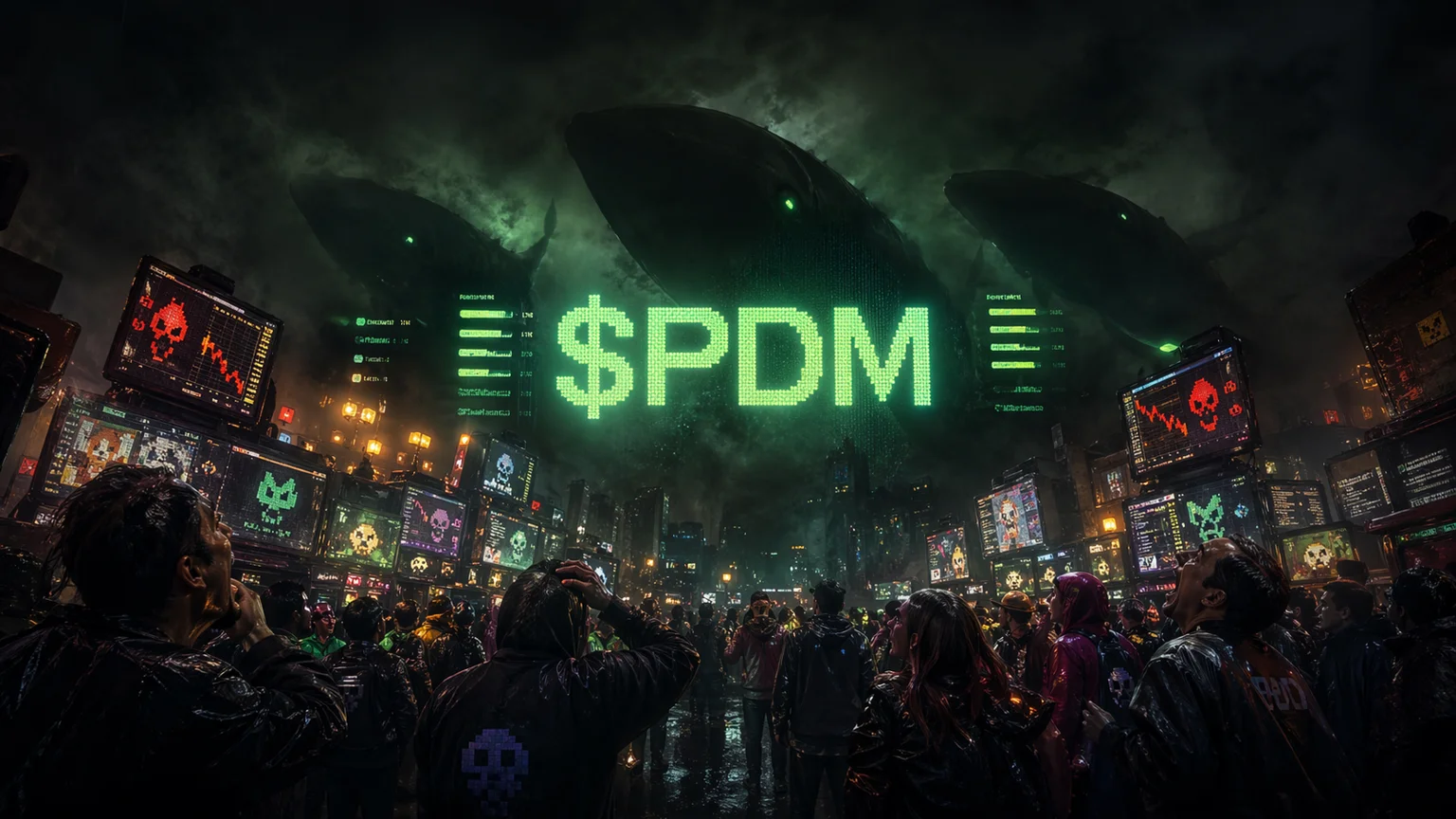
Rugcheck scores PDM at 16 with both authority keys disabled, but the top wallet holds 38.31% of supply and the top three wallets control 58.3%.
By around 1:05 PM UTC, Pixel Dumb Money had already done the part most fresh Solana jokes never manage. It forced the market to take it seriously for at least a few minutes. The pair was trading around a $121,347 market cap after printing roughly $1,999,976 in turnover while still only about 2.7 hours old. That is a ridiculous volume-to-size ratio for any launch, and it is even louder when the token has no grand product story hiding underneath it. The whole pitch is sitting right there in the name. Pixel Dumb Money is a reflexive meme about dumb money itself, which means the chart only works if enough traders decide the joke is worth repeating with their wallets.
The important part is that PDM has already graduated from a cute ticker into an actual stress test of whether culture alone can keep a chart alive after the first vertical shove breaks. DexScreener showed 17,844 total transactions, 9,631 buys against 8,213 sells, and a buy ratio just under 54%. That is real flow, not decorative noise. At the same time, the one-hour candle was already down 57.42% and the last five minutes were down another 28.44%. So this is not a clean breakout article about a chart levitating in perfect green silence. It is a launch-radar piece about a meme that unquestionably got attention, then immediately had to prove it could survive the first ugly wave of profit-taking.
- → PDM pushed about $2.0M in turnover on a market cap of only $121.3K while the pair was still under three hours old, which is enough raw activity to keep it on the live launch board even after a violent pullback.
- → The tape is still active. DexScreener logged 17,844 total transactions with 9,631 buys against 8,213 sells, so the market has not fully abandoned the meme even though the last hour was down 57.42%.
- → The contract setup is cleaner than the holder map. Rugcheck scores the token at 16 with freeze and mint authority both disabled, but the top wallet controls 38.31% of supply and the top three wallets control 58.3%.
What Makes This One Different
PDM works because the branding does not need explaining. In meme trading, that matters more than people like to admit. The fastest spreads usually belong to tokens that can be understood in one glance and repeated without effort in a feed full of overstimulated traders. Pixel Dumb Money lands immediately because it turns the market's favorite insult into the product itself. That gives it a built-in audience. Every trader who has ever mocked retail exit liquidity already understands the joke. The ticker invites the same people to become the punchline, which is exactly the sort of circular stupidity that keeps meme coins alive longer than they deserve.
The second differentiator is how hard the pair got worked relative to its size. PDM was still sitting around a $121.3K market cap while volume was already brushing $2.0M across three pairs. That means the market churned more than sixteen times the implied size of the token through the board before lunch in UTC. A launch can fake a percentage move with thin liquidity and one aggressive buyer. It cannot fake that kind of repeated rotation. Traders clearly found the name sticky enough to keep coming back to it, even after the first euphoric move started getting sold into. That does not guarantee continuation, but it does tell you this was a real board item instead of random dead-on-arrival pump dust.
The Numbers So Far
The stat line is exactly why PDM is fascinating and dangerous at the same time. The token was still up 244% on the day, but that headline number hides how brutal the intraday structure already looked. The one-hour move sat at negative 57.42%, and the last five minutes were down another 28.44%. In cleaner language, the market already had a chance to punish late longs, and it took it. That normally kills a fresh launch outright. The reason PDM remains worth writing about is that the turnover never disappeared. Even through the flush, traders kept hitting the pair. That tells you the chart still has unresolved attention around it, which matters more than a pretty candle at this stage.
Liquidity around $30,285 is still thin enough to make every emotional decision expensive, but it is not imaginary. Combined with almost $2.0M in volume, it means the chart has already experienced multiple rounds of real repricing instead of one clean launch spike. The participation profile supports that read. The board showed 17,844 transactions over the life of the move, with buyers still narrowly ahead of sellers. That is the weird charm of this setup. PDM already looks damaged, yet not dead. It is one of those culture trades where the first collapse can actually make the story bigger if the crowd decides the rebound would be funnier than the failure.
What the On-Chain Data Shows
The contract-level read is cleaner than the chart-level read. The saved Rugcheck profile scores PDM at 16, with freeze authority disabled and mint authority disabled. No danger-level or error-level risk warnings were attached to the profile that came through selection. That matters because it strips out the dumbest reasons to avoid the trade. This is not a story about an obviously toxic permission setup or a contract that screams instant sabotage. If PDM fails, it is much more likely to fail because of positioning and ownership than because the token itself hides some clown-level switch.
Ownership is where the setup gets nasty. The top wallet controls 38.31% of supply, the second wallet holds another 12.9%, and the third wallet adds 7.1%. That puts 58.3% of the token in just three wallets. None of those addresses are flagged as insiders in the saved profile, which is better than seeing a wall of tagged insider balances, but concentration this extreme still dominates the risk. PDM does not need a malicious dev to break. It only needs one very large holder to decide the joke has lasted long enough. This is exactly why the token can rebound hard and still remain a yellow signal. The contract is passable. The structure is not forgiving.
Can the Crowd Rebuild the Chart?
That is the actual question now. PDM already proved it can attract eyes. It still has an X community link, a Telegram room, and a name that naturally invites screenshots, irony, and self-own posting. Those things are enough to buy a second act if the chart stabilizes. In fact, the first ugly flush can help a culture trade when the meme itself is strong enough, because the rebound becomes part of the content. Traders do not only want to buy the joke. They want to buy the joke after the room declared it finished. That is where reflexive meme strength really shows up, and PDM is stupid enough in the right way to tempt that kind of behavior.
The bear case is obvious, and pretending otherwise would be shilling. A token sitting at roughly $121.3K after doing $2.0M in volume has already given the market plenty of opportunities to distribute. The holder map is top-heavy, the last hour was ugly, and liquidity is still too small to cushion any serious exit. The bull case is that all the damage so far still happened on active flow, not abandoned tape. If the market reclaims the chart and turns the first flush into a reset instead of a death sentence, PDM can still force another round of discovery simply because the meme is sticky and the cap is tiny. That is why this stays a watch, not a dismissal. The joke already reached escape velocity once. The only question is whether dumb money wants to be the joke again.
🟡 Speculative, but absolutely live. PDM earns the watchlist slot because $2.0M in turnover on a $121.3K market cap is too much real flow to ignore, and 17,844 total transactions say the crowd genuinely engaged with the meme. The contract profile is cleaner than average too, with a Rugcheck score of 16 and both authority keys disabled. The reason this is yellow instead of green is simple: the chart already cracked hard intraday, the top wallet controls 38.31% of supply, and the top three wallets control 58.3%. That is not a healthy distribution. It is a high-velocity culture trade that can rebound violently or break all over again depending on whether attention comes back before the heavy wallets do.
FAQ
What is Pixel Dumb Money?
Pixel Dumb Money, or PDM, is a Solana meme coin trading under the contract address Crc5ca5TFNSqmxFfGFv4wBoaAzkoXkTqoPERj913pump. It hit MemeDesk's board after churning about $2.0M in turnover while still only a few hours old.
Why is PDM getting attention right now?
Because the token produced an absurd volume-to-market-cap ratio. At the time of writing, PDM was around a $121.3K market cap with roughly $2.0M in volume and 17,844 total transactions, which is far more activity than most fresh microcaps ever see.
Is the PDM contract clean?
Cleaner than the average day-zero meme launch. The saved Rugcheck profile scores PDM at 16, freeze authority is disabled, mint authority is disabled, and the selection snapshot did not surface danger-level or error-level warnings.
What is the biggest risk on PDM?
Holder concentration. The top wallet controls 38.31% of supply and the top three wallets control 58.3%, which means a handful of addresses can heavily influence the chart.
What would improve the PDM setup from here?
The cleanest upgrade would be a rebound that comes with fresh volume and broader distribution instead of another thin spike. If buyers can reclaim momentum without large wallets dominating the next move, the trade gets much healthier.