23,000 Holders Strong and 205 Days Old — Pandu Pandas Just Woke Up With a 173% Surge
Most meme coins die in their first week. $PANDU survived seven months, built a verified community of 23K holders, and just posted a $305K volume day out of hibernation. The panda isn't dead — it was sleeping.
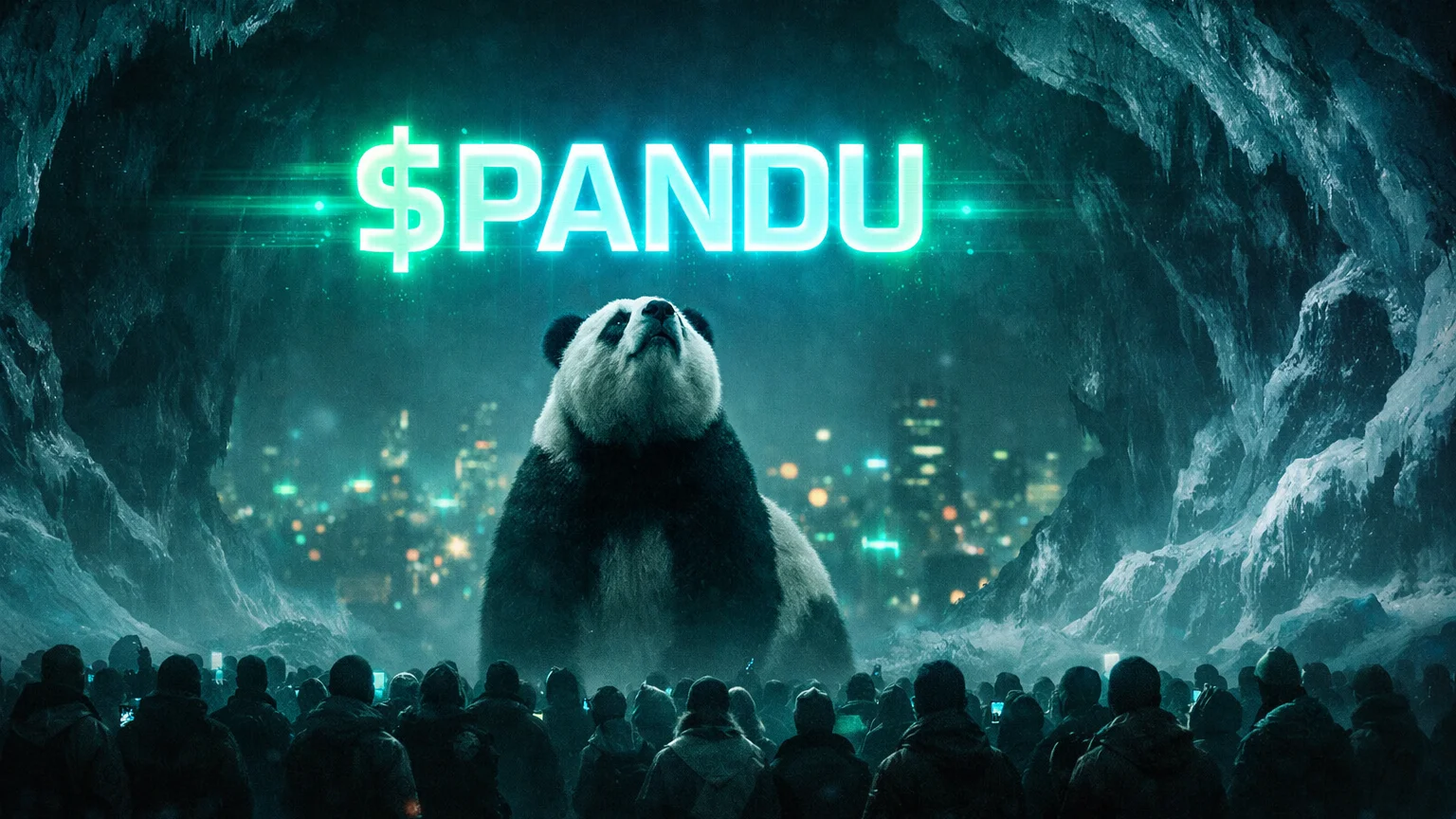
No major concentration risks
Pandu Pandas ($PANDU) launched on letsbonk.fun 205 days ago. In meme coin years, that's roughly equivalent to surviving a nuclear winter, two ice ages, and a meteor strike. The overwhelming majority of launchpad tokens die within their first 72 hours — abandoned by their communities, drained of liquidity, forgotten in the graveyard of dead tickers. $PANDU didn't just survive. It built a holder base of 23,106 wallets, earned letsbonk.fun's verified and community-assist designations, and then went quiet. Until yesterday.
- → $PANDU surged 173% in 24h with $305K volume — a 205-day-old letsbonk.fun token waking from a long consolidation
- → 23,106 holders and verified community status — this isn't a fresh launch, it's an established base reviving
- → Top 3 wallets hold only 11.3% of supply with a balanced 55.8% buy ratio — organic distribution, not whale games
The Rotation
Meme coin trading has developed a distinct pattern over the past six months: capital rotates through fresh launches like a locust swarm, stripping each new token of liquidity before moving to the next. The result is a landscape littered with dead charts — tokens that pumped 500% on day one and now trade at 95% below their launch price. Against this backdrop, the emergence of revival plays represents a meaningful shift in how degens allocate capital.
Revival tokens — mature meme coins that have already survived their initial hype cycle and built genuine holder bases — offer something fresh launches can't: a proven floor. When a token has 23K holders who didn't sell during months of flat price action, it suggests a community that's holding for reasons beyond a quick flip. Whether that reason is genuine belief in the panda meme, sunk cost psychology, or pure stubbornness doesn't matter much. What matters is the holders are there, and they aren't leaving.
The rotation toward established community tokens has accelerated as the fresh-launch success rate continues to decline. Rug pulls, low-effort clones, and oversaturated launch calendars have made degens more skeptical of brand-new tickers. A token that's survived 205 days with verified status feels comparatively safe — even if "safe" is a relative term in meme coin trading.
The Tokens Leading the Charge
$PANDU sits at the center of this revival narrative, but it's not alone. letsbonk.fun's ecosystem has produced several tokens that survived their initial launch window and are now seeing renewed interest. The pattern is consistent: tokens with high holder counts, low creator balances, and verified community designations are attracting fresh volume from traders who've been burned by too many day-one launches.
What makes $PANDU stand out within this cohort is scale. At 23,106 holders, it has the kind of distribution that most Solana meme coins never achieve at any price point. For context, many tokens that reach $10M+ market caps do so with fewer than 5,000 holders. $PANDU built its holder base during a period of minimal price action — meaning these wallets accumulated at low prices and chose to stay.
The Numbers
The buy ratio of 55.8% is telling. Unlike $PVE-style launches where 77%+ buy ratios indicate one-directional accumulation frenzy, $PANDU's near-balanced ratio suggests a market with both conviction buyers and profit-takers actively participating. This is what organic price discovery looks like — messy, contested, and far more sustainable than a pure momentum play.
Volume-to-market-cap is sitting at roughly 1:5 — healthy rotation without the extreme speculation ratios you see in fresh launches. The 6,723 transactions over 24 hours across 23K holders indicate that only a fraction of the holder base is actively trading. Most of them are sitting tight. The organic score of 74.8 reinforces this: the trading activity is predominantly human-driven and distributed across many wallets.
Liquidity at $86.1K is respectable for a $1.55M market cap token. It's deep enough to absorb four-figure sells without significant slippage, and the ratio suggests the token has natural market-making depth rather than artificially inflated pools. That said, any five-figure exit would still move the price meaningfully — this is still a micro-cap by any reasonable standard.
What the On-Chain Data Shows
Rugcheck returns a score of 16 — comfortably in the low-risk zone. No freeze authority. No mint authority. For a 205-day-old token, these baseline safety checks confirm what the longevity already suggests: the deployer set up the token cleanly and walked away.
The holder distribution is where $PANDU genuinely shines. The top three wallets control just 11.3% of total supply. The largest single holder sits at 5.27%. Compare this to the typical meme coin where top wallets routinely hold 20-40% of supply, and $PANDU looks like a textbook example of organic distribution. The burn addresses (11111...111) holding 3% each are standard Solana token mechanics, not active holders.
This distribution pattern is the strongest bull signal in the entire dataset. When supply is this widely distributed across 23K wallets with no single entity controlling more than 5.3%, the token becomes structurally resistant to whale dumps. No single wallet can crash the chart. That doesn't prevent a coordinated selloff, but it dramatically reduces the single-point-of-failure risk that kills most meme coins.
How Long Do Revivals Last?
The honest answer: it varies wildly. Some revival plays recapture their all-time highs and establish new floors. Others spike for 48 hours and return to their pre-revival range. The difference usually comes down to whether the renewed interest brings new holders or just temporarily activates existing ones.
For $PANDU, the key metric to watch is holder count. If the 23K base grows toward 25K-30K during this pump cycle, it suggests the revival is attracting fresh capital — which creates a new support floor above the pre-pump level. If holder count stays flat while price rises, it means existing holders are trading amongst themselves, and the pump will exhaust itself as profit-takers inevitably outnumber new entrants.
The 173% surge with a 55.8% buy ratio is encouraging on that front. The relatively balanced trading suggests both new money flowing in and existing holders taking some profits — a healthy dynamic that can sustain a trend longer than pure one-directional buying. But 24 hours of data isn't a trend. The next 72 hours will determine whether this is a genuine reawakening or a dead cat bounce that traps late entrants.
The Play
If the revival narrative has legs — and the structural data suggests it might — $PANDU is the cleanest expression of the thesis. 23K distributed holders, verified community status, 205 days of survival, balanced buy/sell activity, and no whale concentration. The token has essentially proven its community won't abandon it at the first sign of red candles.
The risk is timing. Entering a 173% pump is buying someone else's early position. The ideal entry was during the months of quiet consolidation — when $PANDU was trading flat with zero attention. That window is closed. What's open now is a momentum trade with structural support underneath it, which is a fundamentally different bet with tighter risk management requirements.
🟡 Speculative — $PANDU has the best structural profile we've seen on a revival play in weeks. 23K holders with only 11.3% top-3 concentration is genuinely rare for a meme coin at any market cap. The 205-day survival with verified community status adds credibility that fresh launches simply can't match. But a 173% pump means the easy money is gone — you're buying the second wave, not the bottom. Watch holder count growth over the next 72 hours. If it pushes past 25K, this panda might have real legs.
What is Pandu Pandas ($PANDU)?
$PANDU is a Solana-native meme token launched on letsbonk.fun approximately 205 days ago. It features a panda-themed community that has grown to over 23,000 holders and earned verified and community-assist designations on its launch platform.
Why is $PANDU pumping now?
After months of quiet consolidation, $PANDU surged 173% in 24 hours with $305K in trading volume. The revival appears driven by renewed interest in established community tokens as traders rotate away from risky fresh launches. The balanced 55.8% buy ratio suggests organic demand rather than coordinated manipulation.
Is $PANDU a rug pull risk?
Rugcheck gives $PANDU a low-risk score of 16 with no freeze or mint authority. More importantly, the token's 23K holder distribution with only 11.3% held by the top 3 wallets makes a traditional rug pull structurally difficult — no single wallet controls enough supply to drain the pool.
How old is the $PANDU token?
$PANDU launched approximately 205 days ago on letsbonk.fun. This longevity is unusual for meme coins, where the vast majority of tokens die within their first week. The token has maintained an active holder base throughout its entire lifecycle.
What does letsbonk.fun verified status mean?
Verified and community-assist designations on letsbonk.fun indicate that a token has met certain community engagement and longevity thresholds. These tags signal that the token has an active, established community — though they are not an endorsement of investment safety.