
90% Buy Ratio on a Token Nobody's Heard Of — Inside Okami's Silent Accumulation Phase
A Japanese wolf-god meme coin doubled in 24 hours with nearly every trade on the buy side. Either someone knows something, or someone wants you to think they do.
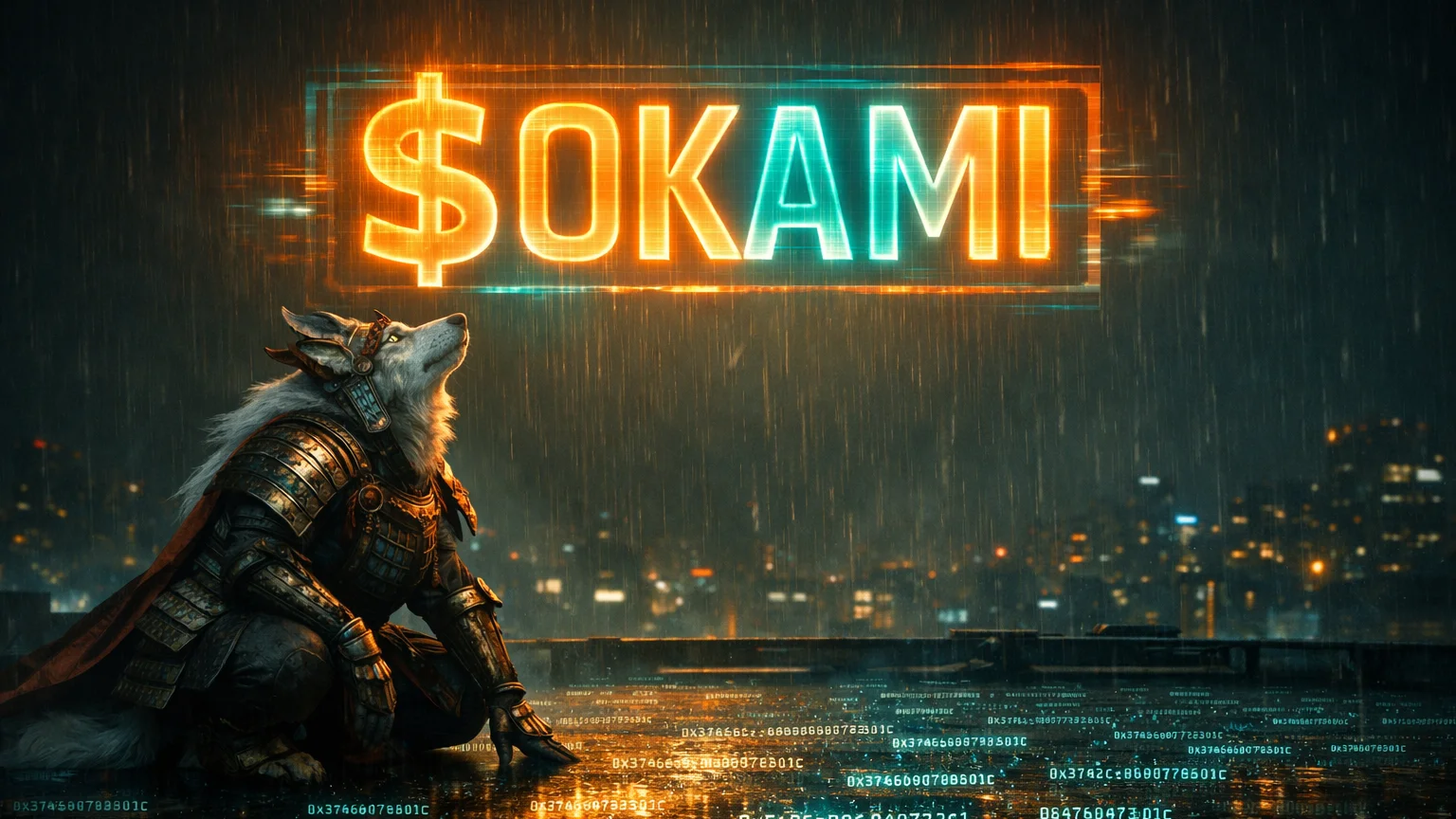
In a market where every trending token comes pre-packaged with CT hype, influencer shills, and Telegram alpha groups racing to front-run each other, Okami is doing something unusual: it's accumulating in near-silence. Over the past 24 hours, this Japanese wolf-god themed Solana meme coin doubled its market cap on $70K in volume — with a 90% buy ratio. Nine out of every ten trades were buys. No KOL callouts. No viral tweet. No Telegram raid. Just relentless, one-sided accumulation that either represents the earliest stage of organic community building or the most patient form of coordinated positioning.
- → Okami posted a 90% buy ratio over 24 hours — one of the most lopsided accumulation patterns on Solana right now
- → Doubled its market cap to $65.6K on $70K volume with zero visible CT promotion or KOL involvement
- → Top two wallets hold 34.5% of supply — significant concentration, but the burn address at #3 suggests some supply is permanently removed
What Makes This One Different
A 90% buy ratio is statistically abnormal. On most micro-cap Solana tokens, buy ratios hover between 45% and 60% — the natural churn of speculators rotating in and out. When you see 90%, it means one of three things: a single entity is accumulating through multiple wallets and suppressing sell orders, a tight community is coordinating buys while agreeing to hold, or genuine organic demand is overwhelming the available supply at current prices. Each scenario has very different implications for what happens next.
The theme helps. Okami — the wolf deity from Japanese mythology — occupies a less crowded meme lane than the typical dog/cat/frog derivatives. Japanese-themed tokens have had sporadic success on Solana, and the aesthetic carries well on social media without needing to ride anyone else's IP. The name "Cadabomb Okami" suggests either a specific project vision or an existing brand being tokenized, though details are sparse.
What's most notable is the absence of noise. No DexScreener boosted ads, no trending hashtag, no CT threads breaking down the "alpha." The token appeared on DexScreener's new listings radar and started accumulating buyers at a pace that suggests coordination — but the kind of quiet coordination you see from early community groups that haven't gone public yet, not from pump-and-dump operators who need volume fast.
The Numbers So Far
The volume-to-mcap ratio is roughly 1:1, which for a micro-cap launch is healthy but not extreme — contrast this with YURI's 14x ratio in the same timeframe. Okami's accumulation is measured, not manic. 4,921 transactions over 24 hours averages about 3.4 trades per minute — human pace, not bot pace. The pattern is consistent with a small but active community buying in measured amounts rather than algorithmic spray-and-pray.
Liquidity at $19K is thin by any standard, which means the 99% price increase required relatively little capital to achieve. A few thousand dollars of sustained buying into thin LP is enough to double a $33K starting mcap. The buy ratio amplifies this — with 90% of trades on the bid side, sell pressure is almost nonexistent, which creates an air pocket under the price. The flip side: when sellers finally arrive, that same thin liquidity means the move down will be equally violent.
What the On-Chain Data Shows
Rugcheck assigns Okami a score of 16 — low risk. No freeze authority, no mint authority. The deployer wallet is clean with zero token balance and no history of previous token launches. Standard pump.fun deployment mechanics.
The holder distribution is where it gets interesting. The top wallet holds 20.69% — a significant chunk that represents meaningful single-point-of-failure risk. The second wallet at 13.87% brings the top two to 34.5% combined. Notably, the third-largest "holder" is the Solana system program address (all 1s), which represents burned tokens — 2.47% of supply is permanently removed. This is a moderately positive signal suggesting the deployer or early participants burned a portion of supply, though the amount is modest.
The 34.5% concentration in two wallets is the primary risk factor. Neither wallet is flagged as insider, but on a $65K token with $19K liquidity, a decision by either top holder to exit would crater the price. The lack of Rugcheck risk flags combined with the burned supply suggests this wasn't launched with malicious intent, but intent and outcome are different things in micro-cap meme territory.
The Accumulation Pattern
What separates Okami from the hundreds of pump.fun launches that spike and die daily is the buy ratio sustainability. A 90% buy ratio over a 24-hour period — not a 15-minute window, but a full day — requires either coordinated discipline or genuine demand. Most pump-and-dump operations can maintain a lopsided buy ratio for hours, not days, because the operators need to start distributing their positions once the chart looks attractive enough to attract outside buyers.
The fact that Okami's buy ratio held at 90% for 24 hours while the price doubled suggests the accumulators aren't finished. They're not selling into the pump — they're adding to positions. This is either the early stage of a community-driven accumulation phase that could precede a much larger move once the token gets promoted to a wider audience, or it's patient operators building a position that they'll dump once they have enough social proof ("look at this chart!") to attract exit liquidity.
The transaction count supports the former interpretation. At 4,921 trades over 24 hours, with most on the buy side, the average buy is roughly $13-14. These are small, repeated purchases — the pattern of individuals DCAing into a position, not a whale splitting a large order across multiple transactions. But sophisticated operators know this, too, and can mimic retail accumulation patterns using transaction-splitting bots.
The Bear Case
A 90% buy ratio sounds bullish until you ask: who's going to buy at 2x when the current buyers are the only demand? The entire price increase has been driven by a self-contained buyer pool. There's no external catalyst — no CT attention, no KOL amplification, no narrative event — to bring fresh capital into the token. At some point, the accumulators either need to create that catalyst themselves (announce, promote, shill) or accept that they've built a position in a token with no demand driver beyond their own continued buying.
The top holder at 20.69% is sitting on roughly $13,500 worth of tokens against $19K in LP. If that wallet dumps, it would drain approximately 71% of available liquidity in a single transaction. The second holder at 13.87% would drain another significant chunk. Together, they could empty the pool and leave remaining holders with worthless tokens and no exit. The Rugcheck score is clean, but the holder math is not.
There's also a simpler explanation for the 90% buy ratio: nobody's selling because there's nobody to sell to. In the earliest hours of a micro-cap token, many wallets that bought at launch are either small enough to forget about or belong to people waiting for a much larger pump. The absence of selling isn't necessarily conviction — it might just be apathy or greed waiting for a higher number.
🟡 Speculative — Okami's 90% buy ratio over 24 hours is genuinely unusual and worth watching. The accumulation pattern is more consistent with early community building than coordinated pump-and-dump — small transaction sizes, sustained buying, no rush to promote. But the fundamentals are as thin as the liquidity: $19K LP, 34.5% in two wallets, zero external catalysts. This is a pre-hype accumulation play. If the community behind it successfully brings attention to the token, the early math works beautifully for current holders. If they don't, it's a quiet token that quietly dies. Watch for the transition from accumulation to promotion — that's when you'll know which scenario is playing out.
What is Okami crypto?
Okami (also called Cadabomb Okami) is a Solana-based meme coin themed around the Japanese wolf deity Okami. It launched on pump.fun and gained attention for its unusually high 90% buy ratio, suggesting coordinated or organic accumulation.
Why is Okami's buy ratio so high?
A 90% buy ratio over 24 hours means nine out of ten trades were purchases. This typically indicates either a tight community coordinating accumulation, a single entity buying through multiple wallets, or genuine organic demand exceeding available supply. The small average transaction size ($13-14) suggests retail-style buying rather than whale activity.
Is Okami a rug pull?
Okami scores 16 on Rugcheck with no freeze or mint authority — meaning the deployer cannot freeze transfers or inflate supply. However, the top two wallets hold 34.5% of total supply against only $19K in liquidity, which creates significant dump risk even without smart contract manipulation.
What does a high buy ratio mean for a crypto token?
A high buy ratio means the vast majority of trades are purchases rather than sales. While this can indicate strong demand, it can also mean that sellers are simply waiting for higher prices or that the buyer pool is artificially concentrated. Sustained high buy ratios on low-volume tokens often precede either a breakout (if new buyers arrive) or a sharp dump (when accumulated positions are sold).