KOTO Turned a Lucky Cat Into $2.2M of Solana Turnover, But 71% of Supply Sits in Three Wallets
KOTO exploded 638% in 24 hours and doubled again in the last hour, giving traders a simple lucky-cat meme with velocity to spare. The problem is uglier: Rugcheck shows one wallet holds 43.8% of supply and the top three control 71.0%, which turns every green candle into a possible exit door.
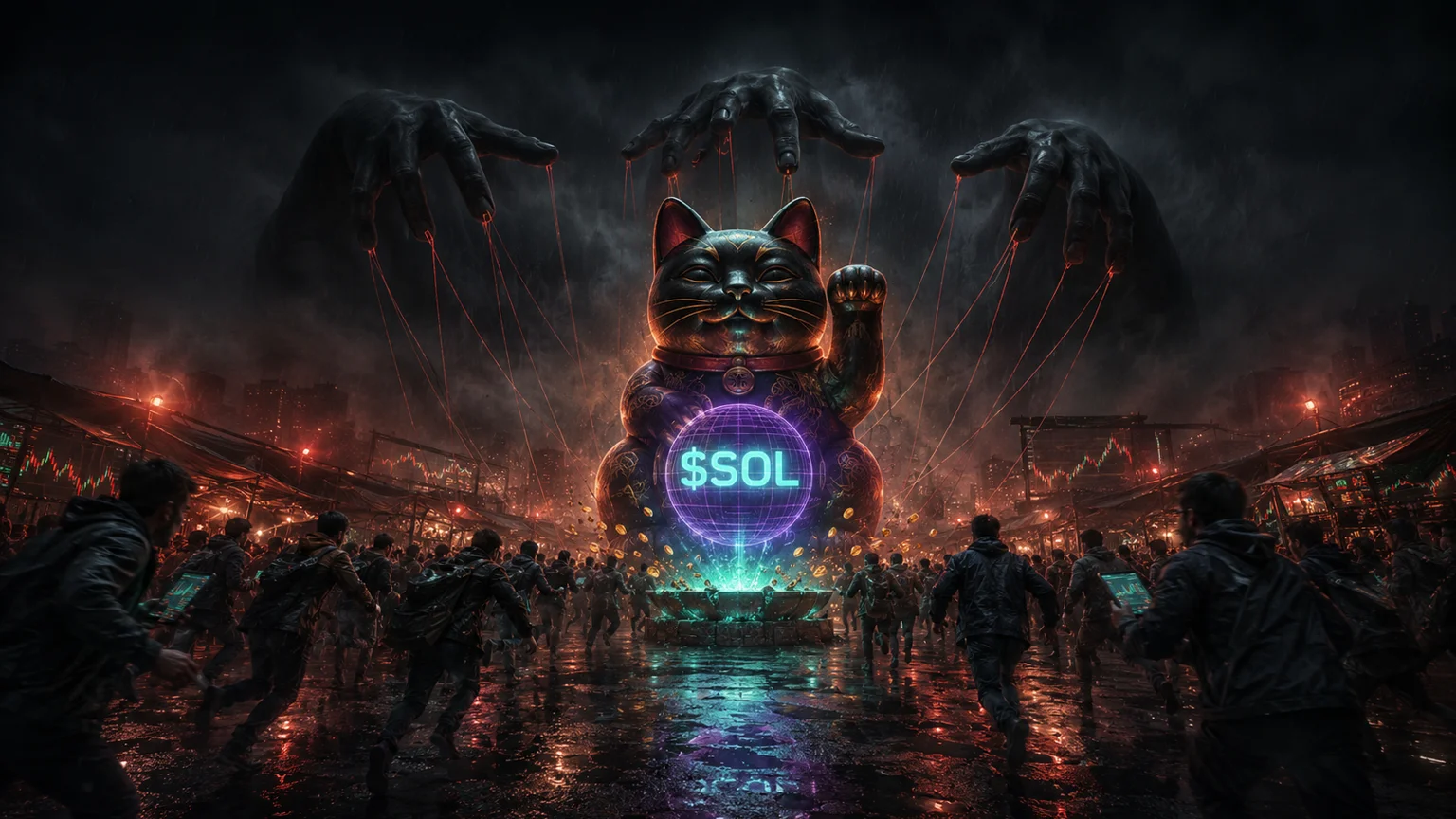
Concentration is the whole story here: one wallet controls 43.8% and the top three hold 71.0%, which overwhelms the otherwise clean contract-permission read.
By around 7:00 PM UTC, KOTO had turned a lucky-cat meme into pure Solana velocity. The token was sitting near a $326.8K market cap after roughly $2.20M in 24-hour volume, up 638% on the day and another 106% in the last hour. Those are absurd numbers for a board barely 1.1 hours old. On raw tape alone, KOTO looked like exactly the kind of fresh launch that can hijack feeds before most traders even find the contract.
The pitch is straightforward enough to spread. KOTO markets itself as a drawn cat that brings good luck and wealth, which is basically memecoin shorthand for easy to understand, easy to post, easy to speculate on. That simplicity is why the board caught immediately. The problem is that KOTO's most important number is not volume or price change. It is concentration. The chain is flashing the kind of holder setup that can make a hot launch feel tradable right until a single wallet decides everyone else is exit liquidity.
- → KOTO generated roughly $2.20M in 24-hour volume on a $326.8K market cap in barely more than an hour, with 24,716 transactions and a 62.9% buy ratio still keeping the board hot.
- → The meme works because lucky-cat symbolism is instantly legible and portable across CT, Telegram, and launchpad chatter. Traders do not need a lore bible to know what they are buying.
- → The chain says the board is concentrated to the point of danger: one wallet holds about 43.8% of supply, the top three control 71.0%, and Rugcheck scored the setup at 53.
What Makes This One Different
KOTO is not winning on originality. It is winning on compression. Lucky-cat symbolism is one of those universal internet motifs that barely needs translation. It carries ideas of luck, money, charm, and collecting behavior without forcing traders to absorb a complicated narrative. That makes it strong meme fuel, especially on Solana, where the fastest boards usually do best when the story can fit into a ticker, an emoji, and one sentence.
There is also a timing advantage here. KOTO hit the tape when traders were already primed for fast-rotating micro-cap names, and the board gave them an instantly legible reason to care. The chart did not need to sell a mission or a product. It just needed to suggest that the next lucky-cat squeeze might be underway. In pure attention economics, that is enough to trigger a rush.
But what makes KOTO different from a cleaner launch-radar candidate is that the story and the structure are pulling in opposite directions. The meme is simple, the turnover is huge, and the first hour looks like a breakout. Underneath that, the wallet map looks brutally top-heavy. That tension is the whole article. KOTO can remain relevant because the meme works. It can also become a trap because the ownership profile looks like a loaded gun sitting under the chart.
The Numbers So Far
The volume-to-size ratio here is almost cartoonish. Roughly $2.20M in 24-hour volume ran through a board worth about $326.8K, with just $51.5K in liquidity supporting it. That is not gentle price discovery. That is a crowd slamming itself through a very small door. Bulls will call that momentum. Bears will call it fragility. Both are describing the same chart.
The tape was still undeniably hot. KOTO printed 24,716 transactions and held a 62.9% buy ratio, which means buyers were still beating sellers by a wide enough margin to keep the board feeling alive. The one-hour move at 106% tells the same story. This was not a stale runner living on past candles. Fresh money was still arriving. In meme markets, that matters because bad structures often survive longer than they should when the order flow stays emotional.
Liquidity keeps the warning label attached. Around $51.5K is not enough depth for a board generating multi-million-dollar turnover to absorb real distribution gracefully. Pair count sat at six, which can make the footprint look broader, but it does not change the central issue. If a large holder starts unloading size into a pool this shallow, the crowd will find out after the candle is already red. KOTO's chart is strong right now. The question is whether the structure underneath it is built for continuation or built for a handoff.
What the On-Chain Data Shows
This is where the KOTO setup turns from hot to hazardous. Rugcheck shows the largest wallet holding roughly 43.8% of supply, while the top three wallets together control about 71.0%. That is not mildly concentrated. That is board-defining concentration. On a fresh meme coin, it means a tiny number of actors can overpower every bullish narrative on the screen if they decide the run has paid them enough.
The contract permissions are not the issue. There is no active freeze authority and no active mint authority, which removes two classic smart-contract landmines. But clean permissions do not rescue a board from ugly distribution. Rugcheck also flagged two danger-level risks: top-ten holders controlling more than 70% of supply and a single holder owning a large chunk outright. Those warnings matter more than the missing freeze flag, because concentration is the most immediate path from euphoric board to violent unwind.
The deployer wallet does not add a comforting backstory either, but it also is not the headline. Creator balance was zero at check time and there is no special multi-token builder pattern worth romanticising. For KOTO, the only on-chain fact that really matters is that ownership is narrow enough to overrule the crowd whenever the biggest wallets feel like it. That does not mean a rug is happening now. It means the structure is bad enough that traders should treat every continuation candle as borrowed time until distribution actually improves.
Why This Launch Still Matters
KOTO still matters because the market will trade setups like this whether the structure is clean or not. Simple meme, big velocity, tiny market cap, easy-to-share branding — that recipe is exactly how crowded intraday narratives get born. If MemeDesk ignores those boards just because the chain looks ugly, it misses the part that traders care about most: where attention is going right now.
The useful read is not never look at it. The useful read is know what game you are in. KOTO is not a clean conviction board. It is a crowd-fueled squeeze candidate sitting on a dangerous holder map. Those can keep running longer than rational people expect, especially when the meme is simple enough to circulate far outside the first pocket of buyers. But when they fail, they usually fail fast and without fairness.
That is why the concentration number matters more than the 638% daily move. A huge candle tells you people are excited. A 71.0% top-three concentration tells you who has control. If KOTO keeps ripping, the lucky-cat story will get louder. If one major wallet starts distributing into that enthusiasm, the story changes from early breakout to textbook exit liquidity in minutes. The board is worth covering precisely because both outcomes are live at the same time.
Verdict
🔴 KOTO has real meme velocity and a clean lucky-cat hook, but the holder structure is bad enough to overwhelm every bullish number on the screen. Multi-million-dollar turnover on a $326.8K market cap can squeeze hard, and a 62.9% buy ratio says the crowd is still engaged. None of that cancels a single wallet holding 43.8% and the top three controlling 71.0%. This is a shill-risk launch-radar board: tradable for attention, dangerous for trust.
What is KOTO?
KOTO is a fresh Solana meme token built around a lucky-cat theme and marketed as a symbol of good luck and wealth. It hit launch radar after reaching roughly a $326.8K market cap with about $2.20M in 24-hour volume in just over an hour of trading.
Why did KOTO attract attention so quickly?
Because the meme is instantly legible and the tape was violent. Traders saw a simple lucky-cat narrative, a 638% daily move, another 106% in the last hour, and enough turnover to suggest the board could dominate short-term feeds.
What is the biggest risk in KOTO's setup?
Holder concentration by a mile. Rugcheck shows one wallet holding about 43.8% of supply and the top three controlling 71.0%. That means a tiny set of wallets can dictate the chart if they decide to sell into the crowd.
Does KOTO have obvious contract-permission dangers?
Not on the basic contract-permission read. There is no active freeze authority and no active mint authority. The problem is not permissions. It is ownership concentration combined with only about $51.5K of liquidity under a very hot chart.
Why does MemeDesk rate KOTO as shill instead of speculative?
Because the structure is bad enough to dominate every other signal. The meme works and the flow is real, but a board where one wallet owns 43.8% and the top three control 71.0% is not just uncertain. It is structurally dangerous, which pushes it into red-badge territory.