A 179-Day-Old Pump.fun Ghost Just Ripped 520%, and Solana Looks Ready to Raid the Graveyard Again
JACKJACK is an older Solana meme back from the dead with roughly a $95.8K market cap, about $102.8K in 24-hour volume, and 1,023 holders. The catch is brutal: the top three wallets still control about 64.2% of supply, so this revival is either the start of a broader ghost-board rotation or a concentrated squeeze wearing nostalgia makeup.
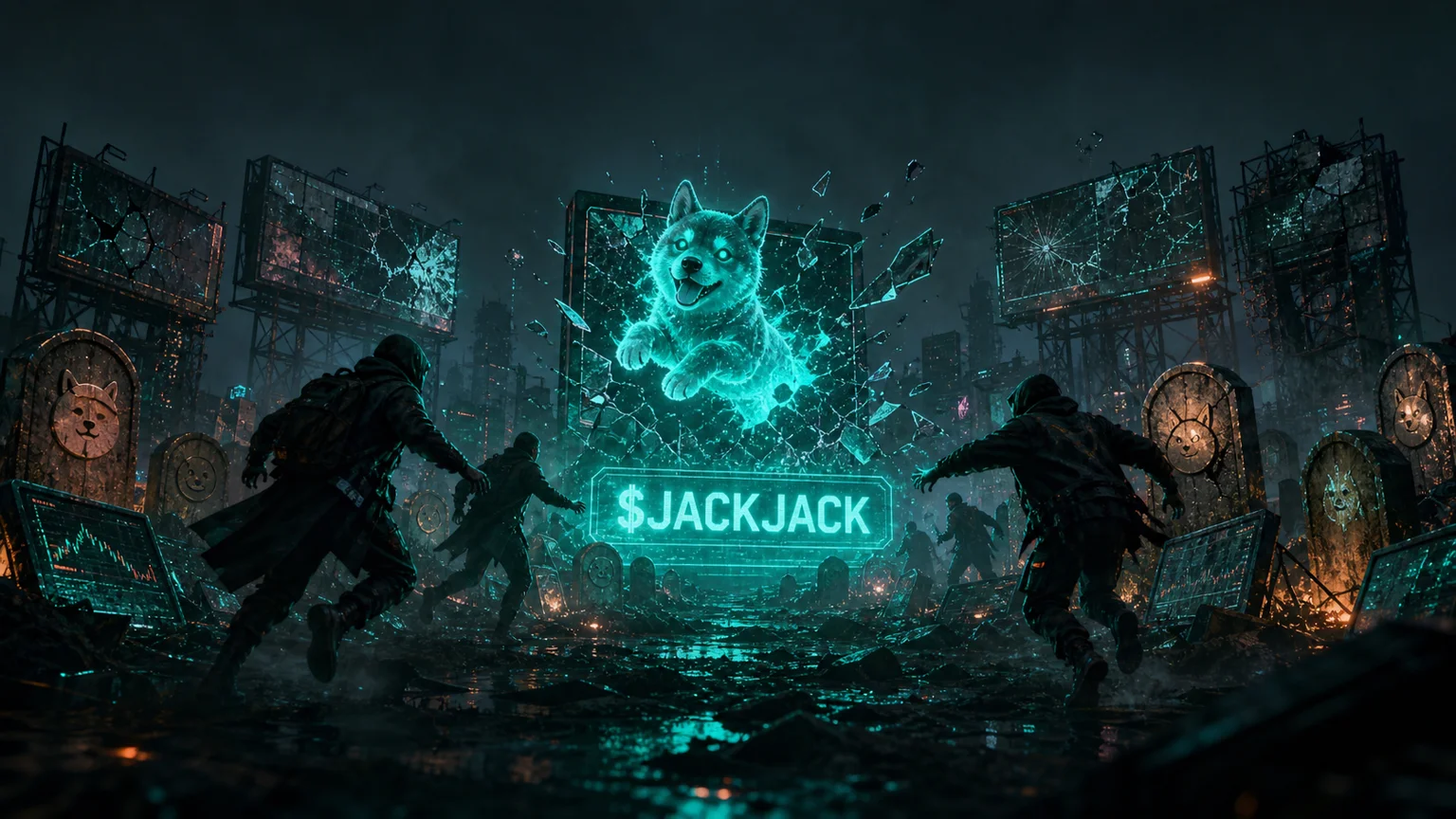
Rugcheck scores JACKJACK at 47, both authority keys are disabled, and the top three wallets still control about 64.2% of supply. That leaves the revival tape tradable and structurally dangerous at the same time.
JACKJACK should have been dead. The token launched on pump.fun months ago, drifted into the part of the Solana cemetery where old boards go when nobody wants to remember them, and then suddenly returned with a 520.24% one-hour burst. By selection time it was trading around a $95.8K market cap on roughly $102.8K in 24-hour volume, with the daily move sitting near 568.98%. That is not the sort of candle traders ignore, especially when it appears on a board that is 179 days old. This is not new-launch energy. This is graveyard energy, and graveyard energy often says more about market mood than fresh mints do.
That is why JACKJACK matters as a narrative-shift signal instead of just a funny chart. When traders start bidding old pump.fun relics, they are telling you novelty is no longer enough. They want recycled symbols, forgotten supply, and boards where a modest amount of fresh capital can create an outsized candle. Zooko's Dog fits that template perfectly. The name carries crypto-native familiarity, the float is old enough to feel neglected, and the market can spin the move as either rediscovery or resurrection. In practice it does not matter which word you pick. Both point to the same thing: Solana degens are once again willing to shop in the cemetery if the percentage move is violent enough.
- → JACKJACK is a 179-day-old pump.fun board that just ripped 520.24% in the latest hour and 568.98% on the day while clearing roughly $102.8K in 24-hour volume.
- → The revival tape is real enough to track: about 1,023 holders, 1,122 daily transactions, a 60.1% buy ratio, and a medium 54.6 organic score show this was more than one wallet tapping the chart for sport.
- → The structural risk is the whole story: Rugcheck 47, only about $16.2K in liquidity, and an ugly 64.2% of supply sitting in the top three wallets.
The Rotation
The rotation here is away from newborn randomness and toward old boards with dormant identity. That shift happens when traders get tired of competing in launchpad knife fights where every new ticker has ten minutes of life and no memory. Older boards offer a different kind of opportunity. They come with leftover holders, stale supply, and enough history that the next move can feel dramatic even when the absolute size is still tiny. In other words, they let traders buy a story about revival instead of a story about discovery. Those are different emotions, and different emotions create different order flow.
JACKJACK also benefits from being culturally adjacent to crypto itself. Zooko's Dog is not a random internet phrase with no anchor. It sounds like something the market already half-remembers. That matters because resurrection trades spread fastest when the ticker feels familiar enough to trigger curiosity and strange enough to avoid feeling exhausted. A board like this can suddenly get treated like found footage from an old cycle. Traders love that sensation because it flatters them. It makes them feel less like they are gambling on nonsense and more like they are spotting buried value that newer entrants were too impatient to notice.
The Tokens Leading the Charge
Yes, this table repeats one token across different time windows, and that is the point. Narrative shifts often begin with a single board proving the template before copycats and adjacent revivals appear. JACKJACK is not yet evidence of a fully formed sector move. It is evidence that traders are willing to try one. When a cemetery board can sustain triple-digit moves across 24-hour, six-hour, and one-hour windows at the same time, the broader message is simple: some portion of the market is actively searching old shelves for something flammable.
The Numbers
The raw numbers are just good enough to keep this from being written off as hallucination. Daily turnover slightly exceeded market cap, which is a useful threshold for old-board revivals because it means the market actually recycled meaningful size through the pair instead of printing one ceremonial candle and moving on. There were 1,122 transactions in the 24-hour window, and the buy ratio came in at 60.1%. That is not manic enough to prove universal conviction, but it is strong enough to show the board was leaning bid rather than simply being squeezed by inactivity. The medium organic score of 54.6 tells a similar story: not perfectly clean, not obviously fake, somewhere in the gray zone where real revivals usually begin.
The danger lives in the pool. About $16.2K of liquidity is tiny, and tiny liquidity makes old-board revivals seductive precisely because small amounts of fresh capital can look like revelation. A 520% one-hour move on deep liquidity would mean something very different. Here it means traders found a neglected board thin enough to reprice violently. That is why the age of the pair matters just as much as the move itself. A 179-day-old token does not get the benefit of innocence. If it suddenly rips, you have to ask whether it is being genuinely rediscovered or merely reactivated in a way that lets a concentrated holder base mark up a cheap asset quickly.
What the On-Chain Data Shows
The contract-level read is not catastrophic, but the holder map absolutely is. Rugcheck scores JACKJACK at 47. Freeze authority is disabled. Mint authority is disabled. Those are decent survival signals. Then you look at the top wallets and the whole mood changes. One address holds 23.74% of supply. Another holds 20.67%. Another holds 19.79%. That is 64.2% of supply concentrated in three wallets. None of them are flagged as insiders in the saved snapshot, but concentration that extreme does not need an insider label to become a problem. It simply needs the wrong three people deciding the move has gone far enough.
This is also a good place to avoid fake sophistication. The deployer wallet is not the insight. A fresh creator profile with no notable token history is normal background noise for boards like this. The meaningful signal is that 1,023 holders exist and yet supply is still massively clustered. That tension is the whole trade. JACKJACK has enough visible distribution to attract revival speculation and enough concentration to make that speculation dangerous. In other words, the chart is interesting because it looks alive. The structure is worrying because it still behaves like an abandoned board that never truly decentralized.
How Long Do Graveyard Revivals Last?
Usually not long. Old-board revivals fail when the first wave of buyers confuses percentage gains with durable demand. The move looks enormous because the base was dead, the liquidity was thin, and the market had forgotten the token existed. That is enough to create a spectacular screenshot and nowhere near enough to create permanence. For permanence, the board needs fresh turnover to keep replacing the sellers who have been stuck for months. It needs the story of revival to keep feeling larger than the obvious temptation to cash out. Most tokens never win that fight.
What gives JACKJACK a chance is the very thing that makes it risky: the move is so dramatic that it can attract more revival hunters if the tape stays active. Graveyard rotations are contagious when traders believe they have found the first board in a broader scavenger season. If this chart keeps holding after a 520% hourly spike, other neglected boards may light up too. If it fails quickly, then JACKJACK becomes a cautionary tale about how easy it is to mistake a concentrated squeeze for the beginning of a narrative. Either way, the token is useful because it is revealing where market appetite is trying to go next.
The Play
The bullish read is straightforward. A 179-day-old pump.fun relic just woke up with enough volume, enough holders, and enough recognizable weirdness to prove traders are willing to revisit forgotten boards. At a sub-$100K market cap, it does not take much additional demand to keep the move absurd. If the market decides JACKJACK is the flag bearer for old-board scavenging, the percentages can keep looking ridiculous precisely because the board is still small. That is the seductive part of the setup.
The bearish read is even cleaner. This may already be the move. The top three wallets own 64.2% of supply, liquidity is paper-thin, and the very age that makes the chart feel romantic also means there are plenty of old holders who may be thrilled to sell strength for the first time in months. That combination does not kill the trade, but it makes this a tape-first situation, not a comfort-first one. JACKJACK is a signal that the cemetery is getting traffic again. It is not proof that every corpse in the cemetery deserves a resurrection premium.
🟡 Speculative — JACKJACK is a real narrative-shift signal because the market clearly decided an old pump.fun board was worth dragging back into public circulation. The percentage move, turnover, and holder count are enough to make the revival interesting. The concentration profile makes it dangerous. With 64.2% of supply in the top three wallets and only about $16.2K of liquidity, this is a ghost-board rotation, not a clean breakout. Respect the appetite it reveals. Do not confuse that appetite with safety.
FAQ
What is JACKJACK on Solana?
JACKJACK, also called Zooko's Dog, is an older Solana meme coin trading under contract address HJBoRECiJddTZQZpuY8pHenf5CZ2yjju4npekmvbpump. At selection time it was a 179-day-old pump.fun board trading near a $95.8K market cap.
Why is JACKJACK being treated as a narrative-shift signal?
Because the move says more than one token is green. A 179-day-old board suddenly ripping 520.24% in an hour suggests traders are rotating into old cemetery boards rather than focusing only on brand-new launches.
Is JACKJACK's revival structurally clean?
Not really. Freeze and mint authority are disabled, which helps, but the top three wallets still control about 64.2% of supply. That concentration is the main risk in the setup.
What does the organic score on JACKJACK mean?
Jupiter's 54.6 organic score puts the board in a medium zone. The trading activity looked real enough to take seriously, but not clean enough to ignore the possibility that thin liquidity amplified the move.
What should traders watch next on JACKJACK?
Watch whether volume keeps replacing sellers after the first spike and whether the board can hold size without immediately round-tripping. If the tape stays active, the graveyard-rotation thesis strengthens. If it fades fast, the move was likely just a concentrated squeeze.