GREMLIN Just Forced $570K Through a $4.5K Solana Shell, and the 98% Hourly Wipeout Is the Whole Story
GREMLIN jammed roughly $570.4K in 24-hour volume through a board now sitting near a $4.5K market cap, with a 61.9% buy ratio, 16,470 swaps, and a brutal 98.53% one-hour puke. If bounce hunters show up, this becomes the nastiest reflex trade on the Solana board. If they do not, it is the cleanest reminder of the day that raw volume can still hide a crater.
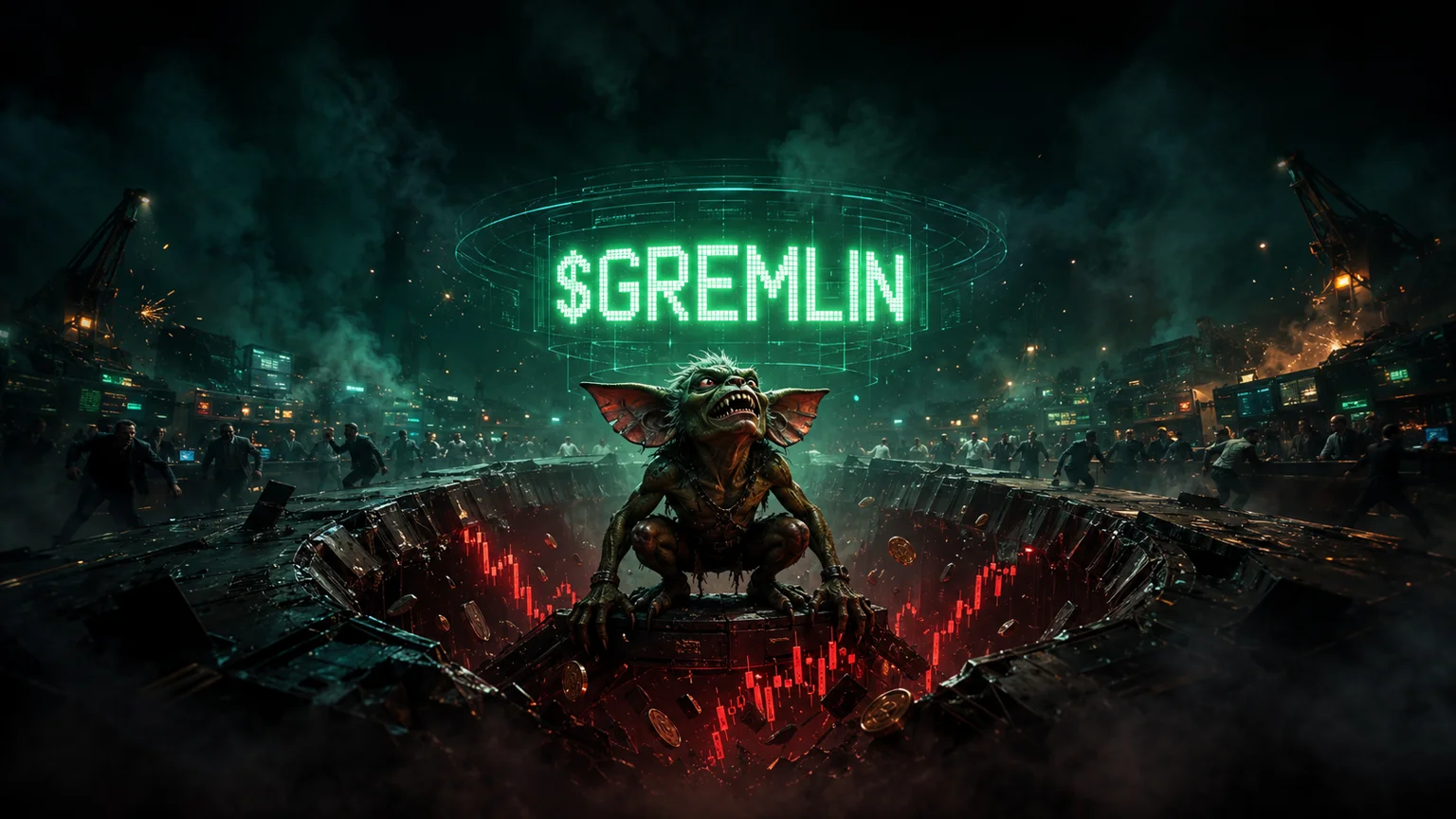
Rugcheck scores GREMLIN at 20 with both authority keys disabled. The saved top-three concentration reads 95.6%, but two of those slots map to the live trading pools themselves, so the real stress signal is not hidden admin risk. It is ultra-thin liquidity and a chart that can still break violently under modest selling.
By about 7:04 AM UTC on May 7, GREMLIN had already turned into the kind of Solana launch traders screenshot for two totally different reasons. On one screen, the token looked absurdly alive: roughly $570.4K in 24-hour volume, 16,470 swaps, and a 61.9% buy ratio in less than three hours. On the other screen, it looked almost post-mortem: the market cap had been smashed down to roughly $4.5K, the 24-hour change sat at negative 88.45%, and the one-hour candle was uglier still at negative 98.53%. That is not a normal early-launch wobble. That is a launch going through open-heart surgery while the crowd is still trying to decide whether it is a meme, a trap, or a bounce.
That is exactly why GREMLIN deserves launch-radar coverage instead of being dismissed as just another dead chart. New meme coins can print fake excitement off a single impulse candle. GREMLIN did something weirder. It created real public traffic first, then collapsed so hard that the traffic itself became the story. When a brand-new board pushes more than half a million dollars through a shell now worth only a few thousand, the market is revealing something important about attention, liquidity, and how fast momentum can turn from invitation to punishment. Either the next buyers are about to stage a vicious reflex move, or this becomes the cleanest lesson of the day in why raw volume can still lie.
- → GREMLIN forced roughly $570.4K in 24-hour volume through a board sitting near a $4.5K market cap, which is the kind of volume-to-value mismatch that only happens when attention arrives faster than structure.
- → The tape is still violent, not dead. The scanner snapshot logged 16,470 total swaps, a 61.9% buy ratio, and then a savage 98.53% one-hour flush that turned the launch into a public stress test.
- → Contract permissions are not the immediate problem here. Freeze authority is off, mint authority is off, and Rugcheck only scores the token at 20. The real danger is razor-thin liquidity and a holder map that becomes fragile the second bounce hunters lose interest.
What Makes This One Different
The obvious difference is the mismatch between participation and surviving value. GREMLIN was not a sleepy microcap with one whale tossing it around. The selection data logged 10,194 buys against 6,276 sells in the first stretch of trading, with more than sixteen thousand total transactions across two live pools. DexScreener also showed 500 active boosts behind the board, which tells you there was real promotional fuel underneath the launch. That does not make the token healthier. It makes the failure more instructive. A lot of launches die because nobody showed up. GREMLIN is interesting because plenty of people did.
The second difference is that the collapse happened before the market could settle into a clean narrative. Usually the board decides what a new coin is first, then price follows. Here, the price action is forcing the narrative in real time. A roughly 2.9-hour-old pair that already round-tripped 88% on the day and almost 99% in the last hour is not trading on patient conviction. It is trading on pure reflex, which means every remaining green candle from here has to prove there are still opportunists willing to absorb panic, not just early wallets trying to exit before the music fully stops.
The Numbers So Far
The arithmetic is almost rude. Using the scanner snapshot, GREMLIN was sitting near a $4.5K market cap while chewing through roughly $570.4K in 24-hour volume. That is turnover of about 128 times the market cap in a single day, and because the pair was not even three hours old, most of that turnover happened in a much tighter window than the headline implies. The token price was down to around $0.000004455, liquidity was only about $5.5K, and the five-minute print was still red. In plain English, the board had already been through enough churn for multiple different trader populations to touch it, scalp it, panic on it, and leave someone else holding the emotional bill.
The volume profile also explains why this chart still has a pulse even after the slaughter. A 61.9% buy ratio on 16,470 swaps means the tape was not one-directional exit flow. Buyers kept pressing even while the structure was visibly breaking. That matters because it separates GREMLIN from a pure rug narrative. This was not a case of nobody trading after the first candle. It was a case of too much business meeting too little depth. With only about $5.5K in visible liquidity, the board never had the cushion to translate interest into stability. It had just enough depth to let traders fight over the carcass.
What the On-Chain Data Shows
On-chain, GREMLIN is cleaner at the contract level than the chart makes it look. The saved dev profile shows no freeze authority and no mint authority, which removes the two laziest ways a launch can betray its holders. Rugcheck scored the token at 20, not pristine but nowhere near the kind of number that screams obvious contract abuse. The deployer wallet itself is not the story here. Creator balance is effectively zero, and there is no notable serial-deployer history worth mythologizing. That is normal meme-coin background noise, not an insight.
The more useful read is in the holder map, and even there you need to avoid the dumb interpretation. Rugcheck's raw top-three concentration reads 95.6%, which looks catastrophic until you notice the first two addresses line up with the live PumpSwap and pump.fun pools. In other words, a lot of that headline concentration is market plumbing, not one cloaked whale owning the kingdom. Even after making that adjustment, though, the board is still fragile. The next visible wallet in the saved profile sits at 10.92%, and the entire launch is operating on tiny liquidity with very few LP providers. So the contract is not the trap. The structure is. GREMLIN can still get mauled simply because the market around it is too thin to forgive aggressive exits.
Why This Launch Matters
GREMLIN matters because it is the sort of chart that exposes what the first-day meme economy actually rewards. Traders like to pretend they can spot quality early, but most early boards are really just contests between attention velocity and available liquidity. GREMLIN won the attention round and lost the stability round almost immediately. That makes it more educational than a smoother chart with worse participation. When more than half a million dollars can crash down into a few thousand dollars of surviving market cap inside a single session, it tells you the board is still paying up for spectacle even when the back end of the trade is built like cardboard.
It also matters because the next move, if there is one, will say more than the first move did. The launch already proved it could attract order flow. That part is done. Now it has to prove whether order flow can return after public humiliation. Fresh boards occasionally do that. The nastiest dead-cat bounces usually come from tokens that looked too damaged to deserve another look, then trap both late shorts and smug spectators when the crowd decides the blood itself is the meme. If GREMLIN gets that second life, it will not be because the fundamentals suddenly improved. It will be because traders decided the punishment went far enough.
What Has to Happen Next
The clearest bullish tell from here is not a heroic percentage candle. It is depth. GREMLIN needs visible liquidity to build faster than the chart can destroy it. If the market cap starts climbing while liquidity stays pinned around the same tiny level, the next squeeze just recreates the same problem at a slightly higher price. What would actually change the read is a cleaner ratio between cap, liquidity, and transaction flow, something that suggests the market is beginning to warehouse the token instead of merely fighting over it for a few chaotic minutes at a time.
The bear case is blunt. If the bounce hunters stop showing up, GREMLIN becomes one more example of first-day volume being a terrible proxy for staying power. The promotion already happened. The big emotional move already happened. The contract permissions being clean will not save a chart if nobody wants the risk anymore. On a board this young, silence kills faster than malice. That is why GREMLIN still belongs on radar: not as a clean breakout, but as a live stress test of whether attention alone can resurrect a launch after it has already been publicly wrecked.
🟡 Speculative, and the speculation is in the rebound reflex, not the structure. GREMLIN earns a real look because the launch did undeniable volume, buyers kept showing up even during the collapse, and the contract-level permissions are cleaner than the chart implies. It stays yellow because the surviving market cap is microscopic, liquidity is razor-thin, and the holder map only looks less terrifying after you strip out pool addresses. If the board produces a second wave, it can move violently. If it does not, this was volume without durability dressed up as a launch.
FAQ
What is GREMLIN on Solana?
GREMLIN is a fresh Solana meme coin trading under contract address DBDkK6A4CigaVrjHkKcYeyXkCxVBpTpNMa2Cy5aqpump. At selection time it was sitting near a $4.5K market cap after roughly $570.4K in 24-hour volume.
Why did MemeDesk cover GREMLIN even though it crashed?
Because the crash is the story. GREMLIN still logged 16,470 swaps and a 61.9% buy ratio in less than three hours, which makes it a real-time read on how meme-launch attention can outrun liquidity.
Does GREMLIN look like a direct rug pull?
Not from the saved contract profile alone. Freeze authority is disabled, mint authority is disabled, and Rugcheck only scores the token at 20. The immediate danger looks more like fragile market structure than hidden admin abuse.
What is the biggest risk on GREMLIN right now?
Liquidity is the obvious problem. With only about $5.5K in visible liquidity, GREMLIN can move violently on modest flow, and any bounce can disappear just as fast if fresh buyers stop stepping in.
What would confirm GREMLIN has real recovery potential?
A healthier rebound would show liquidity expanding alongside price, not just another isolated squeeze. If transaction flow stays active while the liquidity cushion improves, the board has a chance to become more than a reflex bounce.