Big Goblin Burned Through $400K in Volume Before a 94% Collapse, and One Wallet Ended Up Owning 88.48%
BIGOB looked like a fresh goblin-mode launch for barely ninety minutes. Then the market cap fell to roughly $2.0K, liquidity shrank to $3.6K, and the holder map made the whole thing look like a completed extraction cycle.
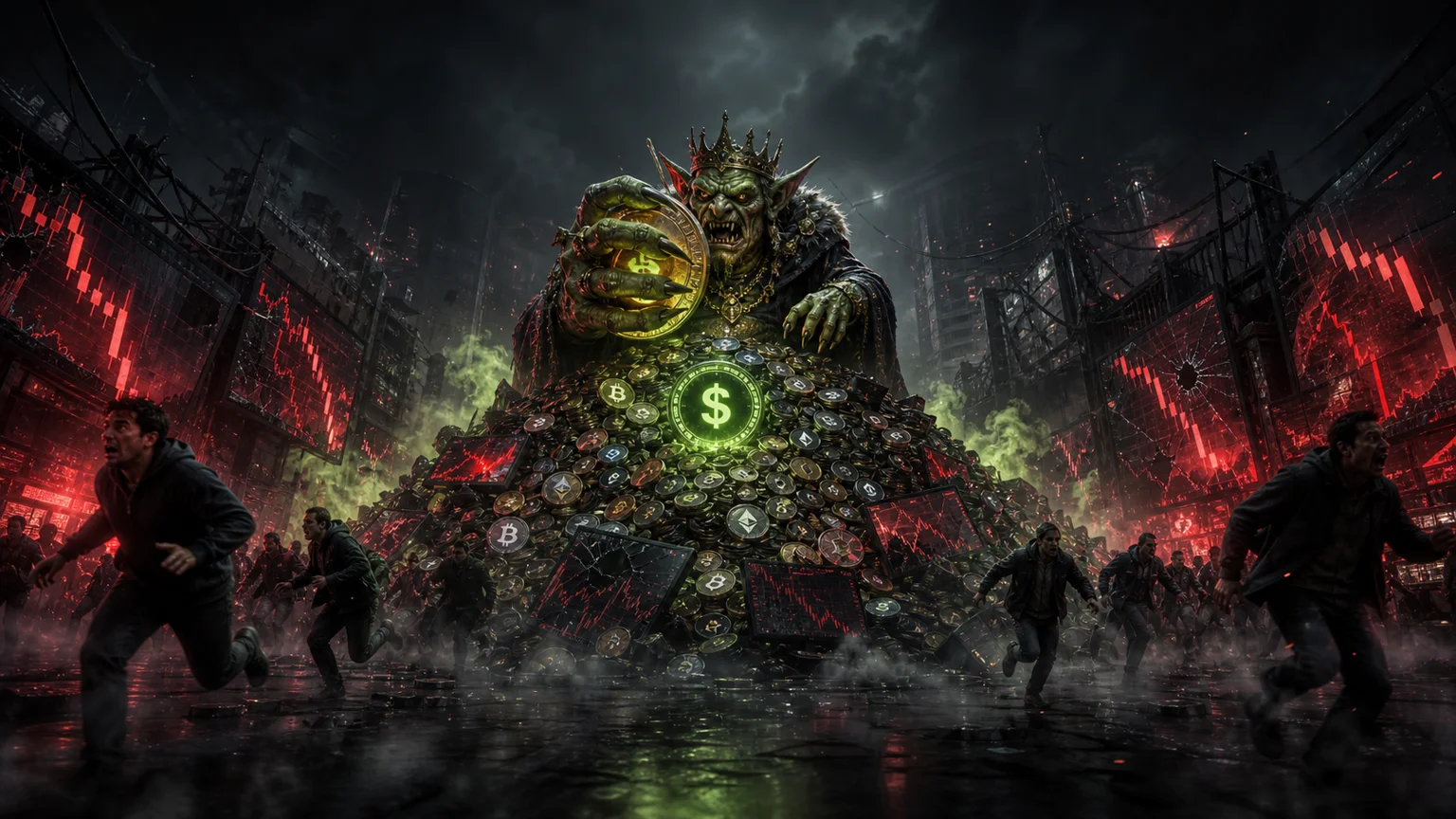
The permission flags look clean, but the holder map is catastrophic: one wallet controls 88.48% of supply, visible top-three concentration clears 112.3% because of overlapping accounting, and the surviving market is far too small to support a healthy recovery story.
Big Goblin lasted just long enough to prove there was money in the room and not long enough to pretend there was a market. At selection time the Solana pair was roughly 1.49 hours old, had already churned about $400,246 in 24-hour volume, and was sitting on a 94.36% collapse that left the headline market cap near $2,035. That is not a rough pullback. That is a speedrun from launch hype into landfill. Goblin-coded tickers can absolutely rip in the trenches because the promise is simple: nobody is here for elegance, everybody is here for degeneracy. But the chart still has to survive the first round of greed. BIGOB did not.
What makes this one worth covering is how efficiently it compresses the pump.fun-style lifecycle without needing a famous caller, a doxxed team, or a half-believable lore package. The pair logged 5,475 transactions in barely ninety minutes, with 2,887 buys against 2,588 sells. That sounds like healthy churn until you look at what survived it. Liquidity was only about $3.6K. Market cap was basically dust. The board was down 96.27% over the prior hour alone. This was not a slow failure that needed chain sleuthing or social drama to decode. It was public combustion, visible in real time to anyone willing to look past the transaction counter.
- → BIGOB launched, printed about $400.2K in volume, and collapsed 94.36% while the pair was only around 1.49 hours old.
- → The tape looked busy with 5,475 transactions and a slight buy bias, but the surviving market shrank to roughly a $2.0K cap with only about $3.6K in liquidity.
- → Holder structure finished the joke: the top wallet held 88.48%, visible top-three concentration reached 112.3%, and the launch never built anything resembling a real float.
What Makes This One Different
Honestly, the differentiator was the label. Big Goblin is not selling utility, trust, or even the pretense of quality. It is selling vibe compression. The whole pitch is that goblin-mode traders know exactly what they are clicking on: a crude mascot, a fast launch, and the fantasy that being early enough cancels the structural ugliness. Sometimes that formula works for longer than it should. The first buyers do not need a story worthy of Bloomberg. They need a meme blunt enough to spread across group chats and a chart violent enough to create FOMO in minutes. BIGOB had both, which is why the volume spike mattered even though the project itself never earned anything deeper than a reflexive curiosity bid.
That is also why the crash matters. When a meme has nothing holding it together except speed, the unwind tells you the truth faster than any roadmap ever could. There was no credible community base to absorb supply, no meaningful liquidity buffer, and no evidence that the early churn was turning into durable ownership. The market did what it always does in that situation. It mistook motion for demand until the motion stopped, then discovered there was almost no floor. BIGOB is useful precisely because it shows the entire cycle in miniature: launch attention, frantic churn, dramatic screenshots, then a surviving chart too small to take seriously.
The Numbers So Far
BIGOB's raw numbers are nasty in the way only tiny Solana blowups can be. Price was around $0.000002034. Market cap and FDV both sat near $2,035, which means there is no comforting difference between circulating reality and diluted fantasy here. Liquidity was roughly $3,610. Volume was about $400.2K. The pair was not even two hours old and was already down 96.27% over the prior hour. Even the slight buy-side edge in the transaction count feels more insulting than reassuring. In dead micro-caps, a buy-heavy tape can simply mean the exits are so wrecked that the prints still look active while the market is functionally over.
The funniest and ugliest number is the ratio between churn and survival. More than $400K of turnover feeding into a remaining market cap of roughly $2K means the launch did not convert attention into ownership at all. It converted attention into turnover. That distinction matters because degens still treat volume as a character reference. It is not. Volume only proves that people touched the pair. In BIGOB, they touched it, fought over it, and left almost nothing standing. By the time the chart finished its speedrun, the surviving asset was less a meme coin than a receipt showing how quickly bad structure can eat a fresh launch alive.
What the On-Chain Data Shows
On paper, the contract permissions are not the loudest problem. Freeze authority is off. Mint authority is off. Rugcheck scored the token at 27, which in isolation would not scream catastrophe. That is exactly why looking only at permission flags is lazy. The real problem is the holder map. One wallet controls 88.48% of supply. The visible top-three concentration clears 112.3%, which usually means the report is capturing overlapping accounting around LP or system-style addresses, but the editorial conclusion does not change. The supply is so concentrated that the chart stops being a crowd market and starts being a very public hostage situation.
The deployer wallet itself does not add much mythology here, and that is normal. Fresh launch wallets are everywhere on Solana and usually do not explain the trade. Structure explains the trade. When one wallet can dominate supply this aggressively and the remaining liquidity is only a few thousand dollars, every candle after the first excitement is basically cosmetic. The market is not discovering a fair price. It is waiting to find out how much inventory a tiny set of addresses is willing to unload into the next batch of hopeful clicks. That is why clean permission flags did not save BIGOB. The launch was structurally broken even without an obvious admin trap.
Why Goblin Launches Die This Fast
BIGOB also says something broader about goblin-coded launches on Solana. These trades do not need long narratives because they thrive on ironic self-awareness. Everybody knows the brand is stupid. That is part of the appeal. The danger is that irony makes traders feel smarter than the risk they are taking. If the ticker openly looks unserious, they start acting like they are too self-aware to get trapped by it. Then the usual mechanics show up anyway: thin liquidity, concentrated supply, launchpad-speed churn, and a chart that expires before the memes do. The joke does not protect anybody from the math.
The real lesson is that speed can hide structural failure better than almost any other statistic. A pair less than two hours old can look alive simply because the transactions keep printing. BIGOB had thousands of them. It still died. Once the early reflexive loop between buys, screenshots, and curiosity broke, there was no underlying market to catch it. That is why this reads best as an autopsy wearing a launch-radar label. The launch itself was the event, and the collapse was the explanation. If traders want fewer of these scars, they need to stop treating a busy first hour as proof that a market has been built. Usually it just means the trap filled quickly.
🔴 BIGOB is finished as a credible momentum story. Roughly $400.2K in turnover ended in a token with a ~$2.0K market cap, ~$3.6K in liquidity, and a holder map dominated by one wallet at 88.48%. The contract permissions were not the main issue. The structure was. This is the kind of launch that looks exciting for an hour, educates nobody in the moment, and then becomes a perfect little case study in why volume without float quality is just a faster path to wreckage.
FAQ
What happened to BIGOB on Solana?
BIGOB, or Big Goblin, launched on Solana, processed about $400.2K in turnover, and then collapsed 94.36% while the pair was only about 1.49 hours old. By selection time the token was sitting near a $2.0K market cap with roughly $3.6K in liquidity.
Why is BIGOB being treated like an autopsy instead of a dip buy?
Because the surviving structure looks broken, not merely shaken. One wallet controls 88.48% of supply, visible top-three concentration clears 112.3%, and the remaining market is too small and too illiquid to support a healthy recovery story.
Was the BIGOB contract obviously dangerous?
Not in the simplest permission sense. Freeze authority and mint authority were both off, and the Rugcheck score was 27. The problem was market structure: extreme concentration, microscopic surviving liquidity, and a launch that never built real ownership.
What is the biggest lesson from the BIGOB wipeout?
Do not confuse frantic early volume with a real market. A meme coin can print thousands of transactions and hundreds of thousands in churn while still being structurally doomed if liquidity is thin and one wallet effectively controls the supply.