68 Wallets Grabbed 47% of ATLAS Supply Before Anyone Else Could — Then It Pumped 93%
A coordinated pre-launch accumulation via ChangeNow shadows a textbook pump. If this is insider coordination, late buyers are exit liquidity. If it's organic conviction, the asymmetry is still absurd.
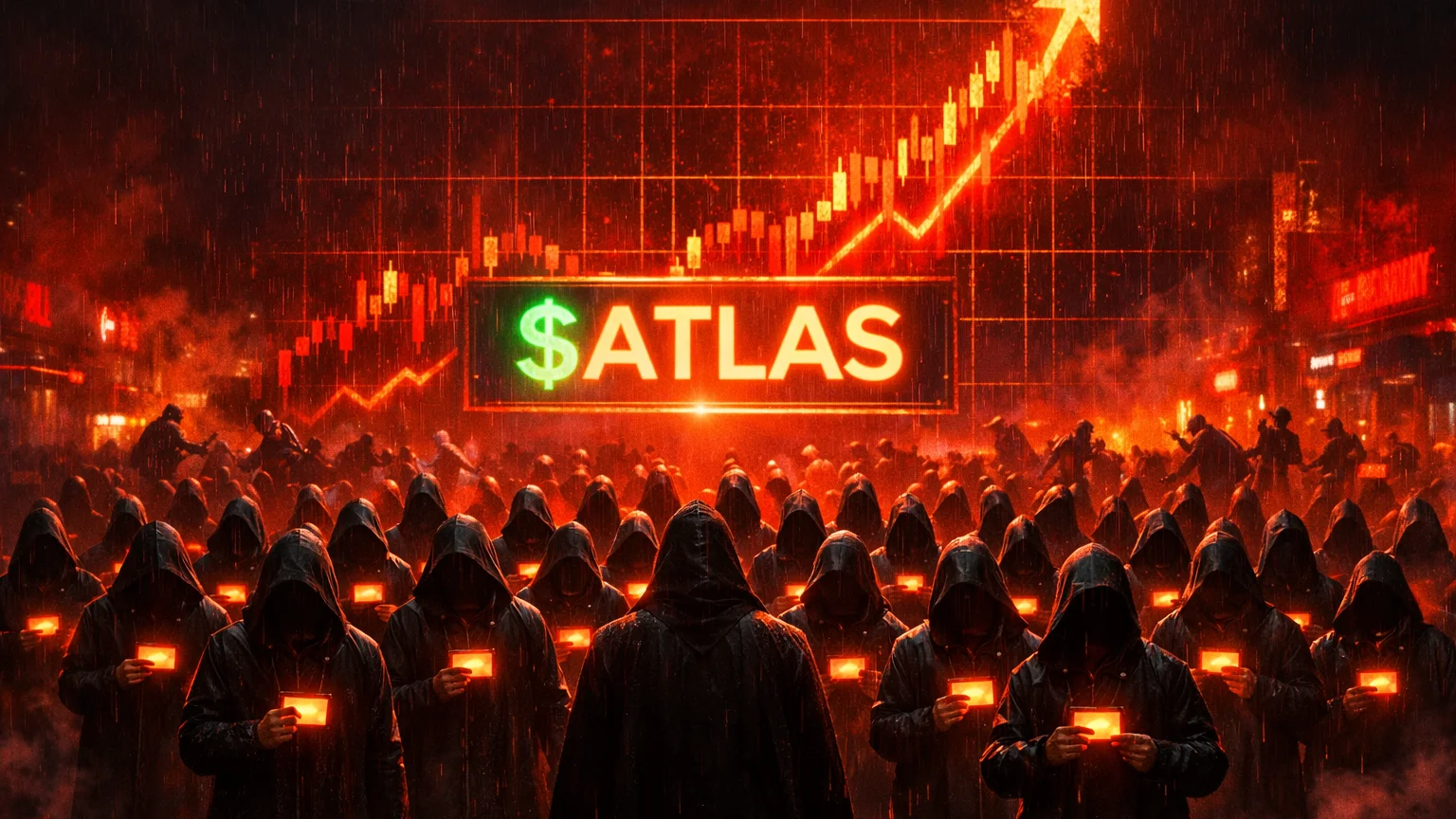
At approximately 6:45 PM UTC on March 30, 2026, ATLAS appeared on Solana's pump.fun launchpad. Within two and a half hours, the token surged 93%, racking up $808K in 24-hour volume across more than 24,000 transactions. On the surface, a standard micro-cap moonshot. Underneath, a pattern that should make anyone paying attention deeply uncomfortable: 68 wallets had already secured 47% of the total supply through ChangeNow before the token went live.
- → 68 wallets accumulated 47% of ATLAS supply pre-launch via ChangeNow — a privacy-focused swap service that obscures wallet origins
- → Token pumped 93% in under 3 hours on $808K volume with an 80% buy-side ratio
- → Top 3 wallets currently hold 44.9% of circulating supply — concentration risk is extreme for a token barely 3 hours old
What Makes This One Different
Most pump.fun launches follow a familiar script: deployer creates token, early degens ape in, price either rips or dies within the first hour. ATLAS broke the script before it even started. Sixty-eight wallets — not one, not five, sixty-eight — used ChangeNow to acquire nearly half the supply before the token was publicly tradeable. ChangeNow is a non-custodial swap service that doesn't require KYC, making it the tool of choice for anyone who wants to accumulate without leaving an obvious on-chain trail.
The coordination is what stands out. A single insider with one wallet is suspicious. Sixty-eight wallets using the same obfuscation pathway suggests either a coordinated group operating with advance knowledge of the launch, or a single entity distributing across dozens of wallets to simulate organic interest. Neither interpretation is flattering. The 47% figure isn't a rounding error — it's nearly half the entire token supply locked up before the first retail buy order hit the books.
This pattern has precedent. In late 2025, several Solana meme launches were exposed for similar pre-launch accumulation schemes, where insiders used privacy-focused bridges and swap services to build positions, then let the retail wave carry the price up before dumping. The playbook is well-documented. The question with ATLAS is whether the 93% pump represents genuine momentum that happened to attract front-runners, or whether the front-runners manufactured the momentum in the first place.
The Numbers So Far
The volume-to-market-cap ratio is staggering — $808K in volume on a $67K market cap means the token's entire market cap has turned over roughly 12 times in under three hours. That's either explosive organic demand or wash trading. The 80% buy-side ratio looks bullish in isolation, but when nearly half the supply is already concentrated in pre-launch wallets, that buying pressure could simply be the 68 wallets' allies creating the appearance of demand while the original holders prepare to distribute.
Liquidity sits at a razor-thin $21.2K. At this depth, a single wallet holding 23.7% of supply could nuke the price to zero in one transaction. The pair is less than three hours old, and there's no locked liquidity mechanism visible. For context, $21K of liquidity supporting $808K in daily volume means slippage on any meaningful exit is going to be brutal.
What the On-Chain Data Shows
Rugcheck assigns ATLAS a risk score of 31 out of 100 — technically in the lower-risk band, though the score doesn't fully capture the pre-launch accumulation dynamic since those wallets used off-chain methods to acquire tokens. No freeze authority. No mint authority. On the mechanical level, the token contract is clean.
The holder distribution tells a different story. The top wallet controls 23.7% of supply. The second wallet holds 16.2%. Combined with the third at 5%, the top three wallets own 44.9% of all ATLAS tokens. That's not unusual for a pump.fun micro-cap in its first hours — but layered on top of the ChangeNow pre-accumulation data, it transforms from a typical concentration pattern into a potential exit liquidity trap. If even one of the top two wallets is connected to the original 68-wallet cluster, the sell pressure could be devastating.
The deployer wallet is a fresh address with zero token history and zero remaining balance — first-time deployer who transferred everything out immediately. This is standard for pump.fun launches and tells us nothing on its own. The real story is in the 68 wallets that circumvented the normal launch flow entirely.
The ChangeNow Problem
ChangeNow has become the go-to tool for meme coin insiders who want plausible deniability. Because swaps are non-custodial and don't require accounts, there's no paper trail linking wallet A to wallet B through the service. For legitimate privacy-conscious users, this is a feature. For coordinated pre-launch accumulation schemes, it's a superpower.
The 68-wallet figure suggests this wasn't a casual operation. Creating and funding 68 separate wallets, routing tokens through ChangeNow, and timing the accumulation to complete before the public launch requires infrastructure and planning. This is the kind of operation that takes days to set up, not something a lone degen throws together on a Sunday evening. Whether it constitutes insider trading in any legal sense is beside the point for meme coin traders — the practical impact is that nearly half the supply is in the hands of people who had an informational advantage.
The Bear Case
Everything about this setup screams distribution play. Pre-launch accumulation. Privacy-routed tokens. Extreme concentration in top wallets. A 12x volume-to-mcap ratio that suggests artificial activity. The 93% pump looks impressive until you realize the people most likely to profit from it had their bags packed before the starting gun fired. At $21K liquidity, the exit door is barely wide enough for one whale — let alone 68 coordinated wallets trying to leave at the same time.
The bull case requires believing that 68 separate individuals independently discovered ATLAS through ChangeNow before launch and all decided to buy, without coordination, and that the subsequent 93% pump is genuine retail demand. That's a lot of coincidences stacked on top of each other.
MemeDesk Verdict
🔴 Shill Alert — The pre-launch accumulation pattern is a massive red flag. 68 wallets grabbing 47% of supply via ChangeNow before the token goes live isn't organic discovery — it's coordination. The 93% pump on paper-thin $21K liquidity looks manufactured. Top 3 wallets holding 44.9% means any exit by insiders will destroy the price. The volume numbers are impressive but meaningless when half the supply was pre-distributed through privacy channels. This has all the hallmarks of a coordinated pump-and-distribute scheme. If you're buying ATLAS right now, understand clearly: you might be the exit liquidity.
What is ATLAS crypto?
ATLAS is a meme token launched on Solana's pump.fun launchpad on March 30, 2026. It gained attention after reports surfaced that 68 wallets accumulated 47% of the token supply through ChangeNow before the public launch, raising insider trading concerns.
What does pre-launch accumulation through ChangeNow mean?
ChangeNow is a non-custodial swap service that doesn't require KYC. Using it to accumulate tokens before a public launch means the buyers can obscure their wallet origins, making it difficult to trace who accumulated and whether the wallets are connected to the token's creators.
Is ATLAS a rug pull?
ATLAS has no freeze authority or mint authority, and its Rugcheck score is 31 (relatively low risk mechanically). However, the pre-launch accumulation by 68 wallets controlling 47% of supply creates a significant distribution risk — insiders can dump at any time without the token's smart contract being directly exploited.
What is the ATLAS token contract address?
The ATLAS contract address on Solana is usmDk9j97FY7TR6QQ4TRtz9fPUZr1pk6SLAt3xepump. Always verify contract addresses through official sources before interacting with any token.
Why is high wallet concentration a risk for meme tokens?
When a small number of wallets hold a large percentage of supply, they can crash the price by selling. With ATLAS's top 3 wallets holding 44.9% and only $21K in liquidity, a single large sell order could wipe out most of the token's value.